Zaxxon: The Revolutionary Isometric Shooter That Invented 3D Gaming
In 1982, Sega's Zaxxon pioneered isometric 3D graphics and became the first arcade game advertised on television, forever changing how games were visualized and marketed.
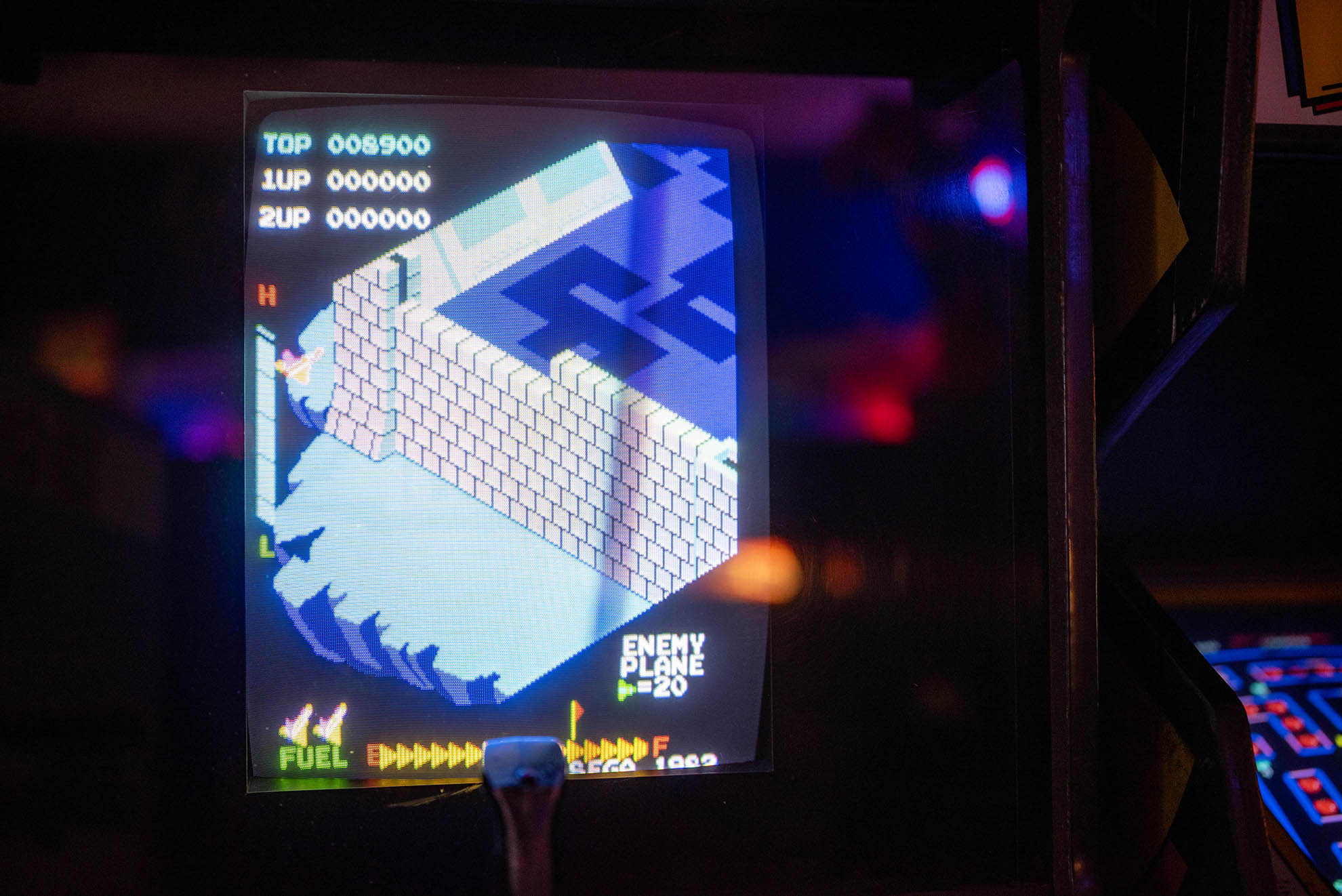
In early 1982, arcade-goers witnessed something their eyes struggled to comprehend: a spaceship casting a shadow that grew and shrank as it soared through a floating fortress, enemies attacking from impossible angles, and a perspective that seemed to defy the flat nature of video game screens. This was Zaxxon, Sega's groundbreaking shooter that pioneered isometric projection in video games and forever changed how developers approached three-dimensional gameplay.
A Name Born from Innovation
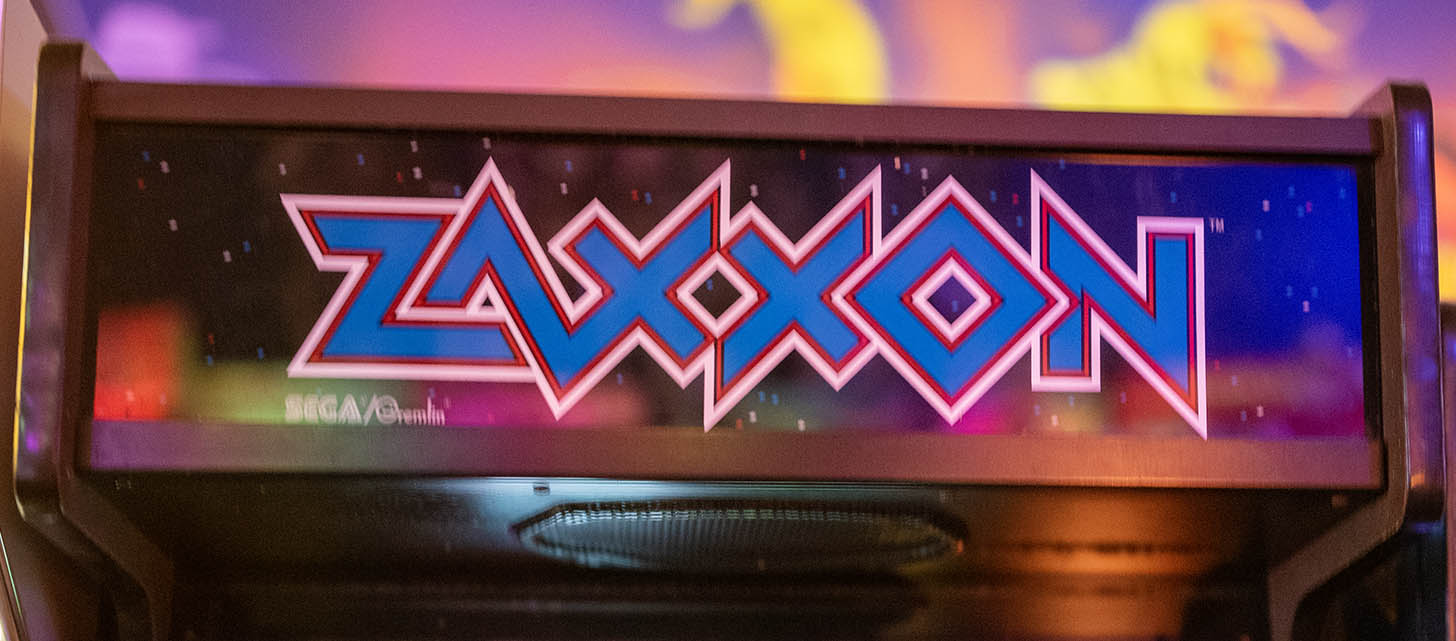
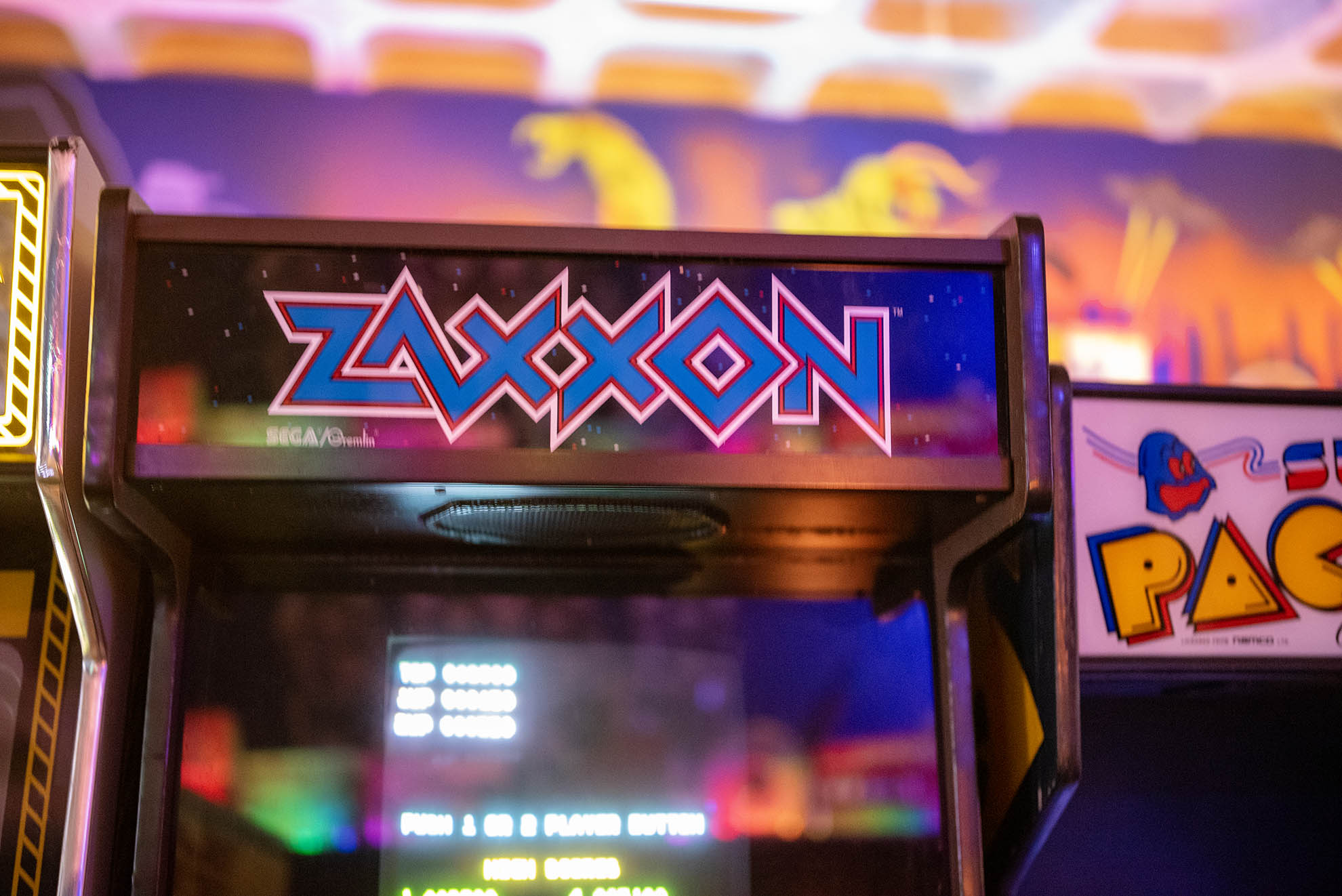
The curious title "Zaxxon" carries its technical DNA in every syllable. The name derives directly from "axonometric projection" - specifically the isometric variant that the game pioneered. Sega's engineers added the aggressive "Z" to create a futuristic-sounding moniker that would adorn arcade cabinets worldwide.
The game serves double duty as an "Antagonist Title" - Zaxxon is also the name of the massive robot boss that guards the enemy headquarters, creating a satisfying narrative coherence where players must defeat the very entity that gives the game its name.
The Corporate Constellation: Sega, Gulf+Western, and Paramount
Understanding Zaxxon's creation requires understanding the unusual corporate structure behind it. In 1969, Sega had been acquired by Gulf and Western Industries, the American conglomerate that also owned Paramount Pictures. Around the end of 1981, Gulf and Western transferred Sega from its manufacturing division to Paramount Pictures in an ambitious effort to enter the gaming business.
This corporate arrangement would prove crucial to Zaxxon's marketing success. With Paramount's resources and Hollywood connections at their disposal, Sega had access to promotional capabilities that no other arcade game manufacturer could match.
The First Arcade Television Commercial
Zaxxon holds the distinction of being the first arcade game ever advertised on television. While home video games had received commercials before, no arcade title had warranted such treatment. Paramount Pictures produced a groundbreaking commercial with a budget of approximately $150,000 (equivalent to roughly $470,000 today).
The commercial was partially created by Mathematical Applications Group Inc. (MAGI), the same special effects company responsible for the computer graphics in Disney's Tron, which released the same year. The 3D imagery might appear primitive by modern standards, but in 1982, it was so impressive that Sega barely needed to show actual gameplay.
The commercial was aired on major networks in large cities across the United States at a total campaign cost estimated between $500,000 to $1 million. The investment paid off spectacularly: Sega and Paramount attributed an almost doubling of sales directly to the television campaign.
Behind the Hardware: Ikegami Tsushinki's Hidden Contribution
While Sega published and promoted Zaxxon, the game's hardware and program code were developed with significant assistance from Ikegami Tsushinki Co., Ltd. (ITC). This Japanese company, primarily known as a manufacturer of professional video cameras and broadcasting equipment, secretly collaborated on several landmark arcade titles during the early 1980s.
Evidence of Ikegami's involvement is hidden within the game itself. The tilesets contain unused graphics featuring the letters "ITC" in a circle - the company's logo at the time. Similar hidden logos appear in Congo Bongo and, most famously, in Nintendo's Donkey Kong, which Ikegami also helped develop.
Technical Specifications
| Component | Specification |
| Main CPU | Zilog Z80 @ 3.04125 MHz |
| Sound | Discrete analog circuitry |
| Display | Vertical raster, 224 x 256 pixels |
| Refresh Rate | 59.999408 Hz |
| Color Palette | 256 colors |
| Cabinet Types | Upright, Cocktail, Cabaret |
The hardware would be reused for three additional games sharing the same pinout: Congo Bongo, Super Zaxxon, and Future Spy.
The Shadow System: A Revolution in Depth Perception
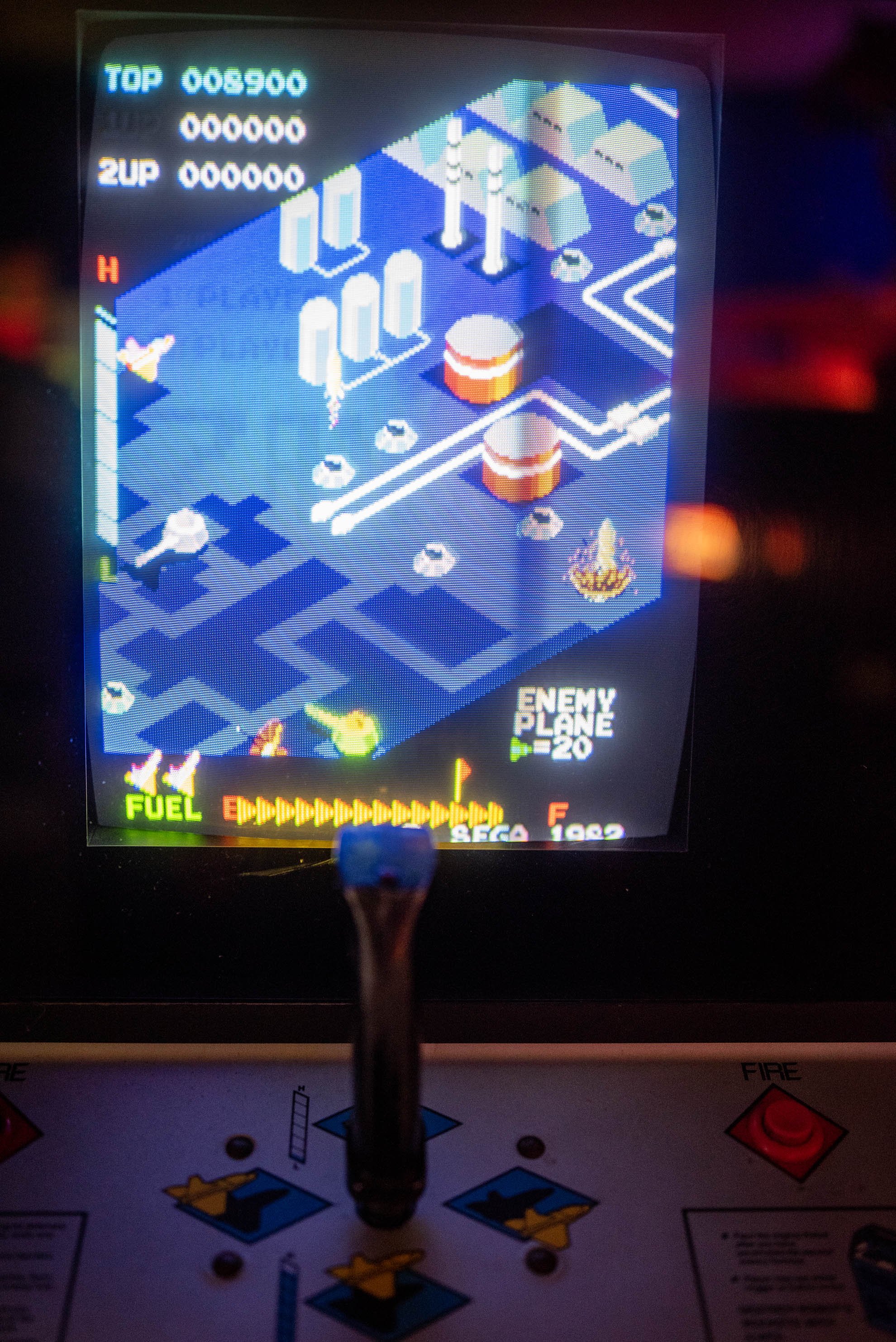
Zaxxon's most celebrated innovation was its use of dynamic shadows to convey altitude. As players piloted their spacecraft through the floating fortress, a shadow appeared directly beneath the ship on the ground below. This shadow grew larger as the ship descended and smaller as it climbed, providing intuitive visual feedback that complemented the numerical altimeter.
This shadow system was revolutionary. Prior to Zaxxon, video games had no effective method for communicating depth in a pseudo-3D environment. The innovation influenced countless subsequent games, and the technique became standard practice in game design.
Gameplay Structure: Three Stages of Aerial Combat
Stage 1: The Floating Fortress Players navigate through a heavily defended asteroid fortress, dodging walls and force fields while managing their fuel supply. Destroying fuel tanks (worth 300 points each) replenishes energy.
Stage 2: Outer Space The middle section removes ground-based obstacles entirely, placing players in open space against waves of enemy fighters. Without ground below, the ship casts no shadow - making altitude judgment more difficult.
Stage 3: The Final Fortress and Zaxxon The concluding section culminates in a confrontation with the robot Zaxxon itself, a massive mechanical guardian armed with a deadly cruise missile. Players must hit the robot's missile six times to destroy it.
World Record: Vernon Kalanikaus's Historic Score
The world record for Zaxxon stands at an extraordinary 4,680,740 points, achieved by Vernon Kalanikaus of Laie, Hawaii, on March 15, 1982 - just months after the game's release. This score has stood for over four decades, making it one of the longest-standing records in competitive arcade gaming.
Commercial Triumph
Zaxxon was a critical and commercial phenomenon. The arcade game reached the top of the monthly US RePlay arcade charts in June 1982. The Amusement & Music Operators Association (AMOA) listed it among the top six highest-grossing arcade games of 1982 in the United States.
The context for this success is remarkable: 1982 represented the peak of arcade gaming's golden age, with the industry generating an estimated $8 billion in quarters - more than the pop music and Hollywood film industries combined. Zaxxon stood alongside titans like Space Invaders in defining the era.
Critical Acclaim and Awards
- 1982 Arcade Awards: Certificate of Merit for Best Science Fiction/Fantasy Coin-Op Game
- 1983 Arcade Awards: Certificate of Merit for Videogame of the Year (console)
- 1984 Arkie Awards: Stand-Alone Game of the Year
- 1985: Electronic Games magazine inducted Zaxxon into its Hall of Fame
Hollywood Appearances
WarGames (1983): The iconic arcade scene in John Badham's cyber-thriller features a Zaxxon cabinet among dozens of classic games.
Friday the 13th: The Final Chapter (1984): Tommy Jarvis, played by a young Corey Feldman, is shown playing Zaxxon. The dialogue even references the game directly: when discussing the killer, Trish says "He'd probably challenge him to a game of Zaxxon."
Legacy and Influence
Zaxxon's impact on game design cannot be overstated. By proving that isometric projection could create compelling gameplay, Sega opened floodgates that reshaped multiple genres. Q*bert, Marble Madness, and countless tactical RPGs and city-builders adopted isometric perspectives.
Today, Zaxxon cabinets are classified as "Very Common" by collector databases, with over 400 known surviving units. For those who experienced it in 1982, Zaxxon represented the future of gaming. Four decades later, that future has become history - but the game's innovations remain as relevant as ever.
Technical Specifications
| Specification | Details |
| Developer | Sega (with Ikegami Tsushinki) |
| Publisher | Sega (Japan/Europe), Sega/Gremlin (North America) |
| Release Date | January 1982 (Japan), March 1982 (USA) |
| Platform | Arcade (Zaxxon Hardware) |
| Genre | Isometric Scrolling Shooter |
| Players | 1-2 (alternating) |
| Display | Raster, vertical orientation, 224x256, 256 colors |
| Main CPU | Zilog Z80 @ 3.04125 MHz |
| Controls | 8-way joystick (flight stick), 1 fire button |
| World Record | 4,680,740 points - Vernon Kalanikaus (March 15, 1982) |
| Awards | Electronic Games Hall of Fame (1985) |
Gallery
Get Gaming News and Features First
Stay updated with the latest gaming news and exclusive content.