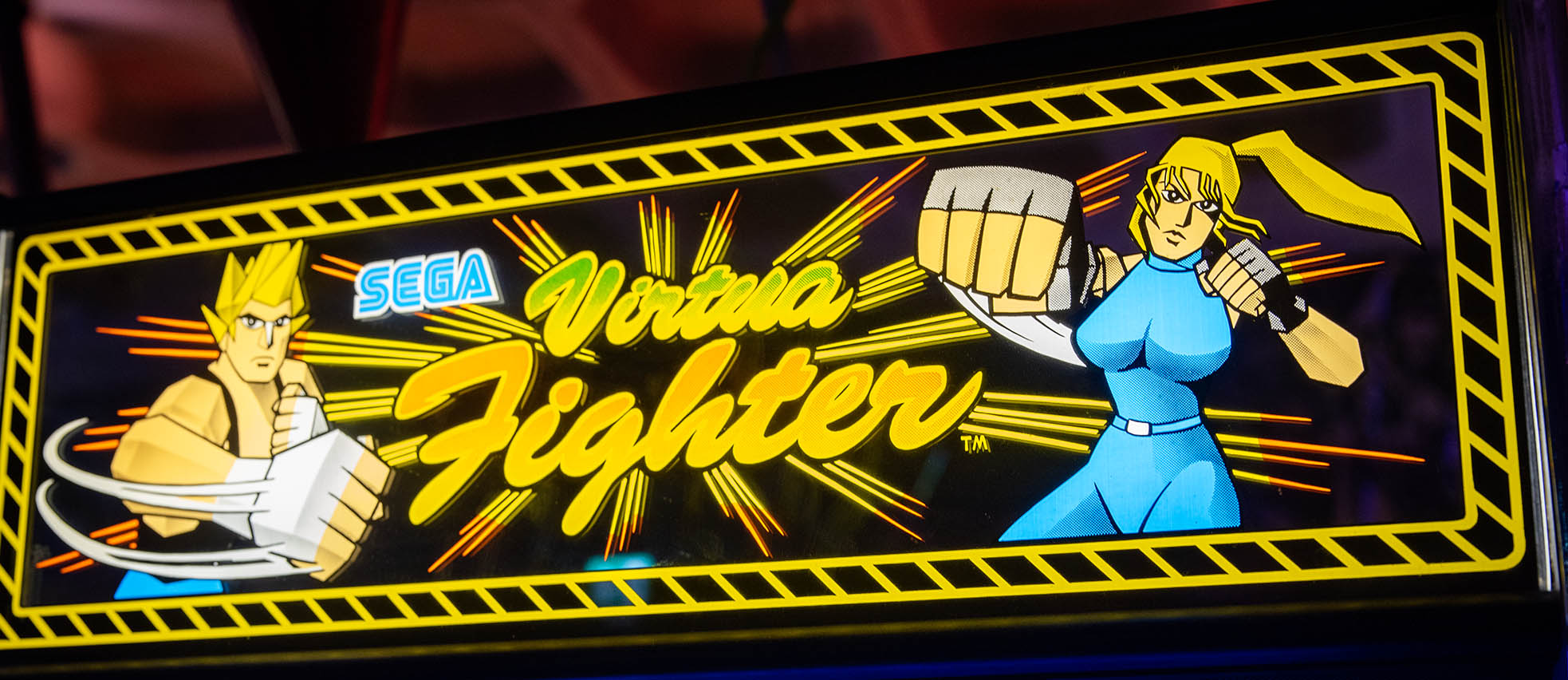
Virtua Fighter: The Game That Revolutionized Fighting Games Forever
How Sega AM2's 1993 arcade masterpiece became the first 3D fighting game, influenced PlayStation's hardware, and earned a place in the Smithsonian.
In December 1993, Sega AM2 released a game that would fundamentally transform the fighting game genre and influence the direction of an entire industry. Virtua Fighter wasn't just the first 3D fighting game, it was a technological marvel that convinced Sony to redesign the PlayStation as 3D-focused hardware, earned permanent display at the Smithsonian Institution, and created the template that Tekken, Soul Calibur, and Dead or Alive would follow. Developed by the legendary Yu Suzuki on Sega's revolutionary Model 1 hardware, this groundbreaking title proved that polygon-based fighters could deliver experiences impossible in the sprite-based era.
From Pit Crews to Martial Artists: The Origins of 3D Fighting
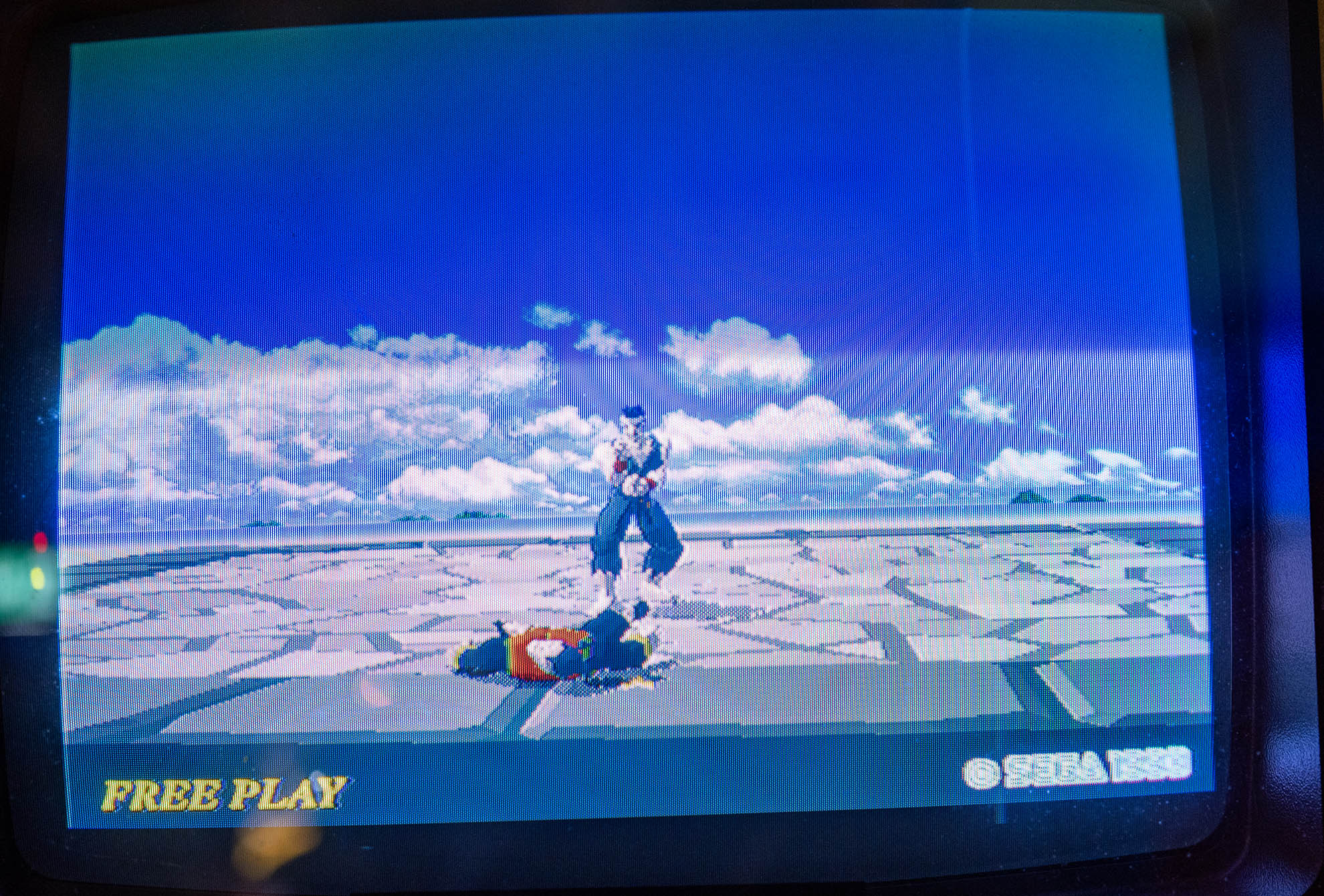
The genesis of Virtua Fighter began not with punches and kicks, but with the humble pit crews of Virtua Racing. Yu Suzuki, already renowned for arcade classics like OutRun, After Burner, and Space Harrier, had been experimenting with 3D polygon technology on Sega's new Model 1 hardware. While developing Virtua Racing in 1992, the team animated small pit crew characters, simple polygon figures that moved with surprising fluidity.
"The first drop of Virtua Fighter was Virtua Racing's pit crew," Suzuki later explained. "Cars have limited moving parts and simple structures. I wanted to try 3D with multi-jointed objects next. We discovered we could move a human figure with about 30-32 joints, so we tested this concept with the pit crew."
The timing proved fortuitous. Capcom's Street Fighter II had exploded in 1991, dominating arcades worldwide. Within Sega, pressure mounted: "Everyone said 'Sega has nothing like Street Fighter II.'" Suzuki saw an opportunity to merge his technical ambitions with market demand. Rather than compete directly with 2D fighters, he would create something entirely new.
Yu Suzuki and the AM2 Development Philosophy
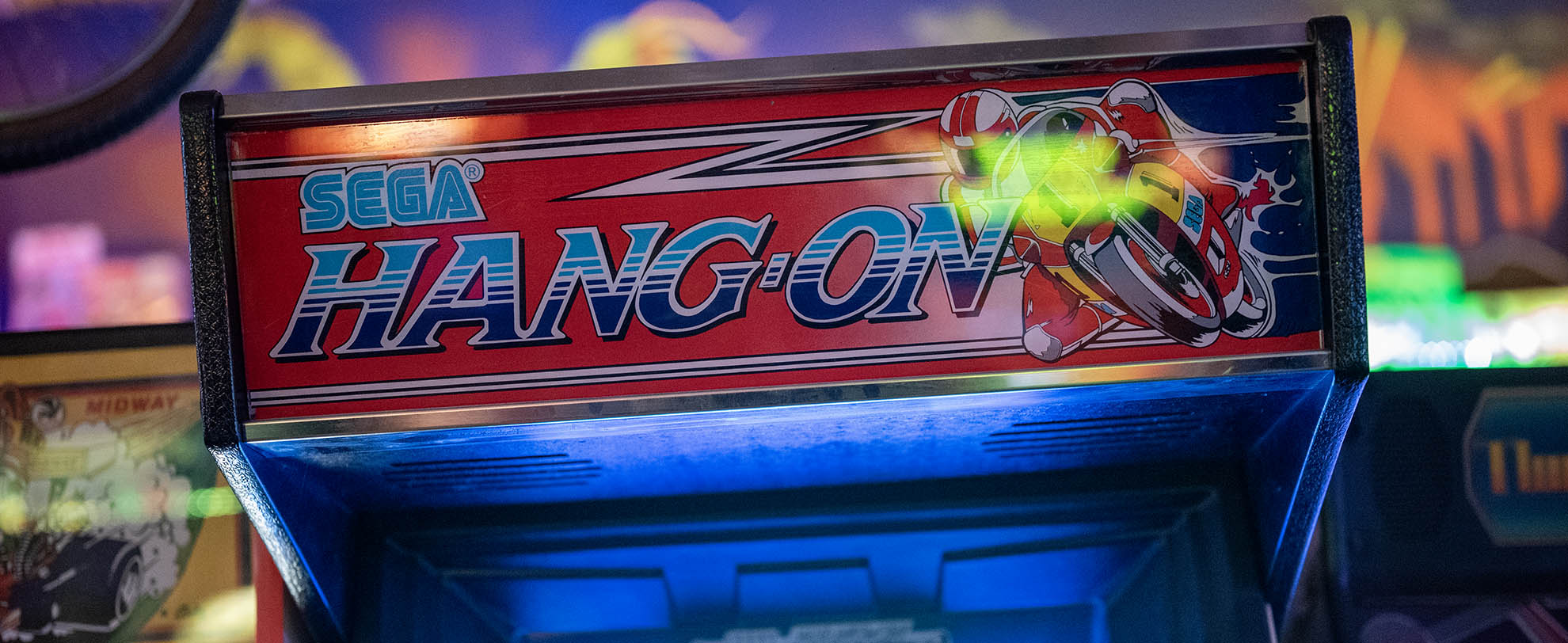
Yu Suzuki joined Sega in 1983 and quickly established himself as one of the industry's most innovative designers. His arcade creations. Hang-On (1985), Space Harrier (1985), OutRun (1986), and After Burner (1987), consistently pushed technological boundaries while delivering accessible gameplay.
For Virtua Fighter, Suzuki assembled a dedicated team within AM2, including designer Seiichi Ishii, who would later leave Sega to create Tekken at Namco. The development philosophy emphasized realism over fantasy. Unlike contemporaries featuring fireballs and supernatural powers, Virtua Fighter would ground itself in authentic martial arts.
"I was confident we could generate powerful expressions without relying on superpowers or weapons," Suzuki stated. "By leveraging accuracy in relative positioning, perspectives, and liberal camerawork, we could achieve something unprecedented."
The team's dedication to authenticity extended to hands-on research. Suzuki traveled to China to study martial arts firsthand, visiting temples where grandmasters taught him Bajiquan, the explosive Chinese martial art that would define protagonist Akira Yuki's fighting style.
The Model 1: Military-Grade Technology Meets Arcade Gaming
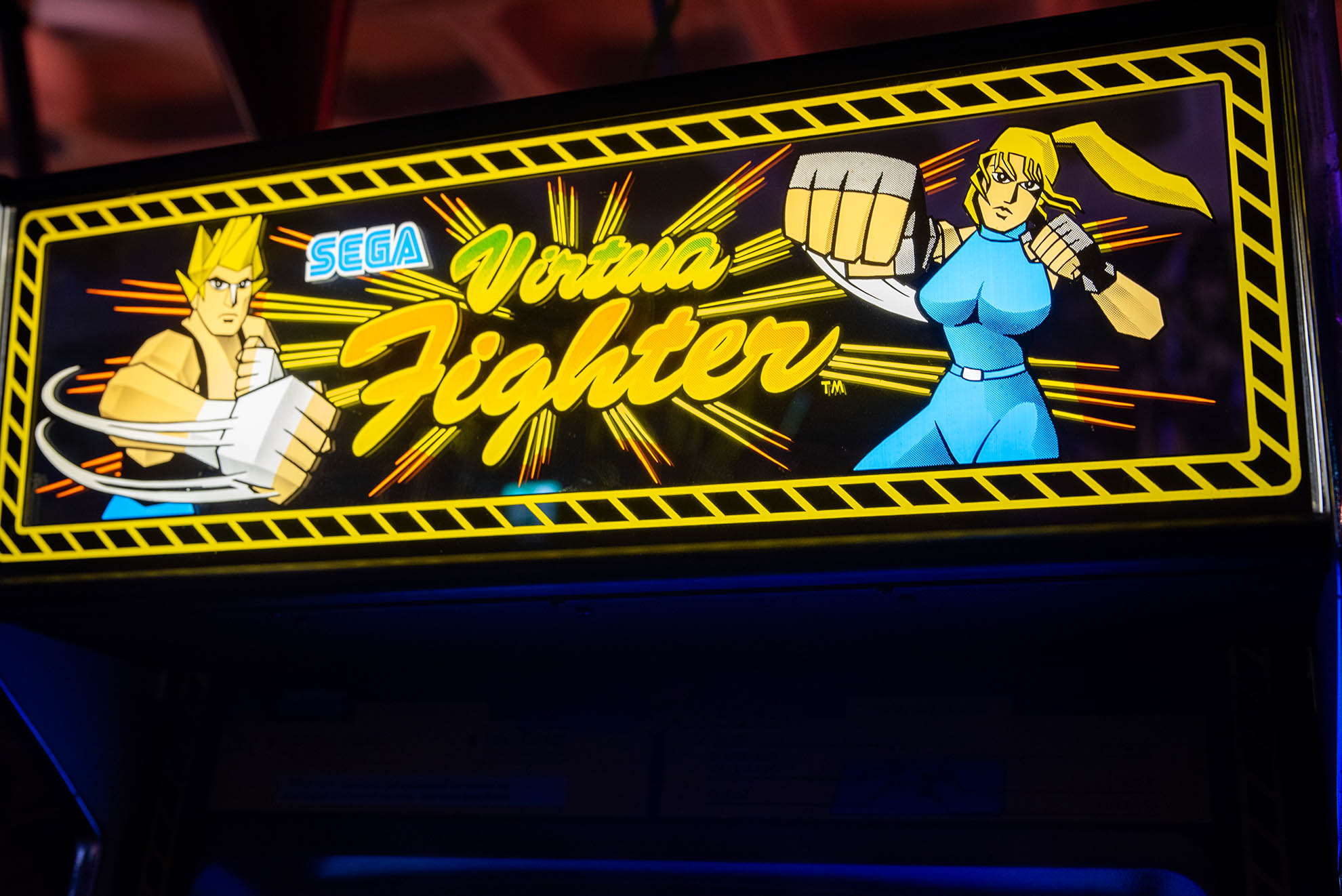
Virtua Fighter ran on Sega's Model 1 arcade hardware, which debuted in 1992 with Virtua Racing. The Model 1 was co-developed by Sega and GE Aerospace (which later merged into Lockheed Martin), with Fujitsu providing the DSP coprocessors. Lockheed Martin's more direct involvement came with the subsequent Model 2.
The hardware specifications were remarkable for 1993:
- CPU: NEC V60 at 16 MHz with 1,936KB RAM
- Graphics: Sega custom GPU capable of 180,000 flat-shaded polygons per second
- Sound: Dual sound processors for stereo audio
- Display: Medium resolution raster graphics
The technical challenges proved immense. According to Suzuki, performing the fast division calculations required for real-time 3D rendering was extraordinarily difficult: "The only applications I was aware of performing fast enough divisions at the time were nuclear reactors and space rockets. We were working with craftsmanship equivalent to inscribing 100 words on a single grain of rice."
Each of the eight playable characters had to be rendered with fewer than 1,200 polygons, a limitation that forced creative solutions but ultimately resulted in remarkably fluid animation for the era.
Revolutionary Innovations That Changed Gaming
Virtua Fighter introduced multiple concepts that became fighting game standards:
Three-Dimensional Combat: For the first time, characters could move in true 3D space, with a dynamic camera that zoomed, panned, and swept around the arena. This wasn't merely cosmetic, it fundamentally changed how players approached spacing and positioning.
The Ring Out System: Directors Suzuki and Ishii created arenas with boundaries where fighters could be pushed out for an instant loss. This "Ring Out" mechanic added strategic tension to every exchange near the edge and would be adopted by Soul Calibur, 3D Mortal Kombat entries, and Battle Arena Toshinden.
Dedicated Block Button: Unlike Street Fighter's hold-back-to-block system, Virtua Fighter used a dedicated Guard button, giving players more precise defensive control.
Realistic Physics: Characters responded to impacts based on actual physics calculations rather than predetermined animations. Clothing and accessories could be knocked off during fights, adding visceral detail to combat.
Motion Capture Animation: Virtua Fighter pioneered the use of motion capture for fighting game characters, recording real martial artists to achieve unprecedented movement authenticity.
Eight Warriors, Eight Disciplines
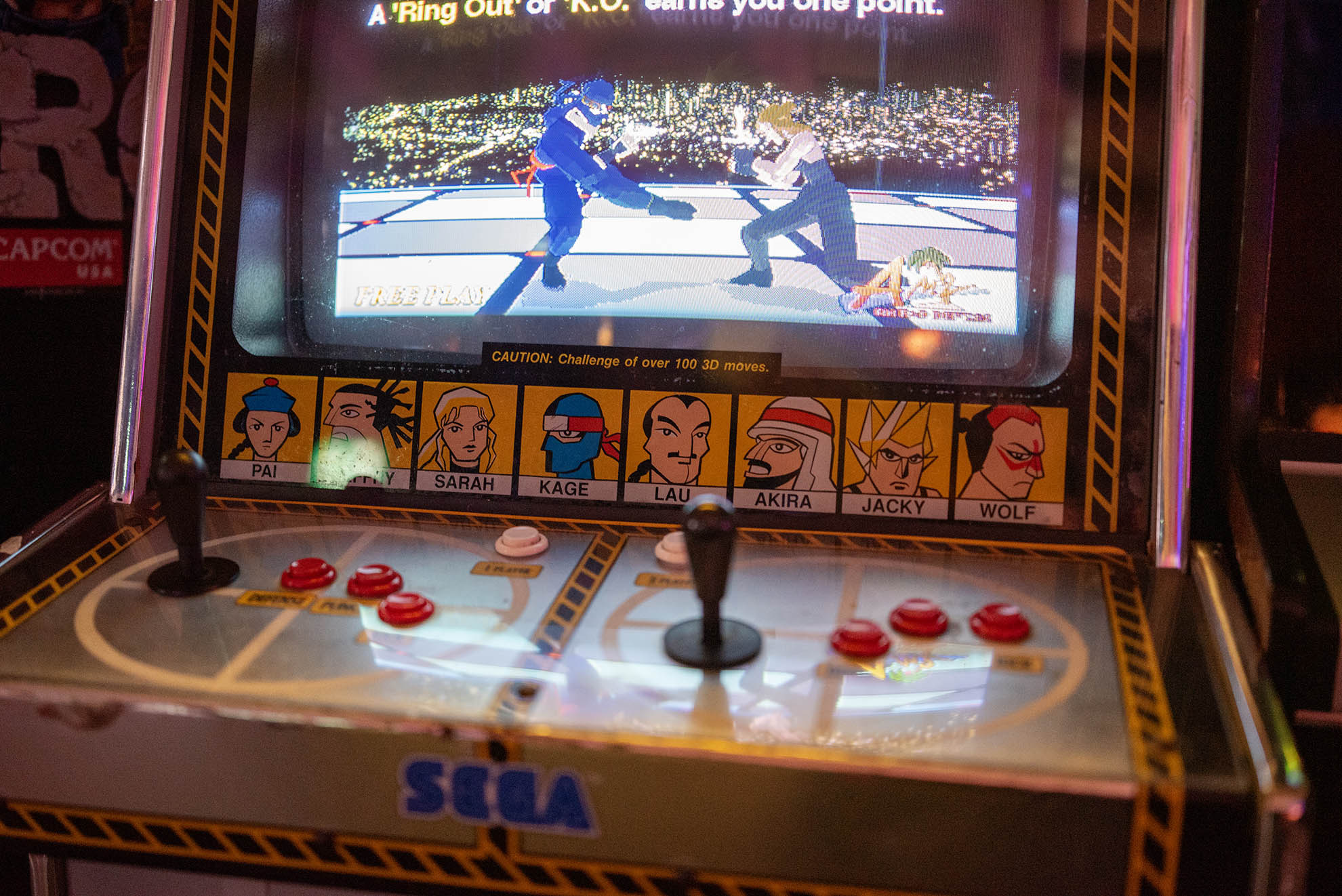
The original roster featured eight playable fighters, each representing distinct martial arts traditions:
Akira Yuki (Japan) - The series mascot practices Bajiquan (Hakkyoku-ken), a Chinese martial art known for explosive short-range power. Suzuki specifically chose this uncommon style for the protagonist rather than typical Japanese martial arts like Karate or Judo, emphasizing the game's commitment to diversity.
Pai Chan (Hong Kong) - A martial arts movie star practicing Ensei-Ken (Mizongquan), Pai is the daughter of fellow fighter Lau Chan. Her style emphasizes speed and multiple stances.
Lau Chan (China) - A master chef from China who fights with Koen-Ken (Tiger-Swallow Fist). Lau strives for perfection in both cuisine and combat, driven by an obsessive pursuit of martial arts mastery.
Wolf Hawkfield (Canada) - A professional wrestler who brings grappling techniques to the tournament. Despite his imposing size, Wolf is portrayed as a peaceful nature-lover with a passion for karaoke.
Jeffry McWild (Australia) - An Australian fisherman practicing Pancratium, the ancient Greek combat sport. Jeffry uses tournament winnings to fund his hunt for the legendary "Devil Shark."
Kage-Maru (Japan) - A ninja using Hagakure-style Ju-Jutsu, Kage enters the tournament seeking clues about the mysterious organization that murdered his father and kidnapped his mother, who would become the game's final boss.
Sarah Bryant (USA) - A college student practicing Jeet Kune Do, Sarah was kidnapped and brainwashed by Judgment 6 to eliminate her brother Jacky.
Jacky Bryant (USA) - Sarah's brother and a race car driver, Jacky also practices Jeet Kune Do. His moveset includes techniques inspired by Bruce Lee himself.
Dural: The Silver Nightmare
The final boss, Dural, represents one of gaming's most tragic antagonists. Originally a human woman named Tsukikage. Kage-Maru's mother and a skilled kunoichi, she was captured by the sinister Judgment 6 corporation and transformed into a silver-skinned gynoid through cybernetic enhancement and brainwashing.
Dural combines techniques from all eight fighters, creating an incredibly challenging final encounter. Her name cleverly references the button combination needed to unlock her as a playable character: Down, Up, Right, A+Left.
Kage-Maru's ongoing quest to restore his mother's humanity became a central narrative thread throughout the series, adding emotional weight to the tournament fighting framework.
Commercial Domination: Records and Revenue
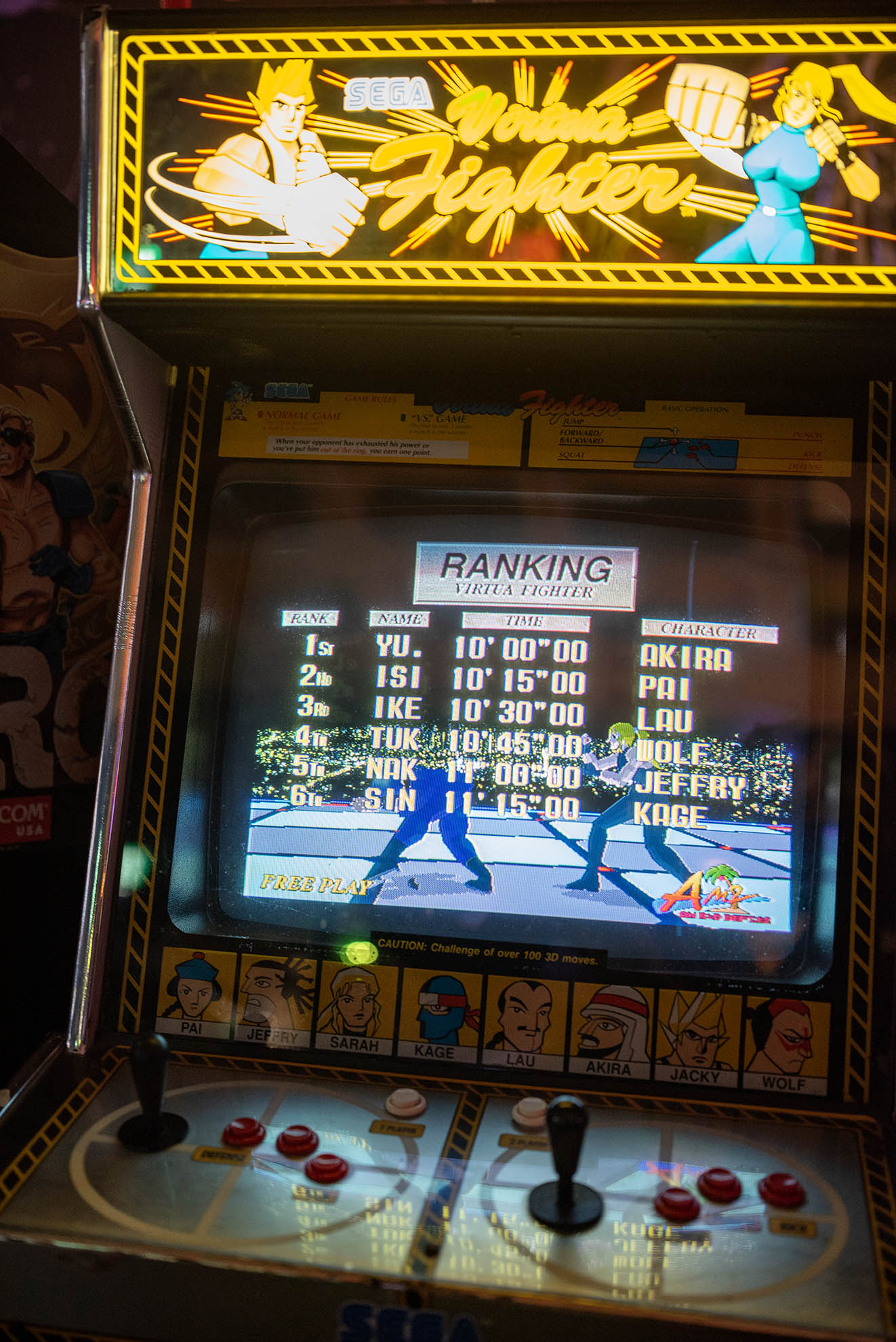
Virtua Fighter's commercial performance exceeded all expectations. During location testing in Japan prior to the August 1993 AM Show, each test machine earned a daily average of ¥60,000 ($600). Sega's highest location test performance in history. At the AM Show itself, visitors rated it "the hit of the show."
Upon release in December 1993, Game Machine magazine listed Virtua Fighter as Japan's most popular upright/cockpit arcade game. It became Japan's highest-grossing arcade game of 1994 and one of the country's highest-grossing arcade games of all time.
The game ultimately sold over 40,000 arcade units worldwide, with each unit costing between $15,000-$21,000 (equivalent to $33,000-$46,000 in 2024). Along with its sequel, Virtua Fighter became Sega's best-selling arcade series, surpassing the previous record holder OutRun.
According to Next Generation magazine in 1995, Virtua Fighter was "the biggest game in Japan since Super Mario World."
The Smithsonian Recognizes a Masterpiece
In 1998, Virtua Fighter achieved an honor unprecedented for a video game. The series was recognized by the Smithsonian Institution for its groundbreaking contributions to Arts and Entertainment, becoming part of the Smithsonian's Permanent Research Collection on Information Technology Innovation.
On April 6, 1998, an induction ceremony was held in Washington, DC. A Virtua Fighter 3 arcade cabinet was donated to the National Museum of American History, where it became the only video game on permanent display in the collection.
Dr. David Allison, executive director of the Smithsonian Awards Collection, called Sega's contribution "wonderful and generous." Yu Suzuki received the Computer World Smithsonian Award, marking a historic first for Japan's game industry.
How Virtua Fighter Saved the PlayStation
Perhaps Virtua Fighter's most profound influence occurred at a rival company. According to former Sony Computer Entertainment producer Ryoji Akagawa and chairman Shigeo Maruyama, the PlayStation was originally planned as 2D-focused hardware.
"What if we make the PlayStation using 2-D hardware? Such an idea was seriously considered," Akagawa revealed. Everything changed when Virtua Fighter launched. Maruyama stated that once the game hit arcades, Sony's direction for the hardware became "instantly clear."
"If it wasn't for Virtua Fighter, the PlayStation probably would have had a completely different hardware concept," Akagawa concluded.
This pivot toward 3D graphics directly influenced the PlayStation's architecture and contributed to its dominance over the Sega Saturn, an ironic outcome given that Virtua Fighter originated on Sega hardware.
Inspiring the Competition: Tekken and Beyond
Virtua Fighter's influence extended directly to its competitors. When Namco developed Tekken in 1994, they recruited none other than Seiichi Ishii. Virtua Fighter's designer, to lead the project.
Tekken was explicitly designed as "Namco's answer to Virtua Fighter." While adding texture-mapped graphics and a four-limb button system, the fundamental 3D fighting framework derived directly from Sega's innovation. Tekken was marketed to smaller arcades as a cheaper alternative to Virtua Fighter 2, which required the expensive Model 2 hardware.
As 1UP noted: "Due to its innovation, Virtua Fighter not only influenced competitors' games, it basically created a genre. Technically, every 3D fighter that came after it owes Virtua Fighter for establishing that a 3D fighter could work."
The Soul Calibur, Dead or Alive, and Fighting Vipers series all trace their lineage to concepts pioneered in Virtua Fighter.
The Lost Fighter: Siba's Discovery
In 2016, 23 years after Virtua Fighter's release, data miners discovered unused characters hidden in the arcade ROM. Most notably, they found Siba (originally named "Majido"), an Arab fighter who appeared in prototype screenshots and even on international arcade cabinets (mislabeled as "Akira").
Siba was removed during development due to poor performance during location tests. Developers speculated he lacked a signature move to distinguish him from other fighters. His moveset was sparse, borrowing from Sarah and Lau without establishing a unique identity.
The character was later resurrected in Fighters Megamix (1996) as an unlockable fighter, finally giving fans access to this mysterious lost warrior.
Saturn Launch and Cultural Phenomenon
When the Sega Saturn launched in Japan on November 22, 1994, Virtua Fighter served as the system's killer app. Saturn versions sold over one million copies combined with the enhanced Remix edition, a remarkable attach rate that helped the console initially outsell the PlayStation in Japan.
The franchise's popularity spawned a 35-episode anime television series that aired from October 1995 to June 1996 on TV Tokyo. The series followed Akira Yuki's journey to become a stronger fighter, featuring characters from the game in serialized adventures.
Virtua Fighter became a cultural touchstone in Japan, with competitive scenes flourishing in arcades nationwide. Major tournaments like the Morinaga Angel Cup (1997) drew dedicated players seeking championship glory.
A Revolution Set in Polygons
Virtua Fighter represents more than a successful arcade game, it marks a fundamental turning point in video game history. By proving that polygon-based characters could deliver compelling, realistic combat, Yu Suzuki and AM2 opened doors that the entire industry walked through.
From inspiring Sony's PlayStation hardware direction to establishing the template for 3D fighters, from earning Smithsonian recognition to generating over 40,000 arcade unit sales, Virtua Fighter's impact reverberates through gaming to this day.
Those angular polygon fighters, which some observers described as "stacks of blocks", moved with an authenticity that captivated players worldwide. Their movements were based on real martial arts, their physics grounded in reality, their competitive potential proven through years of tournament play.
Three decades later, Virtua Fighter remains the foundation upon which the entire 3D fighting game genre was built. For more classic arcade preservation, see Street Fighter II Champion Edition.
Technical Specifications
| Specification | Details |
| Developer | Sega AM2 |
| Publisher | Sega |
| Release Date | December 1993 (Arcade), November 1994 (Saturn Japan) |
| Platform | Sega Model 1 |
| Genre | 3D Fighting |
| Players | 2 simultaneous |
| Controls | 8-way joystick, 3 buttons (Punch, Kick, Guard) |
| Display | Horizontal raster, medium resolution, color |
| Sound | Amplified stereo (two-channel) |
| Director | Yu Suzuki, Seiichi Ishii |
| Music | Takayuki Nakamura, Takenobu Mitsuyoshi |
| Voice (Kage-Maru) | Takenobu Mitsuyoshi |
| Cabinet Units Sold | 40,000+ worldwide |
| Unit Cost | $15,000-$21,000 |
Sega Model 1 Games Library
The Model 1 hardware hosted a small but influential lineup:
| Game | Year |
| Virtua Racing | 1992 |
| Virtua Formula | 1993 |
| Virtua Fighter | 1993 |
| Star Wars Arcade | 1994 |
| Wing War | 1994 |
Awards and Recognition
- Game Machine Magazine: #1 Upright/Cockpit Arcade Game (December 1993)
- Japan Arcade Charts: Highest-Grossing Arcade Game of 1994
- Gamest Awards 1993: Nominated for Game of the Year, Best Fighting Game, Best Graphics
- Smithsonian Institution (1998): Permanent Collection Information Technology Innovation
- Computer World Smithsonian Award (1998): Yu Suzuki
- 1UP: Listed among 50 Most Important Games of All Time
For more fighting game history, see BlazBlue's 17th Anniversary.
Gallery
Get Gaming News and Features First
Stay updated with the latest gaming news and exclusive content.