Wrestle War: Sega's Bold 1989 Arcade Grappler That Cloned Wrestling Icons
Wrestle War 1989 Sega System 16B arcade - Hulk Hogan and Road Warriors tributes. Rare cabinet, pseudo-3D ring, Mega Drive port. Now on Astro City Mini V 2022.
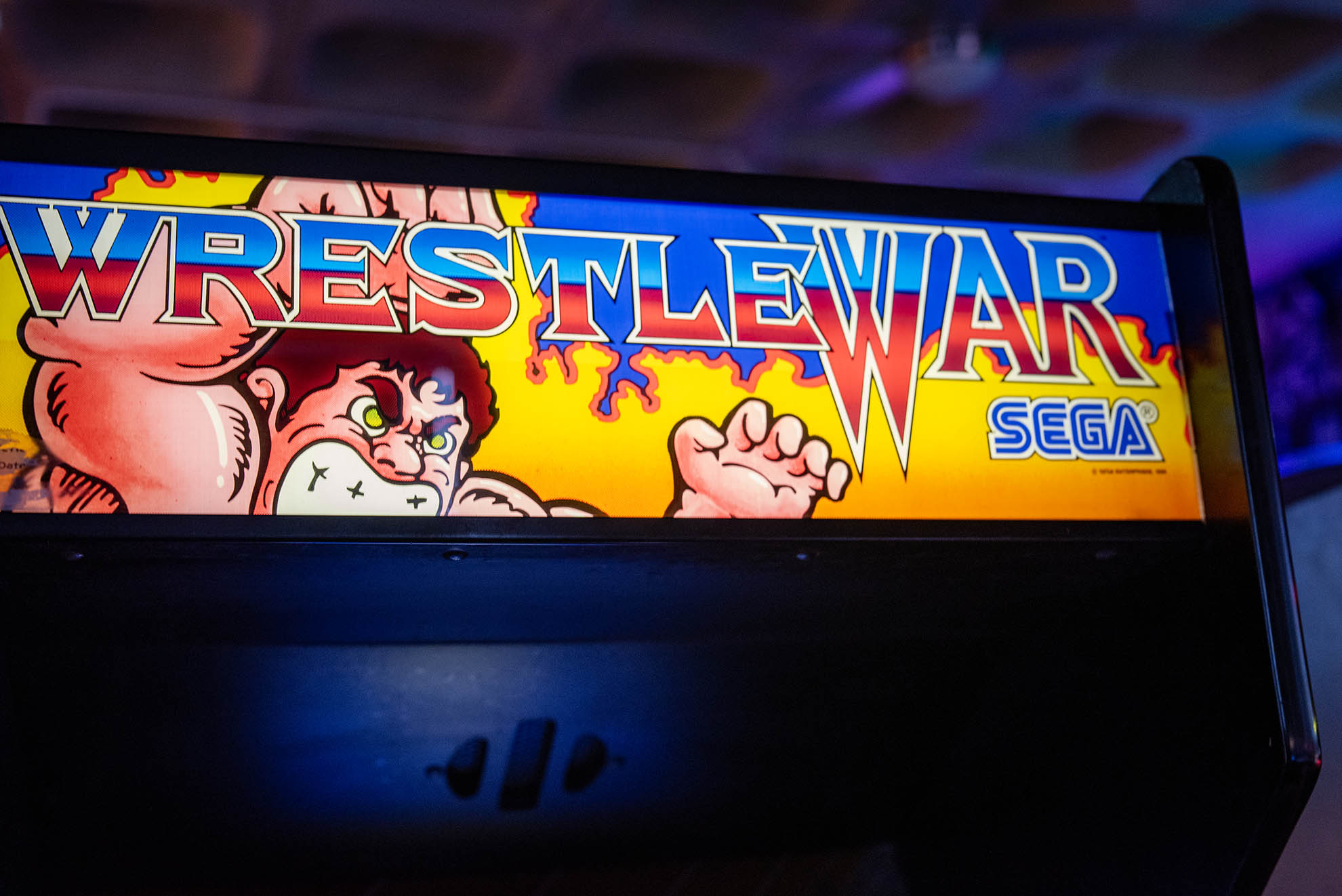
In February 1989, Sega released an arcade wrestling game so brazen in its character designs that the Japanese cover art literally featured a muscular figure wearing a bandana emblazoned with "HOGAN." This was Wrestle War, a game that captured the essence of late-1980s professional wrestling by populating its roster with thinly-veiled tributes to icons like Hulk Hogan, Bruiser Brody, and the Road Warriors, all without a single licensing agreement. Running on Sega's powerful System 16B hardware, Wrestle War delivered innovative pseudo-3D ring presentation and satisfying grappling action that made it a cult favorite among wrestling game enthusiasts.
The Name Game: A Curious Coincidence
Wrestle War's release in 1989 coincided exactly with World Championship Wrestling's debut of their "WrestleWar" pay-per-view event series. Despite the identical naming, Sega's game has absolutely no connection to WCW or any wrestling promotion. The timing was purely coincidental, or perhaps Sega's marketing team had their finger on the pulse of American wrestling culture.
This lack of official licensing would prove both a blessing and a curse. Without contractual obligations, Sega's artists could create wrestlers inspired by anyone they wished. But this same freedom would ultimately prevent the game from ever reaching North American Genesis owners, who might have raised legal eyebrows at the parade of familiar faces under assumed names.
System 16B: The Hardware Powerhouse
Wrestle War runs on Sega's System 16B arcade platform, a refined evolution of their System 16 architecture that powered many of their late-1980s hits.
| Main CPU | Motorola 68000 @ 10 MHz |
| Sound CPU | Zilog Z80 @ 5 MHz |
| Sound Chip | Yamaha YM2151 @ 4 MHz |
| PCM Audio | NEC uPD7759 @ 640 kHz (optional) |
| Display | Vertical raster, standard resolution, color |
| Graphics | 128 sprites, 2 tile layers, 1 text layer, sprite scaling |
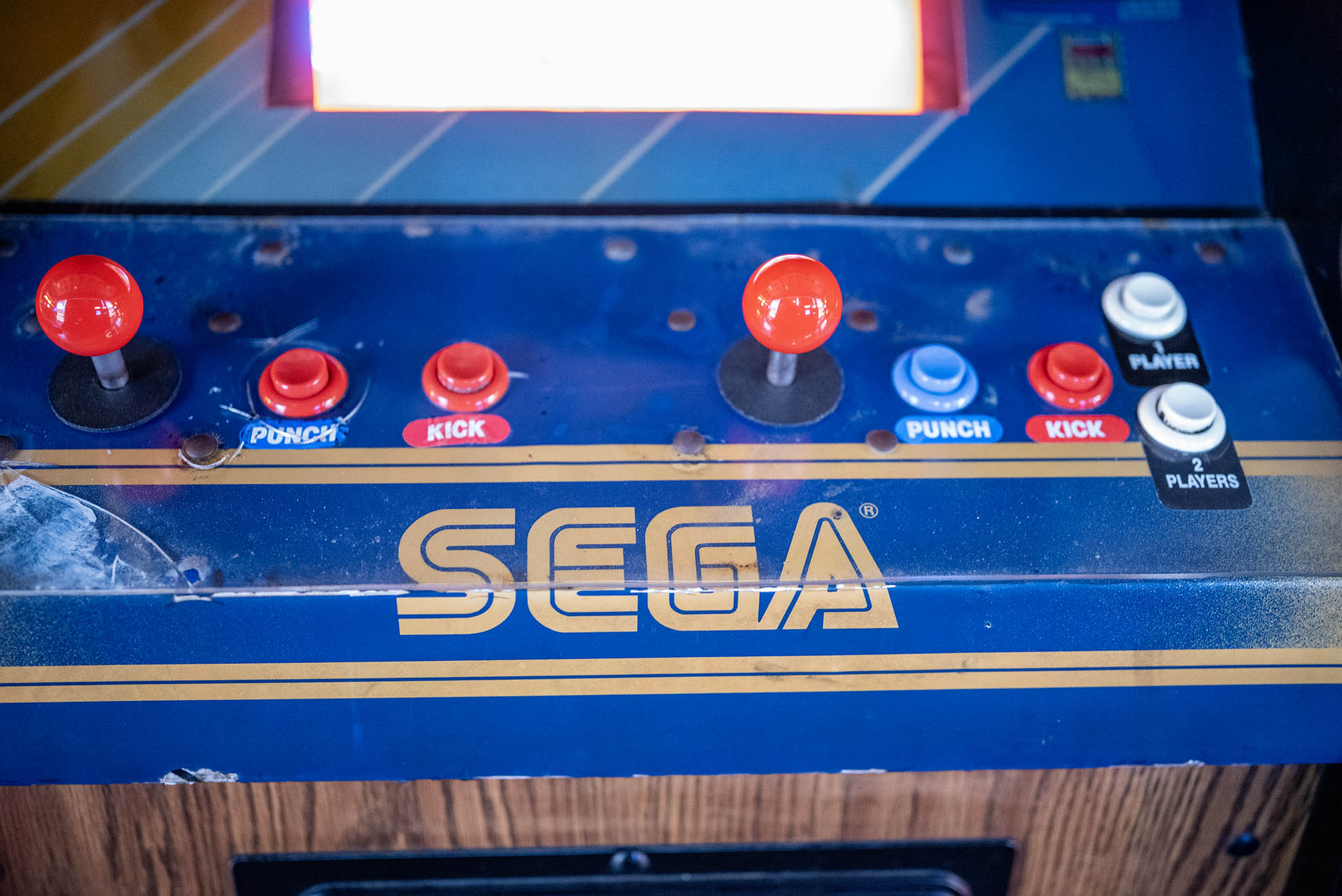
| Controls | 8-way joystick, 2 buttons |
| Players | 1-2 (alternating) |
The System 16B represented a significant step forward from earlier Sega arcade boards. Its Motorola 68000/Zilog Z80 processor combination proved so successful that it influenced subsequent arcade hardware designs. Capcom's legendary CPS-1 and CPS-2 boards (which later powered games leading to Street Fighter 6), SNK's Neo Geo, and even Sega's own Genesis/Mega Drive home console all adopted similar dual-processor architectures.
The platform supported hardware sprite scaling, allowing Wrestle War's large character sprites to move fluidly across the ring while the pseudo-3D camera system rotated perspectives in real-time.
Cabinet and Controls
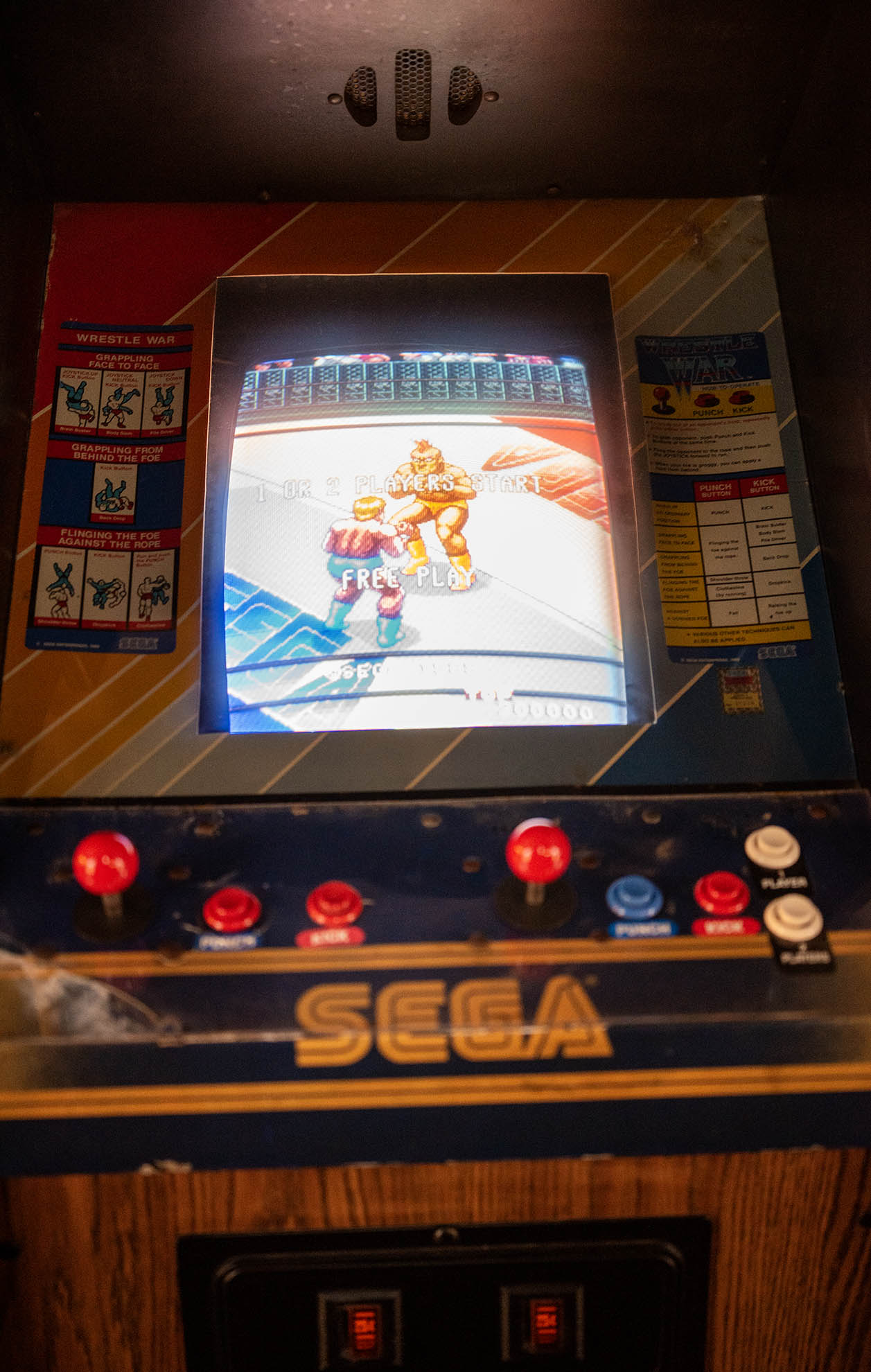
Wrestle War shipped primarily in Sega's standard upright cabinet configuration with vertical monitor orientation. The control scheme prioritized accessibility with an 8-way joystick for movement and positioning, Button A for punch attacks, Button B for kick attacks, and both buttons or joystick combinations to initiate grapples.
The cabinet featured amplified mono sound output, delivering the satisfying impact of slams and the crowd's reactions through a single speaker channel.
According to the International Arcade Museum census, Wrestle War ranks just 9 out of 100 on the popularity scale, making it a genuinely rare find. Of documented machines, only 4 are original dedicated cabinets, 3 are conversions placed in other game cabinets, and 17 exist as circuit boards alone. Collectors seeking a complete Wrestle War cabinet face a significant challenge.
The Pseudo-3D Revolution
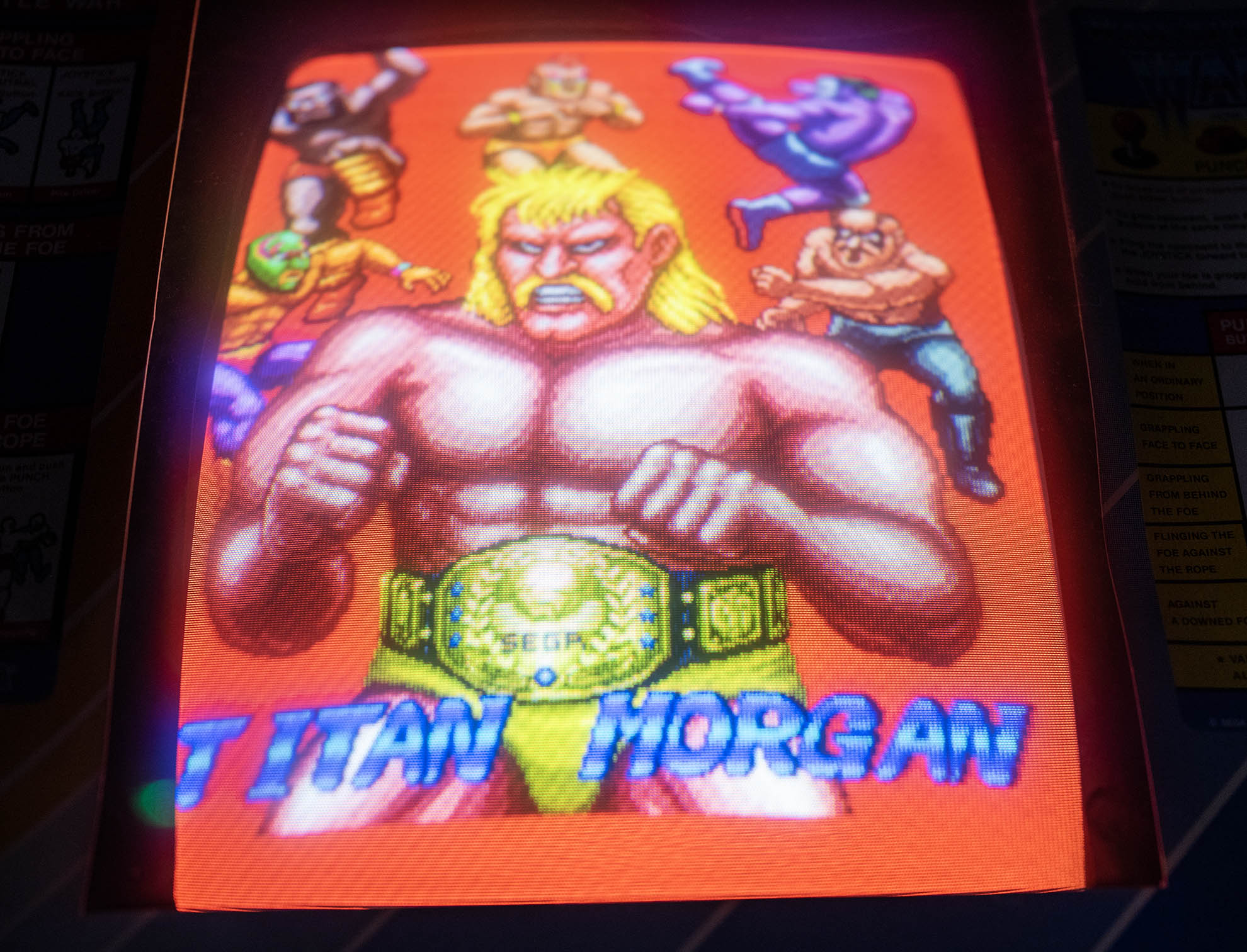
Wrestle War's most technically impressive feature was its innovative ring presentation. Unlike the static side-view wrestling games common at the time, Sega implemented a pseudo-3D system where wrestlers could move along both X and Z axes within the ring.
The camera system dynamically responds to the action. When player movement would obscure the view, such as being pushed to the far side of the ring, the entire perspective instantly rotates 90 degrees, ensuring players always have clear sight lines to the action. This rotating camera was technically ambitious for 1989 and gave Wrestle War a distinctive visual identity.
The SWA Championship Road
Wrestle War casts players as Bruce Blade, a rookie wrestler pursuing greatness in the fictional Sega Wrestling Alliance (SWA) and Sega Wrestling Federation (SWF). The single-player campaign sends Bruce on a championship tour across the United States, challenging territory champions in each region.
Bruce must defeat eight opponents to claim unified championship status. The first six opponents must be conquered to capture both the SWF and SWA World Heavyweight Championship belts. Successfully defending these titles unlocks two hidden boss characters for the ultimate challenge.
The game's tagline, "最強めざして、燃やせ闘魂!" (Aim for the strongest, ignite your fighting spirit!), captured the underdog energy of Bruce's championship pursuit.
The Roster: Wrestling Icons in Disguise
Wrestle War's character roster reads like a "who's who" of late-1980s professional wrestling, with each competitor clearly modeled after real icons while using fictional names for legal protection.
Bruce Blade serves as the player character, inspired by Antonio Inoki and Bob Backlund. A technically-proficient rookie whose moveset emphasizes Japanese strong style fundamentals with finishing moves including the Super Piledriver and German Suplex.
Titan Morgan is the SWA Champion and the game's most blatant homage to Hulk Hogan, complete with blond hair and iconic posturing. His signature Leg Drop made his inspiration unmistakable.
Sledge Hammer holds the SWF Championship as a wild brawler channeling Bruiser Brody's legendary intensity from San Francisco.
Don Dambuster and Mohawk Kid wear spiked shoulder pads and face paint that pay tribute to the Road Warriors/Legion of Doom.
Mr. J. is the hockey mask-wearing monster character inspired by Jason the Terrible from Calgary wrestling.
Nim Rod Falcon provides the high-flying lucha libre tribute to the legendary Mil Mascaras.
Buckskin Rogers appears as a hidden boss, the stiff-hitting tribute to Stan Hansen, the Texas brawler made legendary in Japan.
Grand Kong serves as the final boss, inspired by Abdullah the Butcher, the Sudanese madman and hardcore legend.
Grappling Mechanics
Wrestle War employs a button-mashing grapple system that was common in arcade wrestling games of the era. The combat flow follows a straightforward pattern starting with wearing down opponents using punches and kicks to deplete their stamina. When close, pressing both buttons locks up with your opponent to initiate grapples. Players then rapidly tap buttons to fill their power gauge faster than the opponent in the power struggle phase. Winning the tug-of-war allows executing a technique.
The available moves scale with your opponent's remaining health. Against a fresh opponent, you'll execute basic slams and holds. As their health depletes, increasingly devastating moves become available, culminating in finishers like the Super Piledriver when opponents are nearly defeated.
Additional options include running attacks, ground attacks on downed opponents, turnbuckle moves near ring corners, and outside-the-ring brawling with weapons.
The Cover Art Controversy
The original Japanese Mega Drive release featured cover art that pushed legal boundaries to their absolute limit. The illustration depicted a muscular wrestler wearing a bandana clearly reading "HOGAN," leaving zero ambiguity about the intended reference.
For international releases, Sega's art department performed hasty modifications. The Western cover replaced the Hogan lookalike with a generic black-haired wrestler, ironically making the cover character more closely resemble the player-controlled Bruce Blade rather than final boss Titan Morgan.
This cover modification couldn't disguise the in-game sprites, which retained their original designs. The legal exposure was simply too great for North American distribution, and the Genesis version never released in the United States.
Critical Reception
Contemporary reviews of Wrestle War were decidedly mixed, with opinions often polarized between praise for ambition and criticism of execution.
Positive assessments described the game as "short, simple, and amazingly addictive" with Obscure Video Games giving it a Grade of B+. Reviewers noted "the size of the wrestlers on screen is awesome" and "hitting the small selection of moves is incredibly satisfying." The sprites were called "nice and chunky, far more detailed than the Acclaim WWF games."
Negative assessments were harsh, with Mega magazine scoring it just 38%. Critics cited "some of the absolute worst controls imaginable" with characters that "move so stiffly and awkwardly that it's almost like you're fighting against the controller." The MobyGames aggregated critics score sits at 55% alongside a user score of 5.9 out of 10.
Home Conversions and Re-releases
The Sega Mega Drive port arrived in 1991 in Japan, Australia, and Europe, notably excluding North America. The conversion scaled down the arcade visuals while preserving the rotating ring camera system.
The Sega Smash Pack compilation for Dreamcast in 2001 included the Mega Drive version, though emulation quality reportedly suffered.
The Sega Astro City Mini V in 2022 finally gave the original arcade version a proper re-release in Sega's vertically-oriented mini console on July 28, 2022. This marks the first widely accessible way to experience the authentic arcade version since 1989.
Legacy in Wrestling Game History
Wrestle War occupies a curious position in wrestling game history. Released the same year as Taito's Champion Wrestler and Technos Japan's WWF Superstars, it represented Sega's second major wrestling effort.
The game's influence can be traced through several innovations: the pseudo-3D rotating ring camera predated similar systems in later 3D wrestling games, eight distinct wrestlers with unique movesets set a template for roster variety, and the championship tour concept would evolve into modern career modes.
Sega's willingness to create unlicensed wrestlers based on real icons, while legally risky, resulted in a more authentic wrestling feel than many licensed games that couldn't capture real wrestlers' distinctive styles.
Finding the Ring Today
For collectors, Wrestle War presents a genuine challenge. The cabinet's rarity with only 4 known dedicated units documented makes acquiring one a significant achievement. The Sega Astro City Mini V provides the most accessible legal option for experiencing the original arcade version.
Wrestle War represents Sega at their most audacious, a company confident enough to create obvious tributes to wrestling's biggest stars without securing a single license. Its 2022 inclusion in the Astro City Mini V finally brought the arcade original to modern audiences, joining classics like Super Metroid in receiving modern re-releases, allowing a new generation to experience Bruce Blade's championship journey and discover why Titan Morgan's leg drop looked so suspiciously familiar.
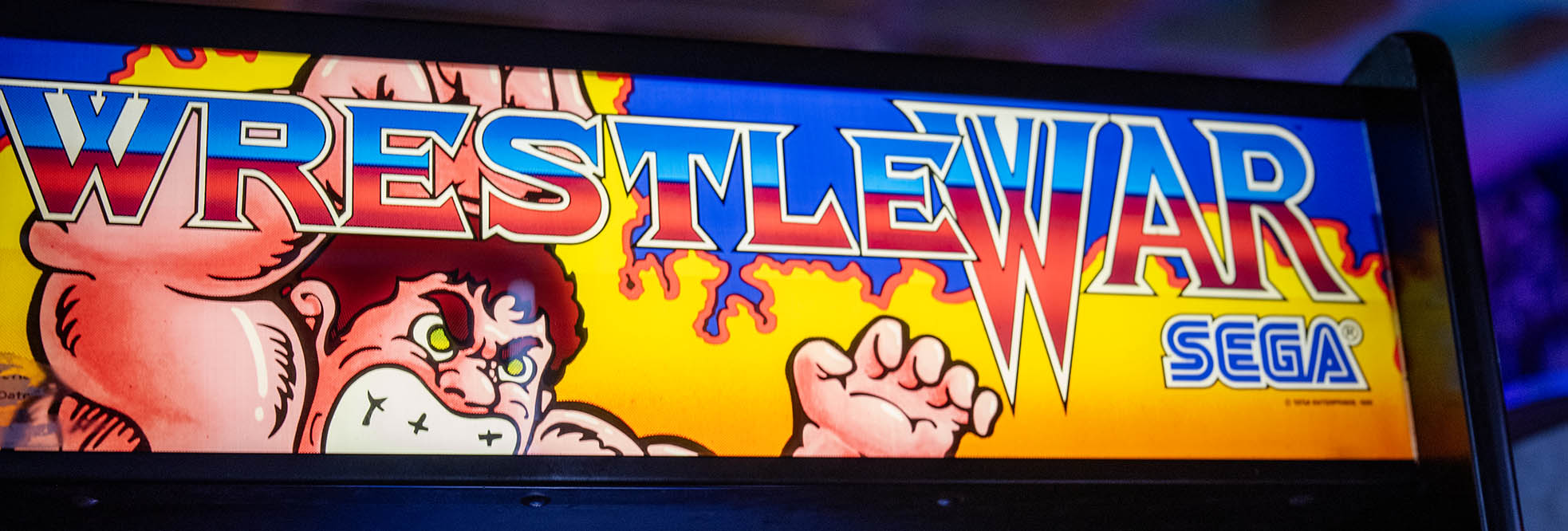
All arcade cabinet photos taken by the author at The Pixel Bunker.
Game Information
| Title | Wrestle War |
| Developer | Sega |
| Publisher | Sega |
| Release | February 1989 (Japan) |
| Platform | Arcade (Sega System 16B) |
| Genre | Sports / Wrestling (see also: BlazBlue) |
| Players | 1-2 (alternating) |
| Main CPU | Motorola 68000 @ 10 MHz |
| Sound | Yamaha YM2151, NEC uPD7759 |
| Display | Vertical raster, color |
| Controls | 8-way joystick, 2 buttons |
| Cabinet Rarity | 9/100 (Very Rare) |
| Home Ports | Mega Drive (1991 - Japan/Europe/Australia) |
| Re-releases | Sega Astro City Mini V (2022) |
Get Gaming News and Features First
Stay updated with the latest gaming news and exclusive content.