Willow: Capcom's Forgotten Fantasy Masterpiece (1989)
Discover Capcom's CPS-1 arcade adaptation of George Lucas' fantasy film - Yoshiki Okamoto's final directed game, trapped in licensing limbo since 1989.
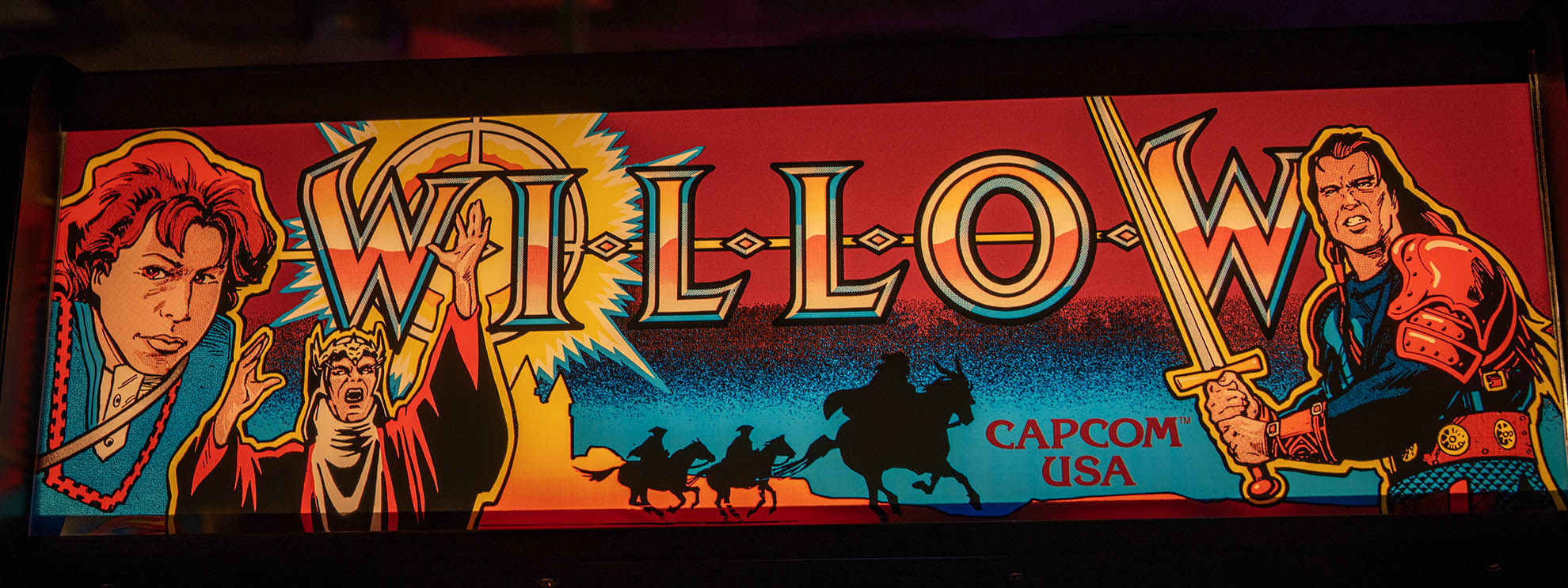
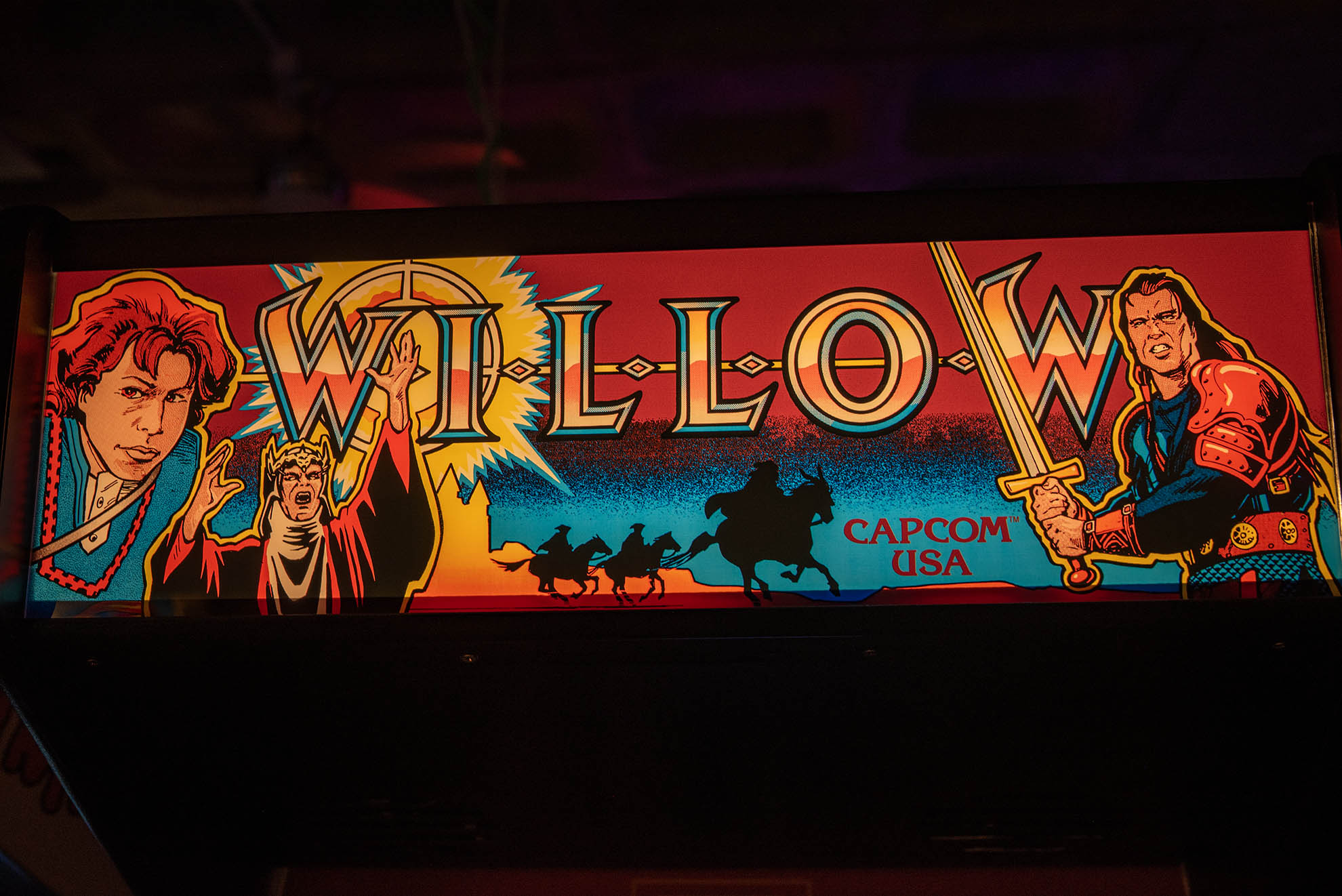
In June 1989, Capcom released one of its most ambitious licensed arcade games: a side-scrolling action platformer based on Ron Howard's fantasy film Willow. Developed during Capcom's legendary "golden era" alongside classics like Strider and Ghouls 'n Ghosts, this CPS-1 title represented the company's strategic push into licensed properties while showcasing their technical prowess on their revolutionary new arcade hardware. Today, Willow remains one of Capcom's most elusive and sought-after arcade games, trapped in licensing limbo and unable to receive a modern re-release.
From Silver Screen to Arcade Cabinet
The 1988 fantasy film Willow emerged from the creative minds of George Lucas and director Ron Howard. Lucas had conceived the story, originally titled "Munchkins," as early as 1972, envisioning a fantasy epic that would place a "little person" in a heroic leading role. "A lot of my movies are about a little guy against the system," Lucas explained, "and this was just a more literal interpretation of that idea."
The film starred Warwick Davis as Willow Ufgood, an aspiring Nelwyn sorcerer thrust into an adventure to protect the infant Elora Danan from the tyrannical Queen Bavmorda. Val Kilmer co-starred as Madmartigan, the self-proclaimed "greatest swordsman in the world," a roguish mercenary who joins Willow's quest. The film featured groundbreaking visual effects by Industrial Light & Magic, including the pioneering digital morphing sequence where Fin Raziel transforms through multiple animal forms. The MORF tool developed by Douglas Smythe for this sequence would later define Terminator 2: Judgment Day and win an Oscar for Death Becomes Her.
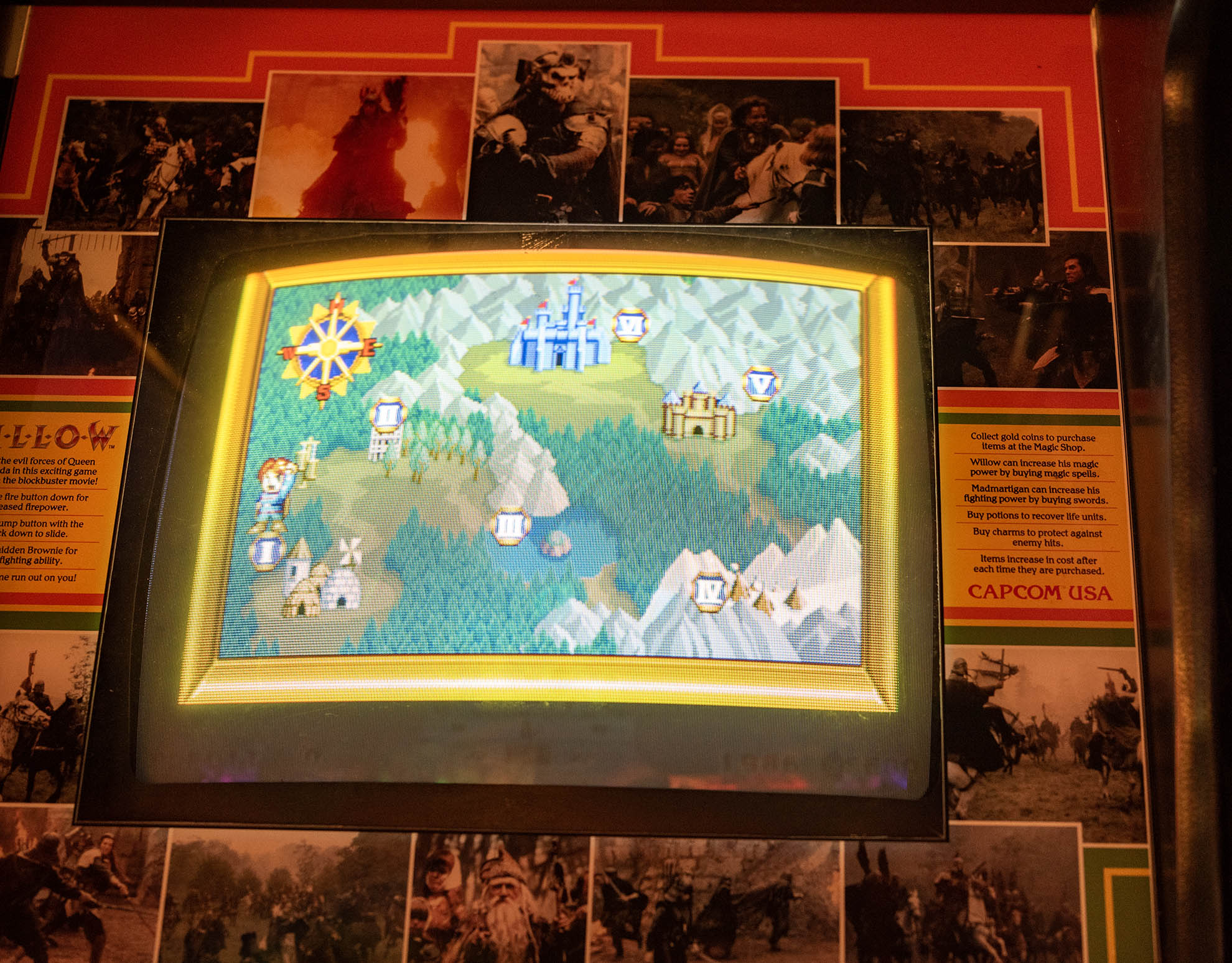
Despite earning $137.6 million worldwide ($57.3M domestic + $80.3M international), Willow received mixed critical reception. However, its fantasy setting and memorable characters made it an ideal candidate for video game adaptation. Capcom secured the Lucasfilm license and made the unusual decision to develop two completely different games: an action-RPG for the NES in the vein of The Legend of Zelda, and a side-scrolling platformer for arcades.
The Final Game Directed by Yoshiki Okamoto
The arcade version of Willow holds a unique place in Capcom history as it was the last game personally directed by the legendary Yoshiki Okamoto before he transitioned to a producer role. Okamoto, who had previously directed landmark titles including 1942, SonSon, and Side Arms, saw licensed games as a strategic opportunity for Capcom.
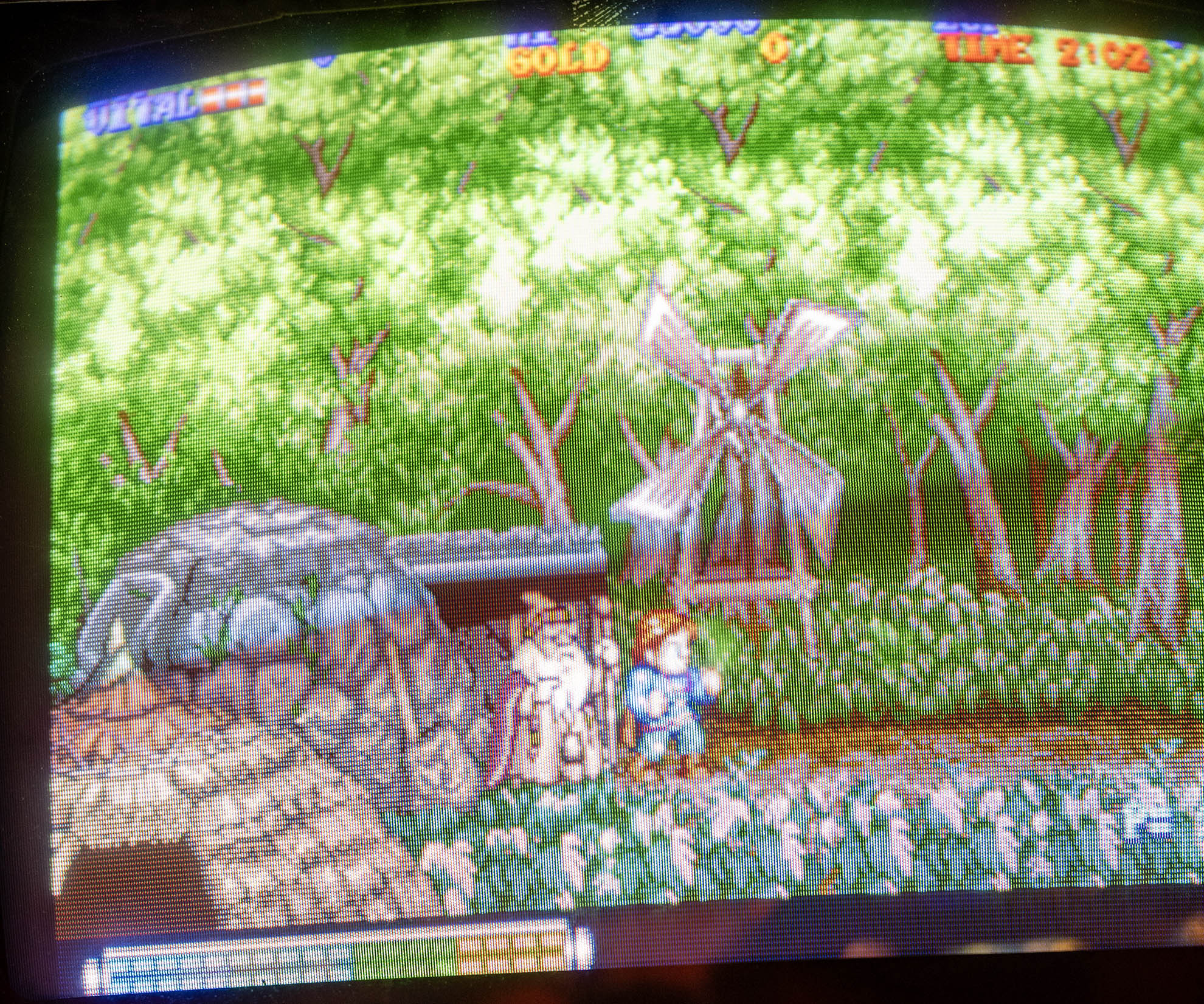
"If you see Willow's face you'll think 'oh, it's Willow, from that movie! How cute!'" Okamoto explained in a 1989 interview. He believed that established characters from other media could help Capcom reach a wider audience, as their original characters "could be too niche." This philosophy drove Capcom's acquisition of licenses for properties like Area 88 and Destiny of an Emperor during the same period.
The development team included programmer Yukio Arai (credited as "Professor Arai"), planners Kawanorider and Deru-Deru Itoh, and a talented art team featuring multiple character designers. The music was composed by Takashi Tateishi, better known by his alias "Ogeretsu Kun," who had recently created the iconic soundtrack for Mega Man 2. Tateishi received advance screenings of the film to ensure his compositions matched the movie's fantasy atmosphere.
Running on Revolutionary Hardware
Willow was the fifth game released for Capcom's CP System (CPS-1), their revolutionary arcade hardware that debuted in 1988. The system represented a massive investment. Capcom spent approximately $9.8 million (equivalent to $26 million in 2024) developing two custom microchips that delivered the power of ten conventional arcade boards.
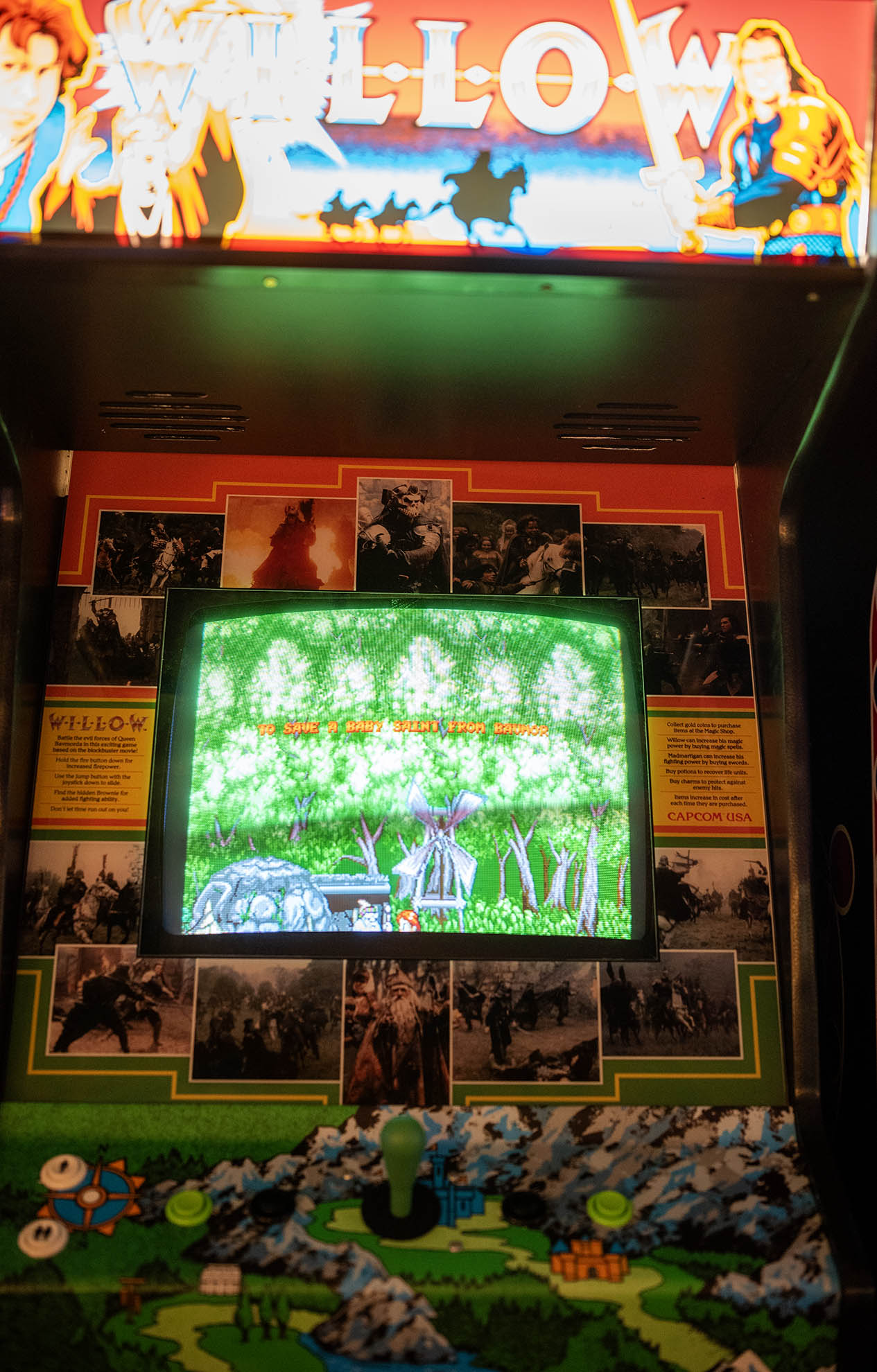
The CPS-1's technical specifications were impressive for 1989. The system ran on a Motorola 68000 CPU at 10 MHz paired with a Zilog Z80 sound processor. It could display 384x224 resolution with 4,096 simultaneous colors drawn from a palette of 65,536, while handling 256 sprites simultaneously with multiple sizes and flip capabilities. Audio came from a Yamaha YM2151 FM synthesizer combined with an OKI MSM6295 ADPCM chip.
"The CP System is an extremely important business strategy to Capcom: we've gambled everything on it," Okamoto stated. The gamble paid off, and Willow demonstrated the hardware's capabilities while helping establish Capcom's dominance in arcades during the late 1980s and early 1990s. The CPS-1 would become the foundation for some of the greatest arcade games ever made, including Street Fighter II.
Two Heroes, Six Stages of Fantasy Action
Unlike many platformers of the era, Willow featured a dual-protagonist system that alternated between characters based on the story's demands. Players control Willow Ufgood in stages one and three, Madmartigan in stages two and four, and can choose either character in stage five. The final stage features both characters in sequence, with Madmartigan battling through the initial sections before Willow faces the climactic confrontation with Queen Bavmorda.
The two protagonists offer distinctly different gameplay experiences. Willow attacks with magical projectiles that can be upgraded through six increasingly powerful spells: Moonlight fires a crescent beam that splits upon impact, Tornado launches an angled magical blast, Gold destroys all on-screen enemies while doubling coin value, Time freezes enemies and projectiles, Explosive unleashes cascading forward and backward blasts, and Crystal creates a circular defensive barrier that destroys incoming projectiles.
Madmartigan fights with his sword in close combat. While his range is limited compared to Willow's magic, his attacks deal more damage and can deflect enemy projectiles. Both characters can purchase upgrades at shops run by gnome merchants who appear throughout each stage.
The six stages faithfully recreate locations from the film. The journey begins at the Crossroad, culminating in a battle against a giant Death Dog. Cherlindrea's Forest features a frantic wagon chase sequence with Madmartigan fending off Nockmaar soldiers. Fin Raziel's Island introduces treacherous sinking platforms and water crossings. Sorsha's Camp presents an uphill battle through snow, including a dragon encounter and confrontation with Bavmorda's daughter. Tir Asleen Castle is a crumbling fortress where the two-headed Eborsisk dragon awaits. The final stage, Nockmaar Castle, serves as the ultimate gauntlet featuring General Kael and Queen Bavmorda herself.
The Eborsisk: From Film Innovation to Arcade Boss
One of Willow's most memorable encounters is the battle against the Eborsisk, a two-headed dragon that serves as the stage five boss. In the film, this creature was created when Willow's spell accidentally transforms a troll into a massive beast. The name itself is a playful jab at film critics Roger Ebert and Gene Siskel, courtesy of George Lucas. The film's skull-masked villain General Kael was similarly named after critic Pauline Kael, another of Lucas's not-so-subtle jabs at his detractors.
The Eborsisk was designed by Phil Tippett and Randy Dutra at ILM, using discarded monster concepts originally created by Ralph McQuarrie for Return of the Jedi. Director Ron Howard reportedly modeled part of the creature after his brother Clint, who typically appeared in cameo roles in Ron's films but couldn't find a suitable part in Willow.
In the arcade game, the Eborsisk fight takes place on a narrow wooden bridge, forcing players to carefully time their attacks while dodging dual streams of fire breath. The encounter captures the grandeur of the film's creature while presenting a genuine gameplay challenge.
Critical and Commercial Reception
Willow achieved significant success in Japanese arcades. Game Machine magazine's July 15, 1989 issue ranked it as the second most-popular arcade game in Japan, an impressive achievement given the competitive arcade landscape of the era.
In North America, the game was equally well-received. Capcom's VP of Sales and Marketing Bill Cravens praised its performance alongside U.N. Squadron, stating both titles were "major hits" for the CPS-1 platform.
Japanese gaming magazine Gamest recognized Willow in their Third Annual Gamest Awards (1989), where it earned 10th place in the Best Direction category and ranked 21st among the year's hit games. Critics praised the game's graphics, which faithfully recreated the film's characters and settings, though some noted the challenging difficulty that encouraged repeated credit insertion.
Modern retrospectives have highlighted Willow's similarities to Ghosts 'n Goblins, another Capcom classic. As one reviewer noted, the game features "the look and feel of Ghosts 'n Goblins, the overall structure of Strider, the sliding and charging of a Mega Man game, and the shop system from Forgotten Worlds." The difficulty can be punishing, but the tight controls and satisfying combat mechanics reward skilled players.
The Lost Port and Licensing Limbo
A version of Willow was planned for the Capcom Power System Changer, a home console adapter for CPS-1 arcade boards released in 1994. The port was previewed but never released, leaving the arcade original as the only version of this particular game.
The licensing situation became significantly more complicated when Disney acquired Lucasfilm in 2012. Since then, Willow has been conspicuously absent from Capcom's various arcade compilations, including Capcom Arcade Stadium and Capcom Arcade 2nd Stadium. Video game historians attribute this to the complex licensing negotiations that would be required with Disney, the current rights holder.
"There are licence issues with them," acknowledged one industry observer discussing the absence of Willow and similarly licensed titles from modern compilations. While Capcom has demonstrated willingness to pay royalties for Disney properties (as evidenced by their Disney Collection releases), a Willow re-release has yet to materialize.
Collector's Market and Modern Access
Today, original Willow CPS-1 boards command premium prices among collectors. Japanese boards in working condition regularly sell for EUR500-600 or more, while complete cabinets are exceptionally rare. According to the Arcade Museum's census, only 77 machines exist among active collectors: 14 dedicated originals, 10 conversions, and 53 circuit boards.
For modern players, MAME emulation remains the only practical way to experience Willow. The game has never been included in any official Capcom compilation, making it (as one publication noted)"one of the best CPS-1 games you're unlikely to ever play on a Capcom compilation."
A Fantasy Classic Frozen in Time
Willow represents a fascinating intersection of film adaptation, arcade game design, and corporate strategy. Created during Capcom's most creative period, directed by one of the industry's most influential designers, and running on hardware that would define a generation of arcade games, it deserved a legacy beyond licensing complications.
The 2022 Disney+ Willow television series briefly revived interest in the franchise, with Warwick Davis reprising his role as the titular sorcerer. Produced at a cost of $156 million, the show's cancellation after one season and subsequent removal from the streaming platform on May 26, 2023 only underscored the complicated relationship between media companies and their older properties.
For those who experienced Willow in arcades during its original release, the game remains a cherished memory of late-1980s gaming. Its combination of faithful film adaptation, dual-character gameplay, and Capcom's signature action platforming quality created something special: a fantasy adventure that, despite its brief commercial life, left an enduring impression on those who discovered it.
Whether through collecting original hardware or exploring emulation options, Willow deserves rediscovery. It stands as a testament to what licensed games can achieve when talented developers are given the resources and creative freedom to bring beloved properties to interactive life.
Game Information
| Title | Willow |
| Developer | Capcom |
| Publisher | Capcom |
| Release Date | June 1989 (Japan), September 1989 (NA/EU) |
| Platform | CP System (CPS-1) |
| Genre | Side-scrolling action platformer |
| Players | 1-2 (alternating) |
| Controls | 8-way joystick, 2 buttons (Attack/Jump) |
| Display | Horizontal raster, 384x224 resolution |
| Sound | Yamaha YM2151 + OKI MSM6295 |
| Director | Yoshiki Okamoto |
| Music | Takashi Tateishi (Ogeretsu Kun) |
| License | Lucasfilm Ltd. |
Development Credits
| Planning | Kawanorider, Deru-Deru Itoh |
| Programming | Yukio Arai (Professor Arai), Kyoko Tomita (Queen Tomita), Yokoyan, Ueyan |
| Character Design | Frunky Kazu, Yokota Yokozo (Bakuhatsu Yokozo), Terukun, Hiramacho, Kuribow, Puttsun Midori, Sadakichi, Oyuu, Rinma, Okachan |
| Music Compose | Takashi Tateishi (Ogeretu Kun) |
| Hardware Design | Kucchan |
| Director | Yoshiki Okamoto |
Get Gaming News and Features First
Stay updated with the latest gaming news and exclusive content.