Space Invaders: The 1978 Arcade Revolution That Conquered the World
Space Invaders (1978) by Tomohiro Nishikado became the highest-grossing video game ever at $14 billion adjusted. Created arcade golden age and first esports tournament.
The Engineer Who Built a Revolution
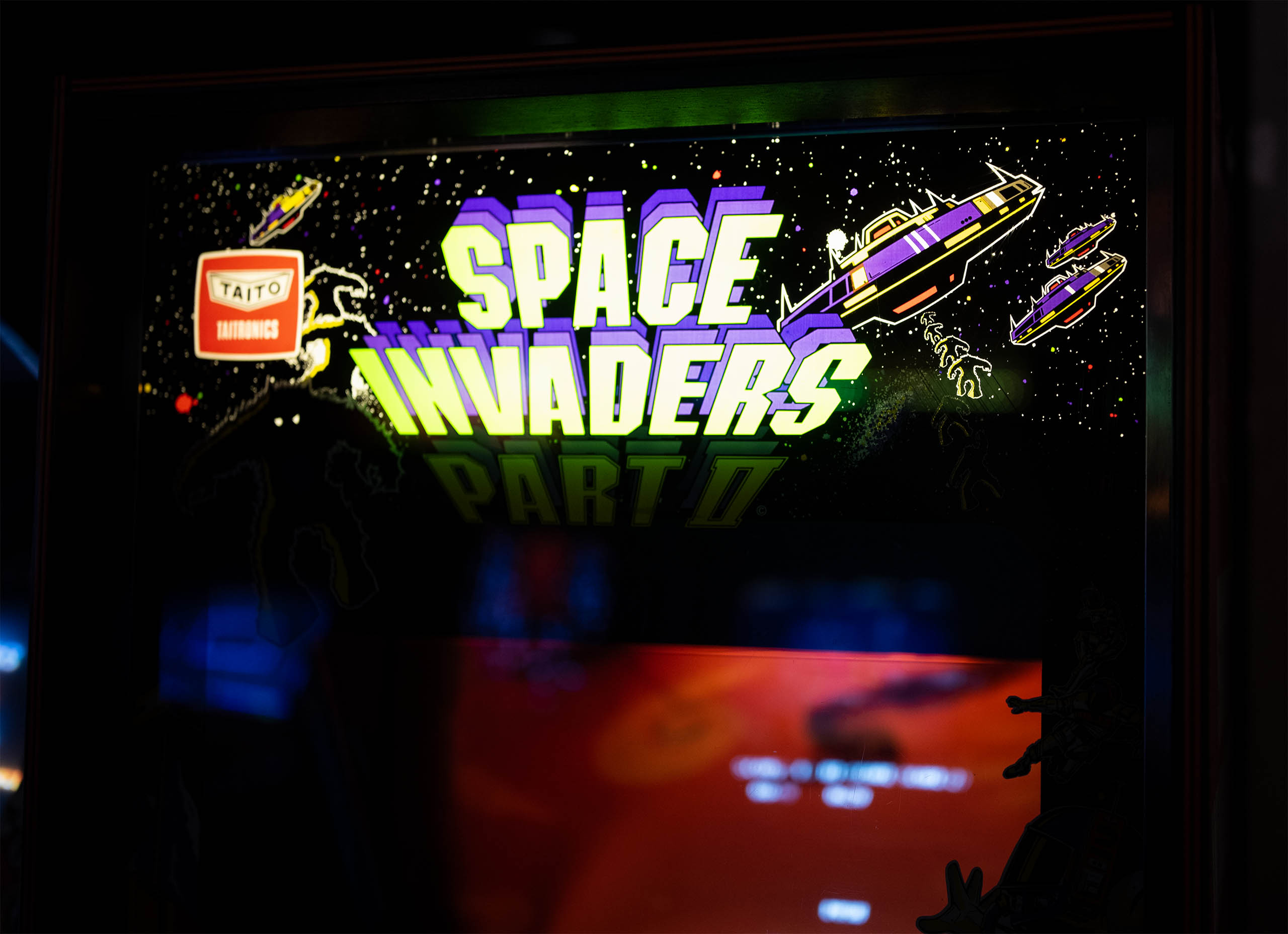
Tomohiro Nishikado wasn't a typical game designer. Born on March 31, 1944, in Osaka Prefecture's Kishiwada City, he developed an early fascination with electronics that led him to study engineering at Tokyo Denki University. After graduating in 1968, a chance encounter with an old colleague at a train station changed the course of gaming history. His friend mentioned that Taito was desperately searching for engineers, and Nishikado decided to join the company.
Before Space Invaders, Nishikado had already proven his talent with electro-mechanical arcade games like Sky Fighter in 1971, the racing game Speed Race in 1974, and Western Gun in 1975. But nothing prepared the industry for what he would accomplish next.
In 1977, Nishikado began developing Space Invaders entirely on his own. This wasn't just game design. He handled the programming, created the pixel art, designed the sound effects, and here's the truly remarkable part: because microcomputers barely existed in Japan at the time, he had to engineer the arcade hardware itself from scratch using an Intel 8080 processor. The man essentially invented an entire gaming platform to bring his vision to life.
Nishikado originally conceived the game with human soldiers as targets, but Taito's management expressed moral concerns about depicting violence against people. Looking for alternatives, he turned to H.G. Wells' classic 1898 novel "The War of the Worlds" for inspiration. The result was a fleet of alien invaders with distinctly aquatic silhouettes that would become some of gaming's most enduring icons.
The Alien Army Explained
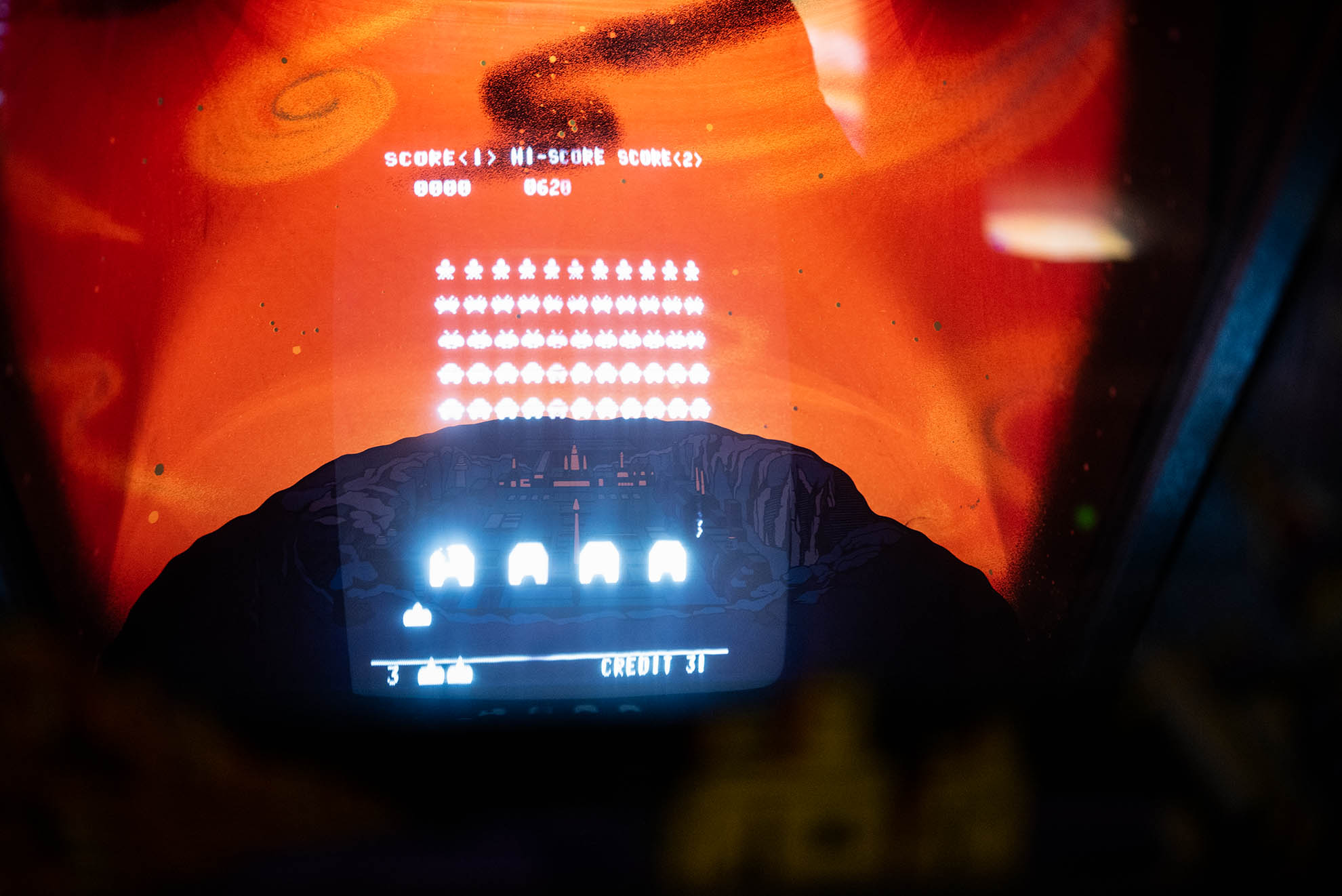
Those pixelated creatures methodically marching across your screen aren't random designs. Nishikado drew each alien type from the ocean, creating a visual language that remains instantly recognizable nearly five decades later:
- The Octopus (bottom two rows) - Worth 10 points each, these eight-legged terrors were Nishikado's original design, directly inspired by the Martian invaders from Wells' novel
- The Crab (middle two rows) Worth 20 points each, this crustacean design became so iconic that Taito eventually adopted it as their corporate mascot
- The Squid (top row) Worth 30 points each, the most valuable regular invaders in the formation
- The Mystery UFO Worth anywhere from 50 to 300 points, this bonus spacecraft appears at random intervals and harbors a secret that competitive players exploited for decades
Here's something most casual players never discovered: the UFO's point value isn't actually random. It cycles through a predetermined sequence based on the number of shots you've fired. By hitting the UFO on your 23rd shot and every 15th shot afterward, you're guaranteed the maximum 300-point bonus every single time. Veterans who mastered this timing held a significant scoring advantage over players who assumed the values were random.
The Accidental Genius of Dynamic Difficulty
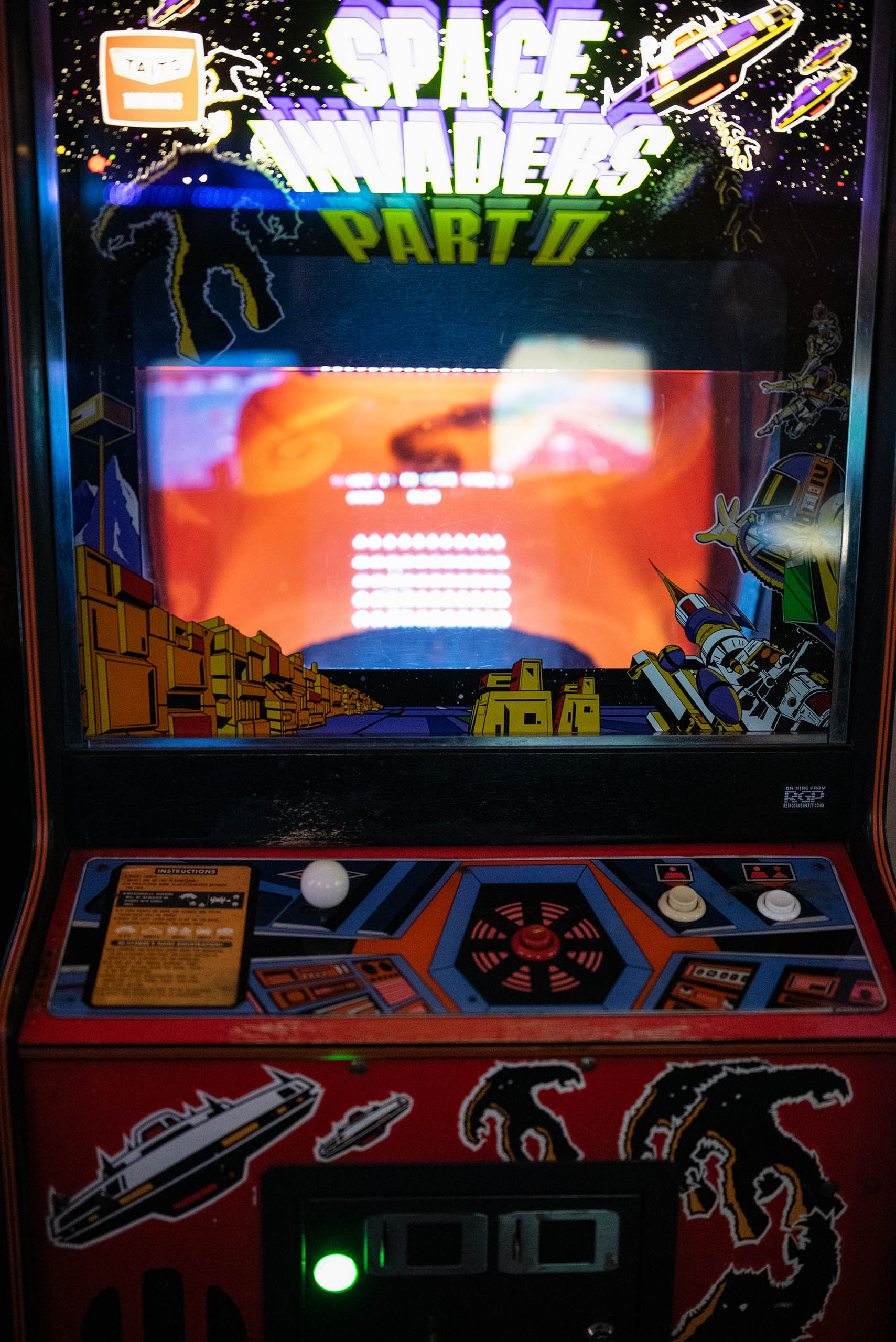
One of Space Invaders' most legendary features emerged from a hardware limitation that Nishikado transformed into brilliant game design. The Intel 8080 processor running at 2MHz simply couldn't render all 55 aliens smoothly when they were all on screen simultaneously. As players eliminated invaders, the CPU had fewer sprites to process, causing the surviving aliens to move progressively faster.
A lesser designer might have tried to compensate for this "bug" by artificially throttling the speed. Nishikado recognized the genius in the accident. He kept the accelerating difficulty as an intentional feature, effectively creating one of gaming's first dynamic difficulty systems. That pulse-pounding climax when the last few invaders are zipping across the screen at breakneck speed, their descent toward Earth accelerating with each pass? That's a hardware constraint transformed into pure gaming adrenaline.
The original cabinet employed clever visual tricks to add color to the monochrome display. Strips of colored cellophane placed over the CRT created the illusion of a multi-colored battlefield: orange for the player's protective bunkers at the bottom, green for the alien horde, and red for the score display at the top. This simple, cost-effective solution gave the game visual personality without requiring expensive color display technology.
The audio was equally innovative. A Texas Instruments SN76477 sound chip generated those iconic sounds: the relentless four-note heartbeat that accelerates as aliens descend, the satisfying zap of your laser cannon, and the ominous explosion when an invader breaks through your defenses. These sounds became so embedded in popular culture that they remain immediately recognizable to anyone who lived through the arcade era.
Numbers That Defy Comprehension
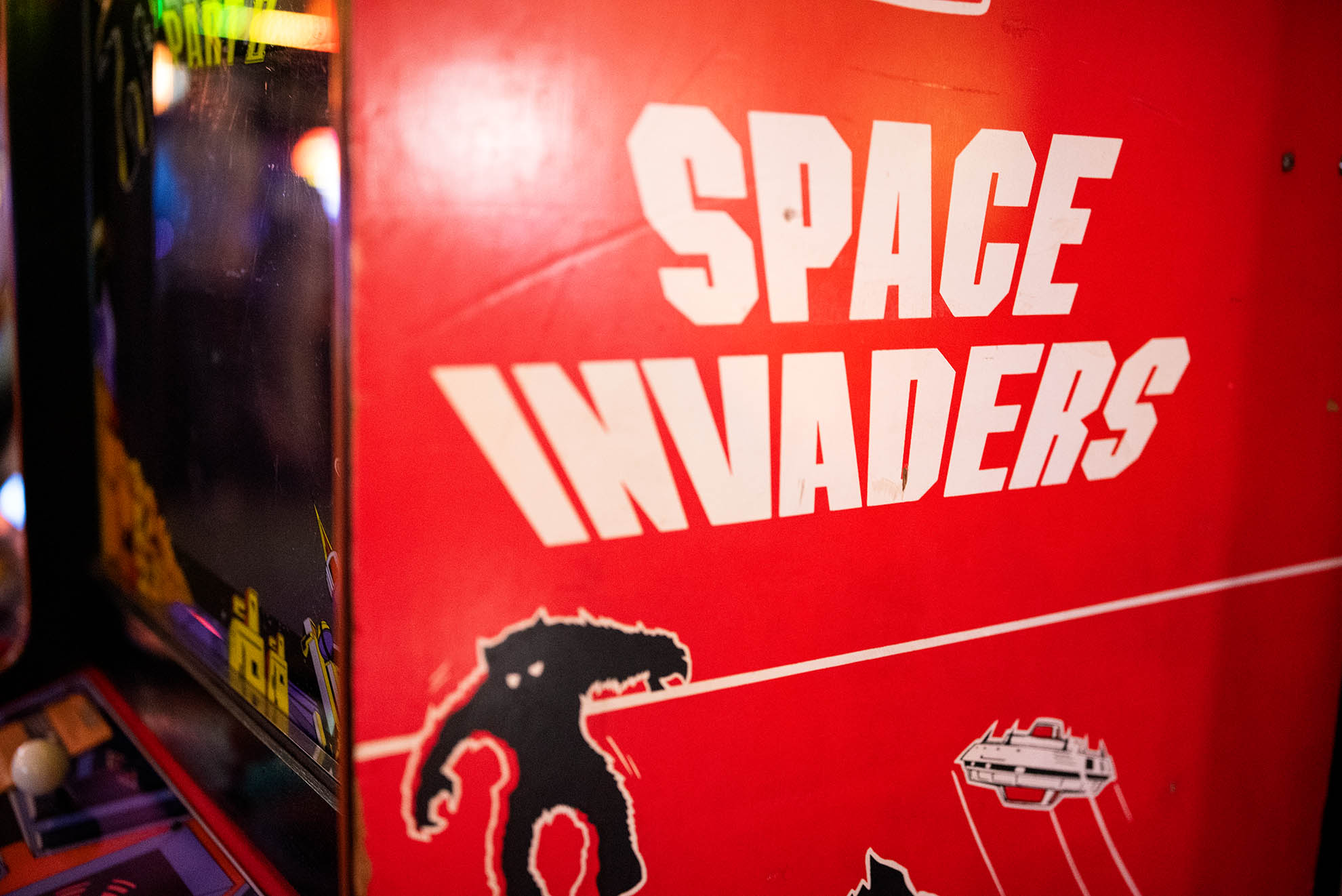
The commercial success of Space Invaders transcends ordinary metrics. By the end of 1978, just months after its summer launch, the game had generated approximately $670 million in Japan alone. At its absolute peak, Japanese arcades were pulling in the equivalent of $12 million every single day from this one game.
By 1982, Taito had shipped over 400,000 arcade cabinets worldwide and accumulated more than $3.8 billion in total revenue. Adjusted for inflation, Space Invaders has earned approximately $14 billion over its entire lifetime, which translates to roughly $30 billion in today's money. This makes it the highest-grossing video game in history when accounting for the changing value of currency over time.
To grasp the magnitude of this achievement, consider that Space Invaders out-earned Star Wars at the box office during this period. It wasn't merely the most successful video game of its era. It became the most successful entertainment product of any kind, outpacing blockbuster films, chart-topping albums, and television phenomena. The game proved that interactive electronic entertainment could compete with, and even surpass, traditional media.
The 100-Yen Coin Shortage: Separating Fact from Legend
You've almost certainly heard the story: Space Invaders was so phenomenally popular in Japan that it caused a nationwide shortage of 100-yen coins, forcing the government to quadruple production. It's a fantastic narrative that perfectly encapsulates the game's cultural dominance. There's just one problem: historians have since determined it's not entirely accurate.
While coin shortages did occur at specific Tokyo arcade locations, the broader monetary situation had more to do with changes in coin composition than gaming addiction. Japan had recently transitioned from silver-content 100-yen coins to copper-nickel versions, and many people were hoarding the older coins for their precious metal value. Additionally, 1978 saw unusually low coin production for unrelated economic reasons.
That said, the myth itself stands as a testament to Space Invaders' cultural impact. The game was so explosively successful that people genuinely believed it could destabilize a nation's currency supply. Even as legend, that speaks volumes about what Nishikado created.
The Birth of Competitive Gaming
In November 1980, Atari organized something unprecedented: the National Space Invaders Championship, the first large-scale video game tournament in history. Regional competitions took place in Los Angeles, San Francisco, Fort Worth, Chicago, and New York City, with four finalists from each region advancing to compete in New York. Over 10,000 players participated across all regions combined, demonstrating that competitive gaming could attract mass participation and serious public interest.
The tournament was won by 16-year-old Rebecca Heineman, who would go on to co-found Interplay Productions and become one of the game industry's most influential developers. This event is widely recognized as a pivotal moment in esports history. While informal gaming competitions had existed before, the Space Invaders Championship established competitive video gaming as a mainstream activity.
The Guinness World Records for Space Invaders reflect decades of dedicated competition. Jon Tannahill holds the official record on the original 1978 arcade version with an astounding 218,870 points. His marathon session lasted nearly four hours and saw the score roll over from 10,000 back to zero twenty-one times. In 2011, Richie Knucklez more than doubled the previous record by posting 110,510 points, demonstrating that mastery of this nearly five-decade-old game still commands respect.
For Space Invaders Part II, the record stands at an incredible 425,230 points, set by Matt Brass in 1982 and never officially surpassed. These scores represent thousands of hours of practice and pattern memorization from players who treated quarter-eating arcade machines as serious competitive venues.
Space Invaders Part II: The Evolution
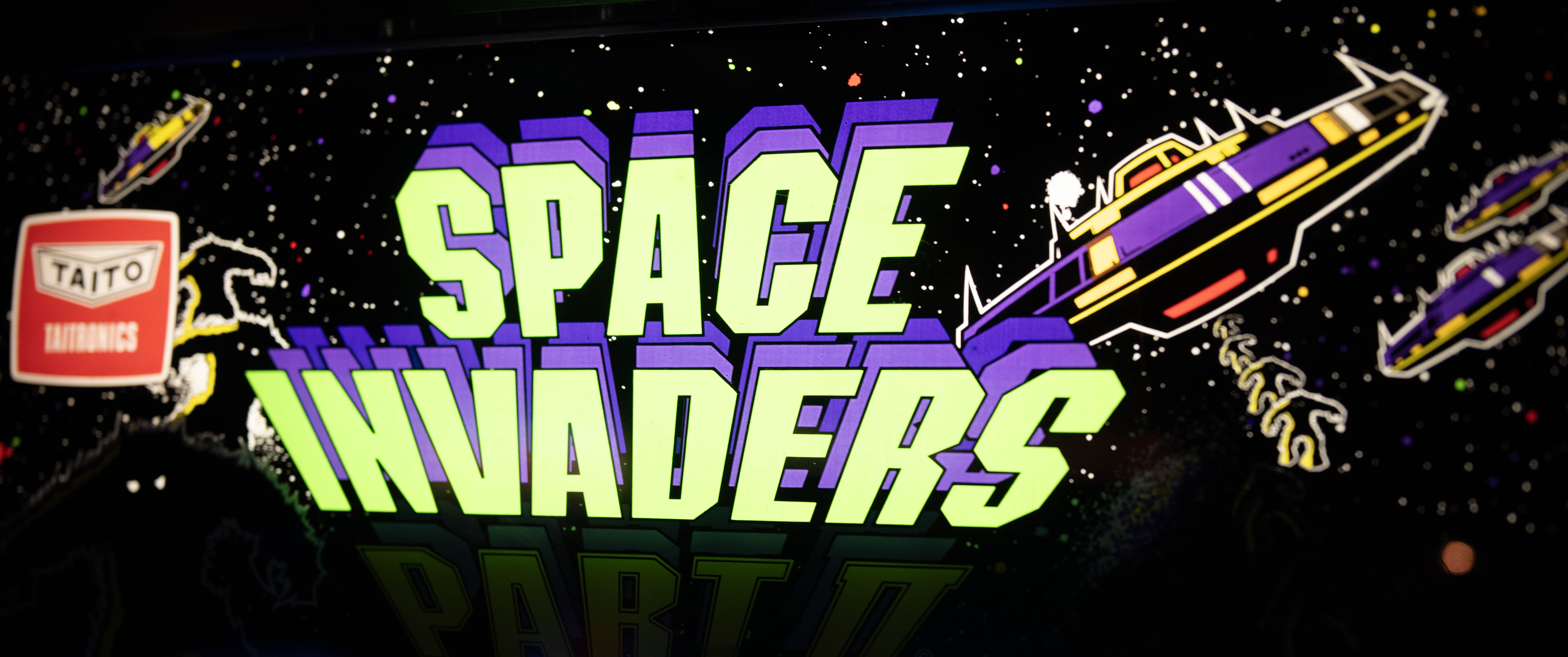
Released in July 1979, Space Invaders Part II represented everything Nishikado wanted to include in the original but couldn't implement due to time constraints. Working with concepts he had conceived during the first game's development, he completed the sequel in just two months.
The improvements were substantial. True color graphics replaced the cellophane overlay system, with different alien types now appearing in distinct colors. New gameplay mechanics kept veterans engaged: some invaders split into two smaller targets when shot, requiring additional shots to eliminate. The UFO gained new abilities, including the power to deploy fresh invaders onto the battlefield after the second stage.
Perhaps most significantly, Part II introduced intermission screens between waves. These short animated sequences gave players a brief respite while adding personality to the experience. These "cutscenes" were among the first in arcade history, establishing a tradition that would become standard in gaming.
The First Killer App for Home Consoles
On March 10, 1980, Atari released its port of Space Invaders for the Atari 2600, marking the first officially licensed arcade-to-home-console conversion in history. Developed by Rick Maurer, the port became more than a successful game. It became the catalyst that transformed home gaming from a niche hobby into a mass-market phenomenon.
The numbers tell the story: Space Invaders quadrupled Atari 2600 sales practically overnight. People who had never considered purchasing a gaming console bought the hardware specifically to play this one game at home. Atari sold 1.25 million Space Invaders cartridges in 1980 alone, and the game eventually moved over 6 million units, making it the second-best-selling Atari 2600 title behind only Pac-Man.
The term "killer app" entered the gaming vocabulary because of Space Invaders. It demonstrated that a single must-have title could drive hardware adoption, a lesson that console manufacturers have applied ever since.
Cultural Revolution Beyond the Arcade
Space Invaders didn't just change gaming. It infiltrated every aspect of popular culture. The Japanese electronic music pioneers Yellow Magic Orchestra sampled the game's distinctive sounds in their 1978 track "Computer Game," which sold over 400,000 copies in the United States alone. The Pretenders released the instrumental "Space Invader" in 1980, written by Pete Farndon and James Honeyman-Scott. The game's audio DNA spread into hip-hop when Afrika Bambaataa sampled YMO's "Firecracker" in his 1983 Death Mix, helping bridge electronic and hip-hop music.
Historians mark Space Invaders as the spark that ignited the Golden Age of Arcade Games. Before its release, video arcades were niche establishments catering to specific demographics. After Space Invaders, they became cultural institutions. The number of dedicated video game arcades in North America doubled between 1980 and 1982, reaching a peak of approximately 10,000 locations.
But arcades weren't the only places you'd encounter the game. Space Invaders' success pushed arcade cabinets into restaurants, hotel lobbies, airports, gas stations, and convenience stores. Video games transitioned from curiosity to ubiquity in a remarkably short time.
Recognition as Art
In a testament to its cultural significance, Space Invaders now resides in the permanent collection of the Museum of Modern Art in New York. MoMA announced its video game collection initiative in November 2012, with fourteen foundational titles chosen to showcase interactive design as an art form. Space Invaders was formally acquired in 2013.
According to MoMA curator Paola Antonelli, these games represent "interaction design" worthy of study alongside painting and sculpture. Space Invaders' inclusion alongside works by Picasso and Warhol confirms what arcade enthusiasts have always known: Nishikado created something transcendent.
Why Space Invaders Still Matters
Nearly five decades after its debut, Space Invaders remains instantly recognizable across generations. That marching alien formation, that accelerating four-note heartbeat of a soundtrack, that desperate final stand against the last speeding invader: these elements have been imitated countless times but never truly replicated.
For those of us who remember pumping quarters into these machines in dimly lit arcades, the sound of aliens descending triggers something primal. It wasn't just a game. It was the moment we collectively realized that video games could be something more than electronic diversions. They could capture imaginations, create communities, inspire art, and yes, generate legends about destabilizing national currencies.
Tomohiro Nishikado built more than an arcade cabinet in 1978. Working alone, he engineered the hardware, designed the software, created the art, and composed the audio for what would become the highest-grossing video game in history. He created the foundation of an industry now worth hundreds of billions of dollars annually.
Every alien shooter, every wave-based defense game, every indie pixel art tribute owes something to those 55 descending invaders. Space Invaders didn't just start the Golden Age of Arcades. It proved that video games could conquer the world.
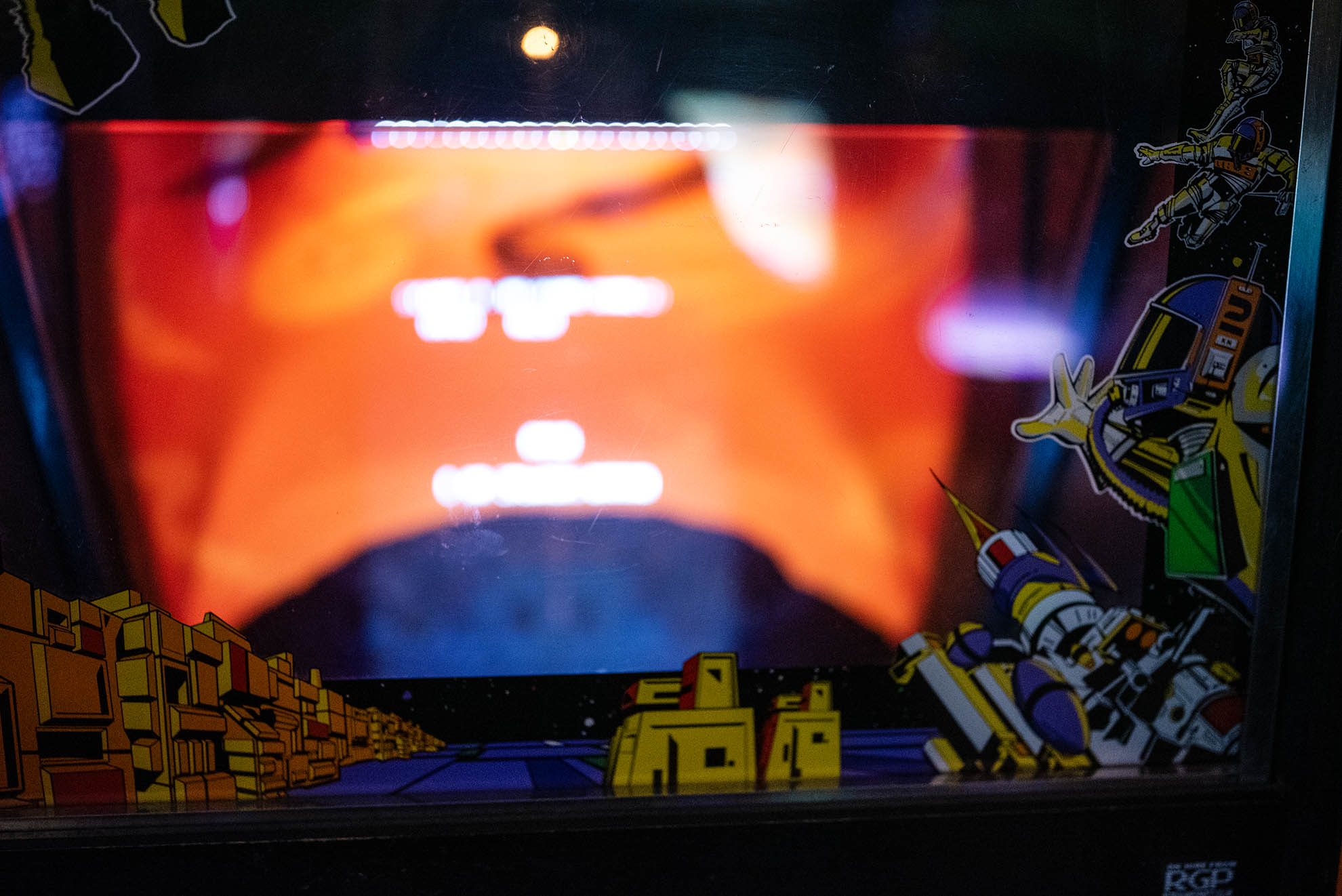
All arcade cabinet photos taken by the author at The Pixel Bunker.
For more arcade history, see Donkey Kong and Street Fighter II.\n\nIf you walked into a Japanese arcade in the summer of 1978, you would have witnessed something unprecedented. Lines stretching out the door. Players feeding 100-yen coins into machines like their lives depended on it. Dedicated "Space Invaders Houses" popping up across Tokyo with nothing but rows upon rows of identical cabinets. This wasn't just another video game release. This was the moment that transformed electronic entertainment from a novelty into a cultural force that would reshape the world.
Game Information
| Title | Space Invaders |
| JP Title | スペースインベーダー |
| Developer | Taito Corporation |
| Designer | Tomohiro Nishikado |
| Release Date | June 1978 (perhaps April 1978) |
| Platform | Arcade (Taito 8080) |
| Genre | Fixed Shooter |
| CPU | Intel 8080 @ 2MHz |
| Display | 256×224 mono + overlay |
| Cabinet Types | Upright, Cocktail |
Gallery
Get Gaming News and Features First
Stay updated with the latest gaming news and exclusive content.