Virtua Striker: How SEGA Invented the 3D Soccer Game
In 1995, SEGA AM2 unleashed Virtua Striker on Model 2 hardware, creating the world's first 3D soccer game and changing football gaming forever.
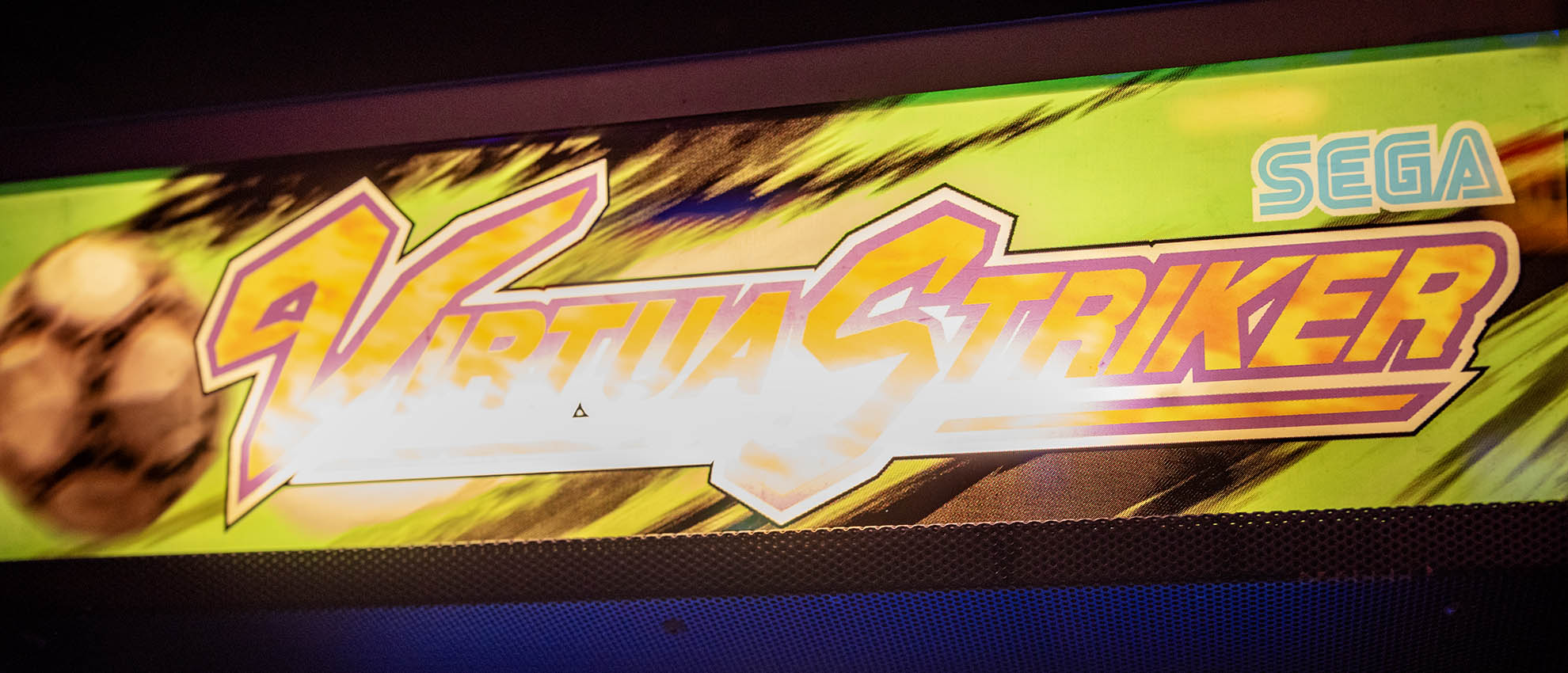
In the spring of 1995, SEGA unleashed something the arcade world had never seen before: a fully three-dimensional soccer game that would forever change how the sport was represented in video games. Virtua Striker wasn't just another addition to SEGA's growing "Virtua" brand, it was a technological breakthrough that arrived at precisely the right cultural moment, capturing the hearts of Japanese gamers riding an unprecedented soccer wave.
The Birth of 3D Football
The genesis of Virtua Striker traces back to Yu Suzuki, the legendary SEGA AM2 director responsible for arcade classics like Space Harrier, After Burner, and OutRun. Suzuki approached Satoshi Mifune, a colleague he had worked with on those earlier titles and someone he knew to be a passionate football fan. The idea was ambitious: create the world's first soccer game using the same 3D polygon technology that was revolutionizing SEGA's arcade lineup.
Development began in 1994 under AM2's guidance, with Mifune taking the role of planner and eventually producer. The team utilized SEGA's Model 2B hardware, the same cutting-edge architecture powering Virtua Fighter 2, to bring their vision to life.
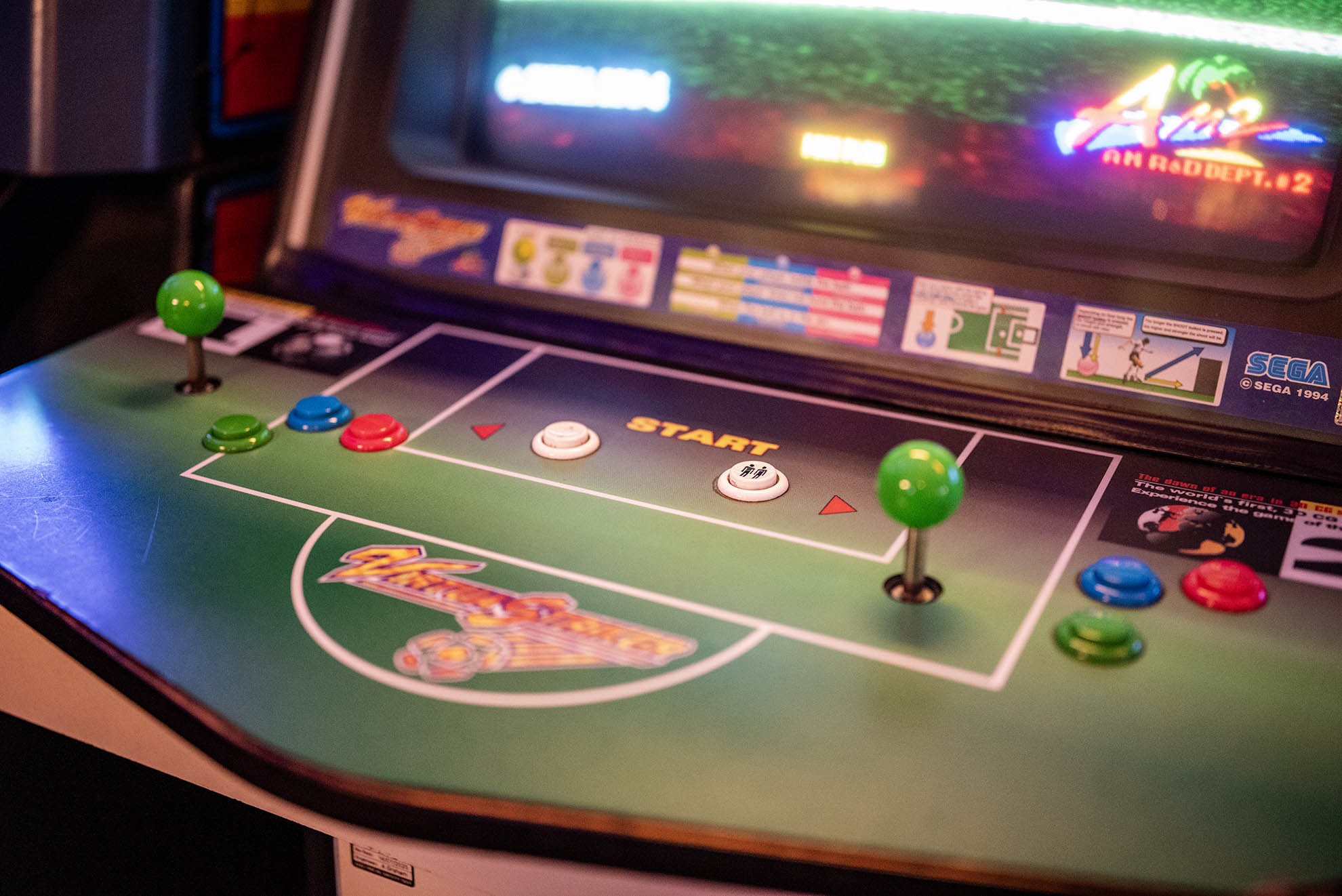
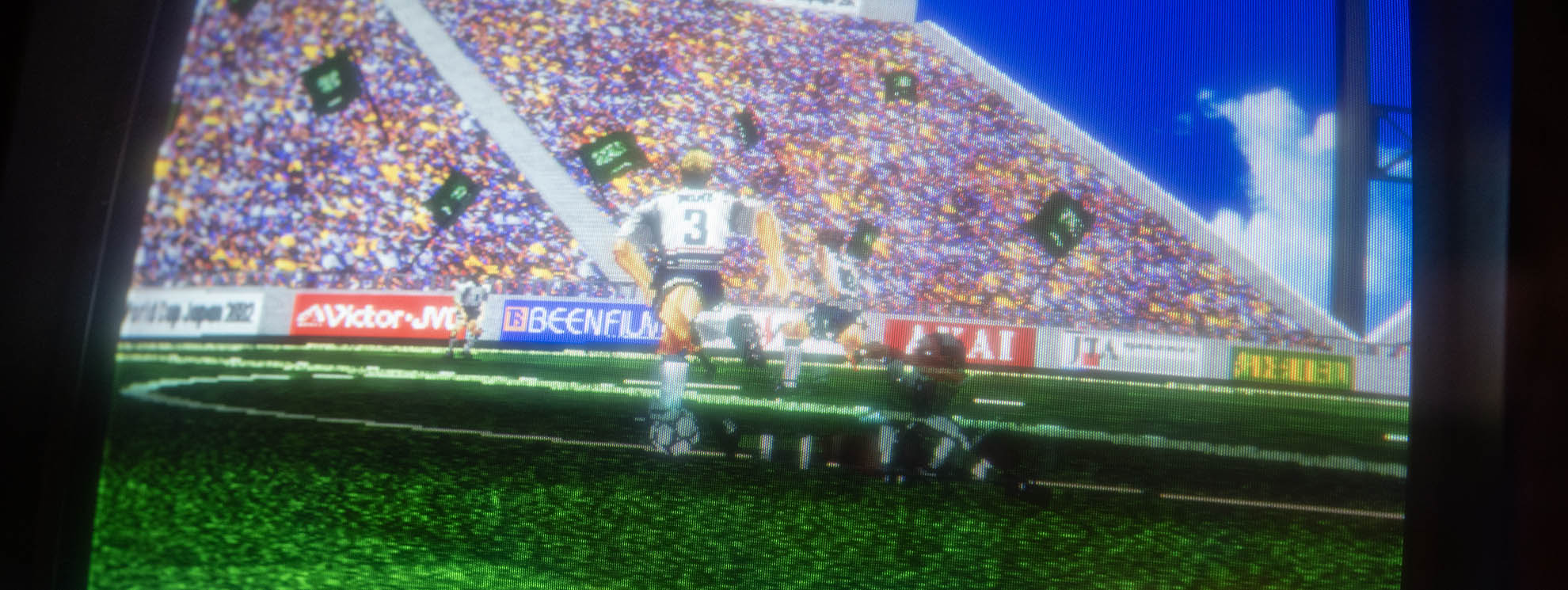
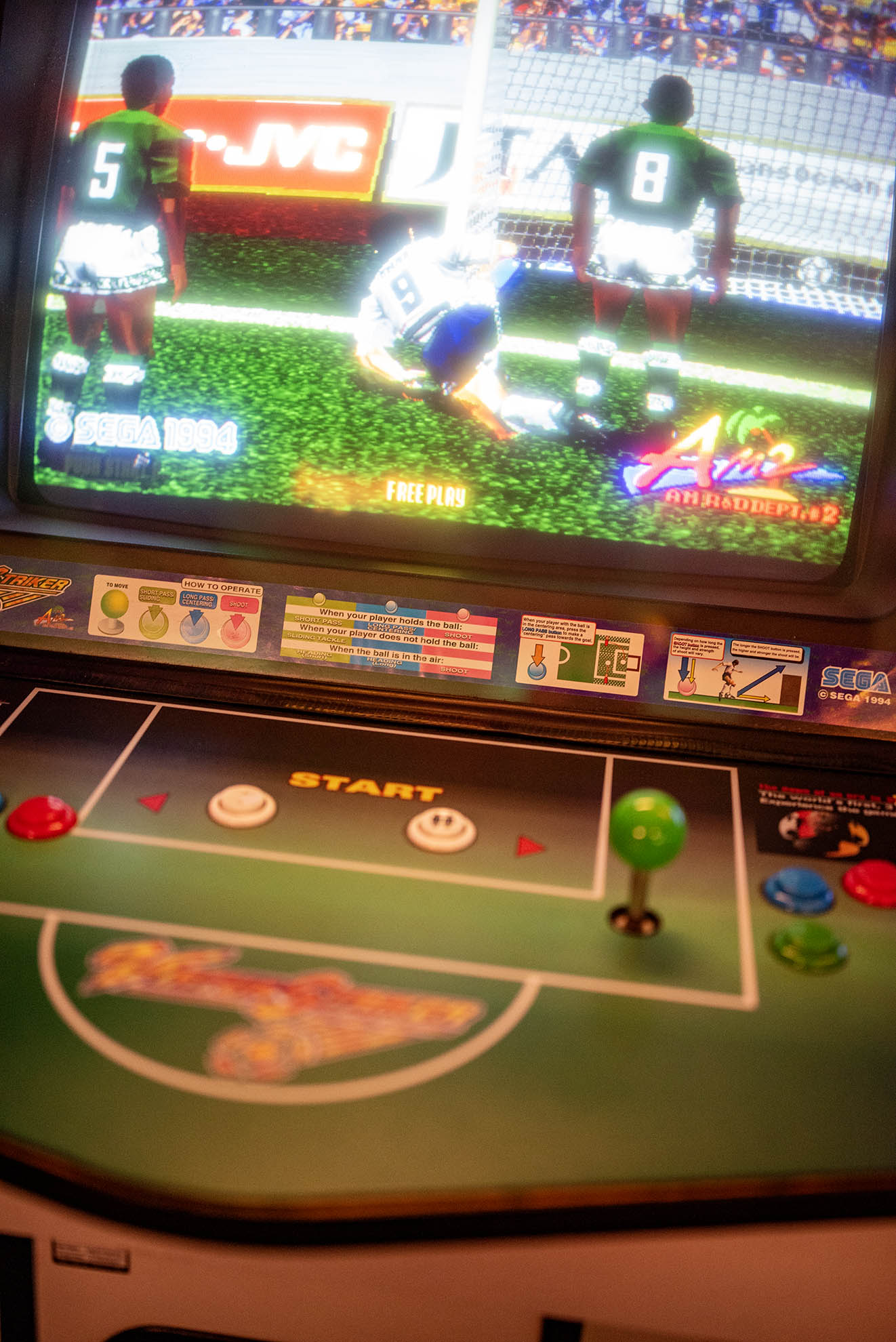
SEGA marketed the game with a bold claim: "The first three-dimensional computer graphic soccer game." This wasn't mere advertising hyperbole. Virtua Striker genuinely pioneered 3D graphics in football gaming, also becoming one of the first sports games to feature texture mapping.
Perfect Timing: Japan's Soccer Fever
Virtua Striker's May 1995 arcade release couldn't have been more perfectly timed. Japan was in the grip of unprecedented soccer mania. The professional J.League had launched in May 1993, instantly becoming a cultural phenomenon. Average attendance at matches hit 17,976 in the inaugural season, rising to nearly 20,000 the following year.
But it was heartbreak that truly galvanized the nation's passion. On October 28, 1993, Japan faced Iraq in Doha, Qatar for World Cup qualification. Leading 2-1 in stoppage time, Japan was moments away from their first-ever World Cup qualification. Then disaster struck. Iraq scored an equalizing goal. The Japanese call it "Doha no Higeki" (ドーハの悲劇), the "Agony of Doha."
This national trauma, combined with J.League fever and the spectacle of the 1994 World Cup in America, created an insatiable appetite for soccer entertainment in Japan.
The Model 2B-CRX Powerhouse
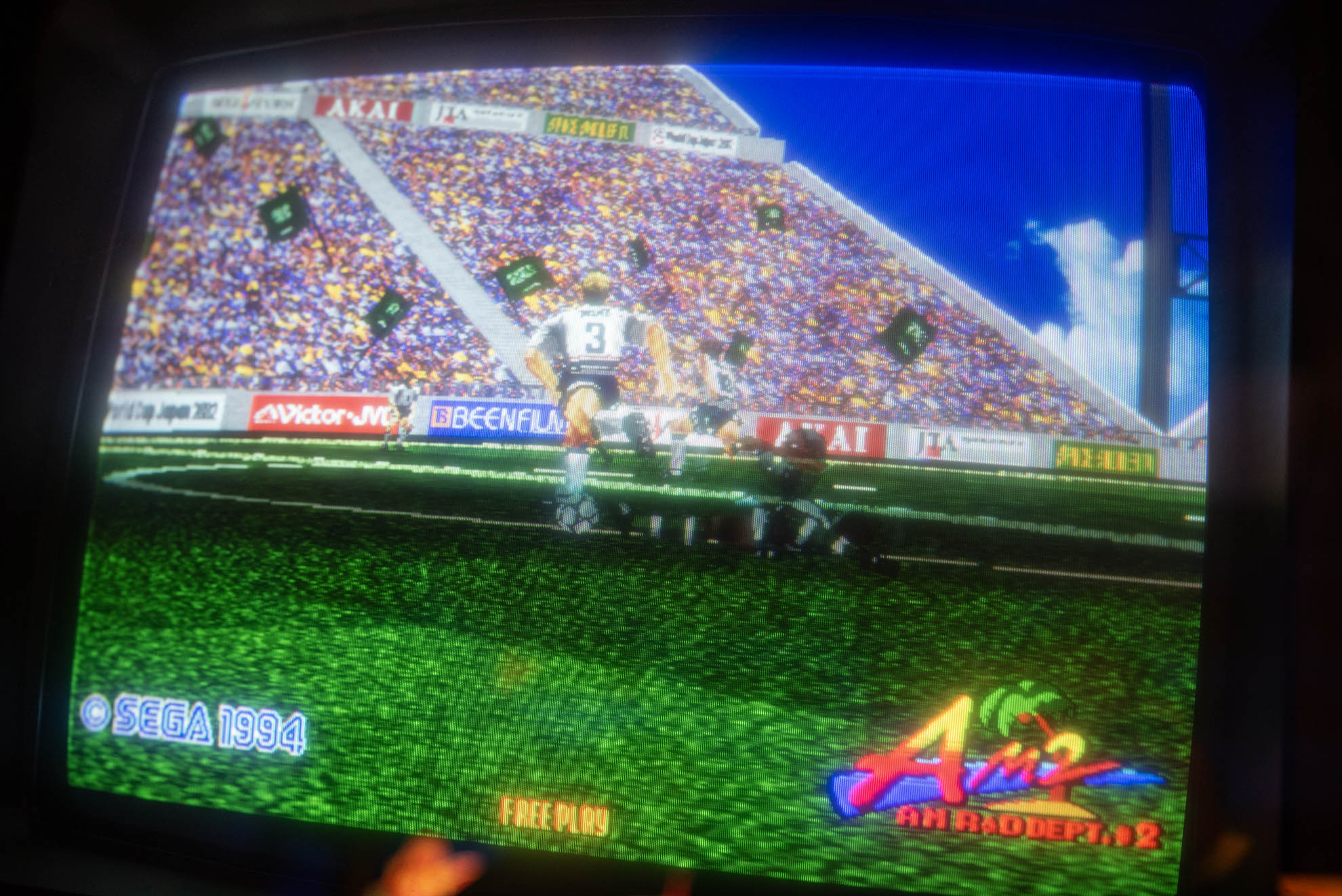
Virtua Striker ran on SEGA's Model 2B-CRX arcade hardware, a technological marvel that represented a $2 million development investment:
| Component | Specification |
| Main CPU | Intel i960-KB @ 25 MHz |
| Geometry DSPs | 2x ADSP-21062 SHARC @ 40 MHz |
| Processing Power | 80 MIPS fixed-point, 240 MFLOPS floating-point |
| Sound CPU | Motorola 68000 @ 12 MHz |
| Sound Chip | Yamaha SCSP (32 PCM channels) |
| Total RAM | ~18 MB |
Complete Model 2 cabinets commanded prices around $15,000. Despite this barrier, SEGA sold over 130,000 Model 2 units by 1996, generating $2 billion in hardware revenue.
Gameplay: Arcade Action Meets Beautiful Game
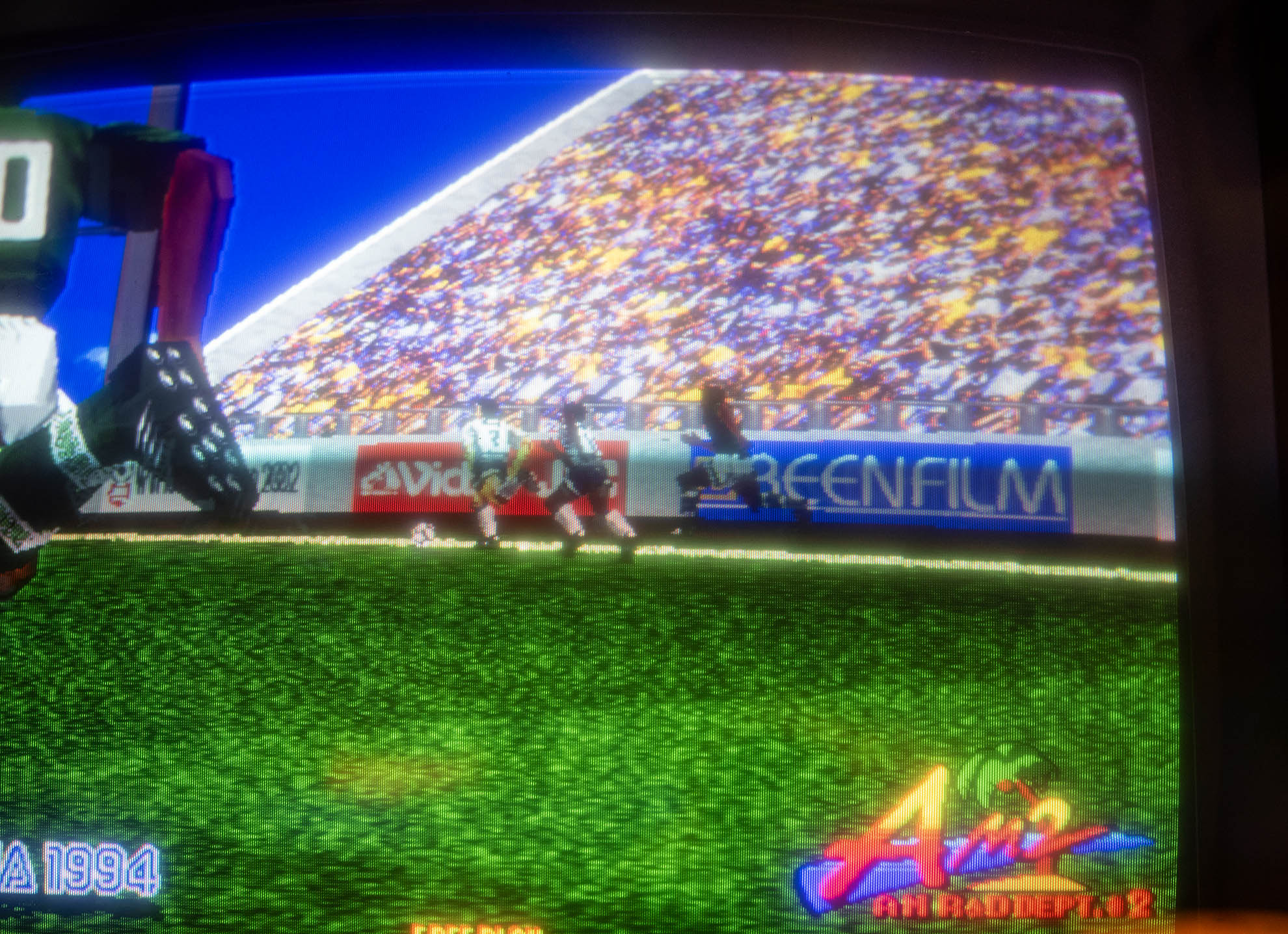
Virtua Striker distilled soccer to its most exciting elements. Matches were brief three-minute affairs designed for quick-burst arcade gaming. The simplified controls emphasized aggressive tackles, rapid counters, and high-scoring action over tactical simulation.
The game featured 18-19 national teams representing the elite of 1994 World Cup-era football. Though SEGA lacked official FIFA licensing, the rosters were carefully crafted to represent recognizable stars through their appearances, jersey numbers, and playing positions.
FC SEGA: The Hidden Developer Team
Like many SEGA arcade games of the era, Virtua Striker contained secrets that rewarded dedicated players. The most famous was FC SEGA, a hidden team composed of the game's actual developers.
To unlock this secret squad, players had to highlight and press Start on specific teams in sequence: France, Colombia, Spain, England, Germany, and Argentina. The first letters spelled out "FC SEGA."
Chart-Topping Success
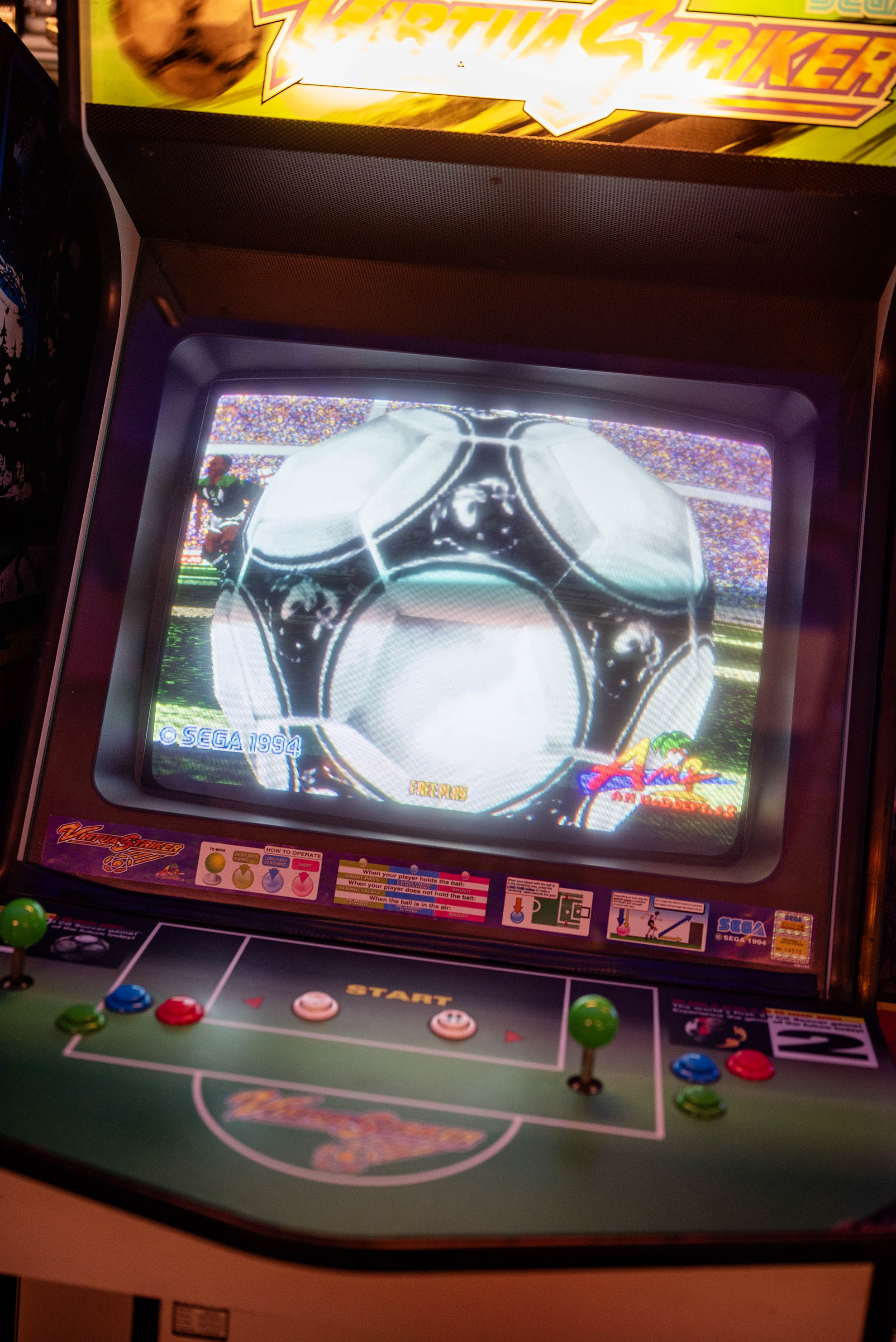
Virtua Striker's commercial performance validated SEGA's technological gamble. Japan's Game Machine magazine reported that Virtua Striker ranked as the second most-successful arcade game overall and the single most-successful dedicated arcade cabinet of July 1995.
The sequel, Virtua Striker 2, would surpass even these achievements, becoming the second highest-grossing arcade game of 1998 in Japan, then claiming the overall top spot in 1999. SEGA's arcade legacy continues through platforms like EVO Japan 2026.
Series Timeline
| Year | Title |
| 1995 | Virtua Striker |
| 1997 | Virtua Striker 2 |
| 2001 | Virtua Striker 3 |
| 2005 | Virtua Striker 4 |
| 2013 | Virtua Striker (HD ports) |
Technical Specifications
| Specification | Detail |
| Developer | SEGA AM2 |
| Publisher | SEGA Enterprises, Ltd. |
| Release Date | May 1995 |
| Hardware | SEGA Model 2B-CRX |
| Players | 2 (linkable cabinets) |
| Controls | 8-way joystick, 4 buttons |
| Teams | 18-19 national teams |
| Sound Creator | Hideaki Miyamoto |
| Planner/Producer | Satoshi Mifune |
| Original Concept | Yu Suzuki |
For more SEGA arcade history, see Virtua Fighter which pioneered 3D graphics on Model 1 hardware.
Gallery
Get Gaming News and Features First
Stay updated with the latest gaming news and exclusive content.