TRON: Bally Midway's Groundbreaking Movie Tie-In (1982)
Bally Midway's 1982 TRON arcade game outgrossed Disney's film, combining four subgames, innovative blacklight cabinet design, and unique flight yoke controls.
In the summer of 1982, a remarkable reversal of fortune occurred in entertainment history. While Disney's ambitious science fiction film TRON struggled at the box office, its arcade adaptation became a phenomenon that would outgross the movie itself. Developed by Bally Midway, the TRON arcade game combined innovative cabinet design, unique controls, and compelling gameplay across four distinct subgames. It won Coin-Operated Game of the Year from Electronic Games magazine and demonstrated that video game adaptations could eclipse their source material.
Racing Against Time: Development Under Pressure
When Bally Midway secured the license to create a TRON video game, they faced an impossible deadline. Disney's marketing strategy demanded the game be ready for the film's July 1982 premiere, with promotional materials declaring: "See the movie. Play the game." This gave the development team mere months to deliver a finished product.
Rather than gamble on a single concept, Bally Midway hedged their bets by having three design teams each develop prototypes. One team proposed an ambitious first-person vector graphics game, while another suggested a collection of minigames using existing Bally Midway technology. The minigame approach won because it had the best chance of meeting the deadline.
The original design document called for six different subgames: Rings (a light-disk duel between Tron and Sark), Paranoia (building bridges across spider-filled chasms), Tank Pursuit, Space Spores, I/O Tower, and Light Cycles. Time constraints forced painful cuts. The Rings concept was spun off into its own game (1983's Discs of Tron), while Paranoia and Space Spores were dropped entirely.
Lead programmer Bill Adams headed the software development, while Atish Ghosh designed the hardware and George Gomez created the iconic cabinet. Earl Vickers handled music programming, transcribing themes from Wendy Carlos's groundbreaking electronic film score.
Four Games in One: The Subgames
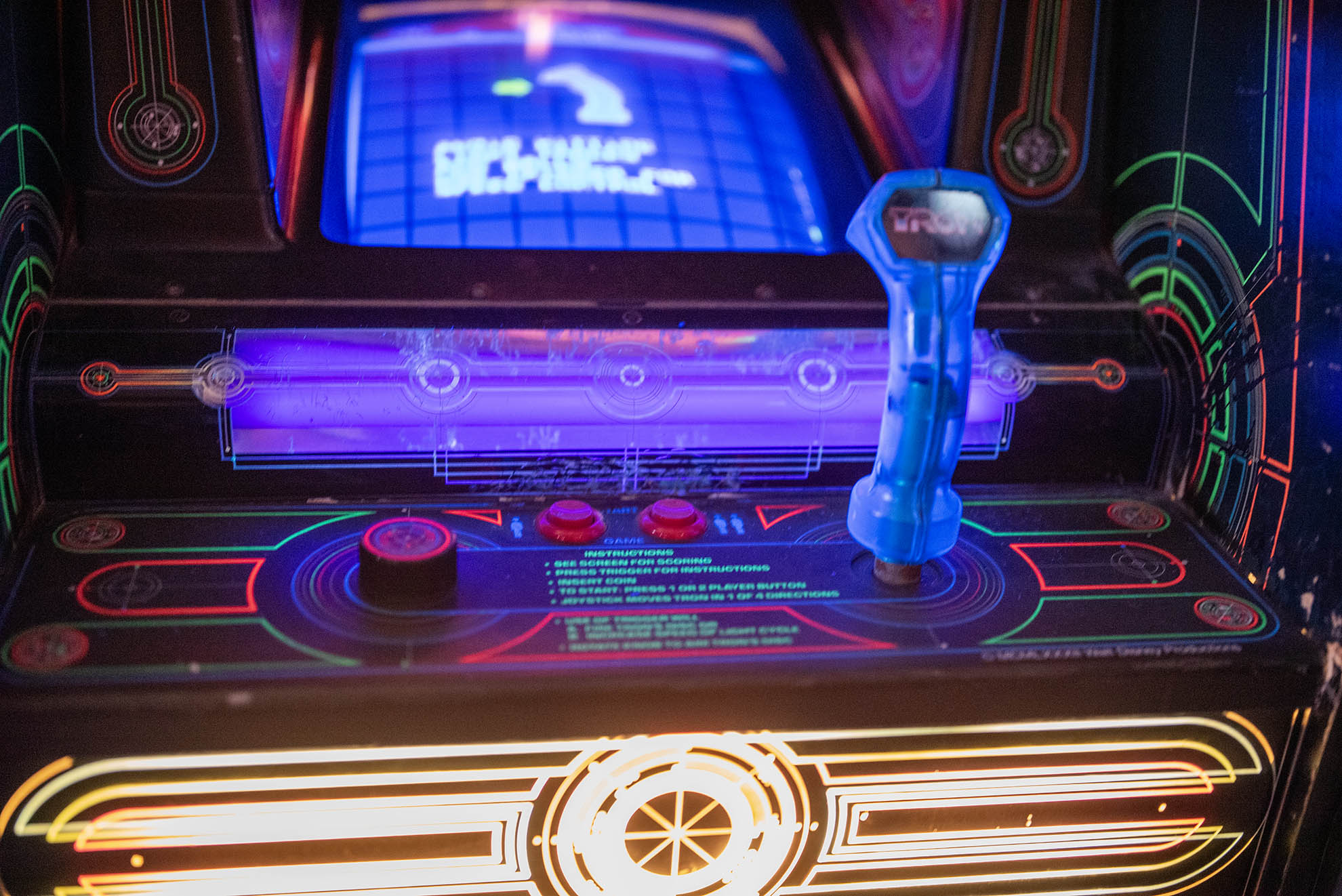
TRON's genius lay in offering variety through four distinct gameplay experiences, each drawing from the film's memorable sequences.
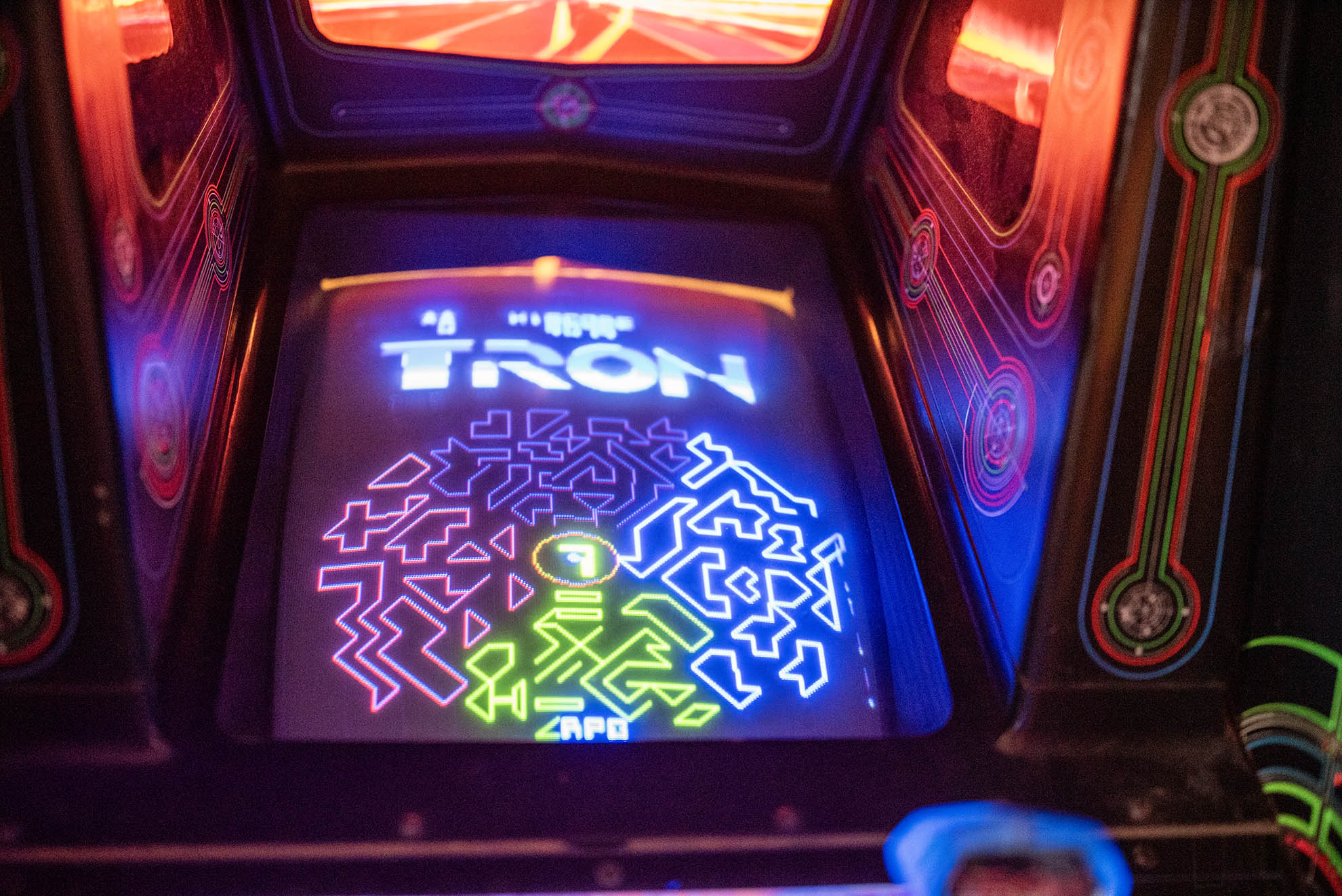
Light Cycles remains the most iconic segment. In this Snake-like arena battle, players guide Tron's blue Light Cycle against one or more yellow opponents. The objective is forcing enemy cycles to crash into walls, jet trails, or each other while avoiding the same fate. This is the only subgame that doesn't use the spinner control.
Grid Bugs (I/O Tower) recreates Tron's perilous journey to the Input/Output tower. Players must destroy swarms of Grid Bugs using Tron's disc while clearing a path to a flashing circle before time expires.
MCP Cone simulates Tron's climactic confrontation with the Master Control Program. Players must break through a rotating shield wall and enter the cone without touching any blocks.
Battle Tanks draws from the film's tank combat sequences and the in-universe game Space Paranoids. Players guide Tron's red tank through mazes, destroying blue enemy tanks and red Recognizers.
Programming Language Progression
In a clever nod to the film's computer-world setting, TRON's twelve difficulty levels are named after programming languages and computing terms. From easiest to hardest: RPG, COBOL, BASIC, FORTRAN, SNOBOL, PL1, PASCAL, ALGOL, ASSEMBLY, OS, JCL, and finally USER.
All four subgames must be completed at each level before advancing. As players progress, enemy speed increases, obstacles multiply, and timing windows shrink.
A Cabinet Like No Other
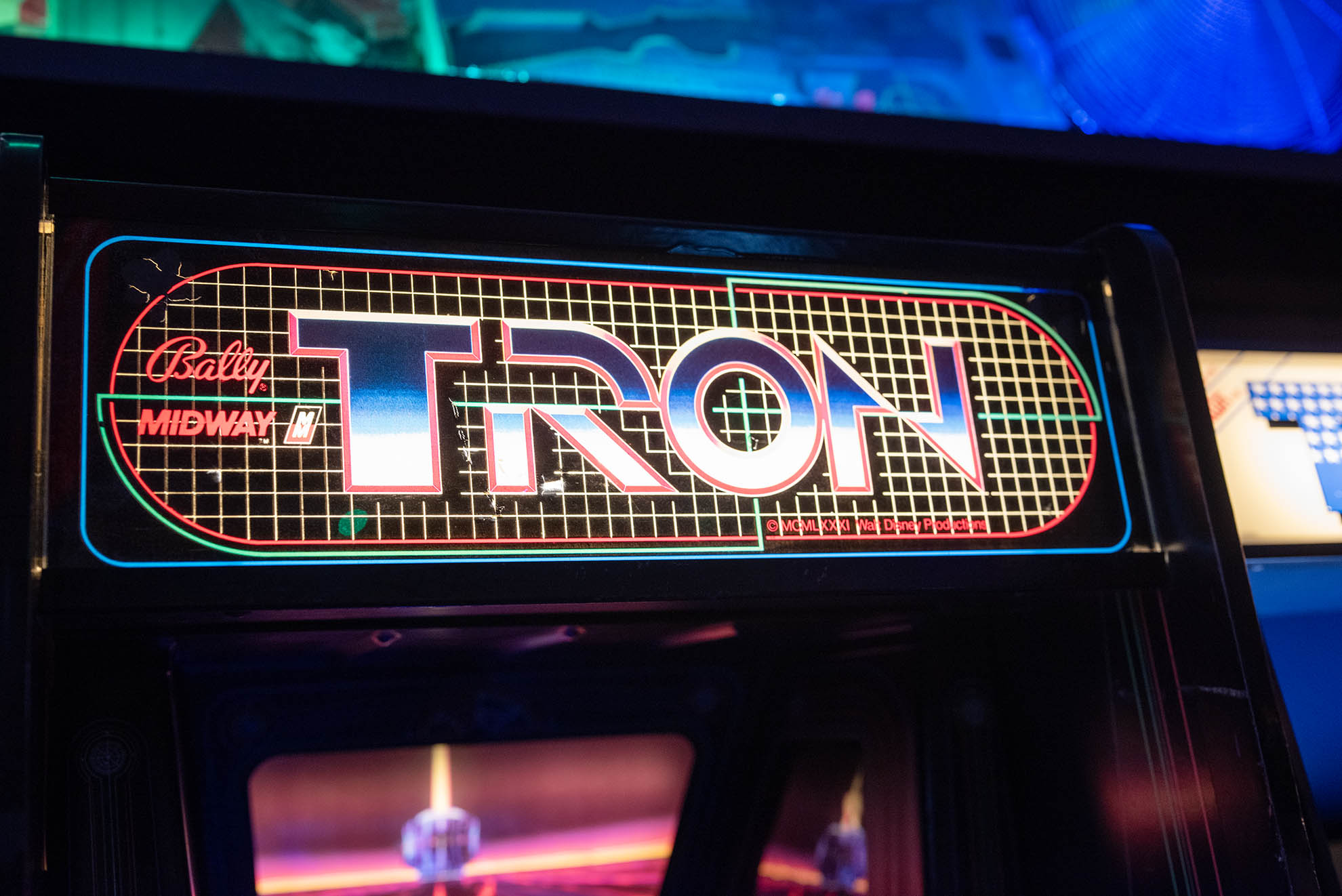
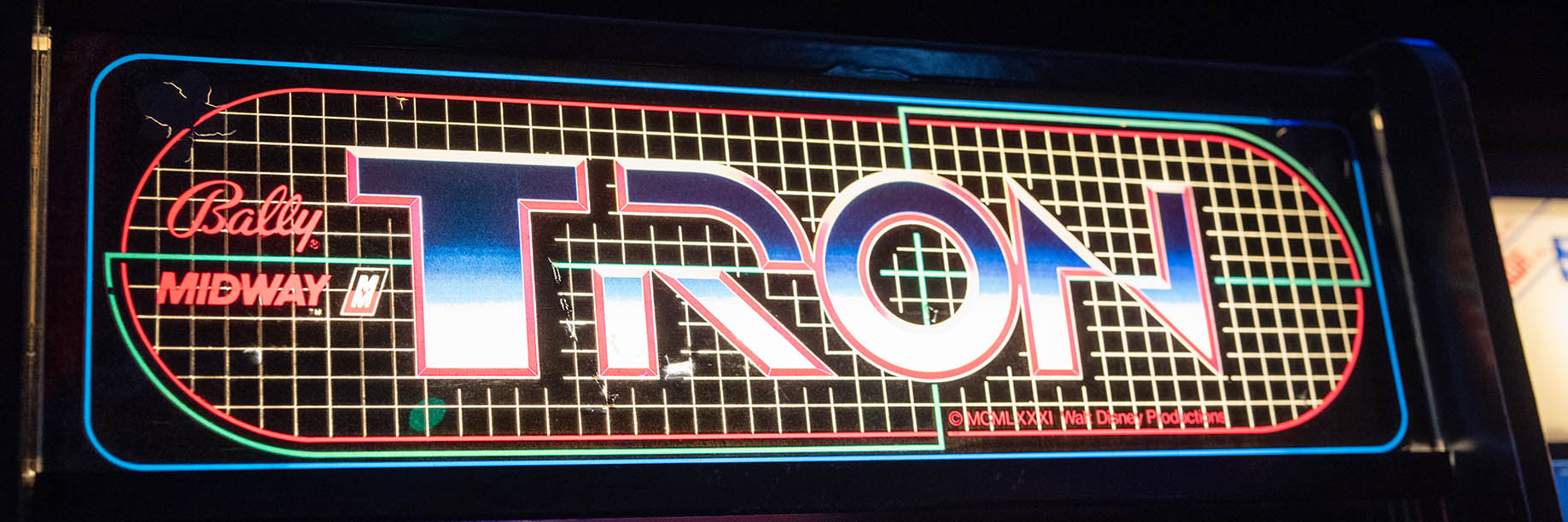
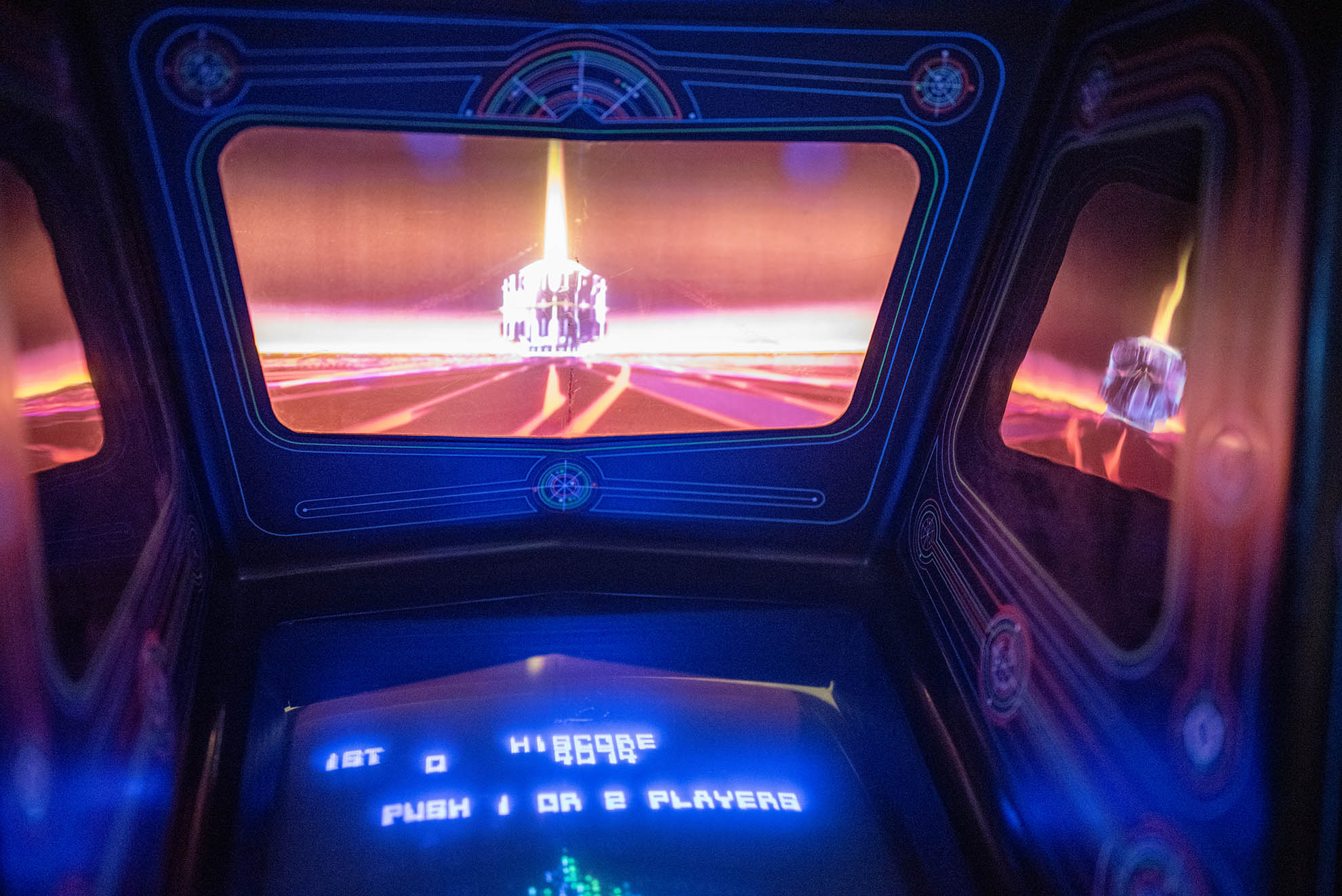
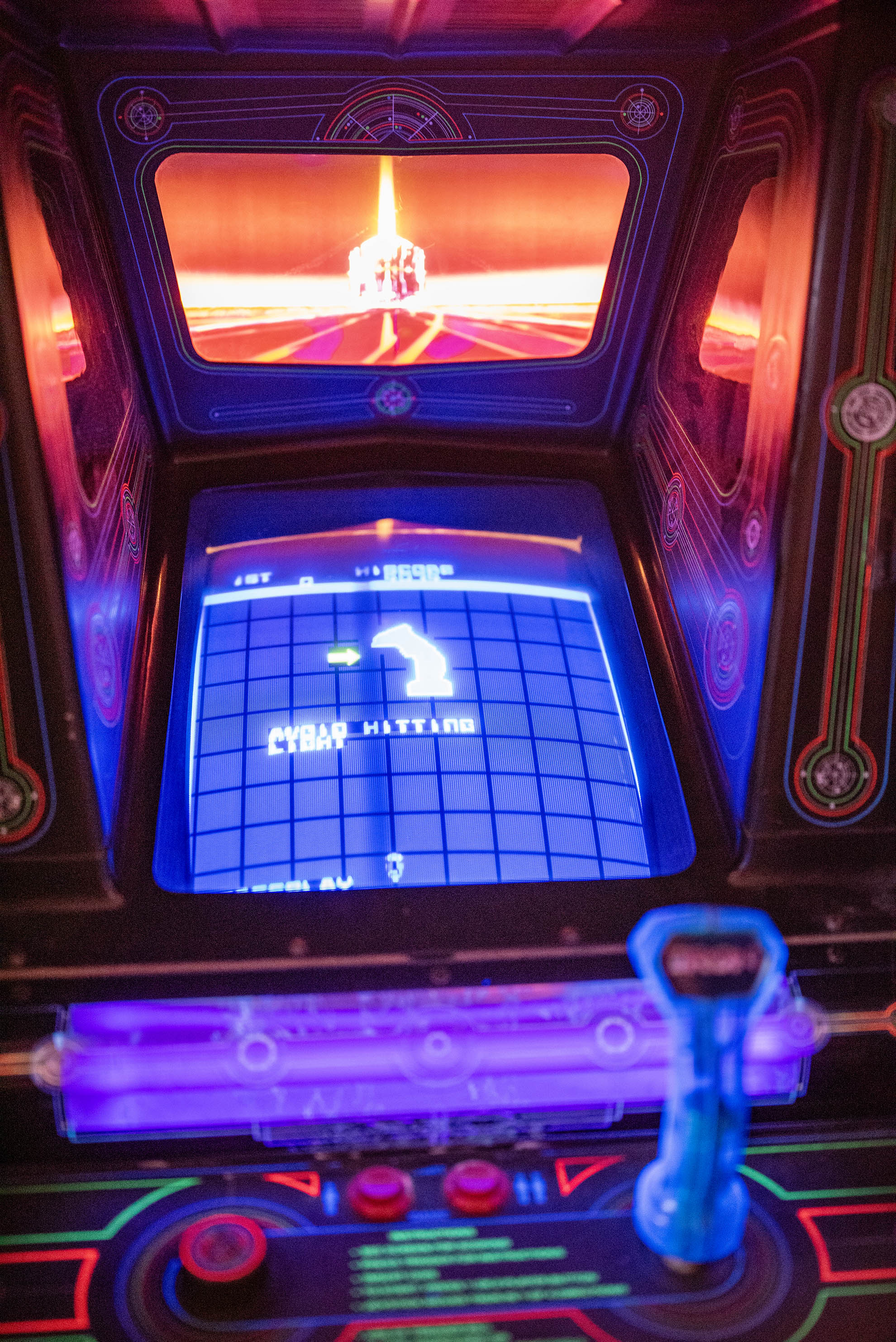
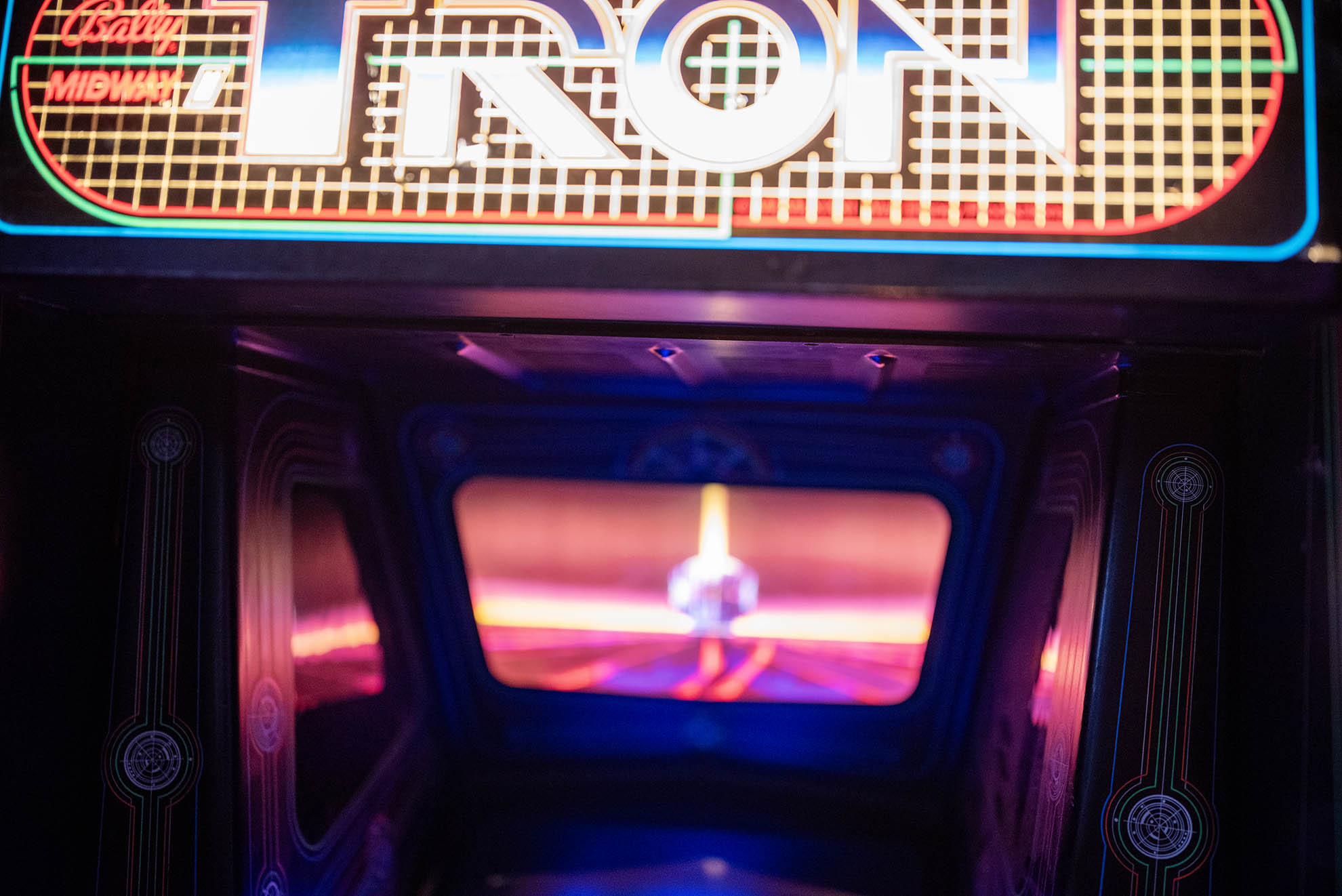
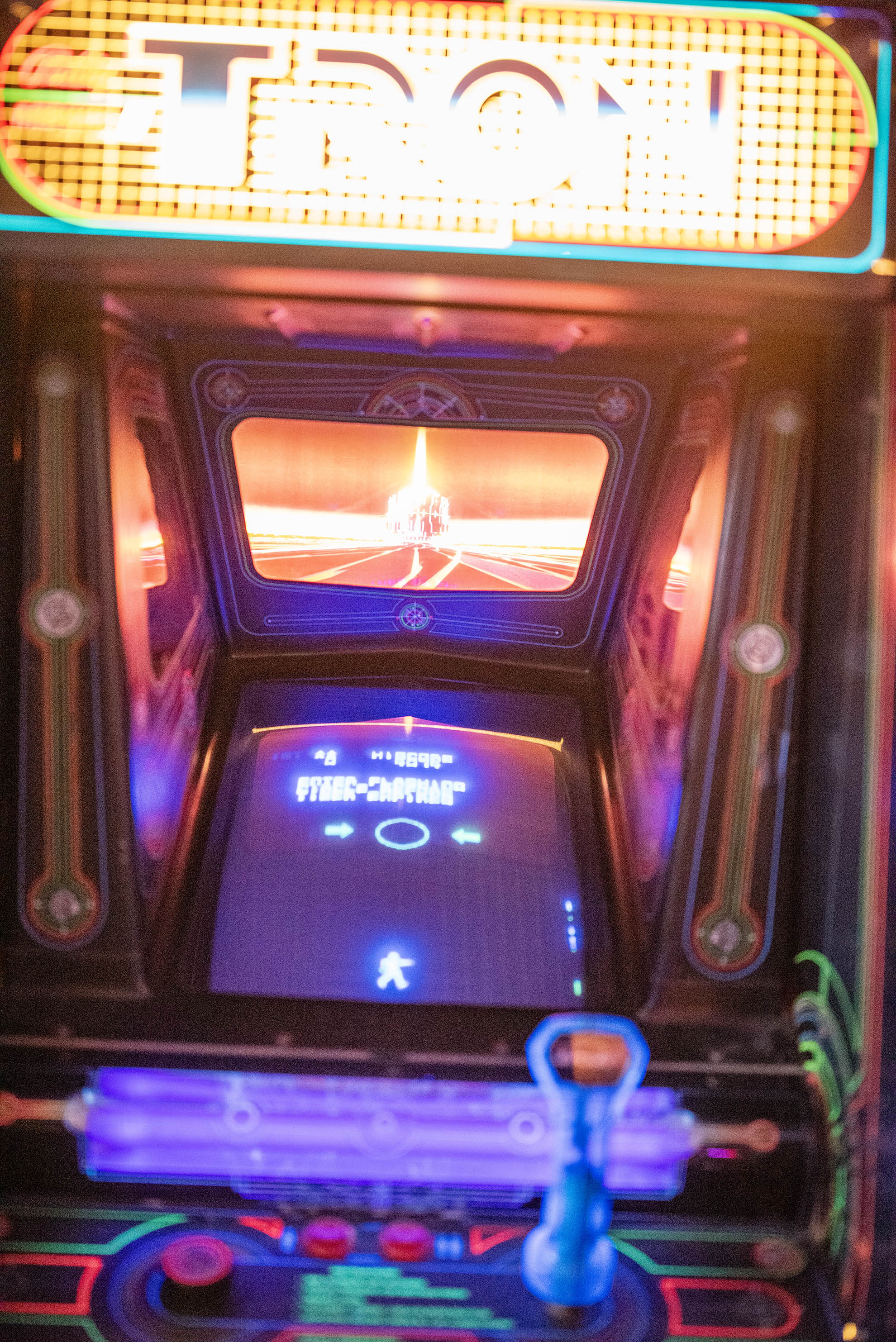
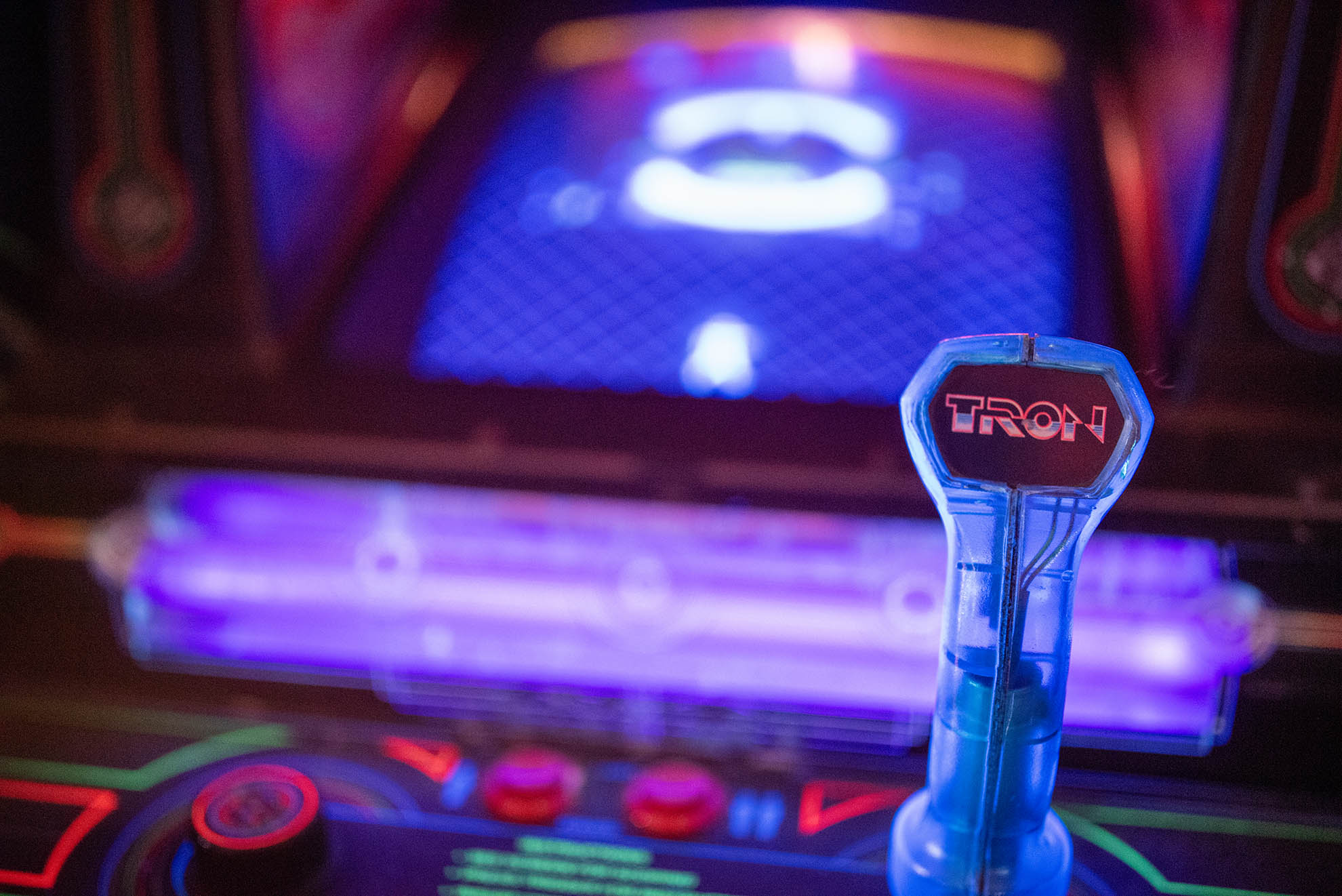
The TRON arcade cabinet became an instant icon through its innovative design. The standard upright cabinet used fluorescent paint and dual blacklights to recreate the film's glowing circuitry aesthetic. One blacklight sat behind clear plastic above the controls, another beneath the control panel, causing the translucent blue joystick and painted circuit lines to glow eerily in darkened arcades.
The controls themselves were distinctive: a flight yoke-style joystick with trigger button for firing, paired with a spinner (rotary dial) for aiming in certain subgames. This combination provided precise control across all four game types while maintaining the futuristic aesthetic.
Technical Specifications
TRON ran on Bally Midway's MCR 2 hardware platform:
| Component | Specification |
| Main CPU | Zilog Z80 @ 2.496 MHz |
| Sound CPU | Zilog Z80 @ 2 MHz |
| Sound Chips | 2x General Instrument AY8910 @ 2 MHz |
| Players | 1-2 (alternating) |
| Controls | 8-way flight yoke with trigger, spinner knob |
The hardware enabled smooth scrolling, multiple on-screen enemies, and the varied gameplay requirements of four distinct subgames.
The Sound of the Grid
Earl Vickers transcribed music from Wendy Carlos's revolutionary film score for the arcade adaptation. Carlos, famous for Switched-On Bach and scores for A Clockwork Orange and The Shining, created the original TRON soundtrack using analog Moog synthesizers and a rare Crumar GDS digital synthesizer.
The arcade game's audio captured the electronic atmosphere of Carlos's work within the constraints of the AY8910 sound chips. While necessarily simplified from the film score, the music effectively transported players into the Grid's digital landscape.
The National Video Game Tournament
Disney's marketing strategy included an unprecedented promotional event: the TRON National Video Game Tournament, sponsored by Bally Midway and the Aladdin's Castle arcade chain. Running from May 24 through June 18, 1982, the competition spanned over 400 arcade locations nationwide.
The response exceeded all expectations. Within just five days, over 120,000 people had entered the tournament. Players logged over a quarter-million games on tournament machines, scoring an estimated 7.5 billion points in the first week alone. It became the most successful video game competition of its time.
The finals took place at Madison Square Garden on July 6-7, 1982, just days before the film's July 9th premiere. Sixteen finalists competed across two days, with celebrity participation from baseball legends Hank Aaron and Willie Mays, actor Doug McKeon, television personality Robin Leach, and TRON cast members David Warner and Cindy Morgan.
Commercial Triumph: Outgrossing the Film
TRON achieved something remarkable in entertainment history: the video game adaptation made more money than its source film.
Disney's TRON opened on July 9, 1982, grossing $4 million opening weekend before finishing with approximately $33 million domestic and $50 million worldwide. Despite respectable numbers, the studio considered it a disappointment given the $17 million production budget.
The arcade game told a different story. Bally Midway sold between 10,000 and 12,000 cabinets at roughly $3,000 each, generating $30-36 million in hardware revenue alone. More impressively, the machines pulled in an estimated $45 million in quarters by 1983. The game didn't just support the movie; it financially eclipsed it.
High Score Legacy
The competitive TRON scene remains active decades later. The current verified Twin Galaxies world record stands at 14,007,645 points, achieved by David Cruz of Brandon, Florida in July 2011. Cruz's record-setting session lasted approximately 10-14 hours.
Discs of Tron: The Fifth Subgame
The Rings concept cut from the original TRON became Discs of Tron in 1983, recreating the film's disc-dueling sequences between Tron and Sark. While technically a sequel, it was always intended as part of the original game.
Discs of Tron introduced the legendary Environmental cabinet, arguably the most ambitious arcade cabinet of the Golden Age. Weighing over 700 pounds, the Environmental version surrounded players with the game world. Players stood on a platform shaped like Tron's disc, with lights flashing when their character died. A two-way mirror created 3D depth effects, reflecting monitor graphics against backlit artwork.
Modern Availability
TRON's licensing complexity has limited modern re-releases. Unlike many classic arcade games available through digital storefronts, the Disney license creates legal hurdles for official ports. Arcade1Up released a licensed TRON cabinet replica featuring the original game alongside Discs of Tron, complete with glowing flight stick and blacklight effects honoring the original design.
For collectors, original TRON cabinets remain desirable restoration projects. The distinctive blacklight system, unique controls, and fluorescent artwork require specialized knowledge to maintain, but a properly restored TRON cabinet captures 1982 arcade magic unlike anything else.
Lasting Impact
TRON demonstrated that movie tie-in games could succeed on their own merits and even surpass their source material commercially. Its innovative cabinet design influenced arcade presentation for years, while the four-subgame structure proved that variety could enhance rather than dilute a gaming experience.
The game arrived at the peak of arcade gaming's Golden Age, capturing the era's creative ambition and technical innovation. While the film required decades to achieve cult classic status, the arcade game was an immediate phenomenon that validated video games as a legitimate entertainment medium.
Gallery
Get Gaming News and Features First
Stay updated with the latest gaming news and exclusive content.