After Burner (1987): SEGA Arcade Classic by Yu Suzuki - Complete History
After Burner arcade game history. Yu Suzuki's 1987 SEGA classic with the legendary 500kg hydraulic cabinet, F-14 Tomcat combat, and arcade innovation.
| Title | After Burner |
| JP Title | アフターバーナー |
| Developer | Sega AM2 (Studio 128) |
| Director | Yu Suzuki |
| Composer | Hiroshi Kawaguchi |
| Release Date | July 1987 (Japan) |
| Platform | Arcade (Sega X Board) |
| Genre | Rail Shooter |
| CPU | Dual MC68000 @ 12.5MHz |
| Sound | YM2151 FM @ 4MHz |
| Cabinet Types | Upright, Cockpit, Deluxe |
The Birth of a Legend
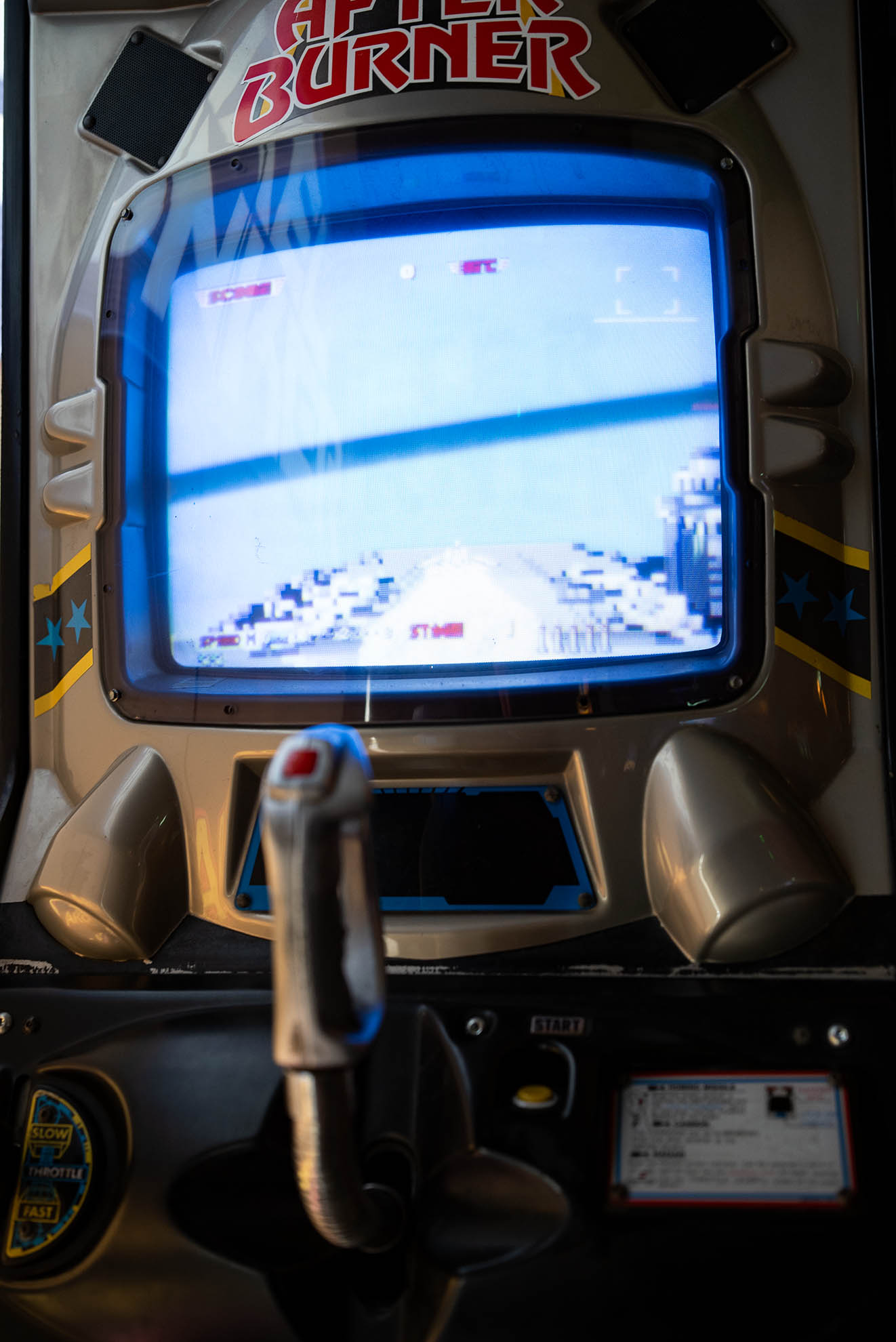
In December 1986, Yu Suzuki had just finished work on OutRun, the revolutionary racing game that let players cruise along sun-drenched highways in a Ferrari Testarossa. But Sega's management wasn't satisfied with merely great. They wanted a game that would "surpass previous profits," and they were willing to give Suzuki whatever he needed to make it happen.
Suzuki assembled a small but brilliant team consisting of himself, Satoshi Mifune, and Kawaguchi. They set up shop in a building called "Studio 128," operating outside Sega's main headquarters under a flextime schedule that allowed them to work on the game in secrecy. This was to be Sega's first "true blockbuster" video game, and the pressure was immense.
The inspiration came from two very different sources. The 1986 blockbuster film Top Gun had captured the world's imagination with its high-octane aerial combat sequences. But Suzuki also drew from Hayao Miyazaki's Laputa: Castle in the Sky, initially planning for the game to have a similar aesthetic. In the end, he opted for the Top Gun look to ensure worldwide appeal.
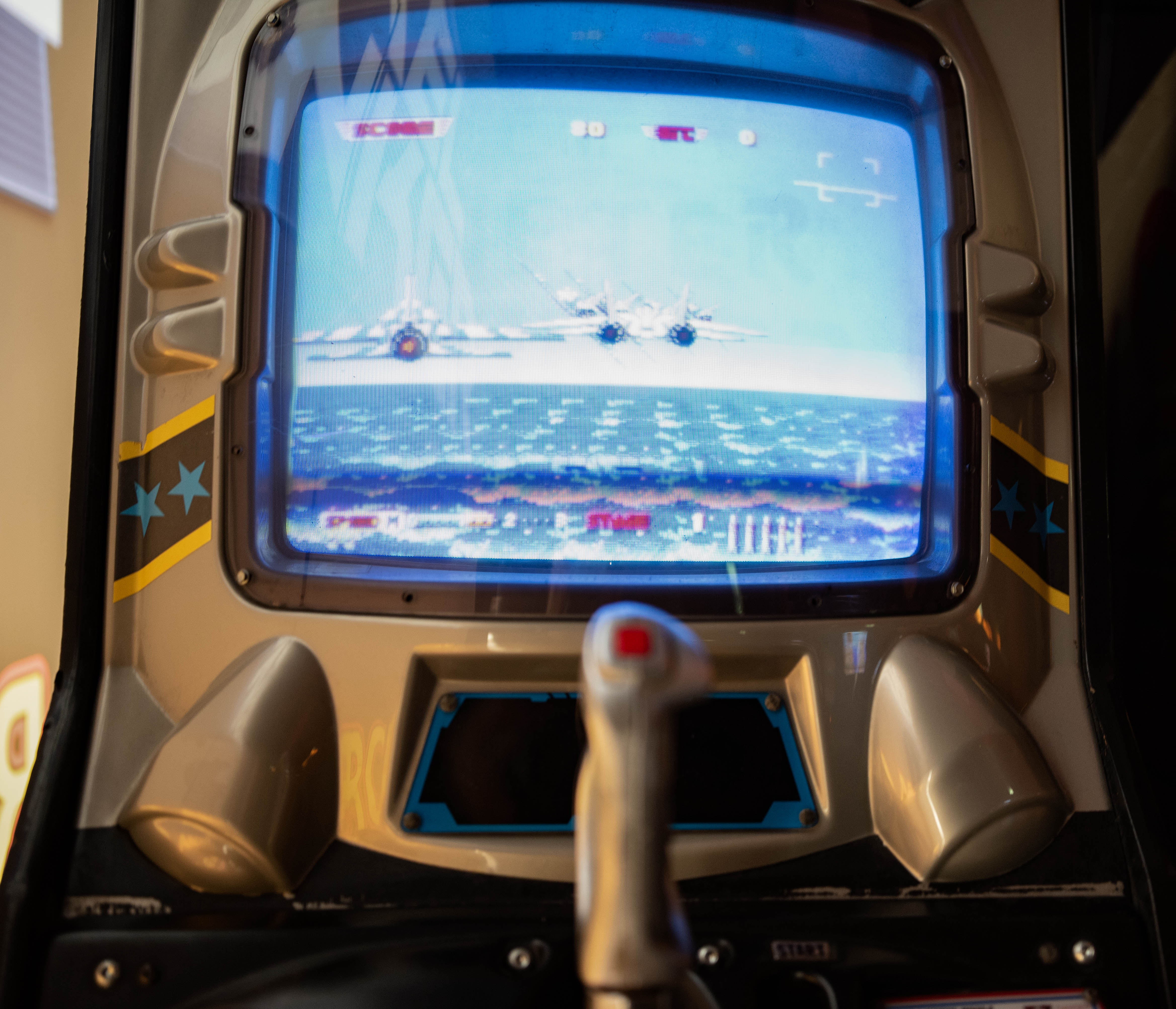
Suzuki originally envisioned the game featuring an F-14 Tomcat battling Soviet forces, with real locations like the Kremlin serving as backdrops. However, two problems arose: there was no time to scout actual locations, and including real landmarks would have overwhelmed the hardware's memory capacity. So Suzuki created fictional landscapes instead, using a travel magazine as reference for the diverse environments players would fly through.
Here's a fascinating piece of trivia: After Burner was the first game that Suzuki's team developed using a computer. They used the NEC PC-98, deliberately choosing modest hardware to prove to Sega that they didn't need expensive development machines to create masterpieces.
Flying the F-14 Tomcat
The player takes control of an American F-14 Tomcat, the legendary twin-engine supersonic fighter jet that had become an icon of naval aviation. The real F-14 was built by Grumman for the U.S. Navy from 1970 to 1992, featuring variable-geometry wings and sophisticated weapons systems capable of tracking 24 enemy aircraft simultaneously.
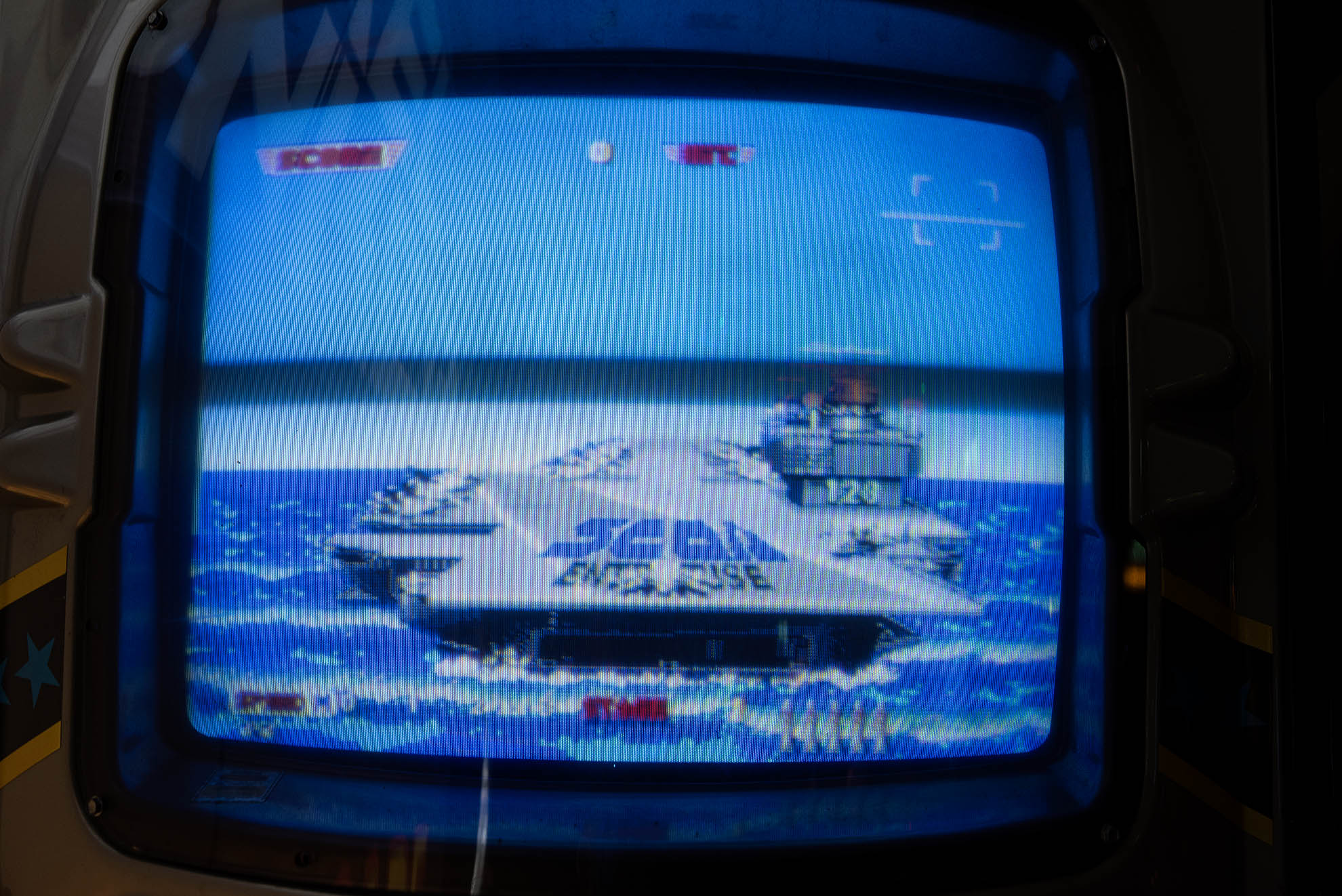
In After Burner, your Tomcat launches from an aircraft carrier brilliantly named the SEGA Enterprise. Your mission: blast through 18 unique stages of intense aerial combat, dodging enemy missiles while unleashing your own arsenal of destruction.
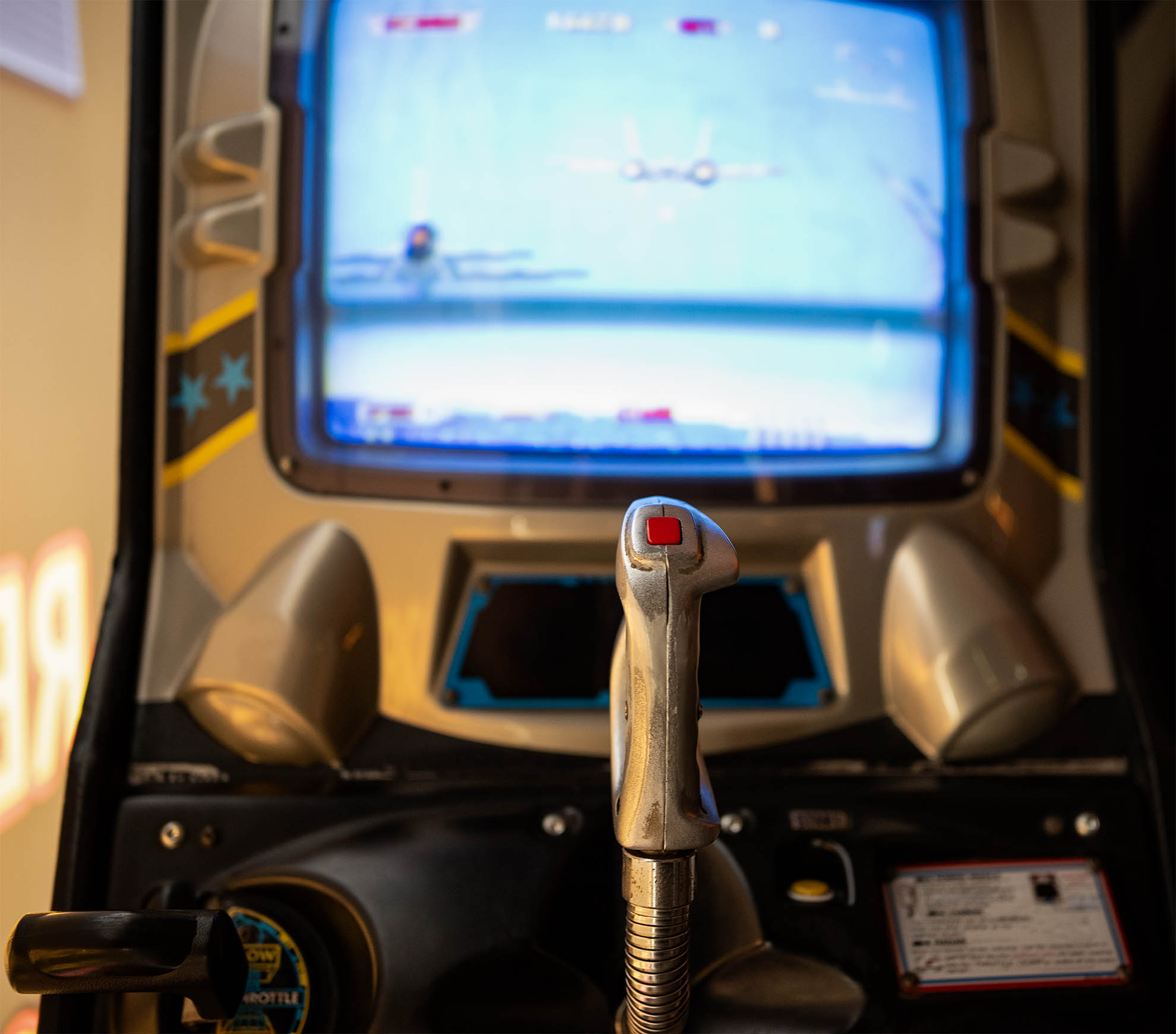
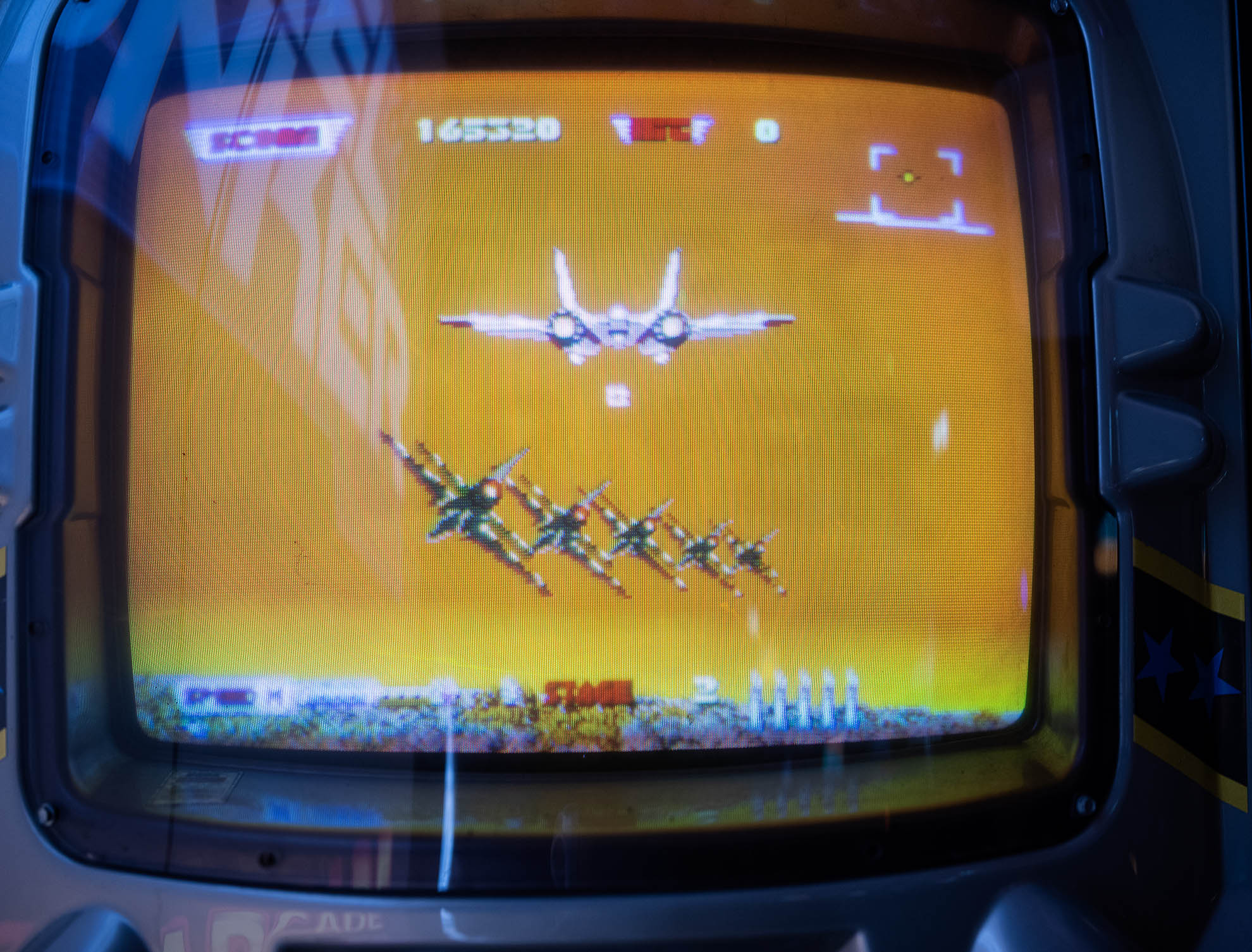
Your aircraft comes equipped with two weapons: an unlimited Vulcan cannon for close-range strafing and a limited supply of heat-seeking missiles that lock onto enemy targets. The missiles are your primary offensive tool, but they run out quickly in the heat of battle. Fortunately, the game features mid-air refueling sequences where a tanker aircraft replenishes your missile supply, giving you a brief respite before the next wave of enemies.
Sharp-eyed players might notice something special during the landing cutscenes. As your F-14 takes off from the runway, you can spot a motorcycle from Hang-On and the Ferrari Testarossa from OutRun driving along the tarmac. These charming Easter eggs were Yu Suzuki's way of connecting his arcade trilogy.
The Revolutionary Cabinet
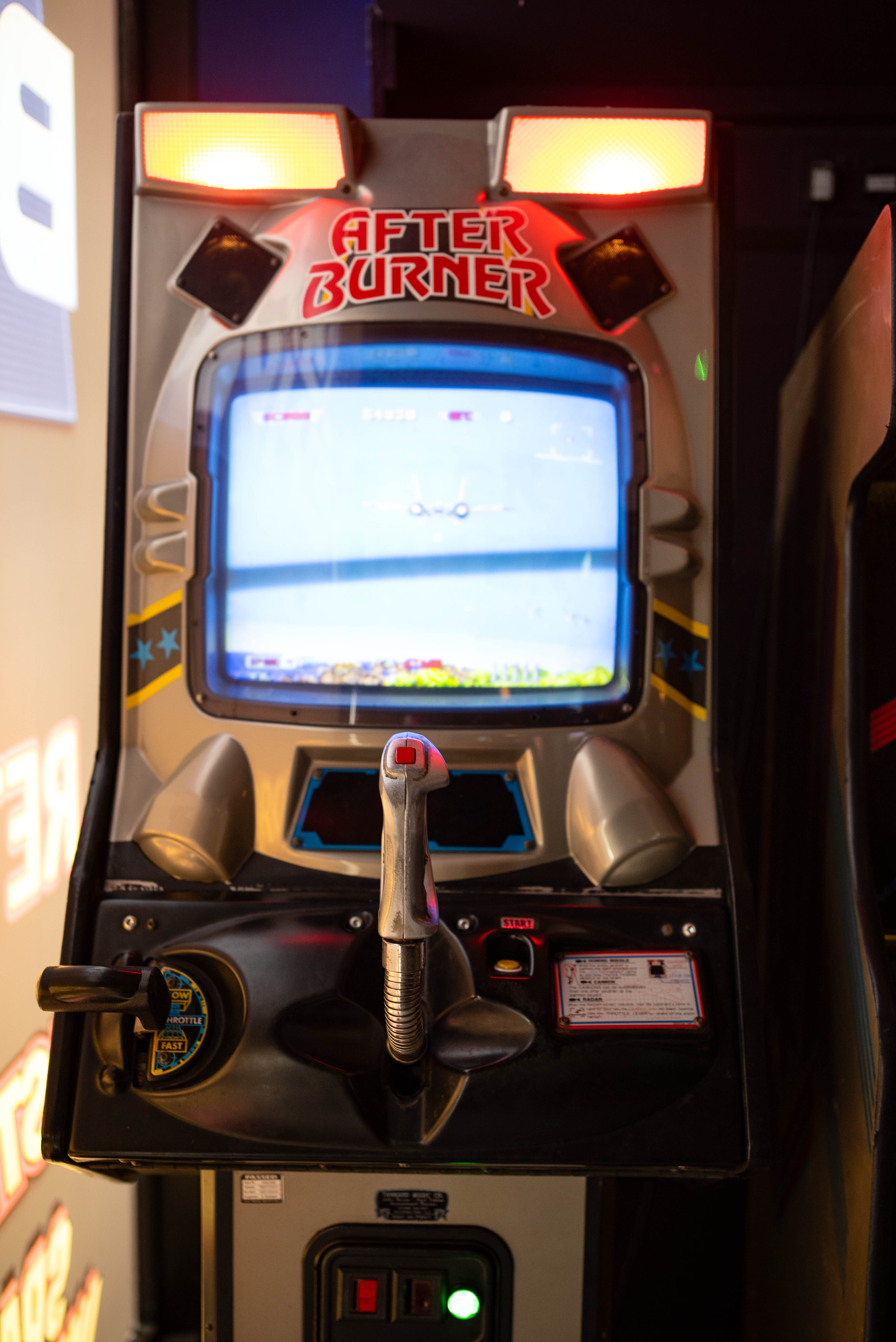
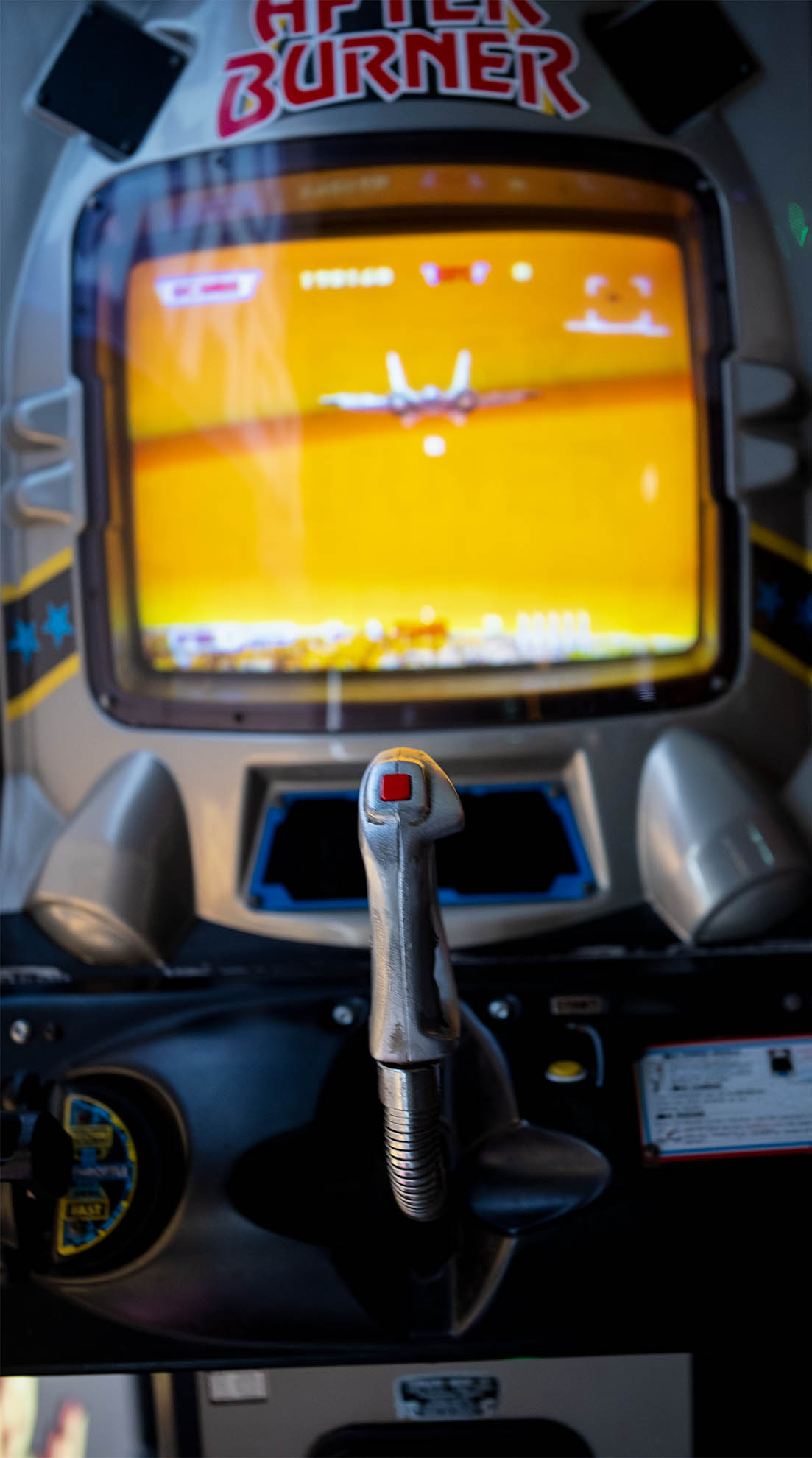
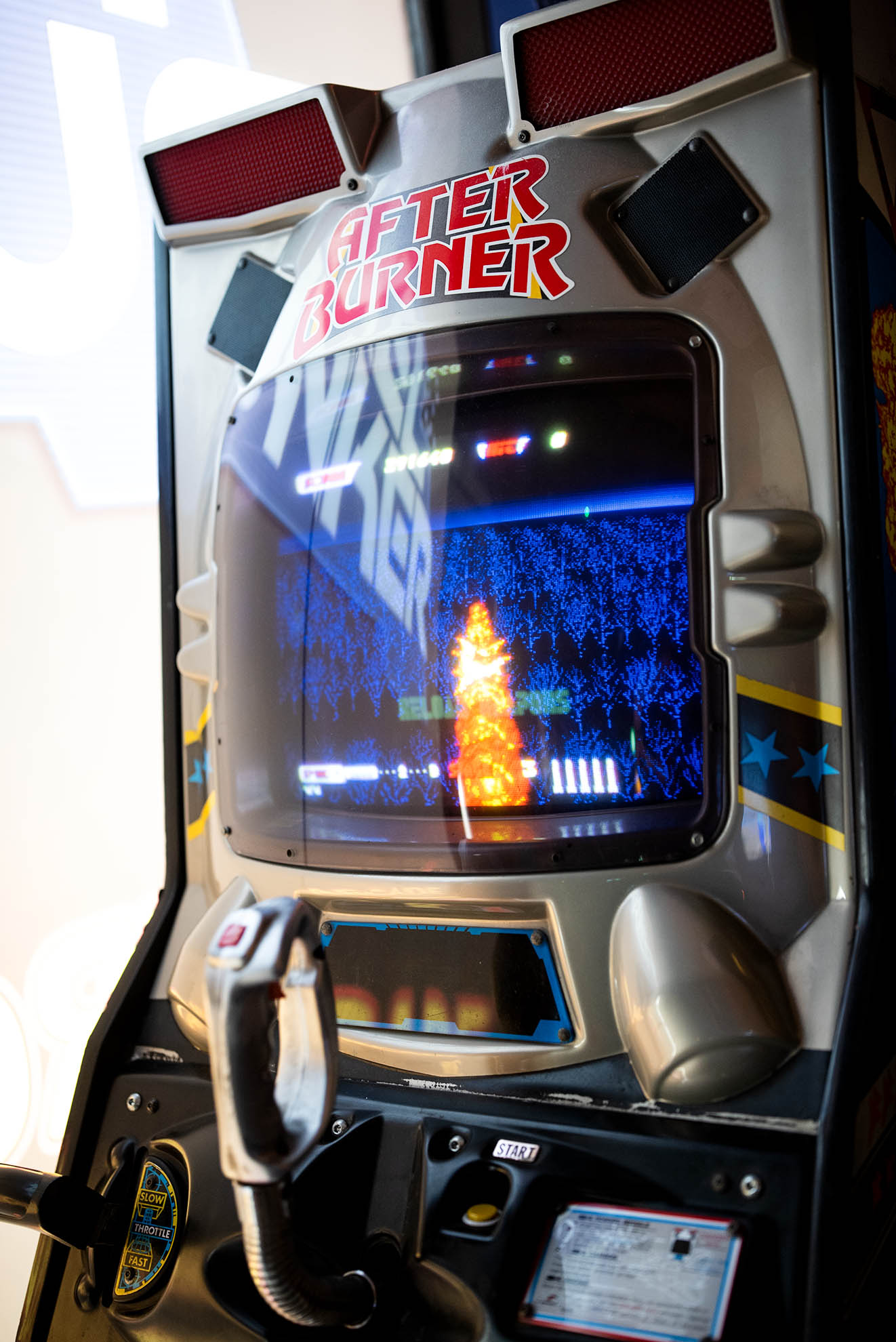
After Burner was released in three different cabinet configurations, but it's the Deluxe version that became legendary.
The Upright Cabinet was the standard arcade unit, offering the full gameplay experience in a traditional form factor. The Cockpit Cabinet added immersion with an enclosed seating area that tilted left and right in response to player input.
But the Deluxe Cabinet was something else entirely. This was Sega's fourth "taikan" (体感, meaning "body sensation") motion simulator game, following in the footsteps of Hang-On, Space Harrier, and OutRun. The cabinet was built on hydraulic systems that moved the player approximately 25 degrees in both horizontal and vertical axes, simulating the sensation of high-speed aerial maneuvers.
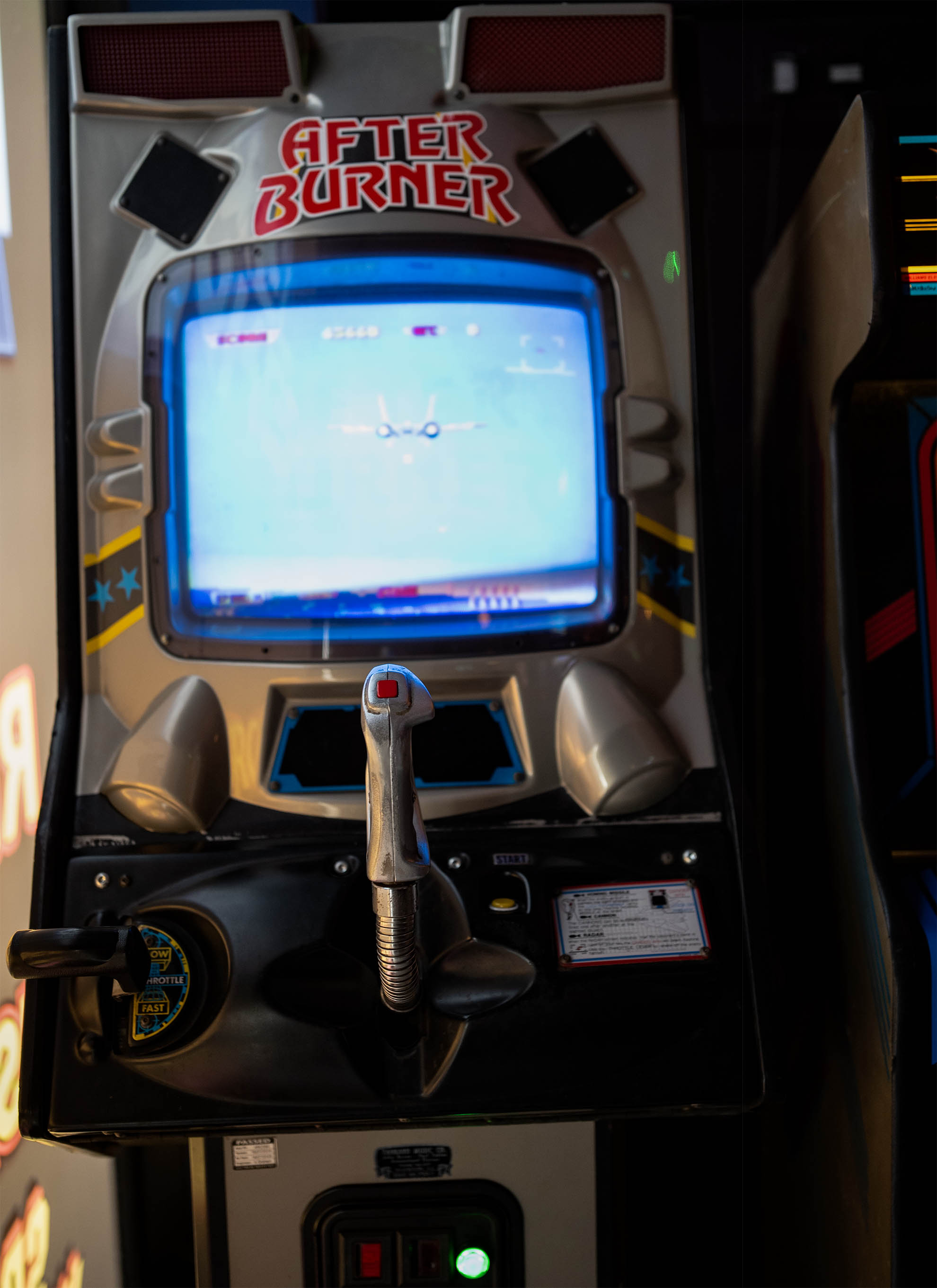
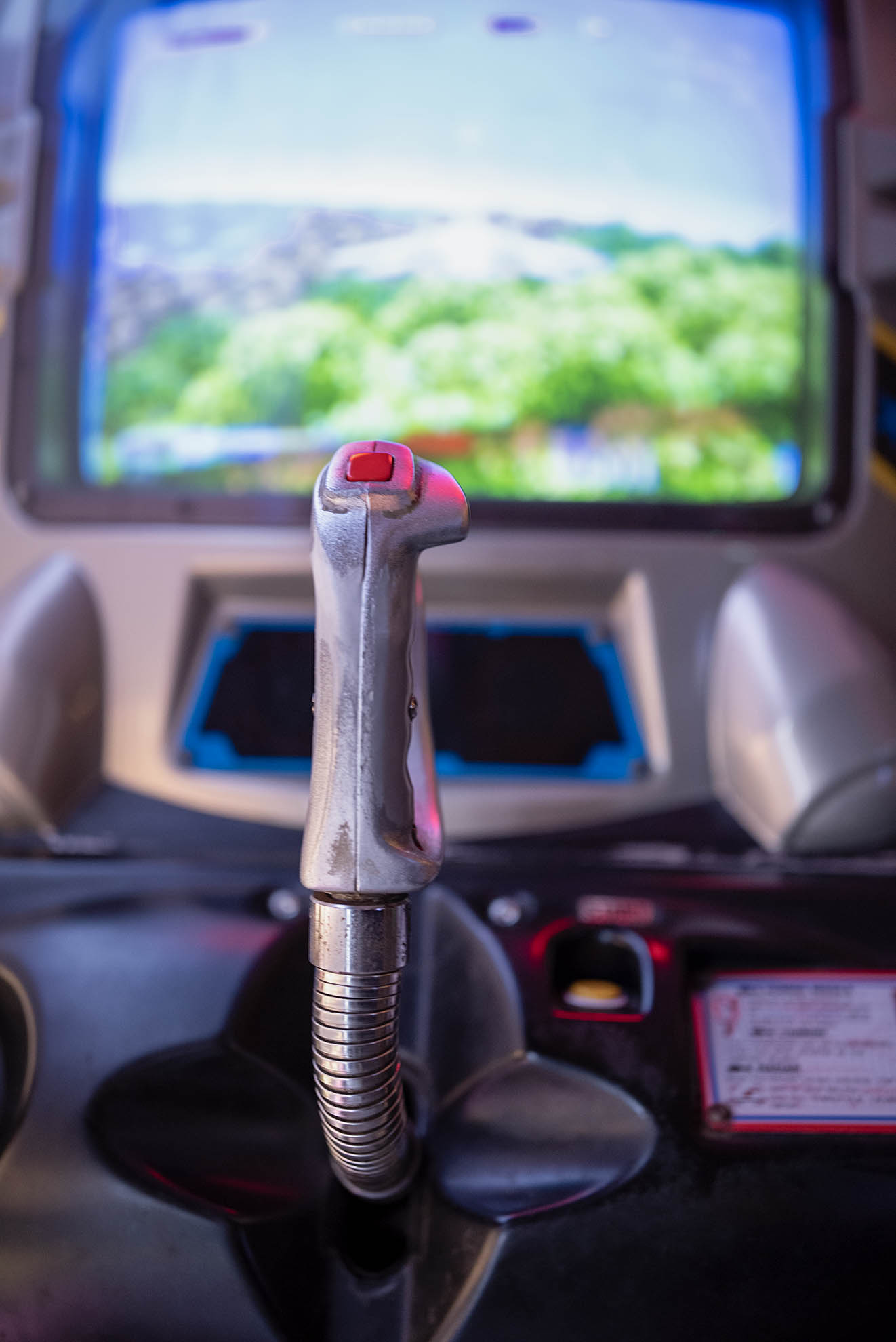
Weighing nearly 500 kilograms and measuring 173cm × 120cm × 200cm, the Deluxe cabinet featured a full seatbelt system and two speakers positioned at head height for immersive stereo sound. In 1987, this beast cost arcade operators £4,000 in the UK ($6,500 USD), equivalent to approximately $18,000 today.
Here's a story that captures just how powerful this machine was: the first prototype unit, which consisted of the monitor attached to a steel frame, had what Satoshi Mifune described as "amazing power." Unfortunately, it was deemed too dangerous to operate and had to have its power levels significantly reduced before it could be released to the public. The idea of creating a gyroscopic cabinet that would spin players completely around stayed with Yu Suzuki, eventually manifesting years later as the legendary R-360 cabinet.
Technical Powerhouse: The Sega X Board
Under the hood, After Burner ran on the Sega X Board, a technical marvel that pushed the boundaries of what arcade hardware could achieve in 1987.
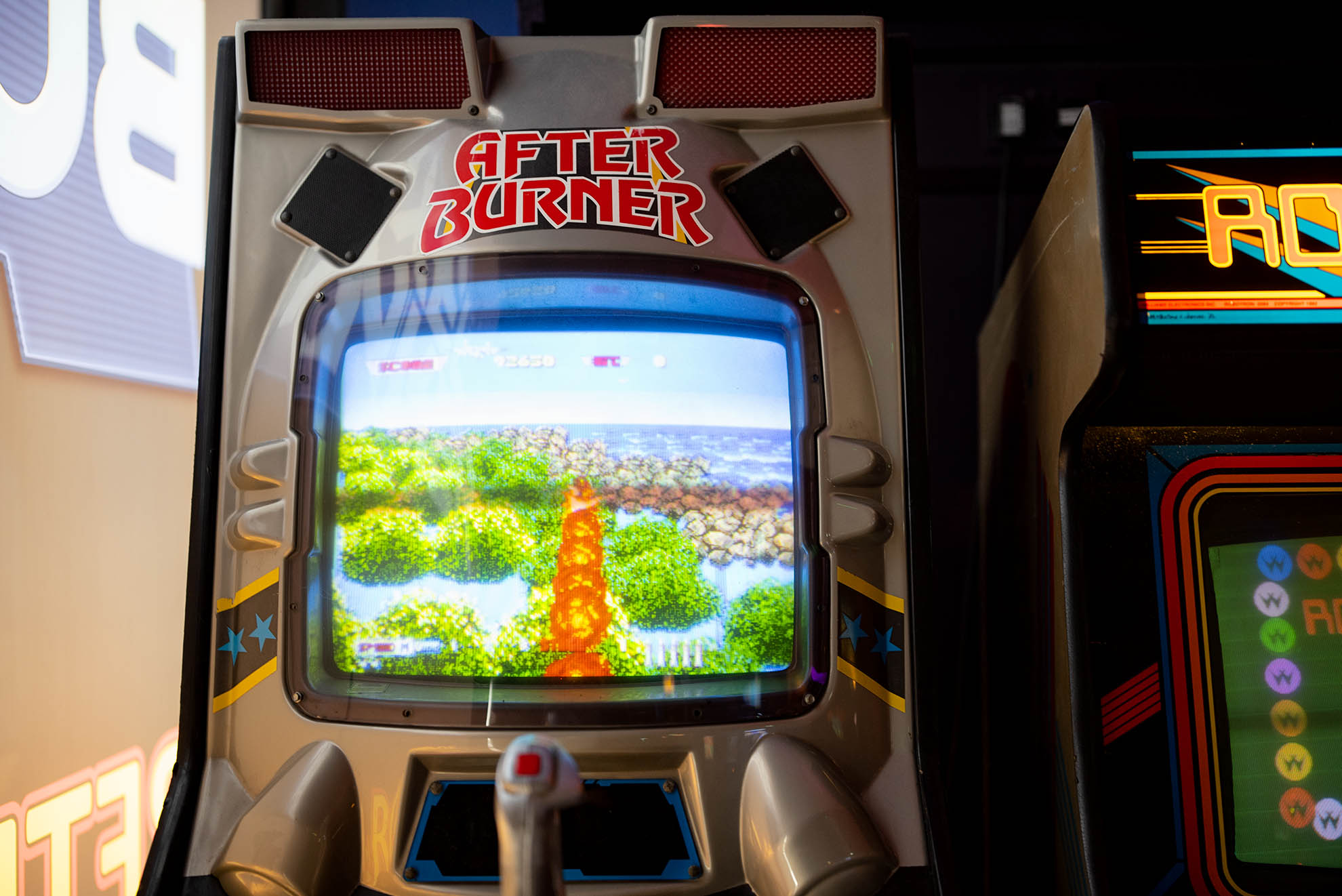
The X Board was a dual-processor system featuring two custom 16-bit Motorola MC68000 CPUs running at 12.5 MHz for main processing. A Z80 sound CPU clocked at 4 MHz handled the audio subsystem, which incorporated a Yamaha YM2151 FM synthesis chip for those unforgettable melodic and stereo sound effects.
What made the X Board special was its ability to perform sprite scaling and rotation in real-time. This technique, which Sega had pioneered with Space Harrier, created the illusion of smooth 3D movement as enemy jets and missiles flew toward the screen. Objects could grow larger as they approached and shrink as they receded, all rendered at a buttery-smooth 60 frames per second.
The X Board would go on to power other classic Sega titles including Thunder Blade (1987) and Super Monaco GP (1989), but After Burner remains its most celebrated achievement.
After Burner II: The Enhanced Experience
Later in 1987, just months after the original release, Sega unveiled After Burner II. Rather than a true sequel, this was an enhanced version that addressed player feedback and added crucial new features.
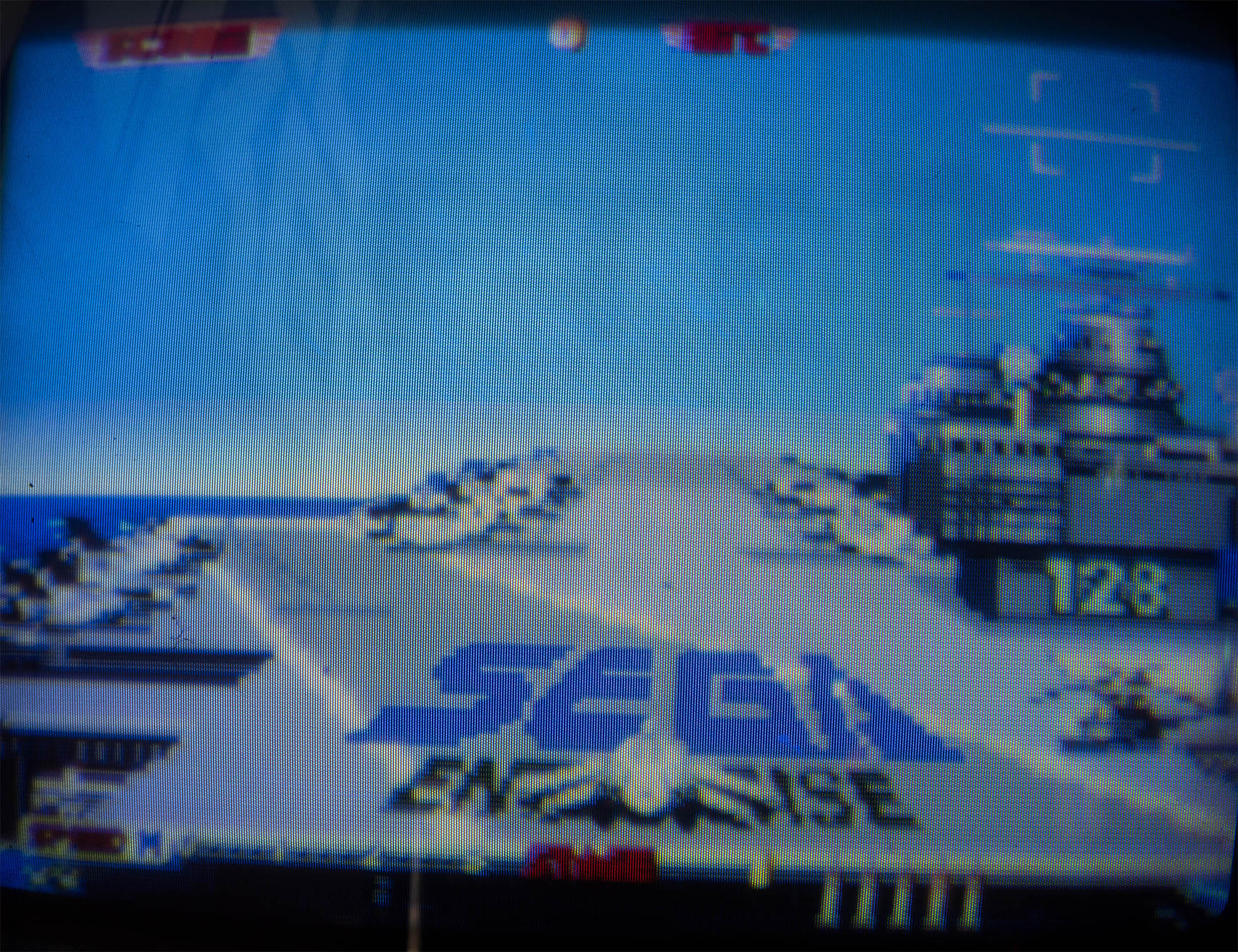
The most significant addition was the throttle control. Where the original After Burner kept players at a constant speed, After Burner II allowed them to vary their velocity, adding a new tactical dimension to the gameplay. Flying slower made it easier to line up shots, while pushing the throttle forward helped evade pursuing enemies.
Other improvements included: - 23 stages instead of 18 (including 3 landing cutscenes and 2 canyon bombing runs) - New enemy formations designed around the speed-based challenges - Missiles that could be fired considerably more frequently - A different attract mode and waiting screen
The original After Burner was primarily a Japan-only release, while After Burner II became the version that conquered the world. Most players outside Japan experienced the series through After Burner II, which is why it's often considered the definitive version.
The Legendary Soundtrack
No discussion of After Burner is complete without praising the work of Hiroshi "Hiro" Kawaguchi, one of Sega's most legendary composers.
Born on April 12, 1965, Kawaguchi joined Sega in 1984 as a programmer before transferring to the sound department the following year. He worked closely with Yu Suzuki and became the musical voice of Sega's golden age, composing the soundtracks for Space Harrier, OutRun, and After Burner.
The After Burner soundtrack is a masterclass in creating adrenaline-pumping arcade music. The compositions perfectly complement the on-screen action, ramping up intensity during combat while providing brief moments of respite during refueling sequences. The YM2151 FM synthesis chip gave Kawaguchi a rich palette of sounds to work with, and he made full use of its capabilities.
The soundtrack's enduring popularity is evidenced by its numerous re-releases. A six-CD box set was released for the game's 20th anniversary, and Data Discs issued the complete arcade score on vinyl, including an unused "Melody Version" of the title track. In 2015, additional melody versions were discovered on Kawaguchi's original 8-inch floppy discs and included in the 3DS remaster.
Kawaguchi has remained active at Sega, returning to update his classic soundtracks for modern releases like OutRun 2: Coast to Coast (2006) and After Burner Climax (2006).
Dominating the Charts
After Burner was a worldwide commercial juggernaut. In Japan, it was the second highest-grossing large arcade game of 1987, beaten only by Suzuki's own OutRun. But it didn't stop there. In 1988, After Burner claimed the top spot, becoming Japan's highest-grossing arcade game overall.
In the United States, After Burner ranked among the top five highest-grossing dedicated arcade games of 1988. The game proved especially popular in American malls, where the Deluxe cabinet became an instant attraction.
The commercial success was transformative for Sega. The company had been struggling with financial disappointments, but After Burner helped turn things around. More importantly, it elevated Yu Suzuki to star developer status, cementing his reputation as one of gaming's true visionaries.
Awards and Recognition
The gaming press and industry recognized After Burner's achievements with numerous accolades.
At the 1987 Gamest Awards in Japan, After Burner dominated the competition, taking home the Best Graphics award while placing second for Game of the Year and third for Most Popular Game. The game's audiovisual excellence was further recognized with fourth place for Best VGM and eighth for Best Sound Synthesis.
The game also received a Special Award at the 1988 Gamest Awards, recognizing its continued impact on the industry.
In the United States, After Burner won the "Most Innovative Game" award at the Amusement & Music Operators Association's 1988 AMOA Games Awards, acknowledging how the Deluxe cabinet had revolutionized arcade immersion.
The Home Conversions
Bringing After Burner's arcade experience home was a significant challenge, but Sega and third-party developers gave it their best efforts across numerous platforms.
The Sega Master System version was an admirable attempt, though the hardware's limitations meant sacrificing some of the arcade's visual splendor. Interestingly, this version gave players unlimited missiles, significantly altering the game's balance.
The Sega Genesis/Mega Drive version was among the best home ports of its era, ranking #38 on Mega magazine's Top Mega Drive Games of All Time. It captured much of the arcade's intensity while working within the 16-bit system's constraints.
The Sega 32X received "After Burner Complete," a near-flawless port that finally brought the arcade experience home with remarkable accuracy. The spectacular sprite scaling and speed were faithfully recreated, though it ran at 30 FPS rather than the arcade's 60 FPS.
The Sega Saturn version stands as arguably the best home port, offering both analog and digital control options along with a smooth 60 FPS framerate that matched the arcade original.
The After Burner Legacy
After Burner's influence extends far beyond its original release. The game established templates for aerial combat games that persist to this day.
Yu Suzuki's vision for the original After Burner cabinet, particularly his idea of spinning the player completely around in a gyroscopic enclosure, eventually became the R-360 in 1990. This legendary cabinet, which could rotate a full 360 degrees in any direction, represented the ultimate evolution of Sega's taikan philosophy.
After Burner Climax, released in 2006, brought the series into the modern era. Hiroshi Kawaguchi returned to update his classic soundtrack, and the game featured stunning HD graphics while maintaining the core gameplay that made the original so beloved.
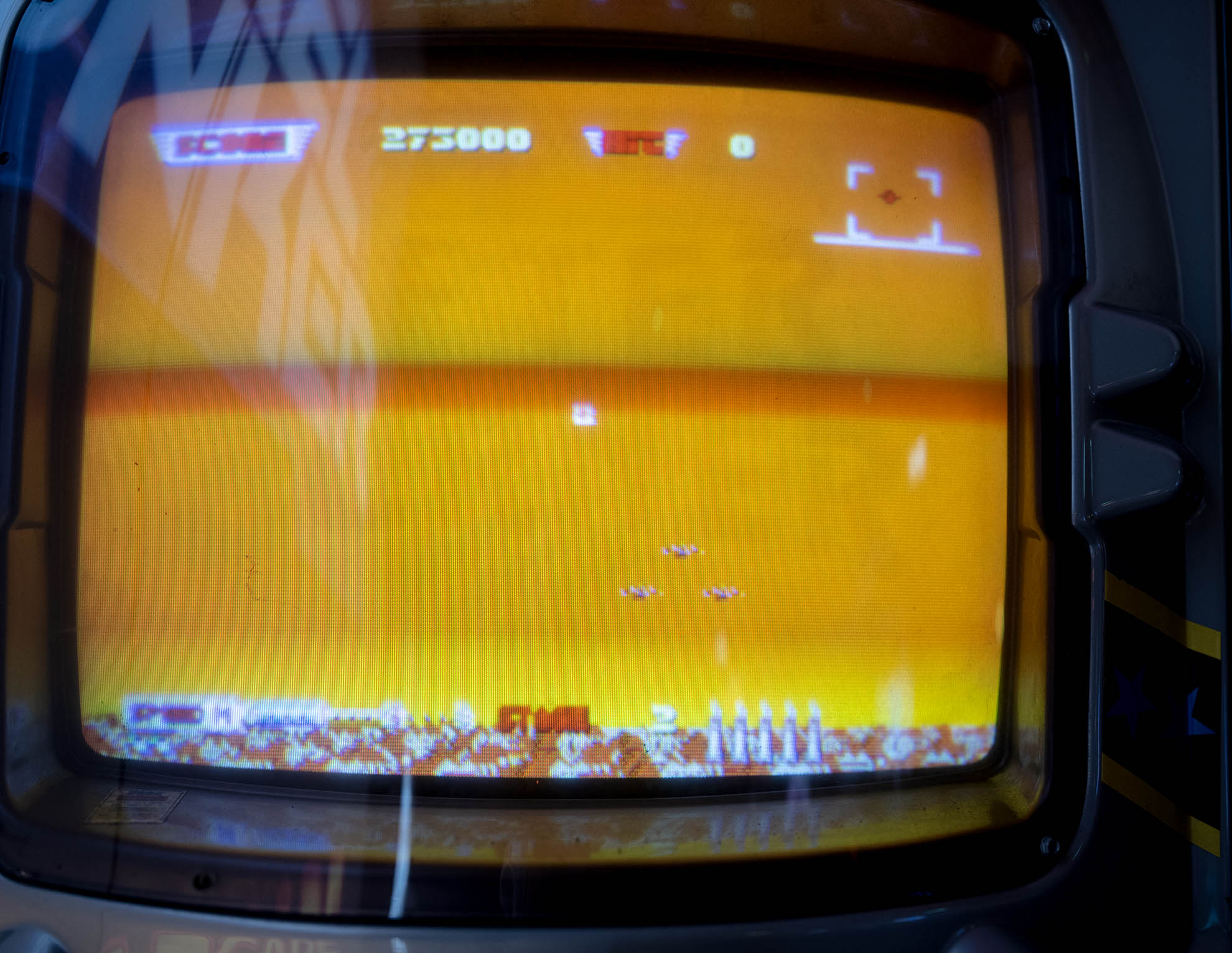
In 2015, the Nintendo 3DS received an enhanced port as part of the Sega 3D Classics line. This version included the previously unreleased "Melody Versions" of Kawaguchi's compositions, recovered from his original 8-inch floppy discs and remastered for a new generation.
The Sensation That Never Faded
Nearly four decades after its release, After Burner remains one of the most exhilarating arcade experiences ever created. There's something primal about climbing into that cockpit, strapping on the seatbelt, and feeling the machine come alive as you engage the throttle.
Yu Suzuki and his team at Studio 128 didn't just create a video game. They created an experience that transcended the medium. The marriage of cutting-edge technology, heart-pounding gameplay, and revolutionary cabinet design established a benchmark that few games have matched.
When you play After Burner, you're not just pressing buttons. You're climbing into the cockpit of an F-14 Tomcat, launching from the SEGA Enterprise, and soaring into endless blue skies filled with danger and glory. That's the magic of After Burner. That's the legacy of Yu Suzuki. That's why, nearly four decades later, we're still talking about a game that dared to ask: what if arcade gaming could make you feel like you're actually flying?
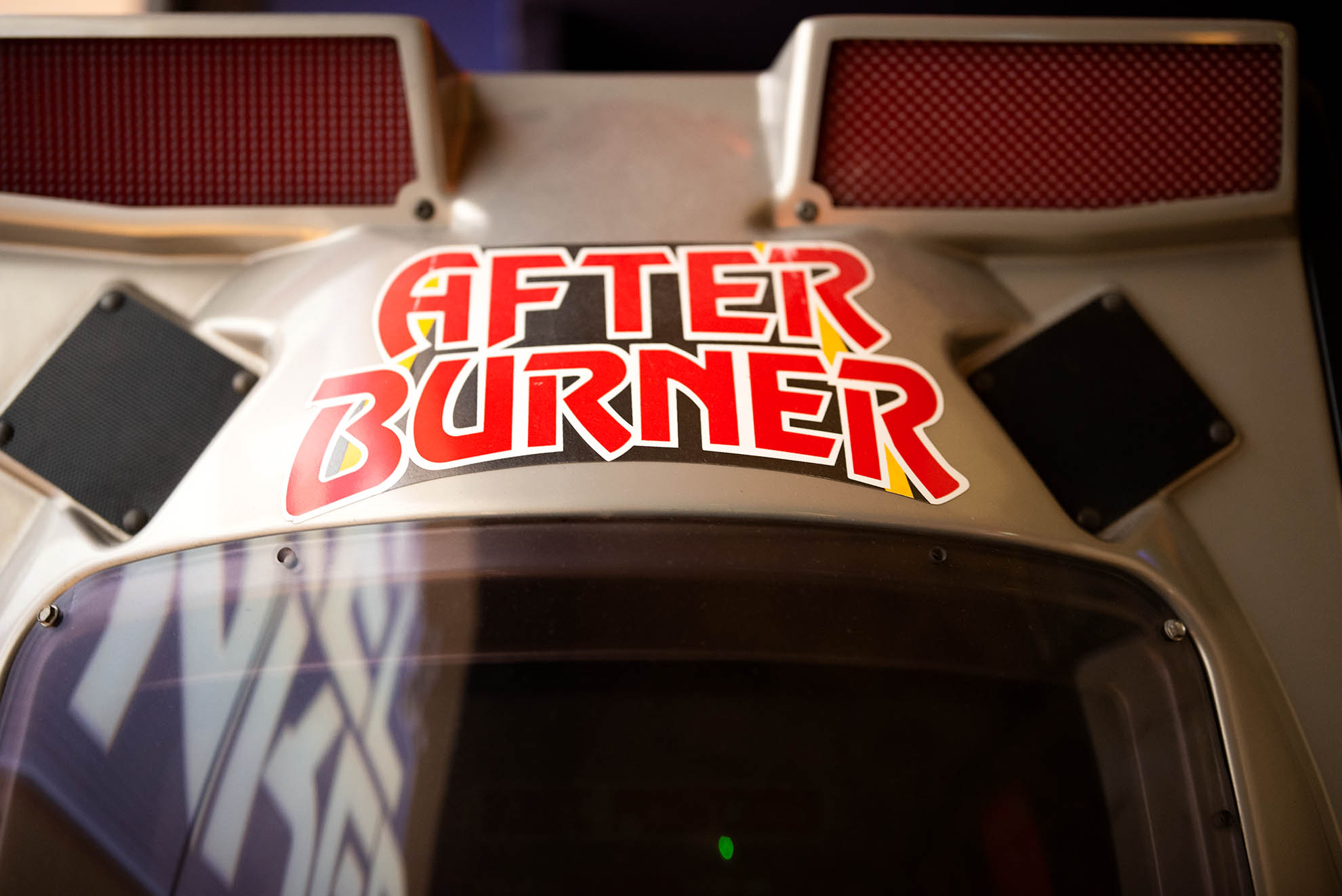
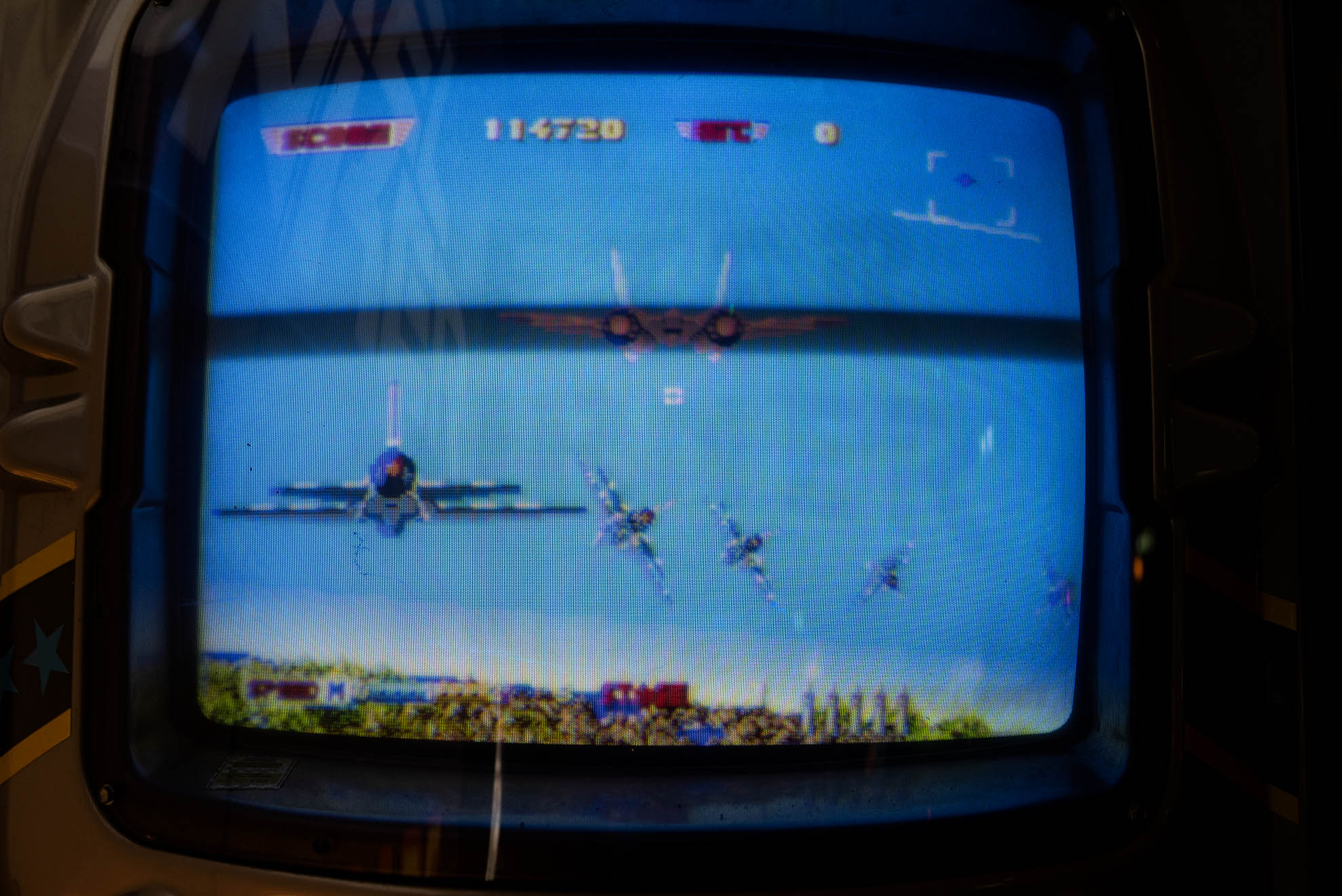
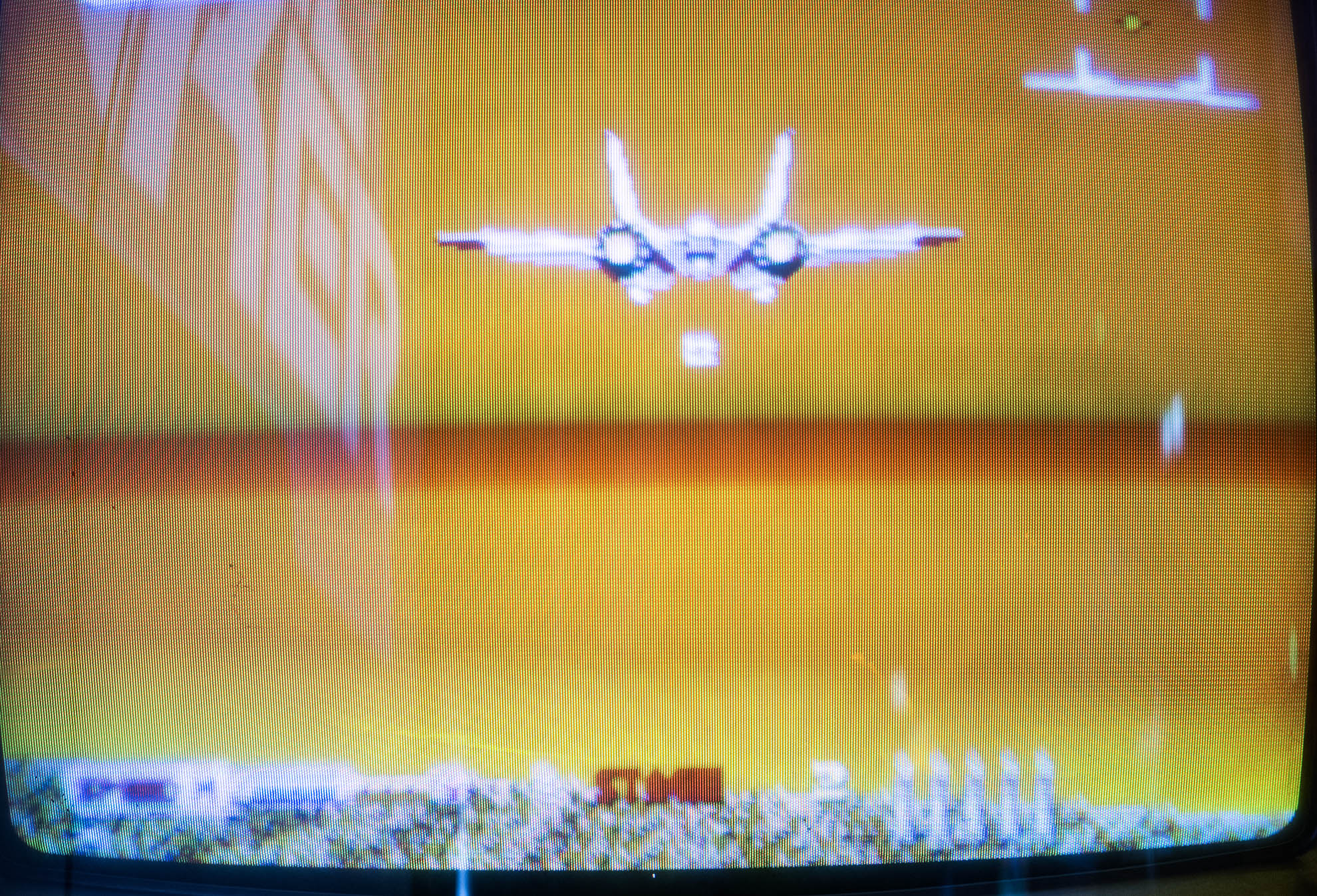
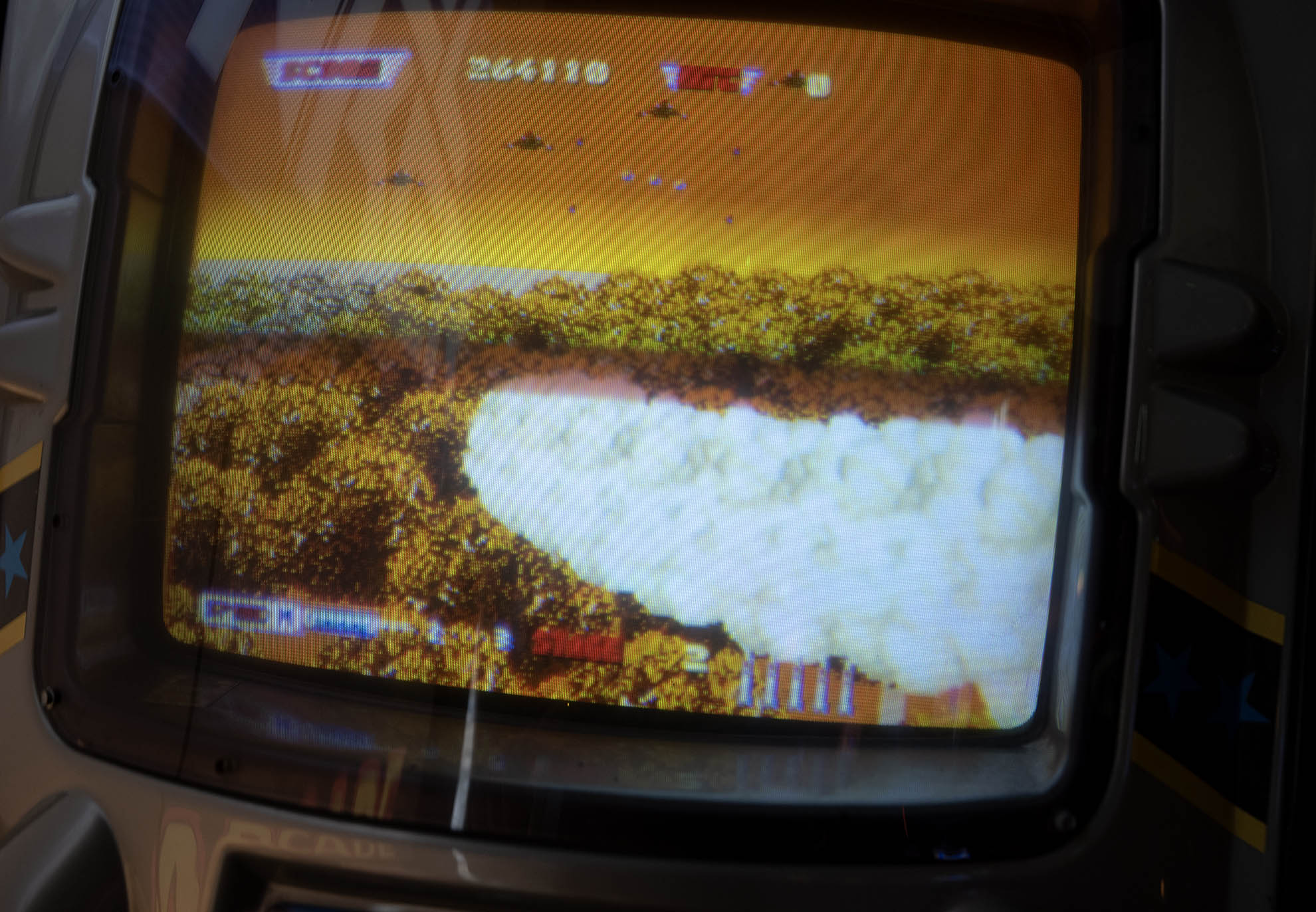
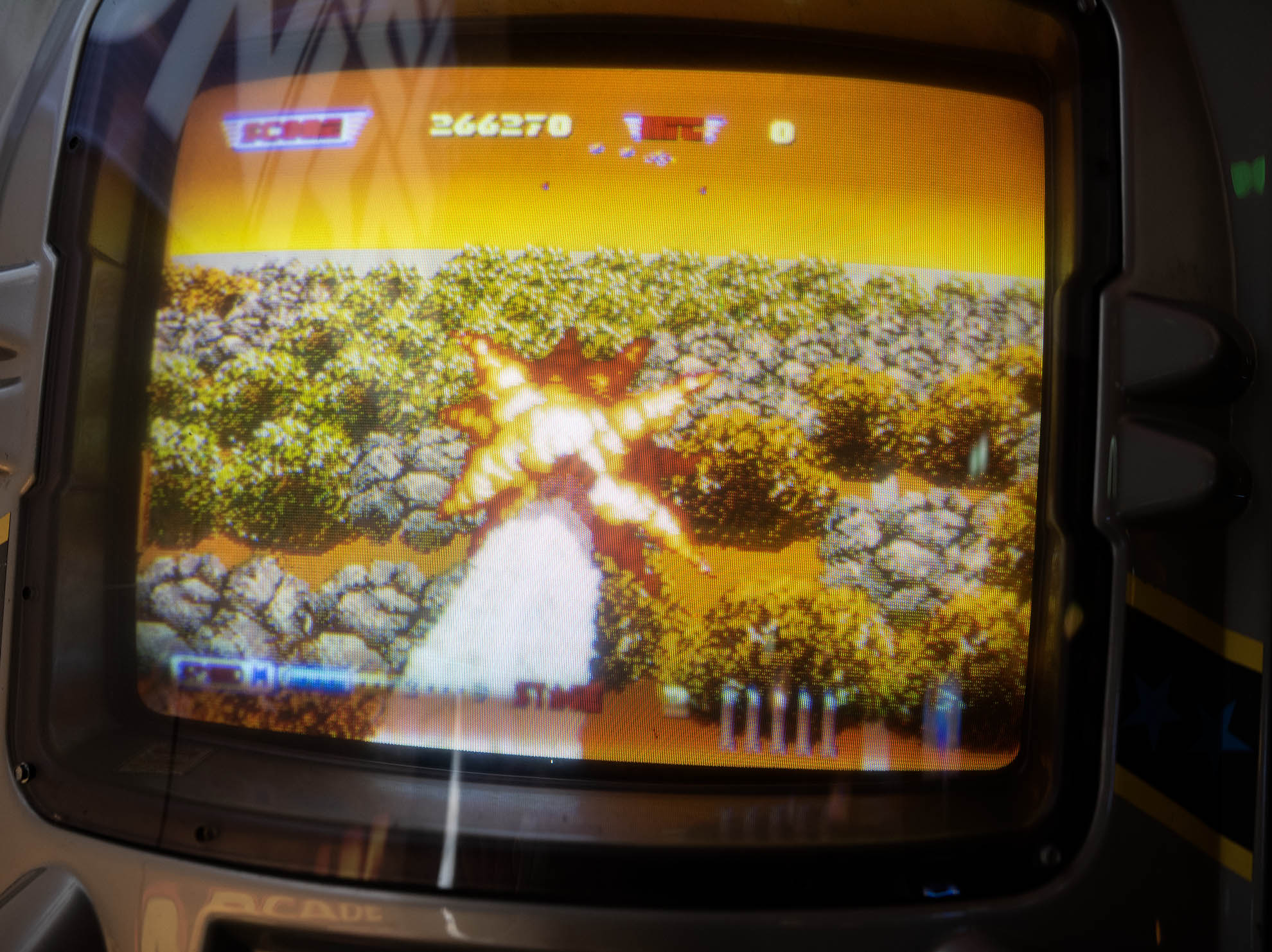
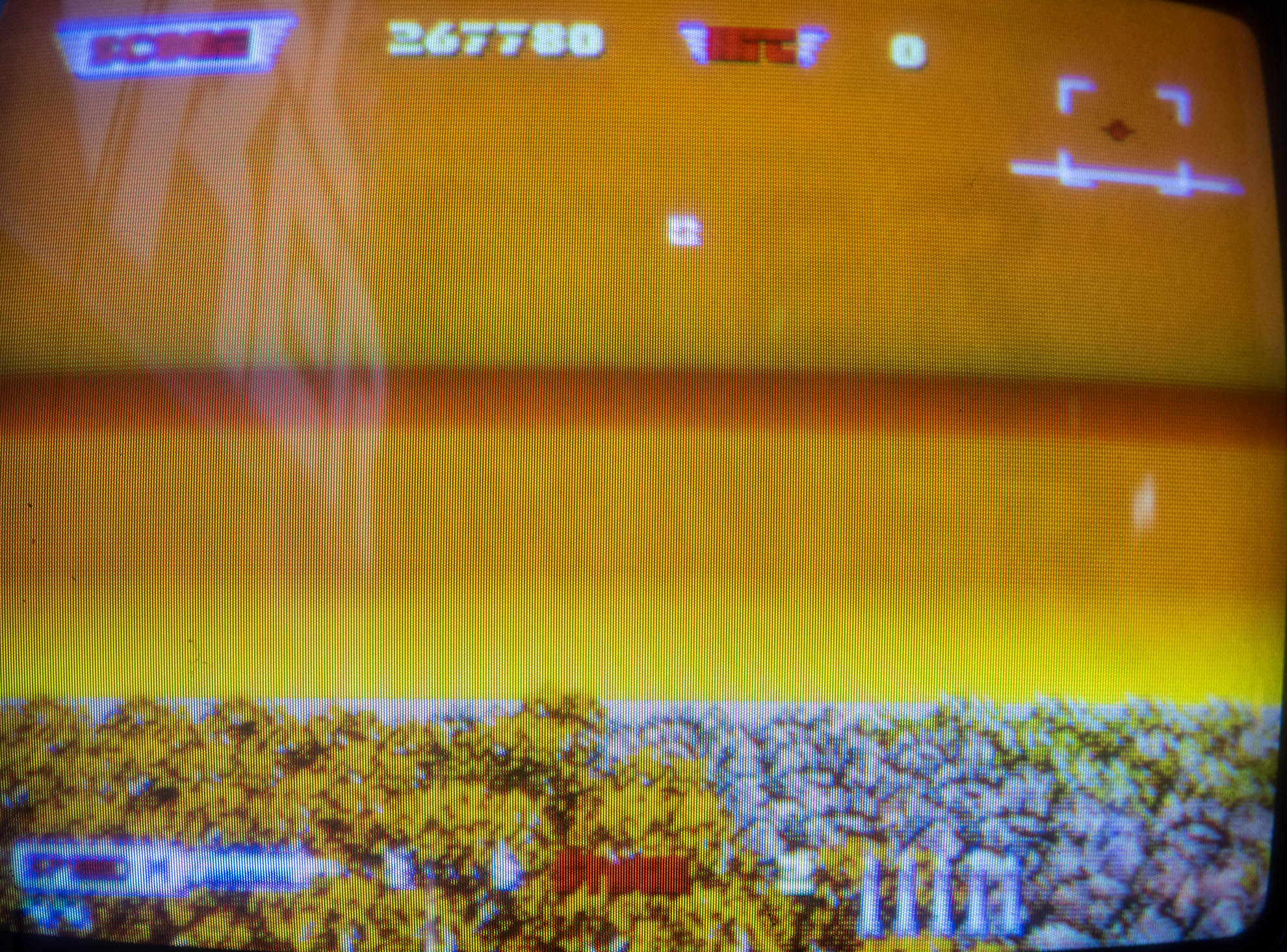
All arcade cabinet photos taken by the author at The Pixel Bunker.
For more Sega classics, see Hang-On and Altered Beast.\n\nPicture this: You're walking through a bustling arcade in the summer of 1987. The familiar symphony of bleeps, bloops, and button mashing fills the air. But then you see it. A massive contraption that looks like it was ripped straight from a military training facility. A full-sized cockpit, complete with seatbelt, tilting and rotating with every movement of the player inside. The thunderous roar of jet engines blares from speakers positioned at head height. This isn't just another video game. This is After Burner, and it's about to redefine what an arcade experience can be.
Gallery
Get Gaming News and Features First
Stay updated with the latest gaming news and exclusive content.