Altered Beast: The Legendary Arcade Beat 'Em Up That Launched the Sega Genesis Era
Altered Beast (1988) earned $79M and launched the Sega Genesis era. Makoto Uchida's System 16B beat 'em up with iconic 'Rise from your grave' voice samples.
Picture this: it's 1988, and you're walking through a dimly lit arcade. The air smells like cigarette smoke and hot electronics. Rows of cabinets flash and beep, each one competing for your attention. Then you hear it. A booming, distorted voice cuts through the noise: "RISE FROM YOUR GRAVE!"
That voice belonged to Altered Beast, and if you grew up in the late 80s or early 90s, those four words probably just sent a shiver down your spine. This wasn't just another quarter-muncher. This was the game that would help launch a console revolution.
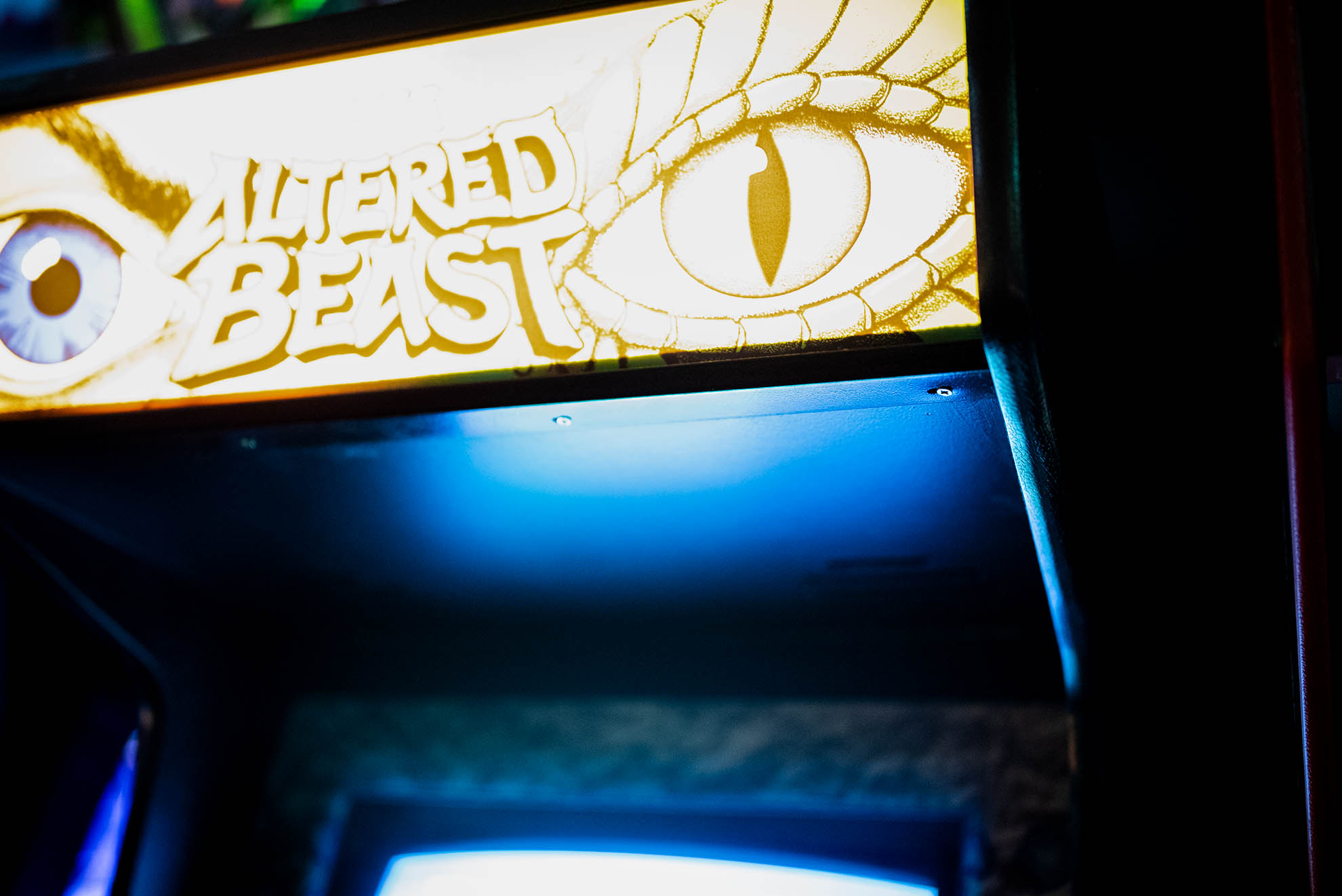
The Beast King's Origins
The story of Altered Beast begins with a young man named Makoto Uchida. Born on July 13, 1955, Uchida joined Sega in 1987 as a humble play tester on After Burner. But he had bigger dreams. He was an avid gamer who had grown up in the golden age of arcades, and he wanted to create something that would blow people's minds.
Uchida pitched an idea to his bosses: a Greek mythology beat 'em up where players could transform into powerful beasts. The inspiration came from some unexpected places. He loved the transformation sequences in Michael Jackson's Thriller music video. He was obsessed with the werewolf transformations in The Howling. And he wanted to blend these with the epic monsters from Ray Harryhausen's classic films.
Sega gave him the green light, but there was a catch. No development team was available. Uchida had to wait six months before a group of developers freed up. That team was Team Shinobi, a small unit within Sega's R&D1 division that had just finished working on the arcade hit Shinobi. They got to work turning Uchida's vision into reality.
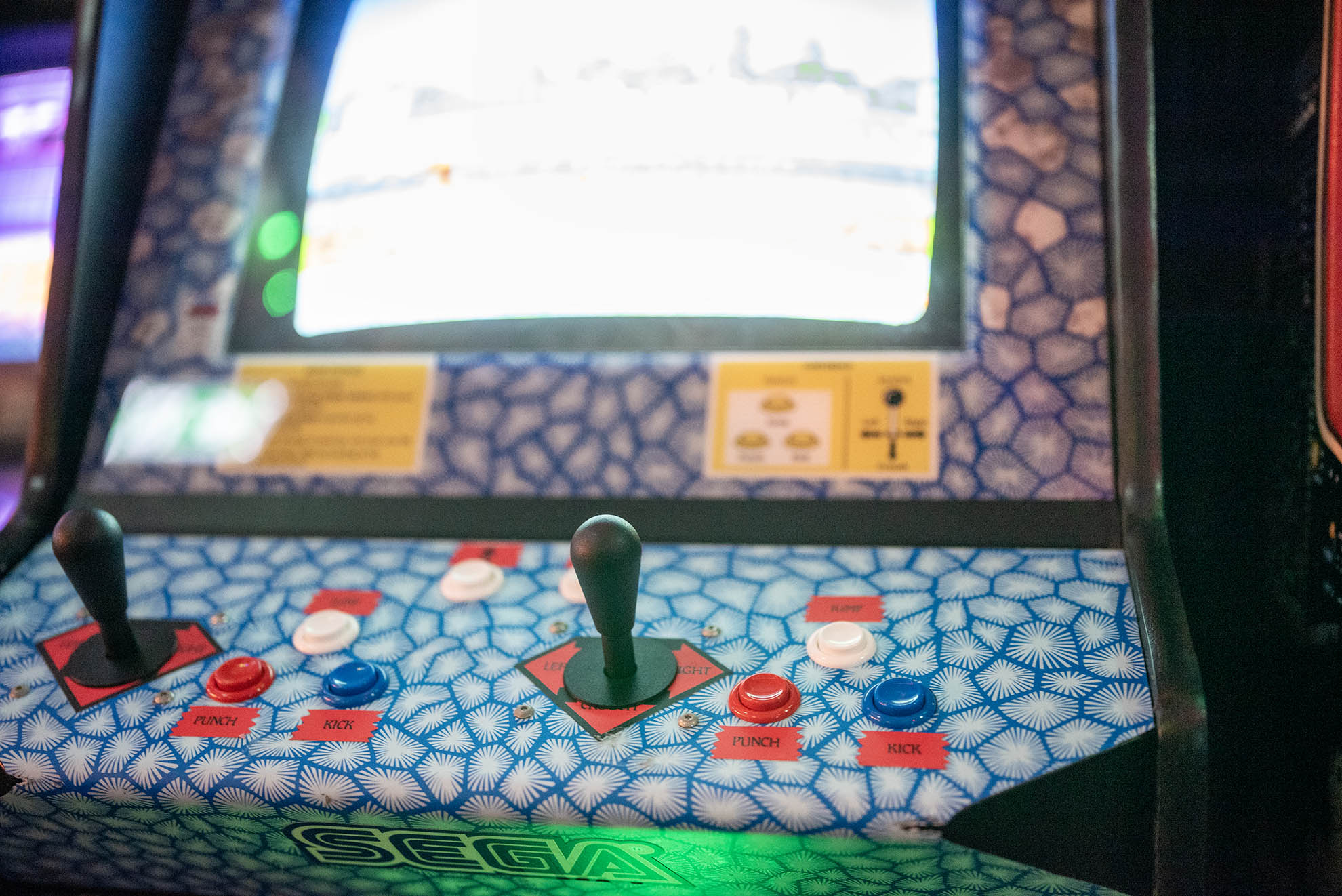
Power Up! The Transformation System
What made Altered Beast different from every other beat 'em up at the time? The transformations.
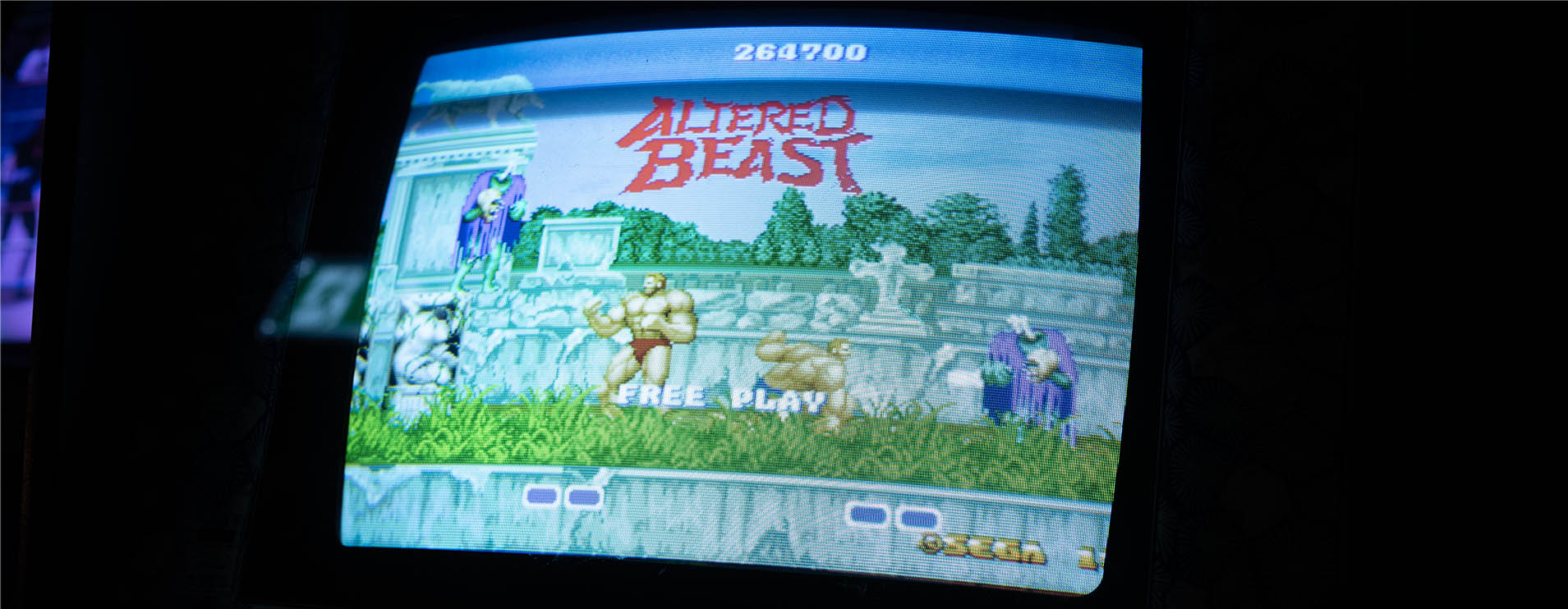
You start the game as a resurrected Roman centurion, punching and kicking your way through hordes of undead creatures. You're decent at fighting, but nothing special. Then you encounter a white two-headed wolf. Defeat it, and a Spirit Ball floats toward you. Grab it.
With one Spirit Ball, your muscles bulge. Your character visibly grows stronger. Grab a second one, and you become even more massive, almost grotesquely muscular. But the third Spirit Ball? That's when the real magic happens.
Your body contorts. Fur sprouts. Claws extend. You become something else entirely.
Each of the game's five stages features a different beast transformation:
| Stage | Beast Form |
| Stage 1 | Werewolf (fireballs + dash attack) |
| Stage 2 | Weredragon (lightning + electric barrier) |
| Stage 3 | Werebear (petrifying breath) |
| Stage 4 | Weretiger (zigzag fireballs) |
| Stage 5 | Golden Werewolf (enhanced wolf) |
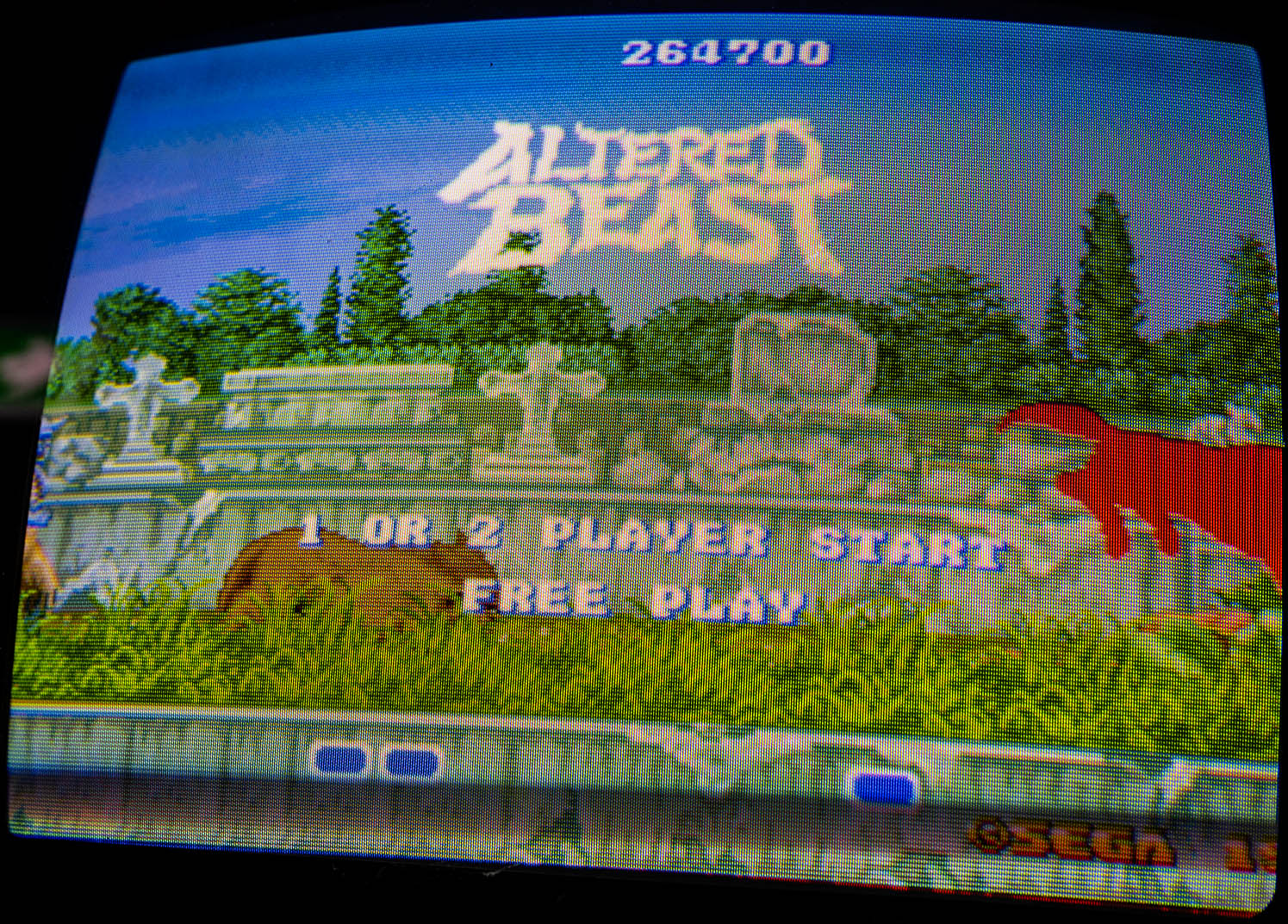
Uchida was so committed to making these transformations look spectacular that he had his lead artist spend an entire month working on nothing but the transformation animations. In 1988, that kind of dedication to a single visual effect was almost unheard of.
Welcome to Your Doom: The Greek Mythology Twist
The game's story is delightfully bonkers. Zeus, king of the Greek gods, has a problem. His daughter Athena has been kidnapped by Neff, a demon god who rules the underworld. Zeus can't intervene directly, so he does the next best thing: he resurrects a dead centurion warrior and gives him the power to transform into mythological beasts.
Here's a fun fact that most players never knew. Neff isn't actually from Greek mythology. Uchida made him up entirely. The name "Neff" comes from the Japanese word "Majin," which roughly translates to "demon god" or "magician." In classical Greek mythology, Hades rules the underworld. But Uchida decided to create his own villain, giving himself more creative freedom.
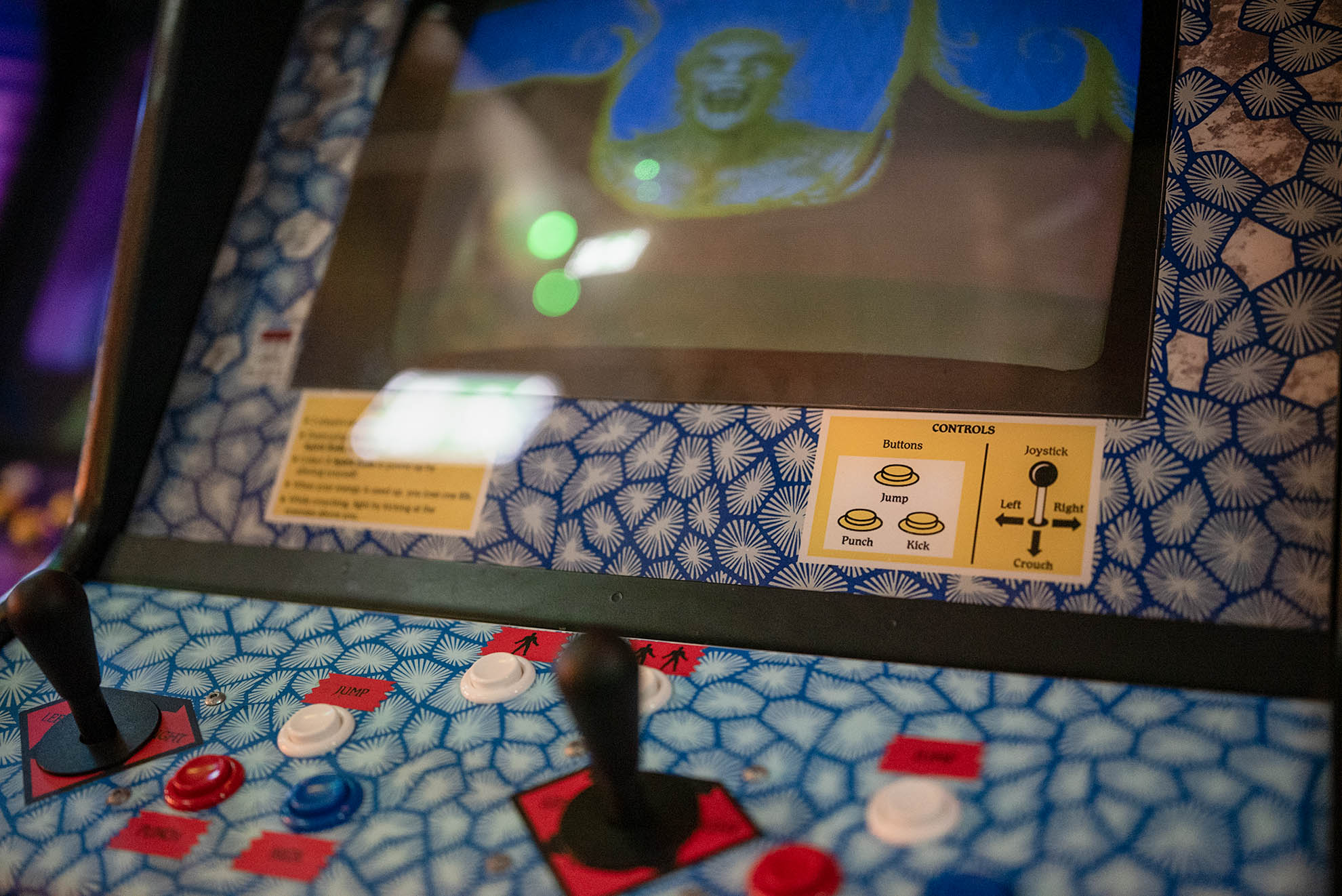
The Japanese version of the game actually has a much more elaborate backstory. It tells of an ancient race called the Beastmen who combined human intelligence with animal strength and divine power. Their arrogance angered Zeus, who sealed them away in a stone monument. When Athena is captured, the gods have no choice but to release these sealed warriors to save her.
Technical Powerhouse: System 16B
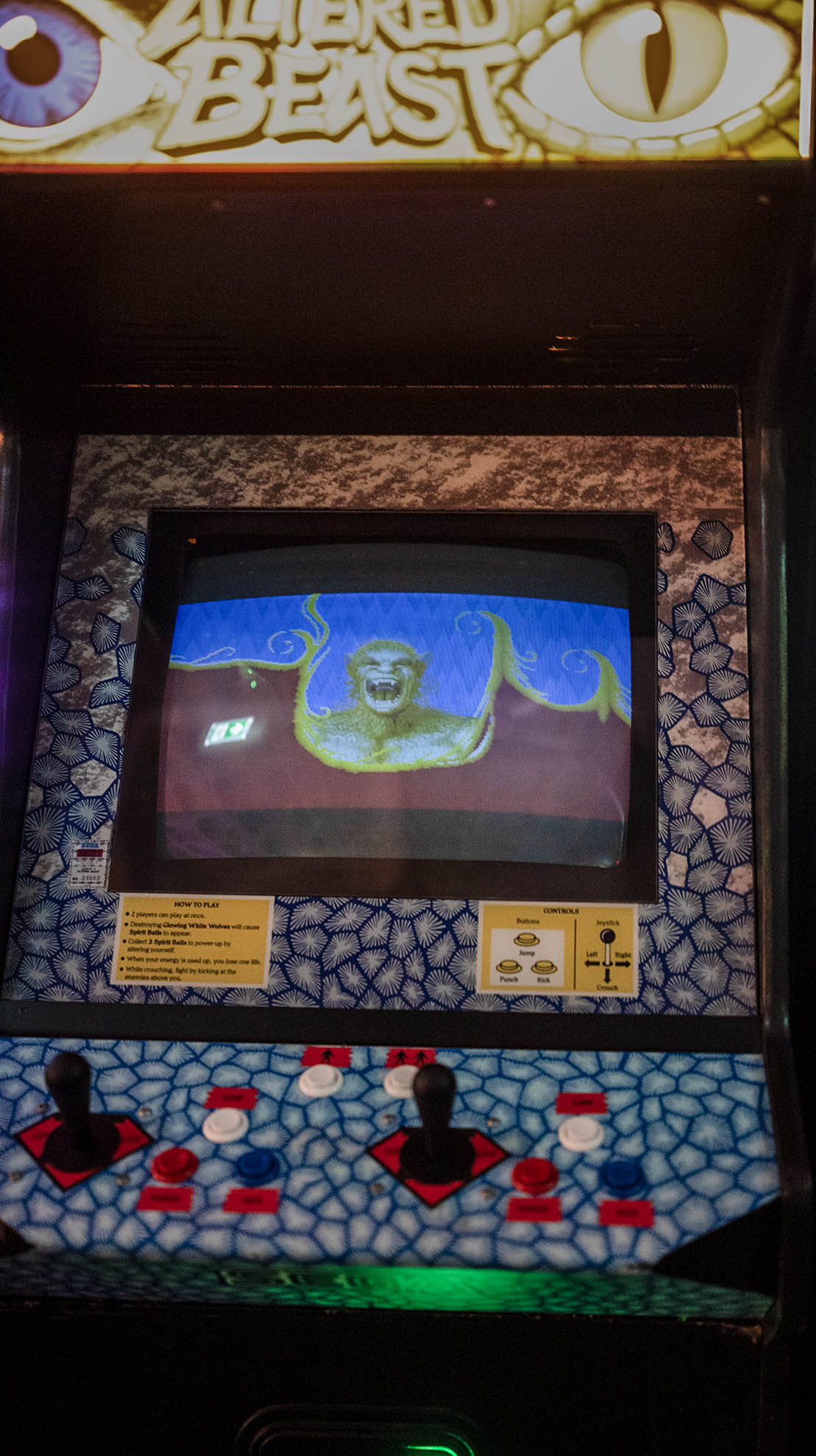
Altered Beast ran on Sega's System 16B hardware, one of the most capable arcade boards of its era. Under the hood, it packed a Motorola 68000 processor running at 10 MHz, with a Zilog Z80 handling sound duties. The Yamaha YM2151 sound chip delivered those unforgettable voice samples and the driving soundtrack.
But the real star was the graphics capability. System 16B could display 128 sprites on screen simultaneously, with individual sprites reaching up to 256 by 256 pixels and 16 colors each. This allowed for those massive, detailed character sprites that made Altered Beast such a visual showcase.
The voice samples deserve special mention. "Rise from your grave," "Power up," and "Welcome to your doom" were revolutionary for their time. Digitized speech in arcade games was still relatively rare in 1988, and the clarity of these samples (well, relatively speaking) helped the game stand out. Fans still joke about the slightly garbled pronunciation, often transcribing it as "Wise fwom your gwave!"
These voice samples have had a surprisingly long cultural afterlife. The opening line is used in every episode of Last Podcast on the Left. Electronic music artist Phuture sampled the voice clips in their 1992 track "Rise From Your Grave." And countless gamers over the years have set it as their morning alarm.
$79 Million in Quarters
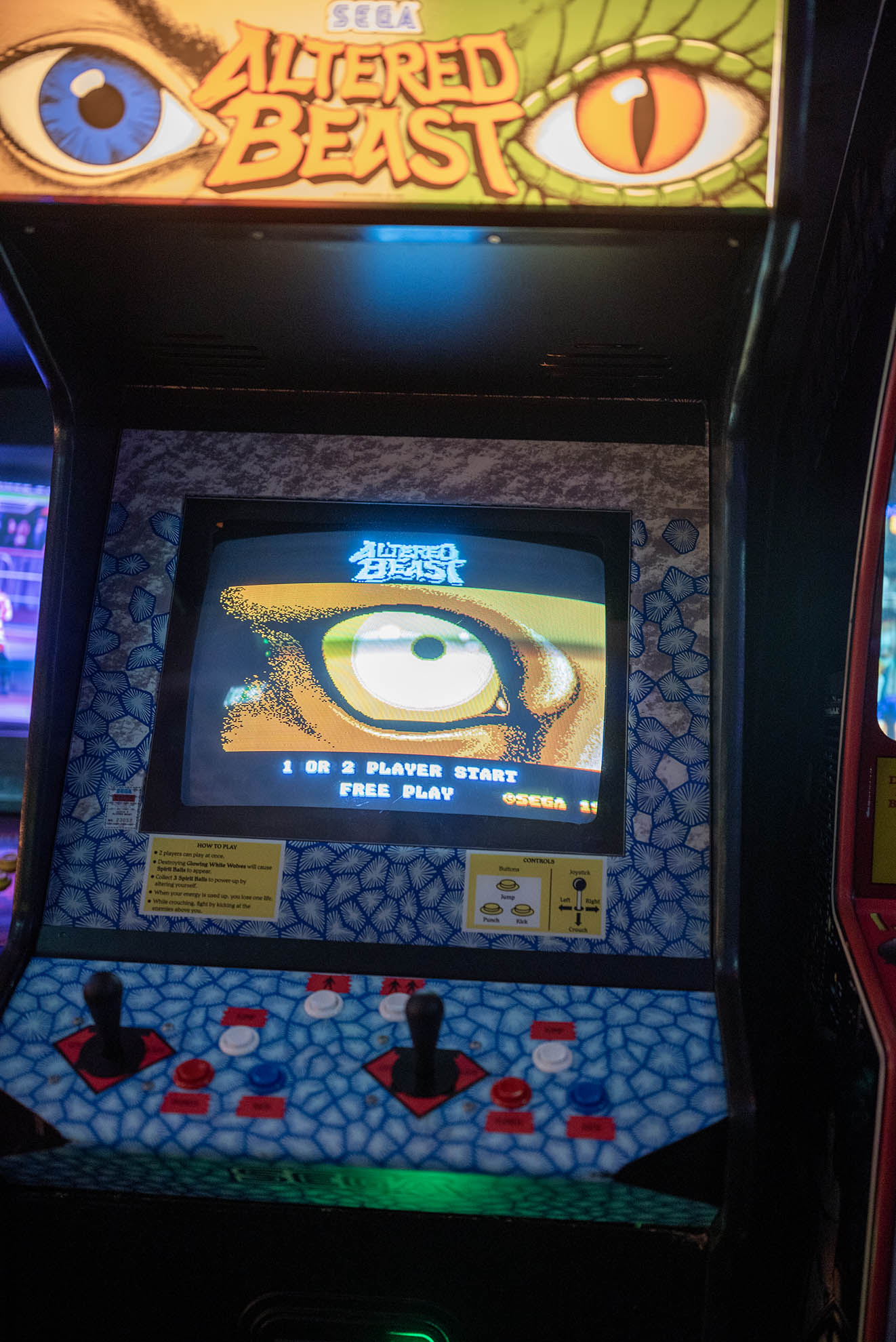
When Altered Beast hit Japanese arcades in June 1988, the response was... mixed. Japanese players had just come off Shinobi, which many considered to have superior gameplay. Altered Beast's more straightforward combat didn't quite capture their imagination the same way.
But America? America went absolutely wild for it.
The combination of the flashy graphics, the transformation mechanic, and those memorable voice samples struck a chord with American arcade goers. The game generated $26 million in Japan and a staggering $53 million in the United States during 1988 alone. That's $79 million total, an enormous sum for an arcade game.
In Japan, Altered Beast was the second highest-grossing arcade game of July 1988. But American arcade operators couldn't keep enough machines on their floors. The success was so overwhelming that Sega executives made a decision that would change gaming history.
The Genesis Era Begins
Nintendo had established the template: bundle a great game with your console to get it into homes. Super Mario Bros. with the NES had been a masterstroke. Sega needed something similar for their new 16-bit console, the Mega Drive (called the Genesis in North America).
Altered Beast was the obvious choice. It was already proven in arcades. It showed off what 16-bit hardware could do. And the Genesis hardware was actually based on the System 16 architecture, meaning the port could be remarkably faithful to the original.
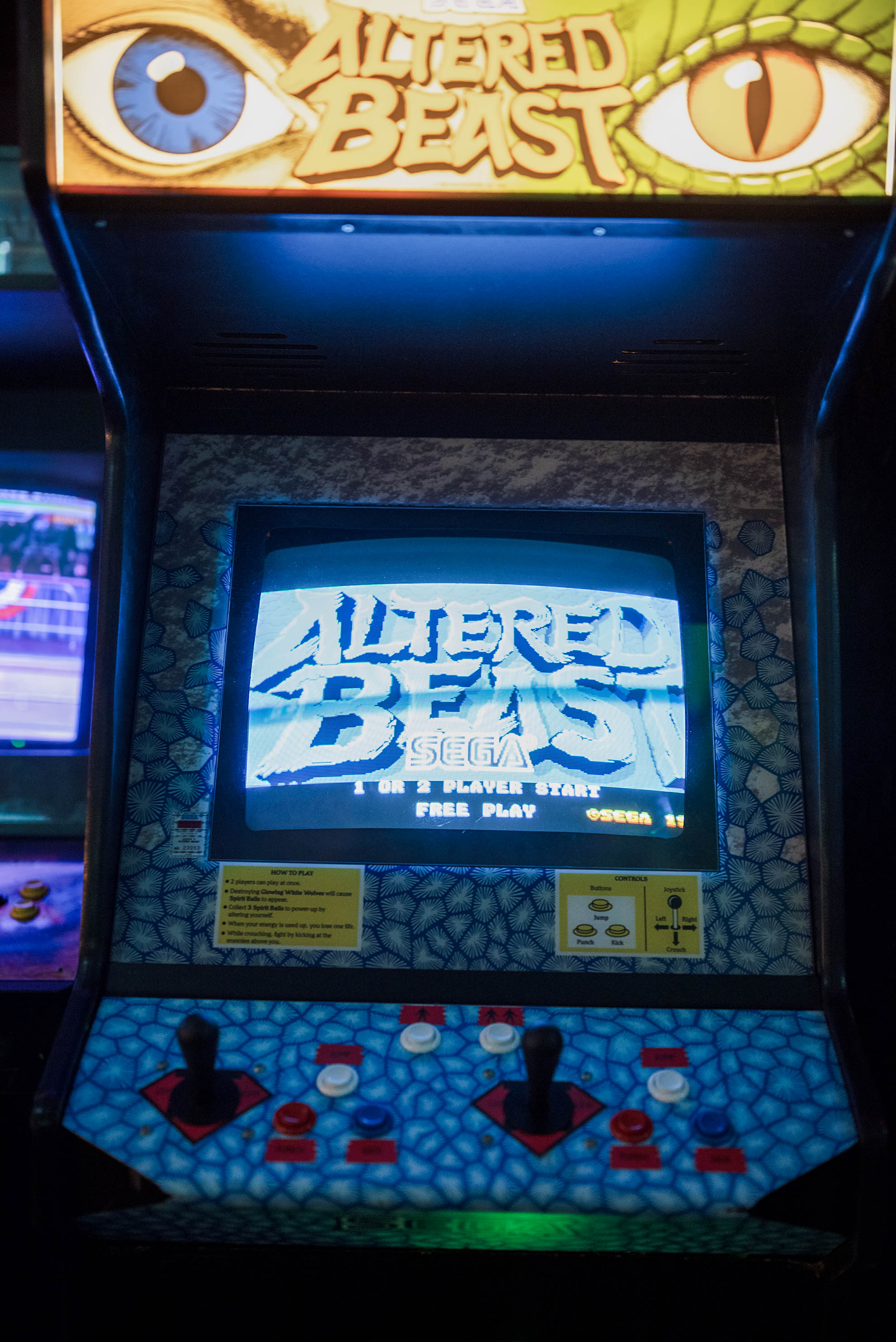
When the Genesis launched in North America in 1989, every console came with Altered Beast. The results were impressive. In that first year alone, approximately 500,000 North American homes had a Genesis with Altered Beast. By the time the bundle was discontinued in 1991, roughly 1.4 million consoles had shipped with the game.
Uchida himself has a bittersweet story about this success. He never actually saw his game bundled with a console. By the time he visited the United States three years after launch, Sonic the Hedgehog had already replaced Altered Beast as the pack-in game. Sega even offered customers who bought the Altered Beast bundle a free copy of Sonic through a mail-in offer.
The Legendary Soundtrack
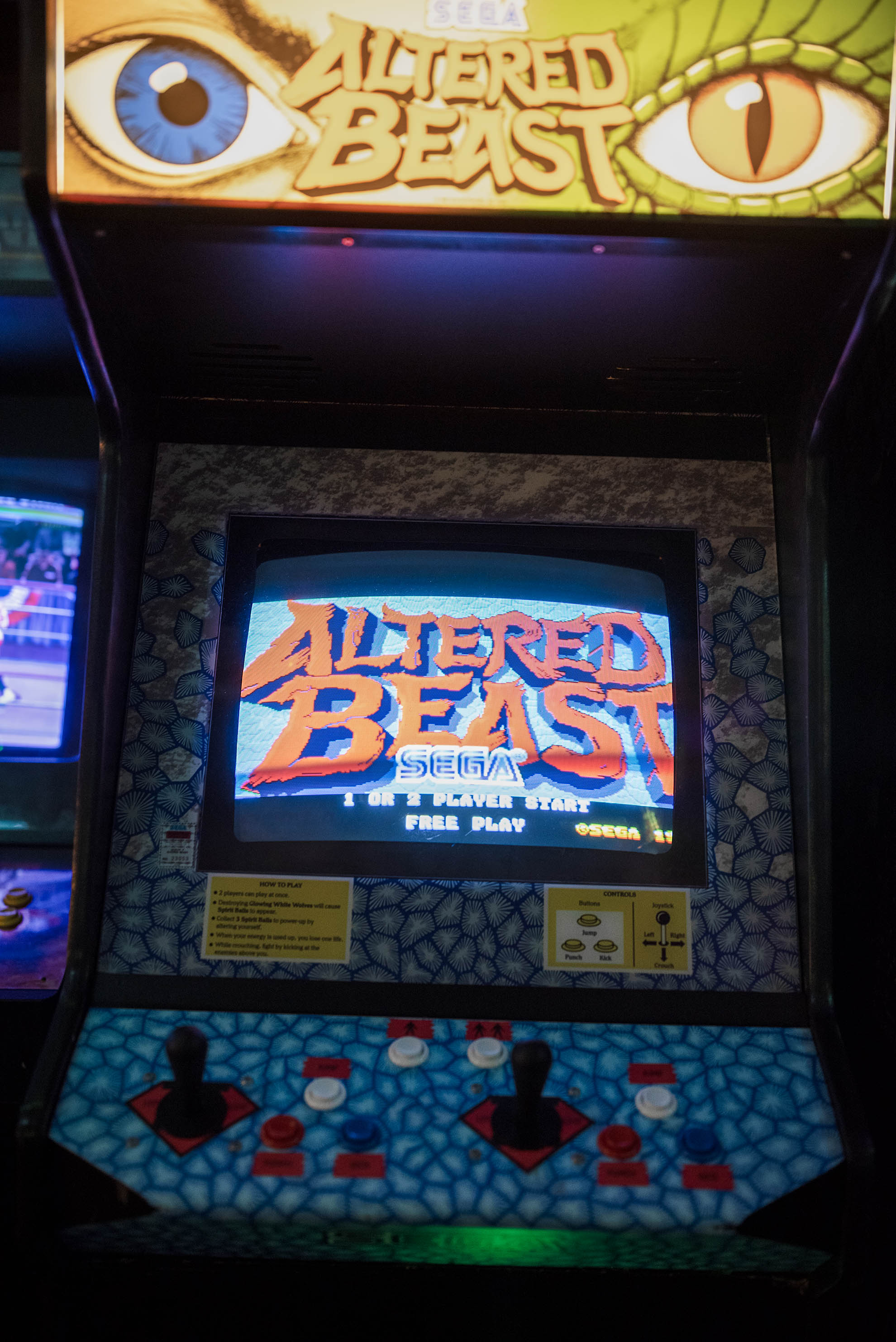
Tohru Nakabayashi, credited as "NAK." or "Master" in Sega's credits, composed the Altered Beast soundtrack. Born December 25, 1957, Nakabayashi was a veteran of Sega's sound team who had previously worked on Thunder Blade and Alien Syndrome. He would later go on to compose the music for Golden Axe.
The soundtrack walks a fascinating line between driving action themes and atmospheric underworld dirges. The boss theme "Gaum-Hermer" still gets stuck in people's heads decades later. In 2017, the vinyl specialists at Data Discs released the Altered Beast soundtrack as their 12th vinyl release, sourced directly from a Japanese Mega Drive for authenticity.
The Secret Movie Ending
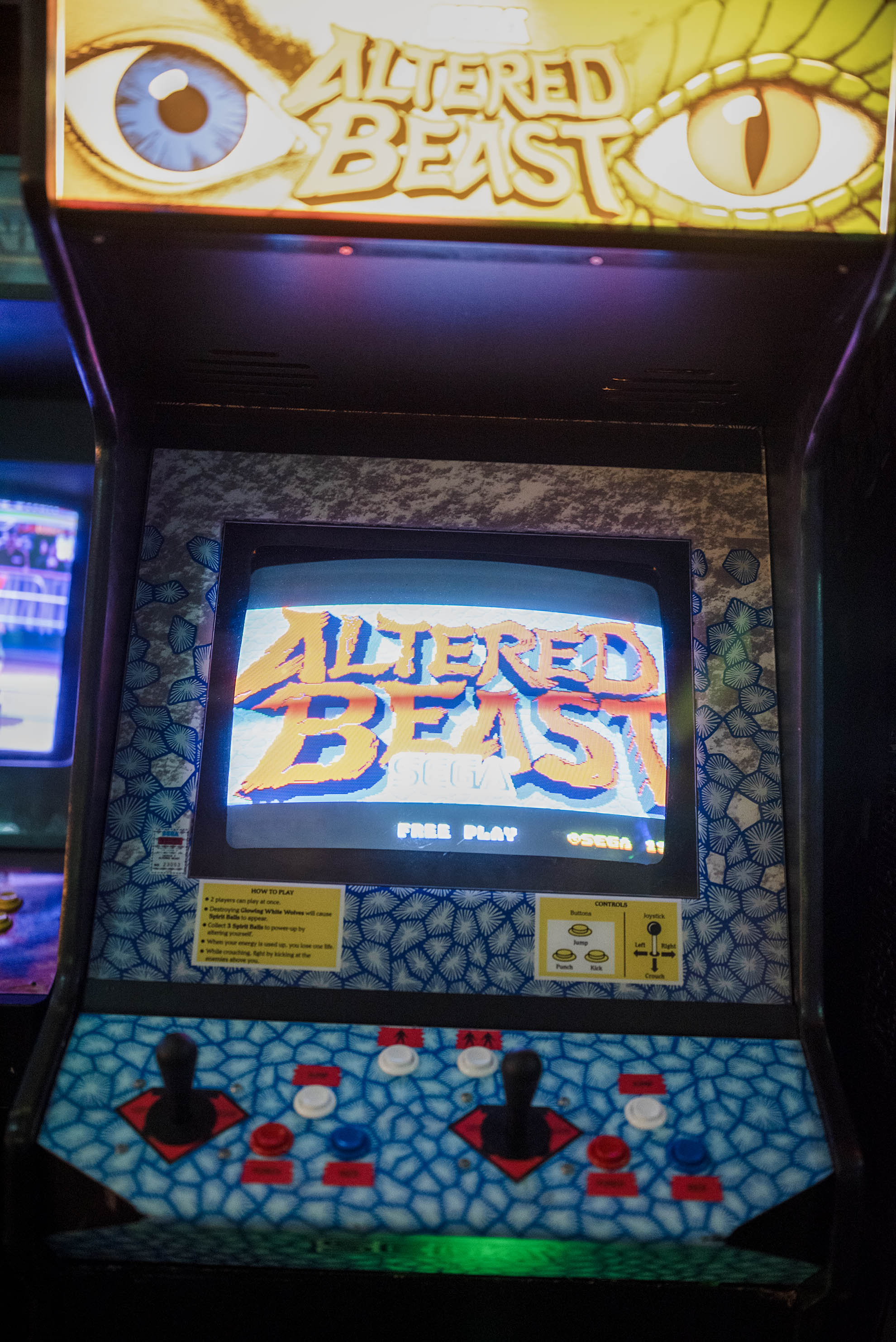
Here's something most players never saw, because most players never finished the game. Altered Beast was notorious for its punishing difficulty. But if you somehow managed to defeat Neff in his final form, you were treated to one of gaming's weirdest twist endings.
After the climactic battle, the monsters start removing their heads, revealing that they're actors in costumes. Athena pulls off a blonde wig to show her real ginger hair. The gargoyle enemies? Props on strings. A hand reaches in from off-screen holding a director's clapperboard that simply reads "The End."
The entire deadly serious adventure was a movie production all along. It's a bizarre, fourth-wall-breaking joke that most players simply never got to experience. This meta twist predates similar gaming humor by years and shows that Uchida had a sense of humor about the inherent silliness of his creation.
Hollywood Calls: Neff Goes to Disney
Speaking of movies, Altered Beast's villain Neff made an unexpected Hollywood appearance in 2012. In Disney's Wreck-It Ralph, Neff shows up in his rhinoceros form as a member of Bad-Anon, the villains' support group. He sits alongside Dr. Eggman, Bowser, and other gaming baddies, dealing with the existential challenges of being a video game antagonist.
The werewolf form also appears as a portrait in Tapper's bar. And in Zootopia (2016), there's a blink-and-you-miss-it Easter egg: Neff appears on a bootleg DVD cover for a movie called "Wreck-It Rhino."
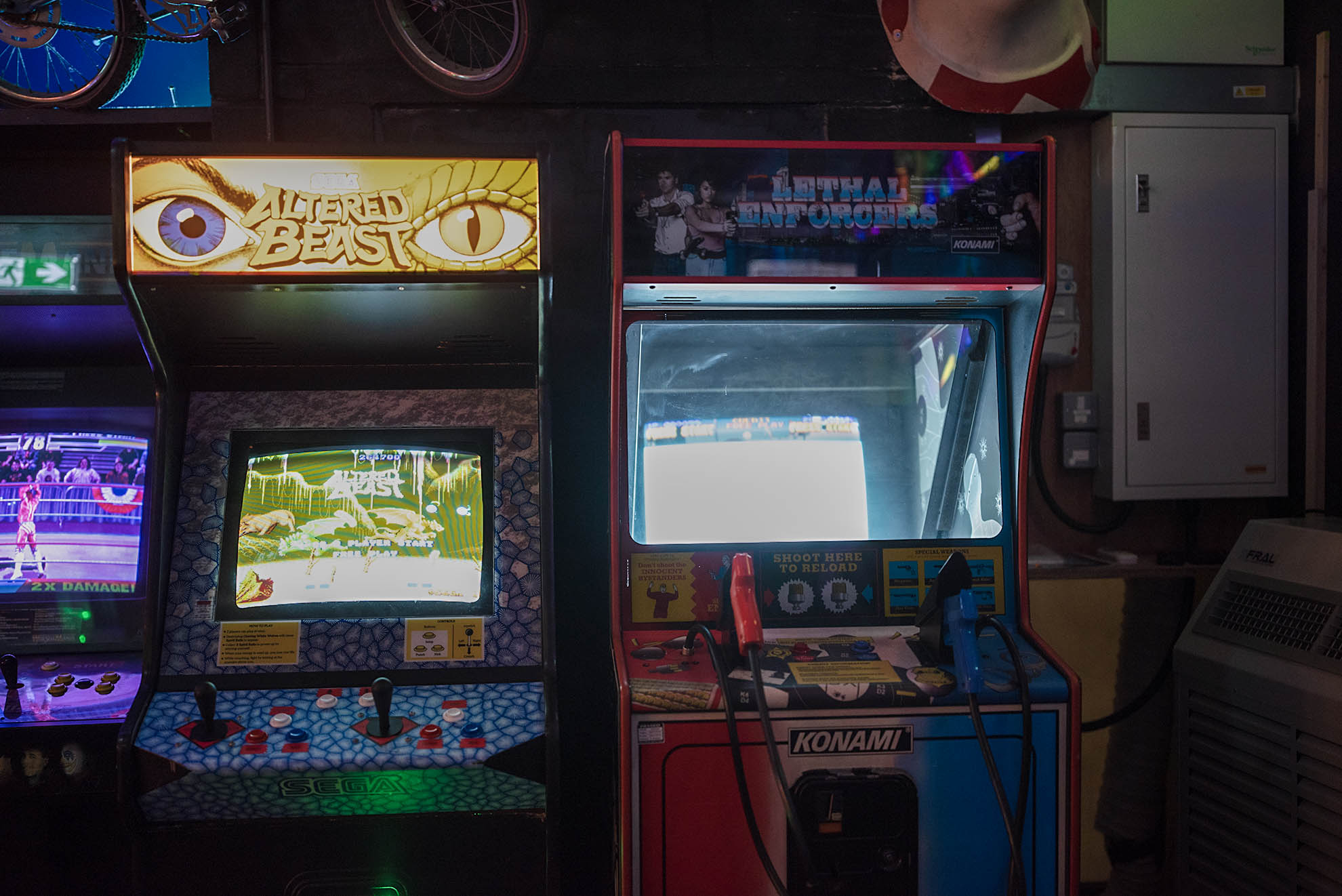
The game's cultural reach extends to music as well. Alternative rock artist Matthew Sweet named his 1993 album Altered Beast after the game. He told Spin magazine that the title represented "whatever is inside you that someday might explode, and maybe you don't know it's there." Australian rock band King Gizzard and the Lizard Wizard referenced the game in their concept album Murder of the Universe with a track called "Tale of the Altered Beast."
Console Port Odyssey
Beyond the Genesis version, Altered Beast was ported to numerous platforms with varying degrees of success.
The Master System version was rough. Limited to single player and only four stages, it suffered from constant slowdowns. The PC Engine (TurboGrafx-16) got two versions: a HuCard release that supported two players but lacked the voice samples, and a CD version that had the voices and added cutscenes but dropped the second player.
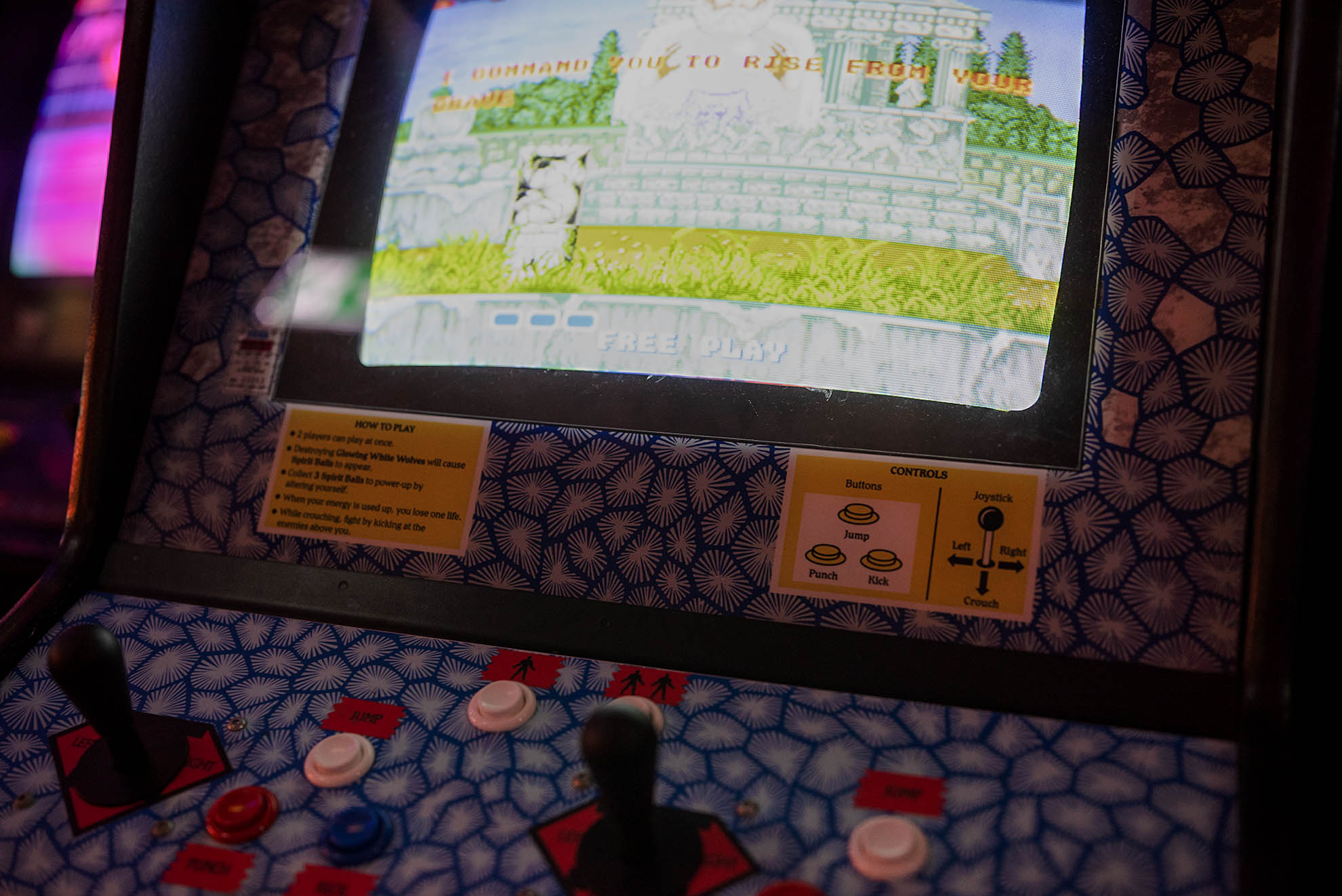
The Famicom version, exclusive to Japan, actually added content the arcade didn't have. It included three bonus beast transformations: a Shark, a Lion, and a Phoenix. These forms have become oddly coveted among collectors and completionists.
Today, the easiest ways to play Altered Beast legally include Sonic's Ultimate Genesis Collection (which actually includes both the Genesis and arcade versions as an unlockable), and the Sega Genesis Mini, which has the game pre-loaded.
Why Altered Beast Still Matters
Is Altered Beast a great game by modern standards? Honestly, probably not. The gameplay is repetitive. The difficulty can feel cheap. The stages blur together. Critics at the time often pointed out these flaws.
But that's not really the point.
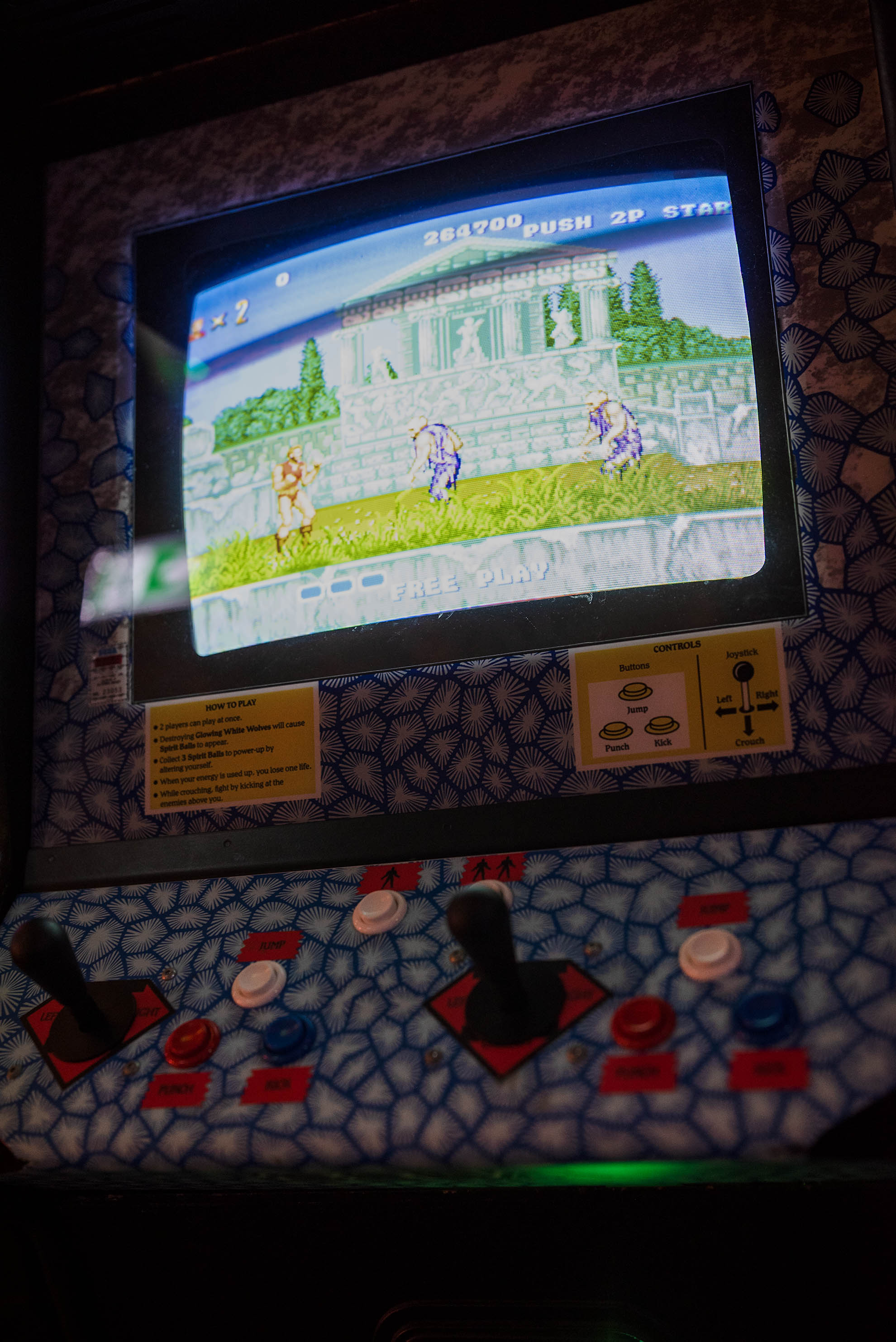
Altered Beast matters because of what it represented. It was one of the first games many players experienced on the Sega Genesis. That opening voice sample, those transformation sequences, that sense of 16-bit power, all of it helped convince millions of gamers that a new era had begun.
Video game journalist Ken Horowitz put it best: "Video gamers identify the 'rise from your grave' opening from the game, whether they are fans of Sega's games or not. Altered Beast's biggest attraction is its charm. It's one of the more memorable concepts Sega conceived."
Makoto Uchida is still working at Sega today, nearly 40 years after joining the company. He's now the head of Sega Shanghai. But occasionally, he still visits American arcades and sees people playing his creation.
"When I occasionally visit videogame arcades in the US, I still see people playing my Altered Beast and Golden Axe games," Uchida has said. "It proves to me that, if the game is good, people will still pay good money to play it."
Rise from your grave, indeed.
*All arcade cabinet photos taken by the author at The Pixel Bunker, Milton Keynes, UK.*
Game Information
All arcade cabinet photos taken by the author at The Pixel Bunker.
For more Sega arcade history, see Hang-On and Donkey Kong.\n\n## Rise From Your Grave
Game Information
| Title | Altered Beast |
| JP Title | 獣王記 (Jūōki) |
| Developer | Team Shinobi (Sega R&D1) |
| Director | Makoto Uchida |
| Composer | Tohru Nakabayashi |
| Release Date | June 1988 (Japan) |
| Platform | Arcade (System 16B) |
| Genre | Beat 'Em Up |
| Players | 1-2 Simultaneous |
| CPU | MC68000 @ 10MHz |
| Sound | YM2151 + Z80 @ 5MHz |
| Revenue | $79 Million (1988) |
Gallery
Get Gaming News and Features First
Stay updated with the latest gaming news and exclusive content.