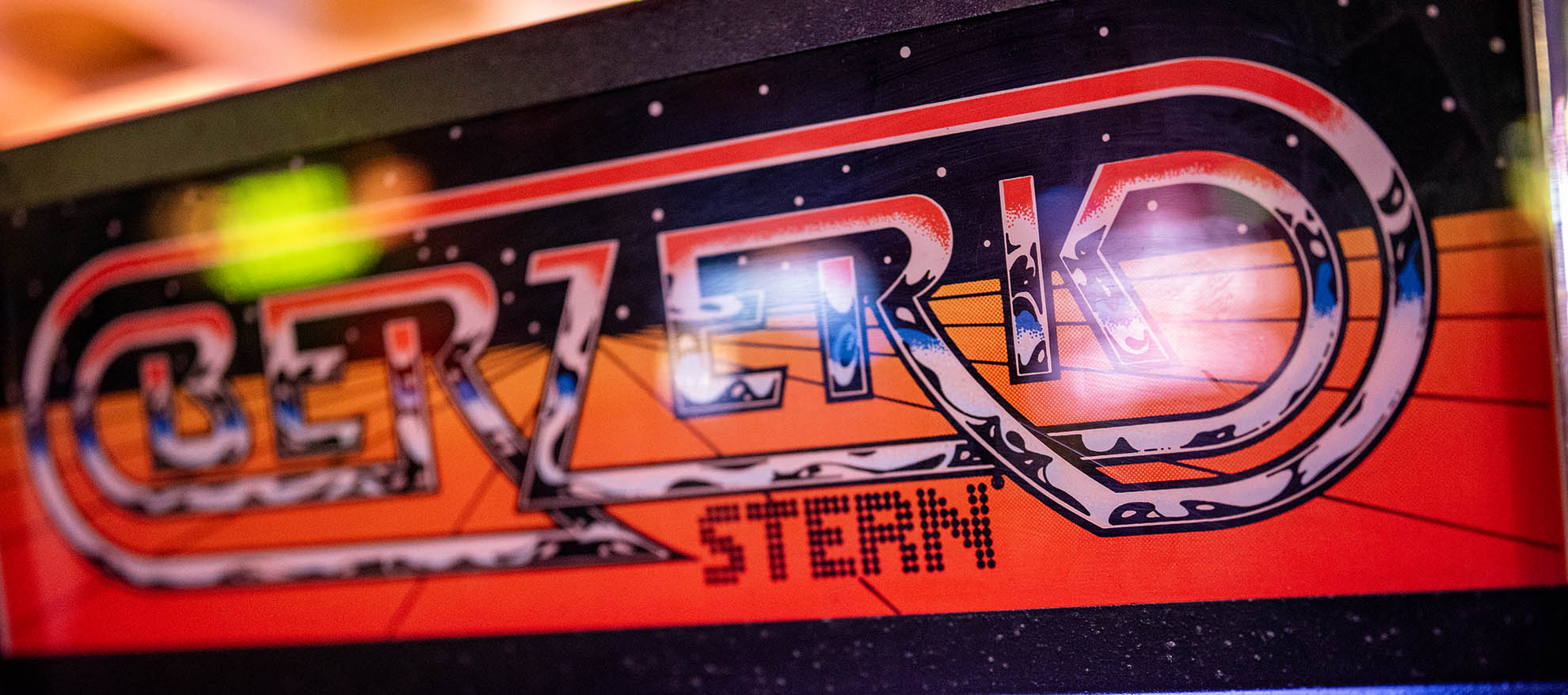
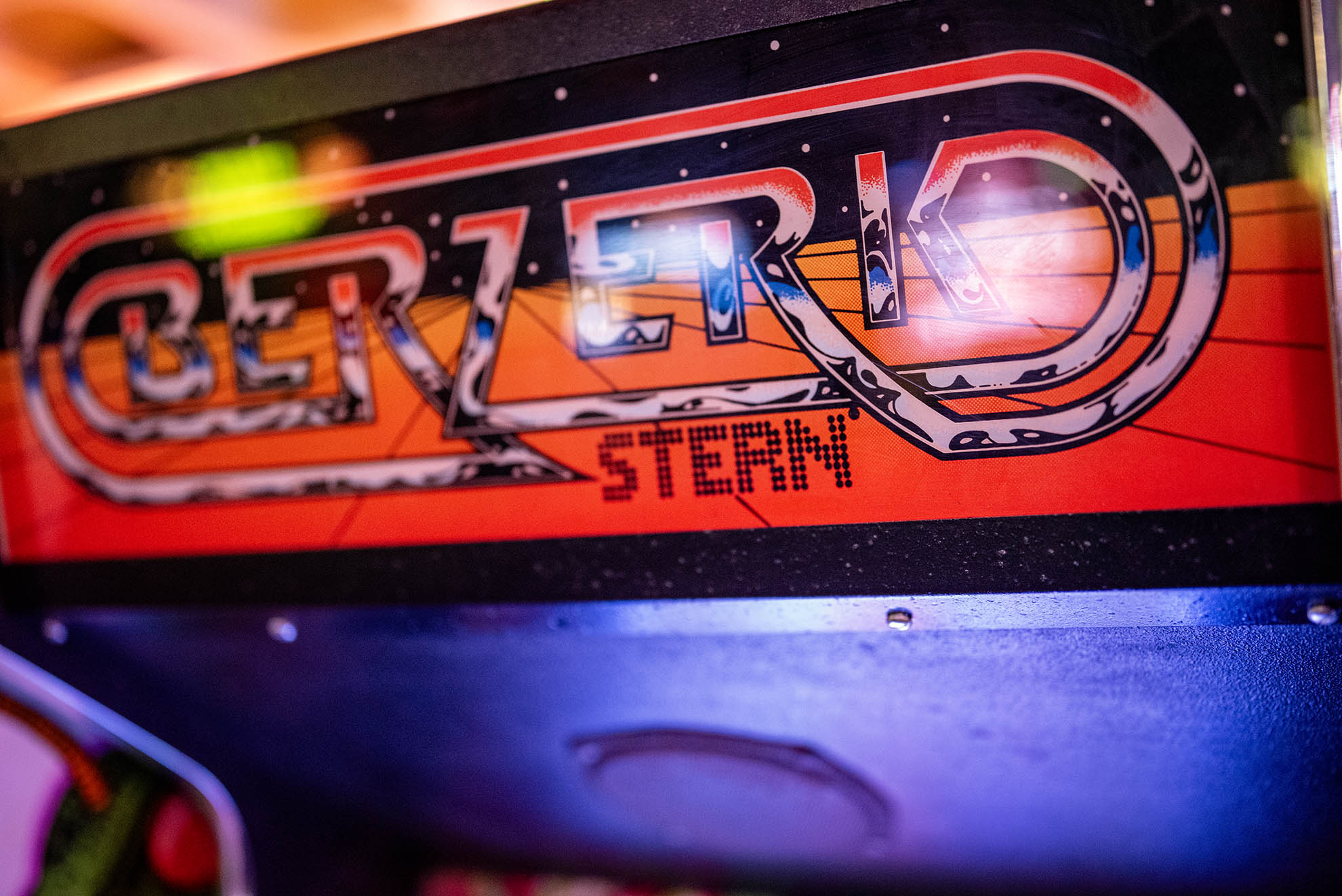
Berzerk (1980): Stern's Arcade Classic with Evil Otto - Complete History
Berzerk arcade game history and guide. Stern's 1980 classic featuring Evil Otto, speech synthesis, and 65,536 procedural mazes that pioneered the twin-stick shooter genre.
Late one night in 1979, a young programmer named Alan McNeil fell asleep and dreamed of a video game. In that dream, he navigated a maze filled with hostile robots, shooting his way through room after room in a desperate fight for survival. The images were stark, black and white, primal. When McNeil woke, he grabbed a notepad and began sketching.
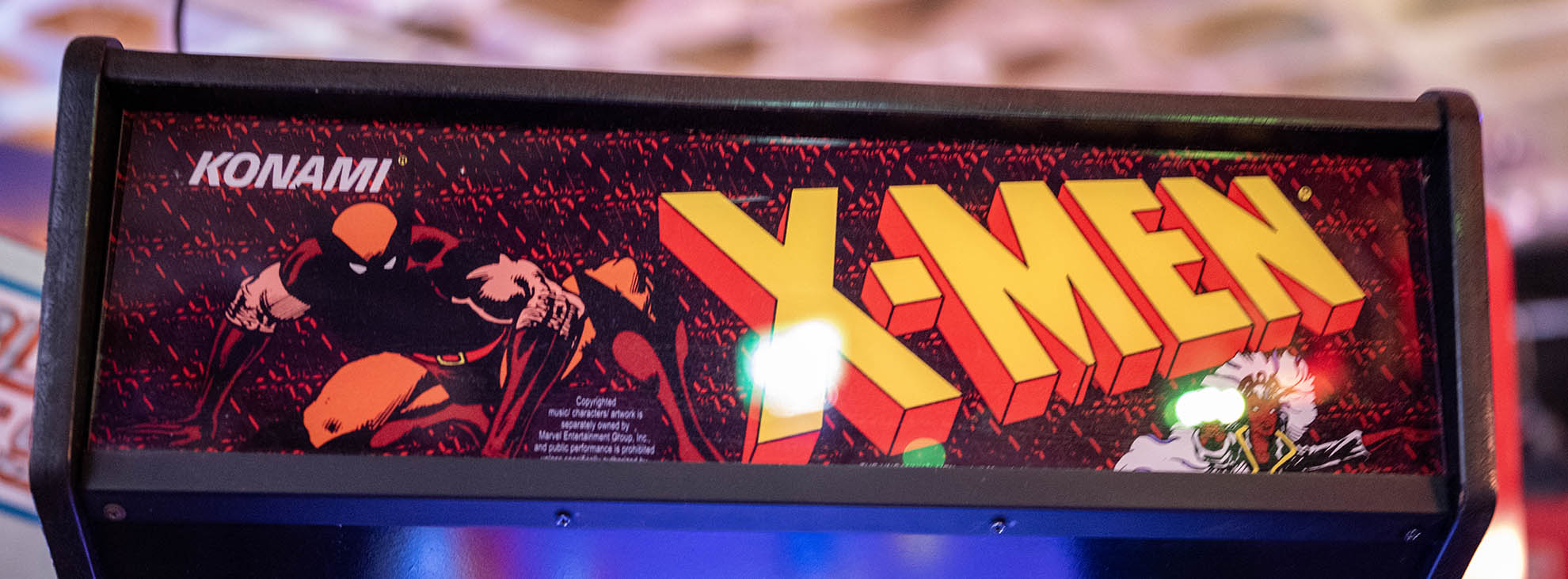
That dream became Berzerk, released by Stern Electronics in November 1980. For another arcade classic, see the X-Men six-player cabinet at The Pixel Bunker. It would become one of the most influential arcade games ever made, pioneering speech synthesis in gaming, inspiring the twin-stick shooter genre, and earning the grim distinction of being the first video game associated with player deaths. Forty-five years later, its robotic taunts still echo through gaming culture: "Intruder alert! Intruder alert!"
The Mind Behind the Machines
Alan Rideout McNeil was born in Urbana, Illinois in 1951. His father Edward was a physics professor at the University of Illinois, and young Alan showed early aptitude for both technology and creativity. After graduating from the University of Illinois with an art degree focused on experimental and computer-generated work, McNeil briefly worked at a Chicago trading firm before joining Dave Nutting Associates, a pioneering video game company.
At Dave Nutting, McNeil learned the fundamentals of arcade game development, working on titles like Boot Hill and Sea Wolf II. But he also accumulated grievances. The company's security chief, a man named Dave Otto, became a particular source of frustration. Otto locked employees out of the building to enforce mandatory lunch hours and piped what he called "beautiful music" into every room. Those memories would fuel McNeil's revenge in digital form.
From Dream to Design
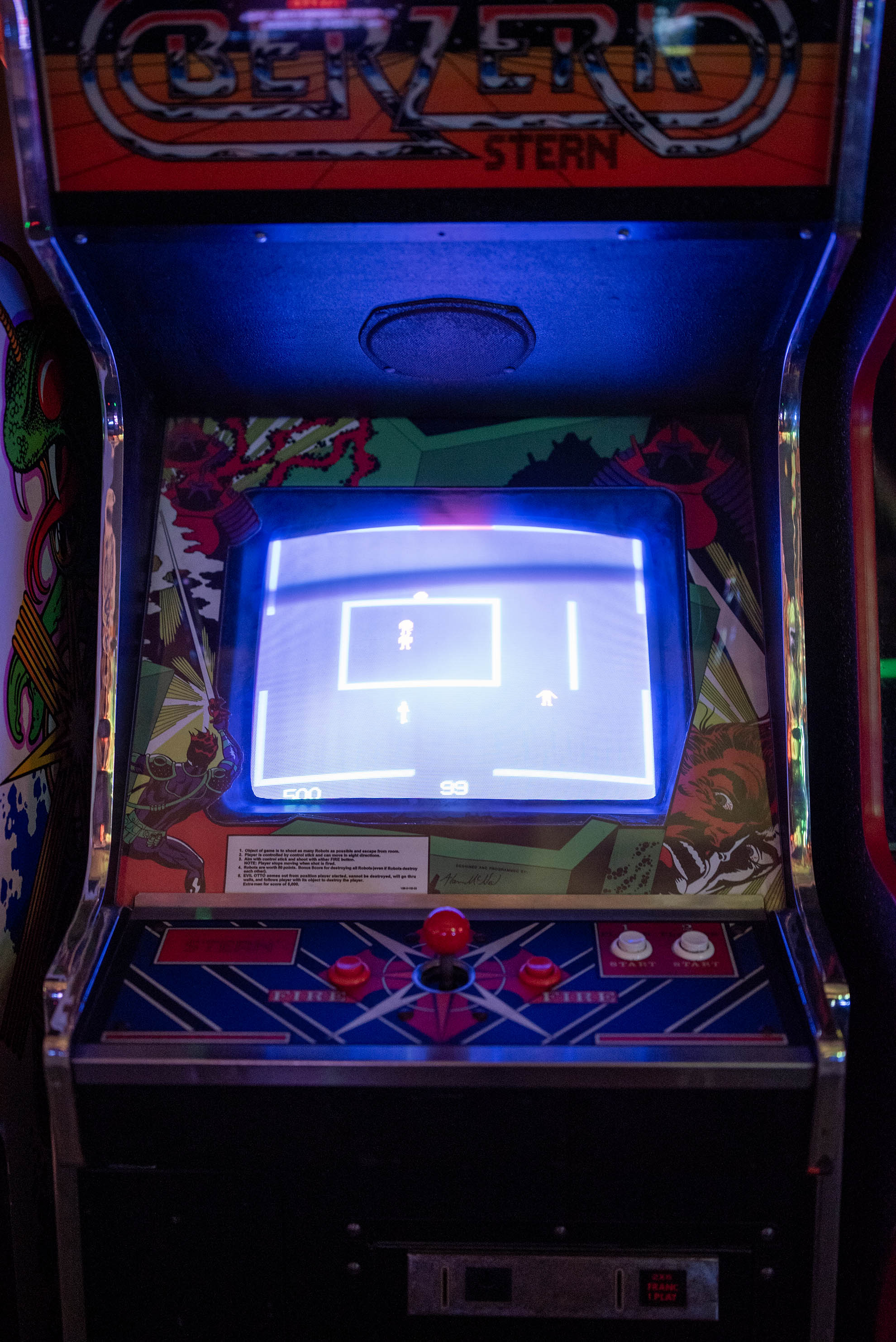
McNeil eventually moved to Universal Research Laboratories, a subsidiary of Stern Electronics. The dream had given him the core concept: a maze shooter where a lone human fights robots. He drew inspiration from multiple sources. The BASIC game "Robots" provided mechanical concepts. Fred Saberhagen's Berserker series of science fiction novels, featuring self-replicating machines bent on destroying all life, gave the game its name and thematic weight.
And then there was Dave Otto. McNeil channeled his frustrations with the security chief into the game's most memorable antagonist: a bouncing, indestructible smiley face named "Evil Otto." The character design dripped with sarcasm. McNeil despised the smiley face symbol, viewing it as representing fake corporate friendliness. In McNeil's mind, Evil Otto's version of "Have a Nice Day" translated to "Have a Nice Day while I beat you to death."
Sixty-Four Thousand Rooms
One of Berzerk's most impressive technical achievements was its maze generation system. The game contains 65,536 possible rooms arranged in a 256 by 256 grid. Rather than storing these layouts in memory, the game generates each room algorithmically based on its coordinates.
McNeil explained his approach: "To make the maze non-random, I used the XY coordinate of the room as a 16-bit number to seed my random number generator. That way you could exit, run back and see the same room. It makes the universe more real if you leave a room with a box in the middle and return to a room with a box in the middle."
The entire program, including speech data and text for multiple language versions, occupied only 16 kilobytes of ROM. This extreme memory constraint forced innovative solutions throughout development.
The Robots Speak
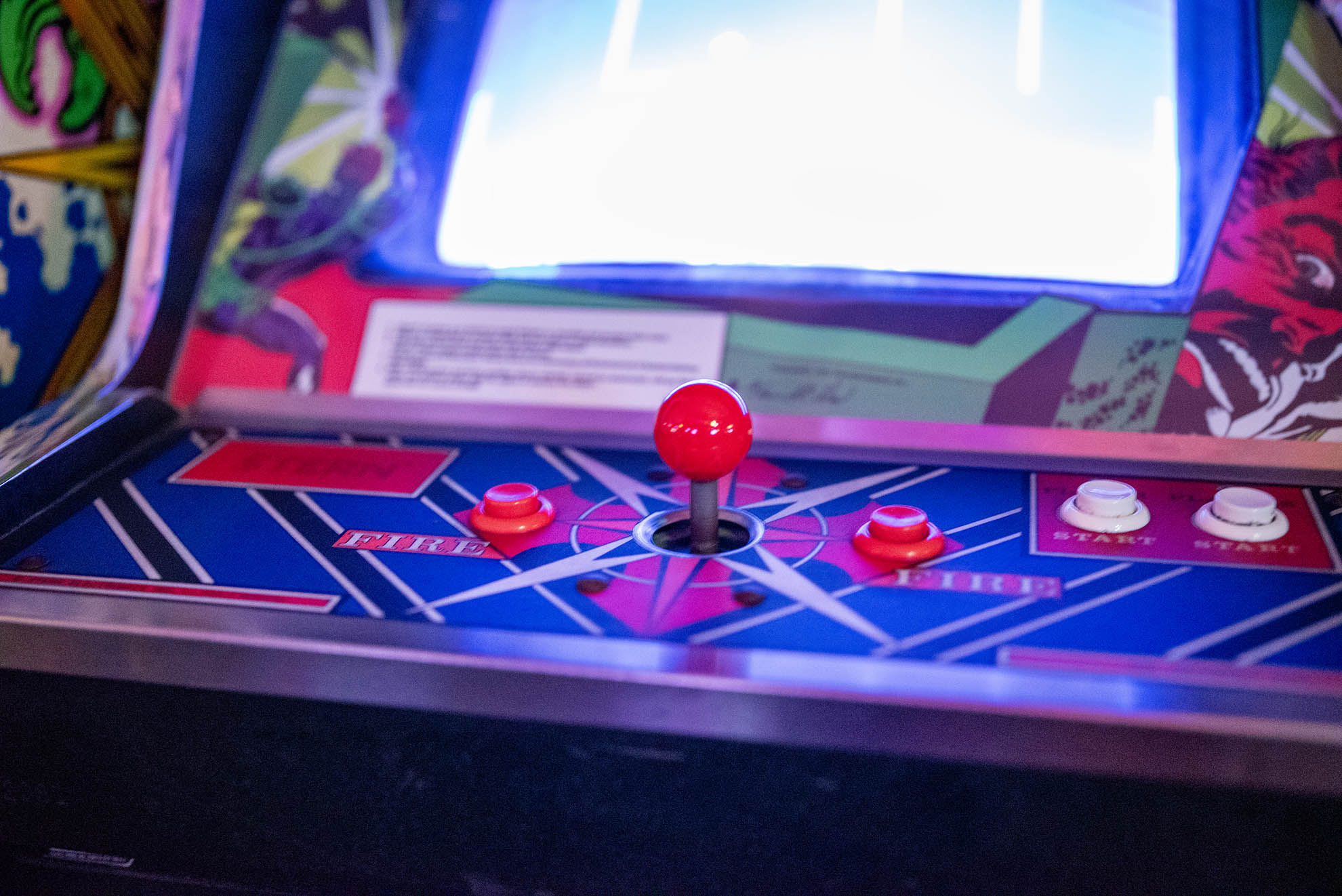
A salesman visited Universal Research Laboratories during development, demonstrating a speech chip originally designed to help visually impaired people. McNeil immediately recognized potential: the chip's robotic, mechanical voice perfectly suited his killer machines.
The implementation was extraordinarily expensive. In 1980, computer voice compression cost manufacturers approximately $1,000 per word. Berzerk's English vocabulary contained thirty words, assembled into phrases that taunted players throughout gameplay.
The most famous line plays during the attract mode: "Coin detected in pocket." It was brilliant salesmanship in audio form, calling out to potential players that the machine knew they had money and expected them to spend it. During gameplay, robots taunt with combinations like "Kill the humanoid!" and "The chicken" for fleeing players. Death triggers "Got the humanoid, got the intruder!" with the second phrase pitched a minor third higher, adding musical drama to defeat.
Stern released versions with speech in English, French, German, and Spanish, making Berzerk one of the first multilingual arcade games.
Gameplay That Kills
The mechanics seem simple. You control a humanoid figure navigating single-screen mazes populated by robots. Shoot the robots. Don't touch them or their laser fire. Don't touch the electrified walls. Exit through openings on the screen edges to advance to the next room.
But Berzerk's genius lies in escalating tension. Each maze can contain up to eleven robots, and they're surprisingly intelligent for 1980. They navigate around obstacles, coordinate movements, and adjust their aggression based on the game's difficulty setting.
Evil Otto appears if you take too long. He bounces toward you relentlessly, passing through walls and obstacles that stop everything else. He cannot be destroyed, cannot be stopped, can only be avoided. And if you shoot at him? He speeds up. One hit from any source kills you. No health bars, no shields, no second chances.
Commercial Success and Dark Legacy
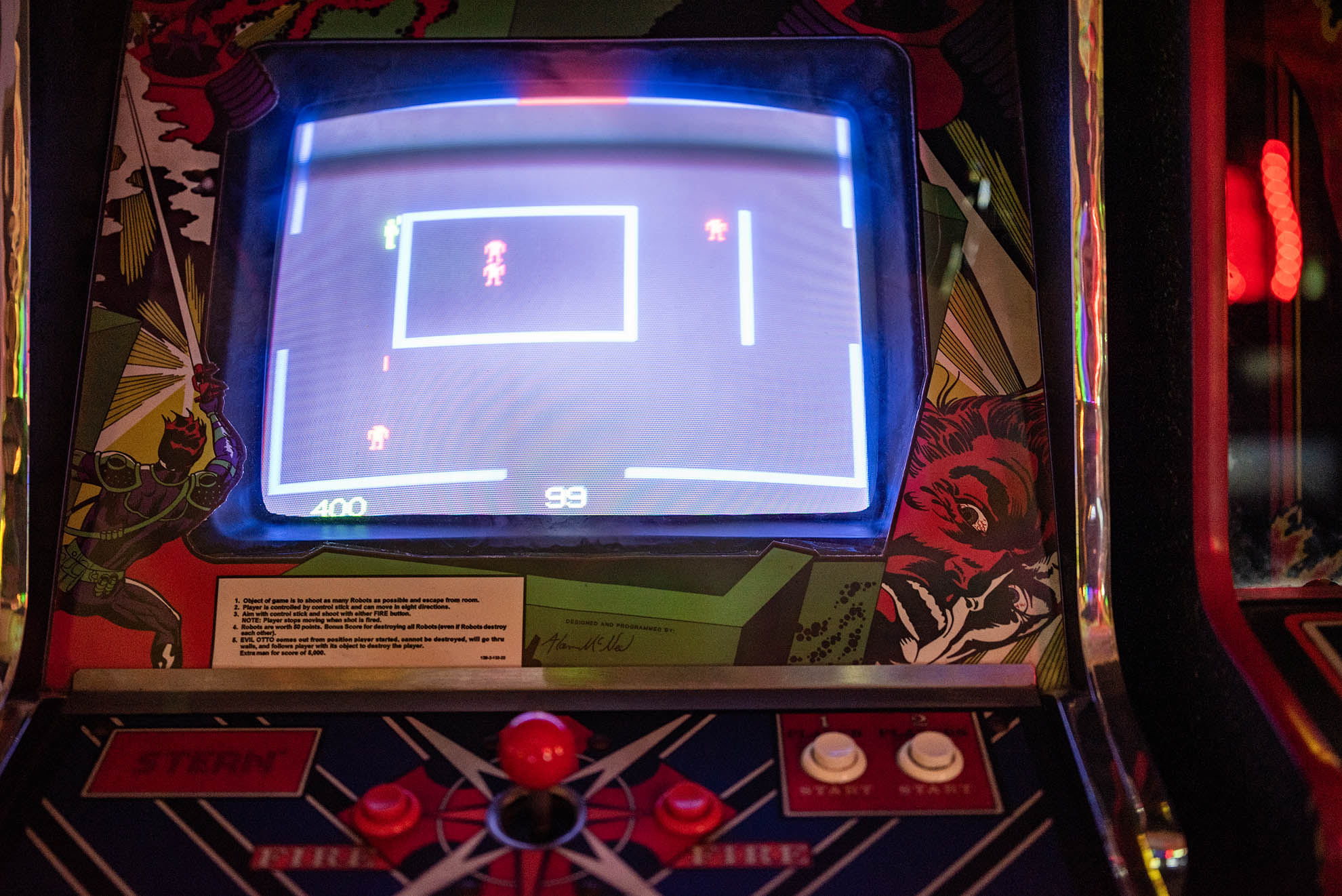
Stern debuted Berzerk at the AMOA exposition in Chicago from October 31 to November 2, 1980. The game shipped on November 12, 1980, and demand exploded. Stern constructed a new building and ran three production shifts to keep up, manufacturing 300 units daily. Total production reached approximately 40,000 units, making Berzerk one of the biggest arcade hits of the early 1980s.
No discussion of Berzerk is complete without addressing its dark legacy. On April 3, 1982, eighteen-year-old Peter Burkowski of South Holland, Illinois visited an arcade, played two games of Berzerk, entered his initials in the top ten list twice within fifteen minutes, then collapsed. An autopsy revealed he suffered from Arrhythmogenic Right Ventricular Cardiomyopathy, an undiagnosed heart condition. Medical examiners suggested the excitement of gameplay may have triggered the fatal cardiac event.
These incidents generated significant media coverage and established Berzerk's reputation as a "killer game," raising early questions about the physiological effects of video games that researchers continue exploring today.
The Robotron Connection
Eugene Jarvis loved Berzerk. The future creator of Defender spent hours playing McNeil's game but was frustrated by the control scheme. When a car accident left Jarvis with a broken right hand, he experimented with alternatives: two joysticks, one for movement and one for aiming.
This innovation became the foundation of Robotron: 2084, released by Williams Electronics in 1982. Jarvis and partner Larry DeMar created the prototype using a Stargate board with two Atari 2600 controllers. The final game, crediting Berzerk and George Orwell's Nineteen Eighty-Four as inspirations, helped establish the twin-stick shooter genre that continues thriving today.
Alan McNeil died of a heart attack on December 29, 2017, at age 66. His legacy lives in every twin-stick shooter, every procedurally generated game world, and every time a robot voice taunts a player. For more retro gaming history, explore Secret of Mana, another landmark title from gaming's golden era.
Technical Specifications
| Component | Specification |
| Main CPU | Zilog Z80 |
| Sound | Custom tone generator + LPC speech synthesis |
| ROM Size | 16 KB (including speech data) |
| Display | Raster, color CRT (originally monochrome with overlay) |
| Resolution | 256 x 224 pixels |
| Cabinet Types | Upright (~37,500 units), Cocktail (~1,200 units) |
| Total Production | Approx. 40,000 units |
| Controls | 8-way joystick, 1 fire button |
| Players | 1-2 (alternating) |
Game Information
| Title | Berzerk |
| Developer | Universal Research Laboratories |
| Publisher | Stern Electronics |
| Designer | Alan McNeil |
| Release | November 12, 1980 (USA) |
| Platform | Arcade |
| Genre | Multidirectional Shooter |
| Mazes | 65,536 procedurally generated |
All arcade cabinet photographs taken by the author at The Pixel Bunker.
Gallery
Get Gaming News and Features First
Stay updated with the latest gaming news and exclusive content.