X-Men Arcade: Konami 1992 Six-Player Masterpiece That Defined Co-op Gaming
X-Men arcade game by Konami (1992) - the legendary six-player beat-em-up that defined cooperative gaming. History of the classic Marvel arcade cabinet.
In April 1992, arcades witnessed an unprecedented sight: six players standing shoulder-to-shoulder, each commanding a different X-Men mutant, united against Magneto's Sentinel army on a cabinet so massive it required two CRT monitors to contain the action. This was Konami's X-Men, the beat 'em up that pushed cooperative gaming to its physical limits and created unforgettable memories through spectacular gameplay, questionable voice acting, and some of gaming's most quotable dialogue. "Welcome to die!" became an instant catchphrase that players still shout three decades later.
From Failed Pilot to Arcade Phenomenon
The X-Men arcade game draws its visual identity and character designs from an unusual source: X-Men: Pryde of the X-Men, a 1989 animated pilot that never became a series. This 21-minute episode, first aired on September 16, 1989, was produced by Marvel Productions and Sunbow Productions, with animation by Toei Animation, as an attempt to launch an X-Men cartoon.
Despite featuring an impressive voice cast including Michael Bell as Cyclops, Patrick Pinney as an oddly Australian-accented Wolverine, Andi Chapman as Storm, and Earl Boen as a maniacally villainous Magneto, the pilot failed to secure a series order. The animation quality and character designs, however, proved perfect for Konami's purposes three years later.
Producer Rick Hoberg later explained the curious decision to give Canadian-born Wolverine an Australian accent: "I was forced to use the Australian version of Wolverine... because all of this Australian stuff was popular at the time, the Mad Max films, 'Crocodile' Dundee, and so on." This regional accent carried directly into the arcade game, puzzling comic fans but delighting players who embraced the quirky characterization.
Stan Lee himself narrated the original pilot, lending Marvel's creative godfather's voice to the project that would eventually inspire millions of arcade credits.
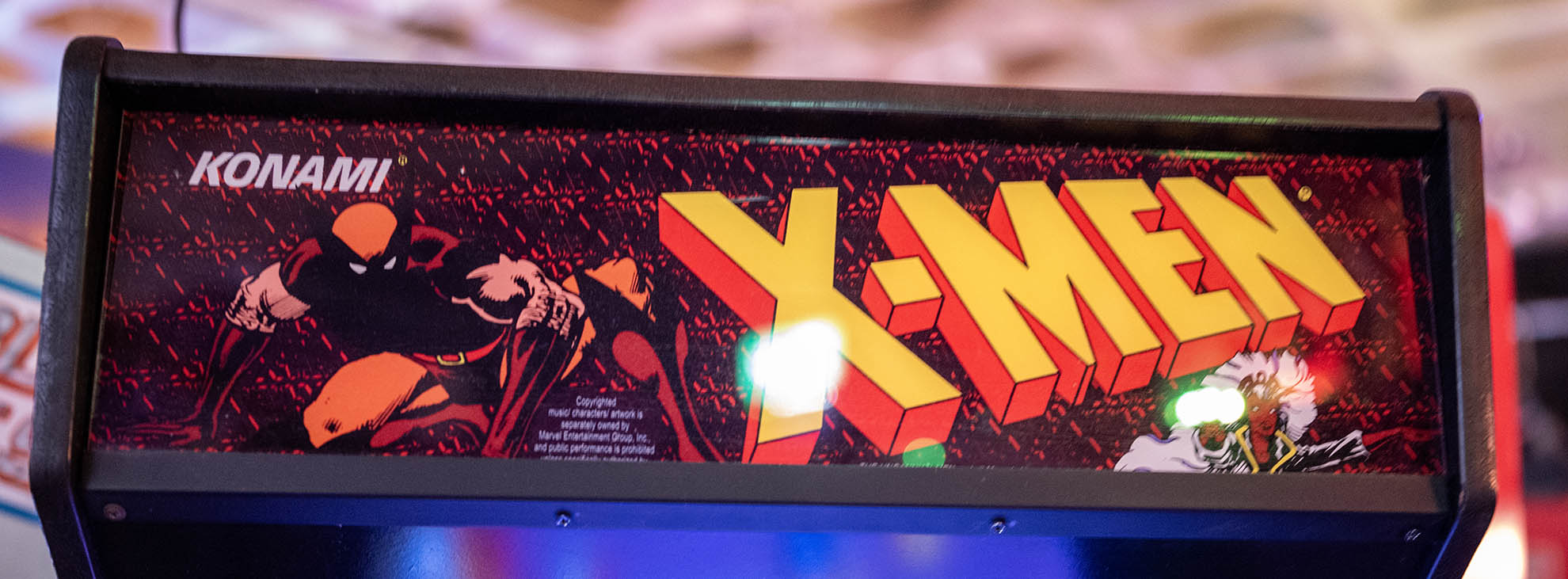
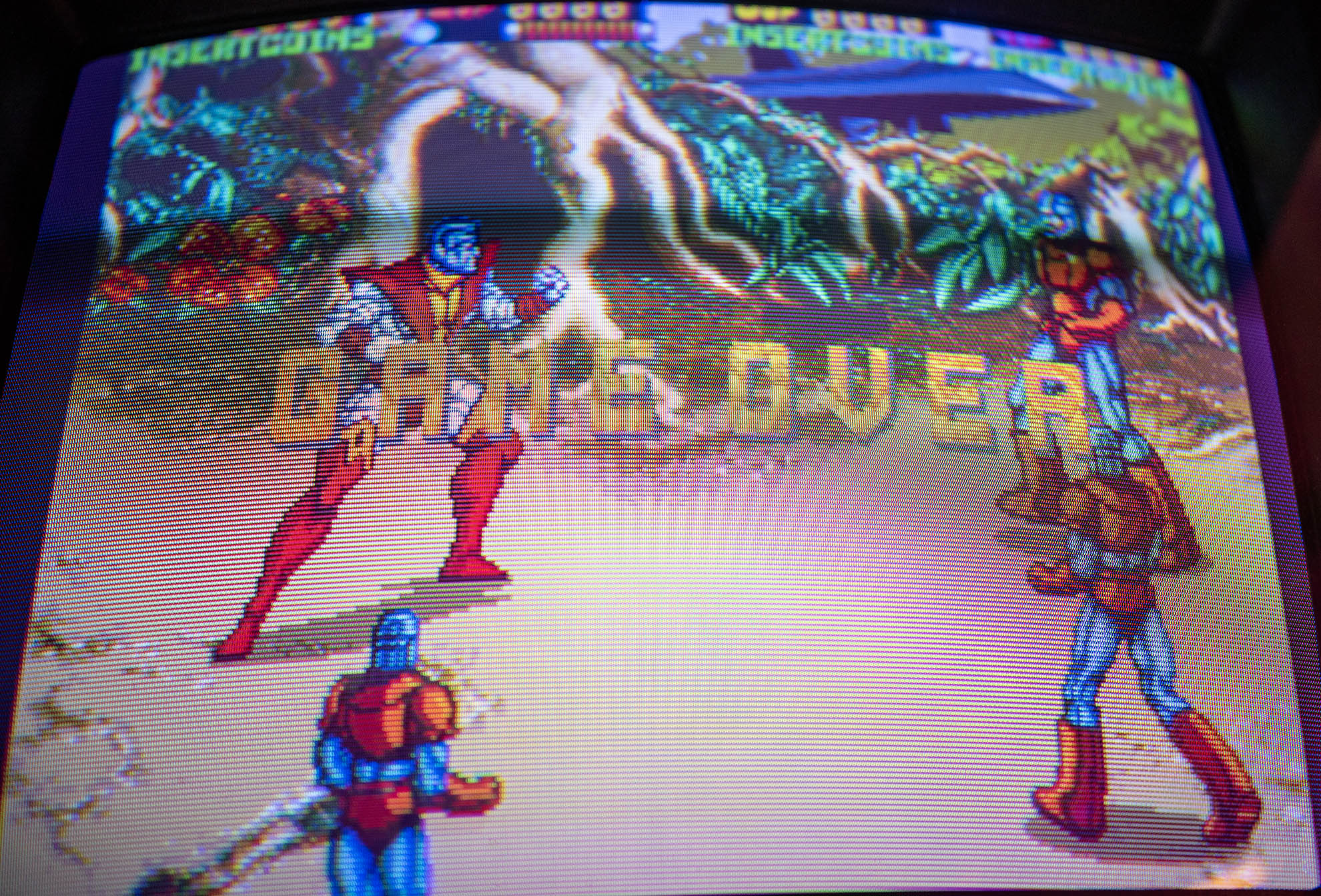
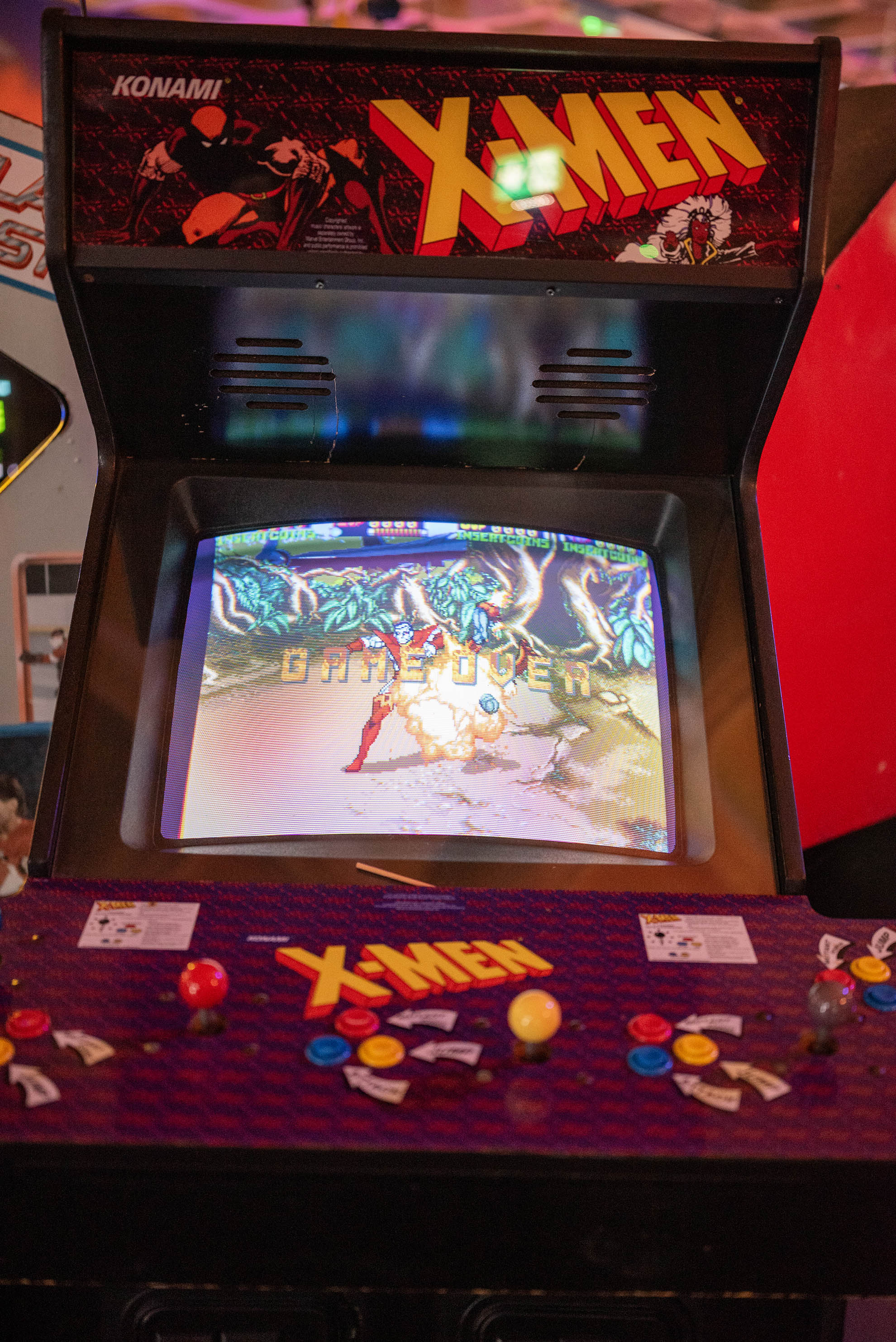
All arcade cabinet photos taken by the author at The Pixel Bunker.
Technical Specifications: The GX065 Hardware
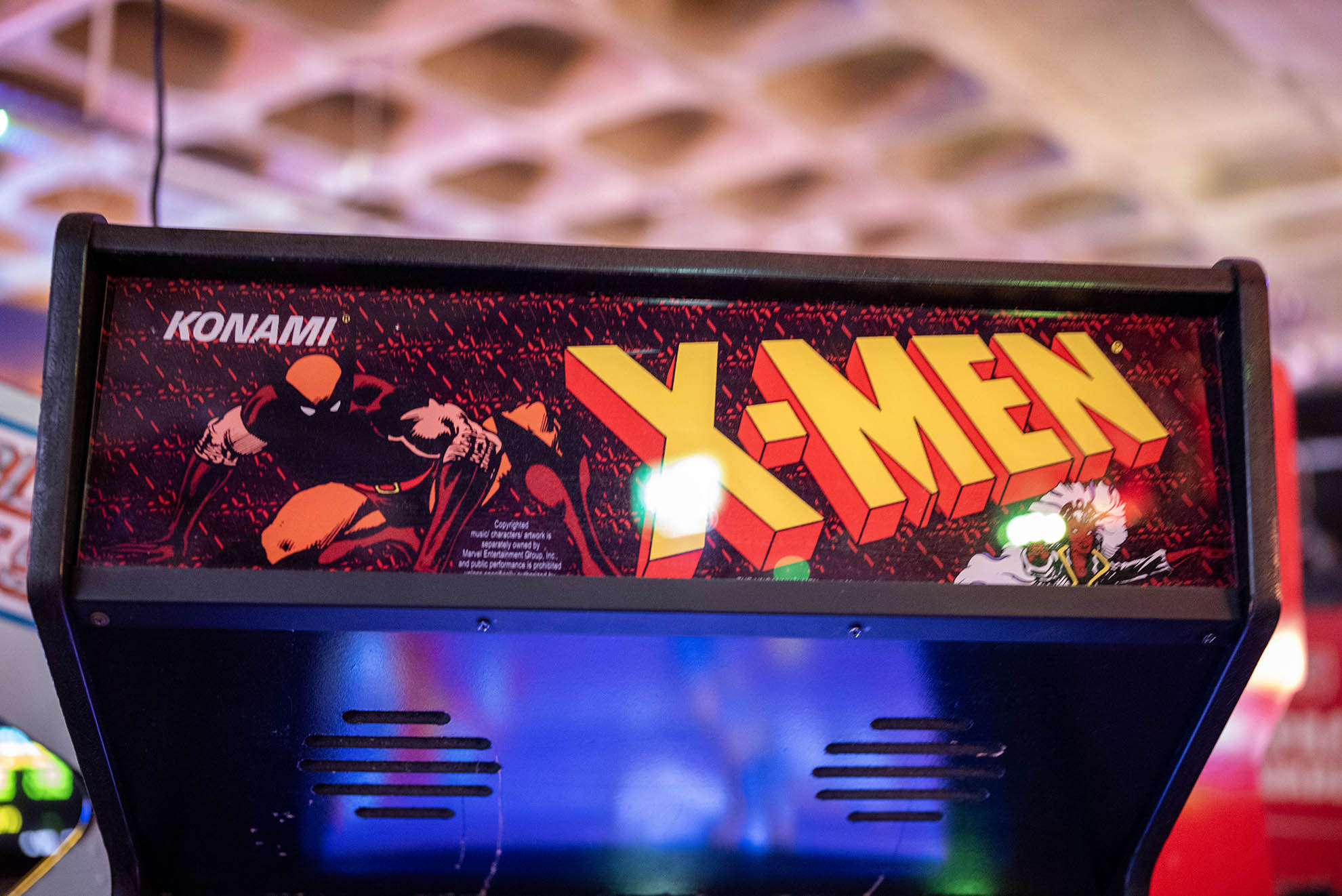
Konami's X-Men runs on custom arcade hardware designated GX065, a powerful platform that enabled the game's impressive visuals and six-player simultaneous action.
| Main CPU | Motorola 68000 @ 16 MHz |
| Sound CPU | Zilog Z80 |
| Sound Chips | Yamaha YM2151, Konami K054539 |
| Display | Raster, 288 x 224 pixels |
| Board Variants | 2-Player, 4-Player, 6-Player |
The sound team delivered a memorable score that complemented the on-screen chaos. Seiichi Fukami served as sound producer and primary composer, working alongside Yuji Takenouchi (sometimes stylized as "TECHNOuchi"). Junya Nakano contributed as guest composer, with additional support from A. Hashimoto. The pounding soundtrack drives players through each stage while the iconic sound effects from Cyclops' optic blasts to Colossus' metallic punches remain instantly recognizable.
The Cabinet Revolution: Three Configurations
Konami manufactured three distinct cabinet configurations, each serving different arcade floor plans and budgets.
The two-player cabinet was the smallest variant, offering the core X-Men experience for locations with limited space. Players chose from the full roster but experienced the game on a standard-width screen with two-player simultaneous action.
The four-player cabinet became the most common configuration, balancing accessibility with the cooperative experience. This mid-size cabinet became the arcade standard, offering enough width for four friends to battle Sentinels together.
The six-player cabinet was the legendary configuration that defined the game's identity. This massive cabinet utilized a revolutionary dual-monitor system: one CRT in the standard position and another mounted below, its image reflected via a mirror to create the illusion of a single ultra-wide display. The cabinet stretched over six feet wide, requiring dedicated arcade floor space but delivering an experience no other game could match.
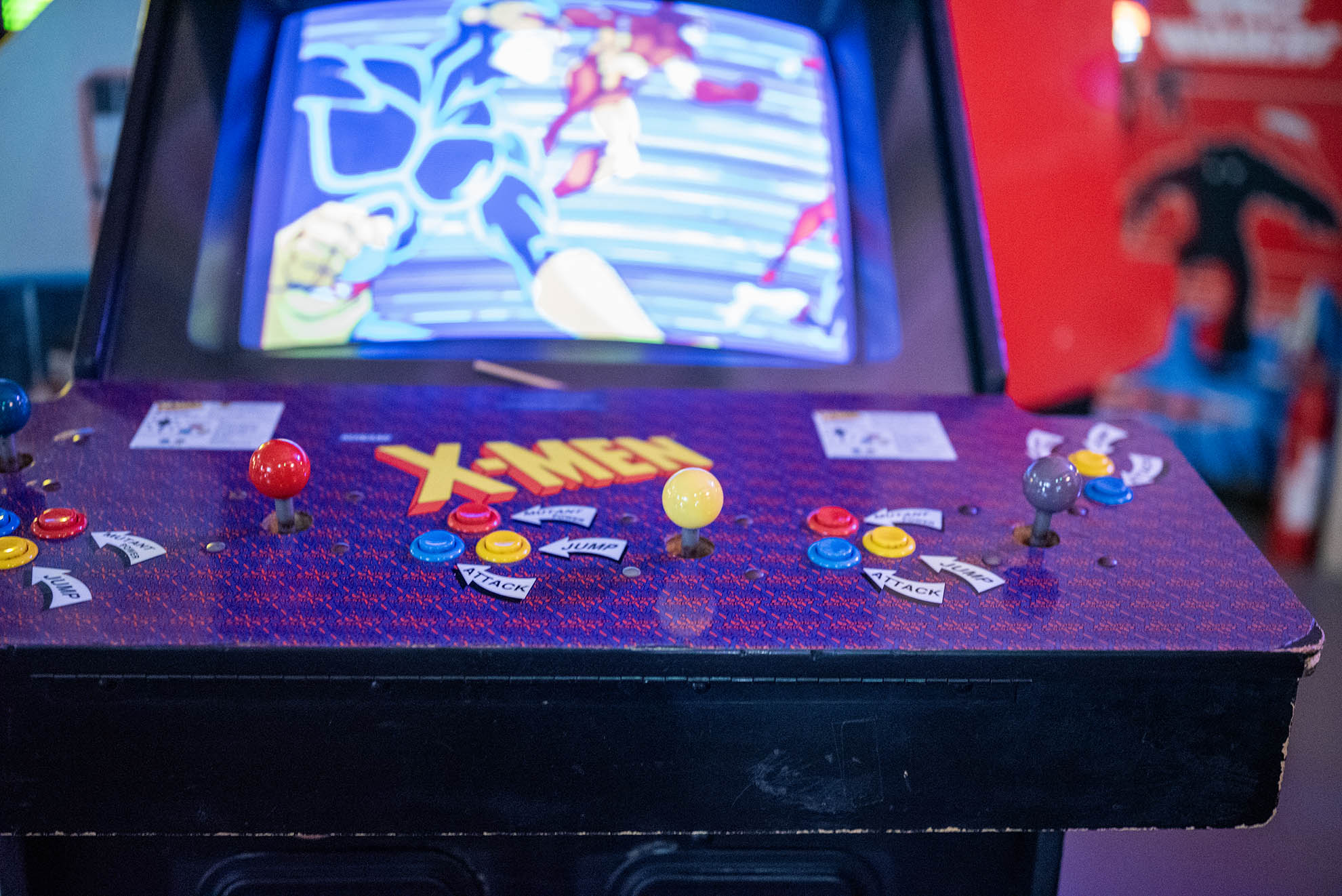
The six-player cabinet's control panel featured six sets of joystick and button combinations, each dedicated to one specific X-Men character. Players didn't just choose their favorite mutant, they chose their physical position at the cabinet.
Six Mutants, Six Playstyles
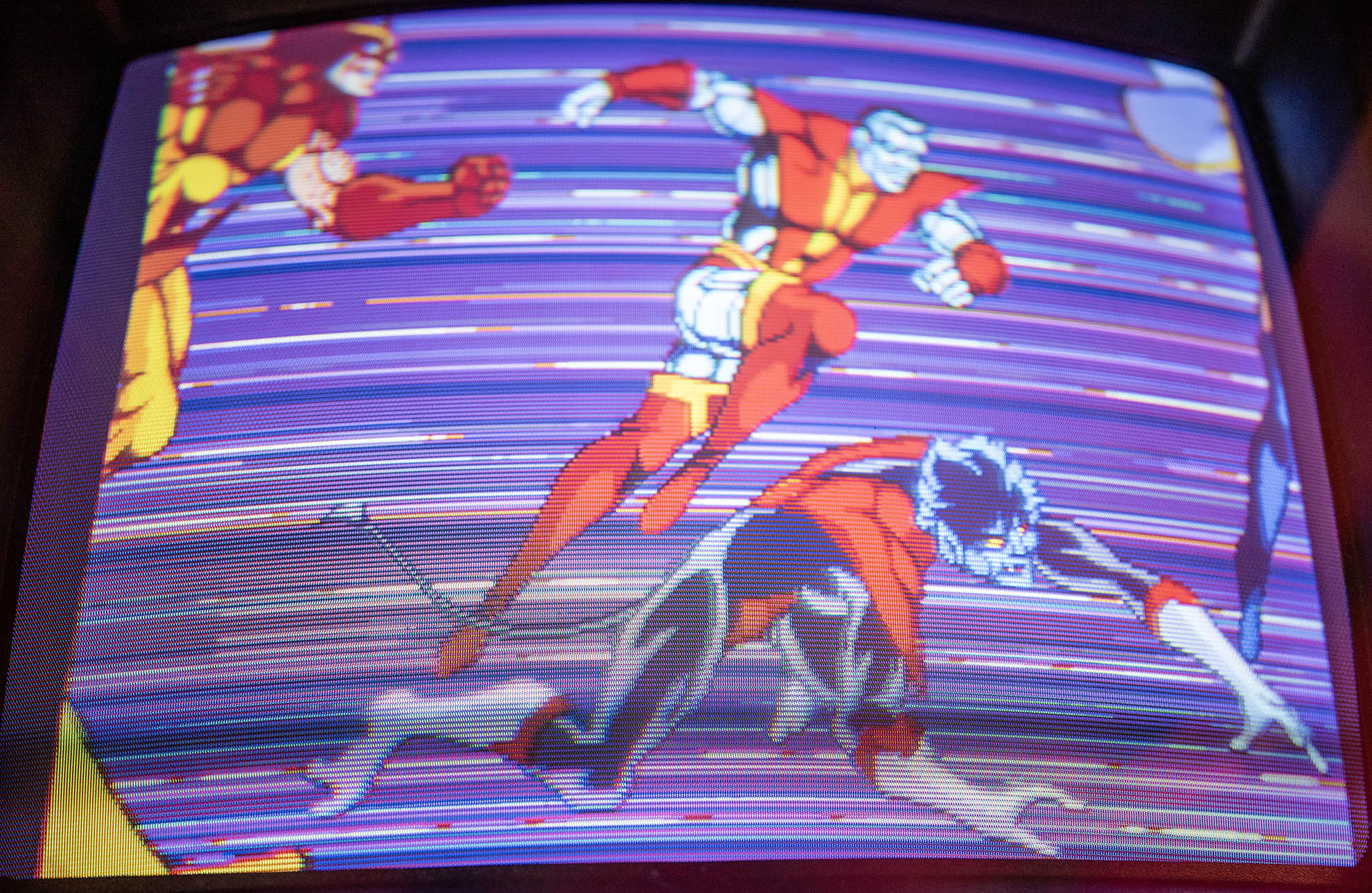
X-Men offers six playable characters, each with distinct abilities and mutant powers.
Cyclops serves as the X-Men's field leader, firing devastating optic blasts that sweep across the screen. His balanced stats make him ideal for beginners, and his mutant power can clear entire enemy waves.
Colossus is the Russian strongman whose metallic form grants him the highest strength among the roster. His mutant power turns his entire body into a devastating weapon, though his range remains limited.
Wolverine attacks with adamantium claws as the savage Canadian (with Australian accent intact), offering fast strikes and close-range devastation. His healing factor is referenced in his slightly higher durability.
Storm commands lightning and wind as the weather goddess. Her mutant power summons devastating electrical storms that damage all enemies on screen, making her invaluable in crowded situations.
Nightcrawler offers unique mobility options as the acrobatic teleporter. His mutant power allows rapid attacks while teleporting, making him difficult for enemies to pin down.
Dazzler is perhaps the most unusual roster choice. The mutant disco singer converts sound into light-based attacks. Her inclusion reflects the Pryde of the X-Men source material rather than contemporary X-Men team lineups.
Mutant Powers and Regional Differences
The mutant power system differs dramatically between regional versions, revealing Konami's approach to Western arcade economics versus Japanese player expectations.
In the North American version, special attacks consume three units of health unless the player's health is critically low, at which point the attack draws from stored mutant power orbs instead. Power-ups are scarce as enemies don't drop health recovery items, and mutant power only restores after defeating bosses. This punishing system encouraged continuous credit feeding.
The Japanese version operates in reverse: mutant power orbs are consumed first, preserving player health for standard combat. More importantly, pink-colored Sentinels drop health pickups and mutant power restoration items throughout each stage. This design philosophy rewards skilled play rather than punishing it, making the Japanese version significantly more enjoyable for extended sessions.
Players who experienced both versions noticed the difference immediately. "Konami was at the forefront of making U.S. versions of its arcade games more unfair than the typical arcade fare," noted period analysis. The Japanese revision tilts the game toward player enjoyment rather than quarter extraction.
Stage-by-Stage Combat
The game progresses through eight stages, each culminating in a boss battle against classic X-Men villains.
Stage 1 takes place in downtown destruction as the X-Men respond to Magneto's Sentinel attack on the city. Players fight through waves of purple robots before confronting Pyro, the flame-manipulating Brotherhood member.
Stage 2 moves the battle to a Sentinel manufacturing facility. The Blob, virtually immovable and devastatingly powerful, guards the factory exit.
Stage 3 sees the X-Men infiltrate Magneto's island stronghold at Island M's exterior. The mystical Wendigo serves as an unexpected boss, his savage attacks contrasting the technological Sentinel army.
Stage 4 goes deeper into the fortress interior where players face Master Mold, the massive Sentinel factory unit responsible for producing Magneto's robot army.
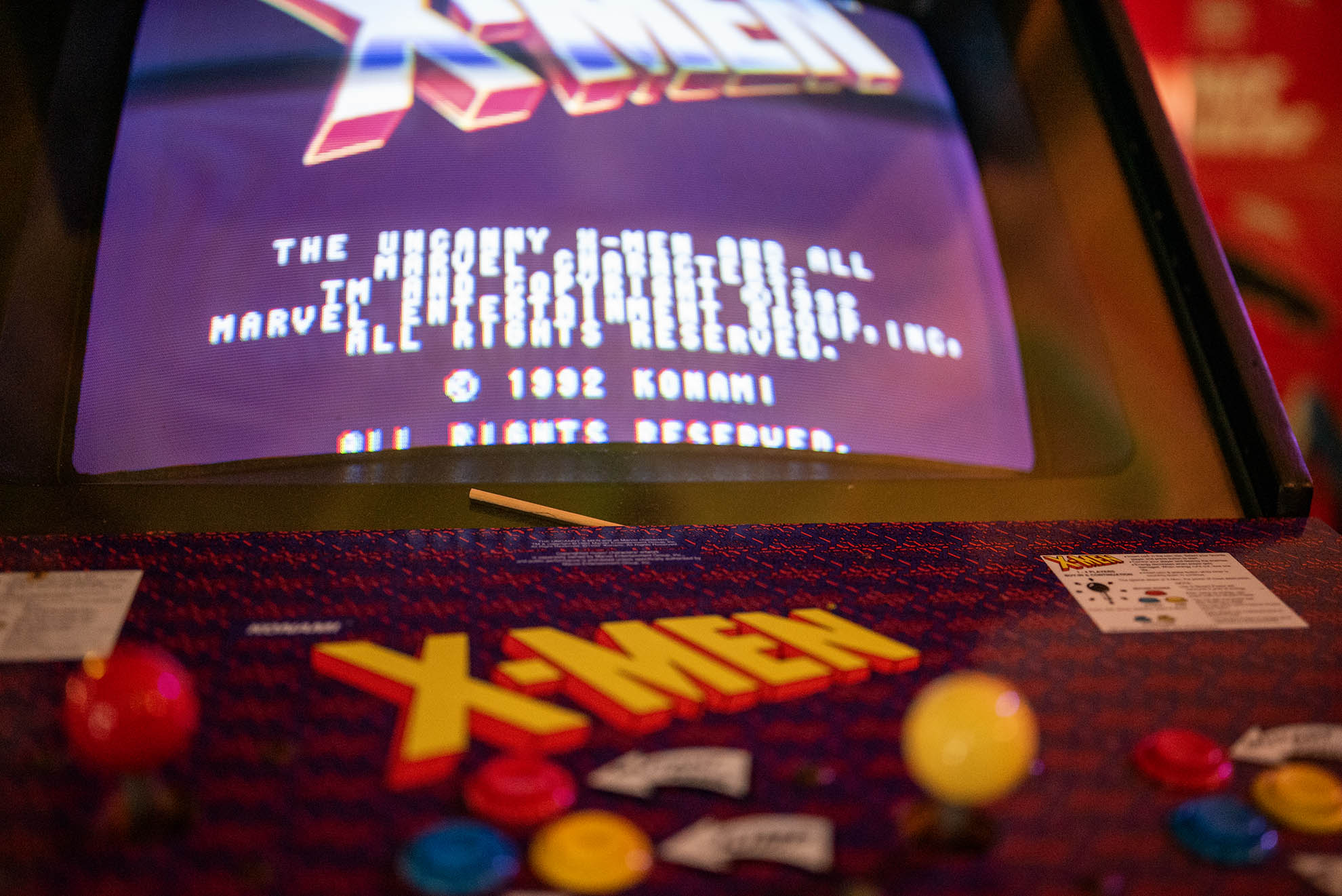
Stage 5 enters the Dark Dimension where Mystique leads the X-Men into a trap, impersonating Professor Xavier. The White Queen awaits as the psychic antagonist in this mind-bending stage.
Stage 6 at Magneto's Headquarters features a gauntlet of returning bosses before confronting Mystique herself, who reveals her deception.
Stage 7 begins the assault on Magneto's orbital base at Asteroid M. Juggernaut, the unstoppable force, guards the entrance.
Stage 8 brings the final confrontation at Asteroid M. Mystique disguises herself as Magneto for one last misdirection before the true Master of Magnetism appears. His magnetic shield deflects most attacks, and his offensive capabilities can devastate unprepared teams.
Welcome to Die: The Infamous Script
X-Men achieved unexpected immortality through its English dialogue. Japanese developers wrote the script, and the translation combined with enthusiastic but stilted voice acting created quotable moments that transcended the game itself.
Magneto's introductory declaration became gaming's most famous grammatical error: "I am Magneto, master of Magnet!" The line "X-Men, welcome to die!" achieved meme status decades before internet memes existed. His taunts of "Come, X-Chicken!" and victory cries of "Kill you!" became beloved callbacks among players.
When Konami re-released the game digitally in 2010, they hired Bang Zoom! Entertainment to re-record all dialogue due to licensing issues. Notably, the script remained unchanged as "Welcome to die!" and "Master of Magnet" were preserved intact. Kyle Hebert voiced all male characters while Mela Lee handled all female roles, but the beloved terrible translations survived the transition.
The cultural impact extended to other games. In Marvel vs. Capcom 3, Deadpool references "Welcome to die!" directly, acknowledging the line's legendary status among fighting game and beat 'em up enthusiasts.
Commercial Dominance
X-Men achieved remarkable commercial success in a crowded 1992 arcade market. In the United States, the game topped the RePlay magazine charts as the highest-grossing deluxe cabinet for six consecutive months, from May through October 1992. This sustained dominance was particularly impressive given the competition as Street Fighter II: Champion Edition was revolutionizing competitive gaming during the same period.
The Amusement & Music Operators Association recognized X-Men's achievements, nominating it for both "most played video game (dedicated)" and "most innovative new technology" at the 1992 AMOA Game Awards. While Street Fighter II: Champion Edition captured the "most played" honor, the nomination acknowledged X-Men's significant impact on arcade revenues.
International performance matched domestic success. In Japan, Game Machine magazine ranked X-Men as the third most successful table arcade unit and seventh most successful upright arcade unit of August 1992. In Australia, Timezone's monthly arcade charts published in Leisure Line magazine crowned X-Men the top-grossing dedicated cabinet of June 1992.
X-Men earned recognition as one of the top five highest-grossing dedicated arcade games of 1992 in the United States, cementing its status alongside Street Fighter II as a defining arcade experience of the era.
The 2010 Revival and Subsequent Loss
Nearly two decades after its arcade debut, Konami commissioned Backbone Entertainment to bring X-Men to modern platforms. The digital re-release launched on PlayStation 3 on December 14, 2010 and Xbox 360 on December 15, 2010.
The port faithfully recreated both the US and Japanese versions, allowing players to experience the regional differences for the first time. Online multiplayer supported up to six players, recreating the legendary cabinet experience across internet connections. Local multiplayer was limited to four players on Xbox 360, though PlayStation 3 supported the full six-player configuration.
Adjustable difficulty settings and custom matchmaking enhanced accessibility, while achievement and trophy systems added modern replay incentives. The re-recorded voice acting preserved the infamous script while meeting modern licensing requirements.
Tragically, the revival was short-lived. Between December 20 and December 31, 2013, Konami delisted X-Men from both PlayStation Network and Xbox Live Marketplace. Expired Marvel licensing was cited as the likely cause, a fate that would also befall Konami's The Simpsons arcade port. Players who purchased the game before delisting retain access, but new purchases became impossible.
Legacy and Critical Recognition
X-Men's influence on beat 'em up design and arcade culture extends far beyond its revenue performance. The six-player cabinet configuration inspired later multi-player arcade experiments, while the cooperative gameplay refinements influenced Konami's subsequent licensed games.
Critical retrospectives consistently rank X-Men among the genre's best. In 2013, Arcade Sushi placed it third on their 10 Best Retro Beat 'Em Ups list, alongside other arcade greats like Wrestle War. Time Extension's 2023 compilation of the Best Beat 'Em Ups of All Time included X-Men among the essential 25 titles.
The game represents the culmination of Konami's beat 'em up expertise. After Teenage Mutant Ninja Turtles in 1989 proved the viability of licensed cooperative brawlers and The Simpsons in 1991 refined the formula, X-Men pushed every element to its maximum: more players, bigger cabinets, more detailed sprites, and more memorable moments.
The Gathering of Mutants
X-Men exists at the intersection of comic book fandom, arcade culture, and cooperative gaming innovation. The six-player cabinet remains one of gaming's most ambitious physical achievements, a piece of furniture as much as entertainment hardware, requiring dedicated space and rewarding it with unforgettable social experiences.
The game's imperfect elements became its most beloved aspects. "Welcome to die!" isn't remembered as an error but as a rallying cry. The Australian Wolverine isn't a mistake but a charming quirk. The punishing American difficulty isn't frustrating but motivation to improve, to coordinate better with friends, to finally see Magneto fall.
When six players stood at that massive cabinet, selecting their mutants and preparing for battle, they participated in something special. Konami understood that arcade gaming was fundamentally social, and X-Men maximized that social potential. Three decades later, the game remains the definitive cooperative arcade experience, standing alongside classics like Xevious, a testament to ambitious design, beloved source material, and the simple joy of saving the world with friends.
Game Information
| Developer | Konami |
| Publisher | Konami |
| Release Date | April 1992 |
| Platform | Arcade (GX065 Hardware) |
| Genre | Beat 'em up / Side-scrolling (see also: BlazBlue) |
| Players | 1-6 (simultaneous) |
| Display | Raster, 288 x 224 pixels |
| Main CPU | Motorola 68000 @ 16 MHz |
| Sound CPU | Zilog Z80 |
| Sound Chips | Yamaha YM2151, Konami K054539 |
| Controls | 8-way joystick, 3 buttons (Attack, Jump, Mutant Power) |
| Sound Team | Seiichi Fukami, Yuji Takenouchi, Junya Nakano |
| Source Material | X-Men: Pryde of the X-Men (1989 pilot) |
| Cabinet Types | 2-Player, 4-Player, 6-Player (dual monitor) |
| US Chart Performance | #1 Deluxe Cabinet (May-October 1992) |
| Awards | AMOA 1992 Nominee: Most Played Video Game, Most Innovative Technology |
| Re-release | PSN/XBLA December 2010 (delisted December 2013) |
| Legacy Rankings | Top 25 Beat 'Em Ups (Time Extension 2023), #3 Retro Beat 'Em Ups (Arcade Sushi 2013) |
Gallery
Get Gaming News and Features First
Stay updated with the latest gaming news and exclusive content.