Hang-On: The 1985 Arcade Revolution That Invented Motion Gaming
Hang-On (1985) invented motion gaming with Yu Suzuki's motorcycle cabinet. Sold 20,000+ units and topped arcade charts 1985-1986 with Super Scaler graphics.
The year was 1985. Arcades were still recovering from the great crash of 1982, and operators were desperate for something new. Something that would drag players away from their home consoles and back into the neon-lit halls where quarters ruled supreme. They needed more than just better graphics or faster gameplay. They needed an experience that couldn't be replicated at home.
Enter Sega. And more specifically, enter a young designer named Yu Suzuki who was about to change everything.
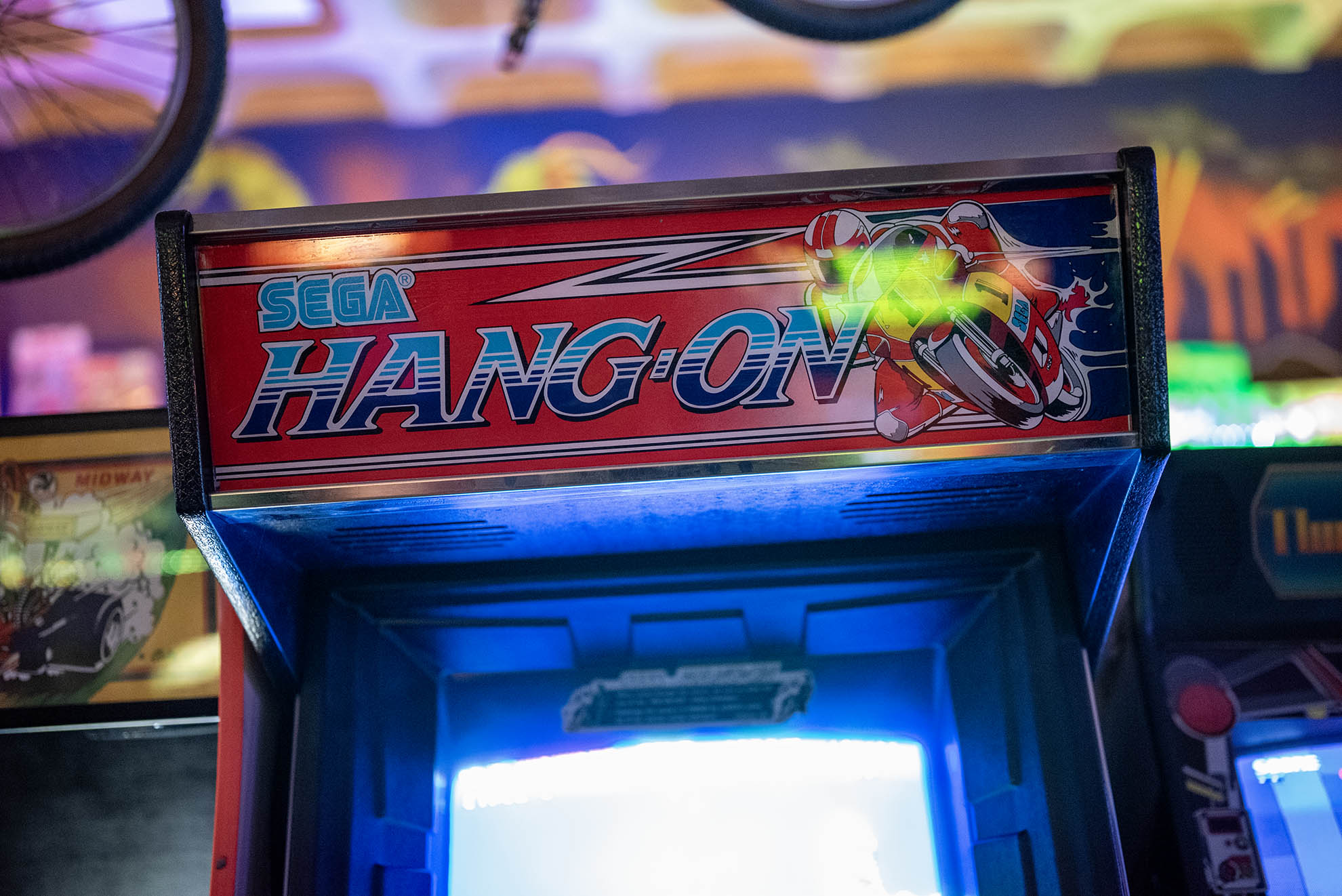
Suzuki had joined Sega in 1983, and by 1984 he'd directed his first game, Champion Boxing for the SG-1000. But what came next would make him a legend. Sega's arcade division wanted something different. Something that would use the player's entire body. And they handed that impossible task to Suzuki.
The result was Hang-On, and nothing in arcades would ever be quite the same again.
The Man Behind the Machine
Yu Suzuki wasn't your typical game designer. Born in Iwate Prefecture, he'd studied 3D computer graphics at university before the term "3D gaming" meant anything to most people. But more importantly for this project, he absolutely loved motorcycles.
"I rode on motorcycles a lot," Suzuki told G4TV in a later interview. "When we came up with the prototype for the arcades, I would ride on that prototype bike for hours and hours every day."
This wasn't just dedication. It was obsession. Suzuki wanted to capture the feeling of leaning into a curve, of pushing your weight against the centrifugal force, of becoming one with the machine. And he was going to test every prototype himself until it felt right.
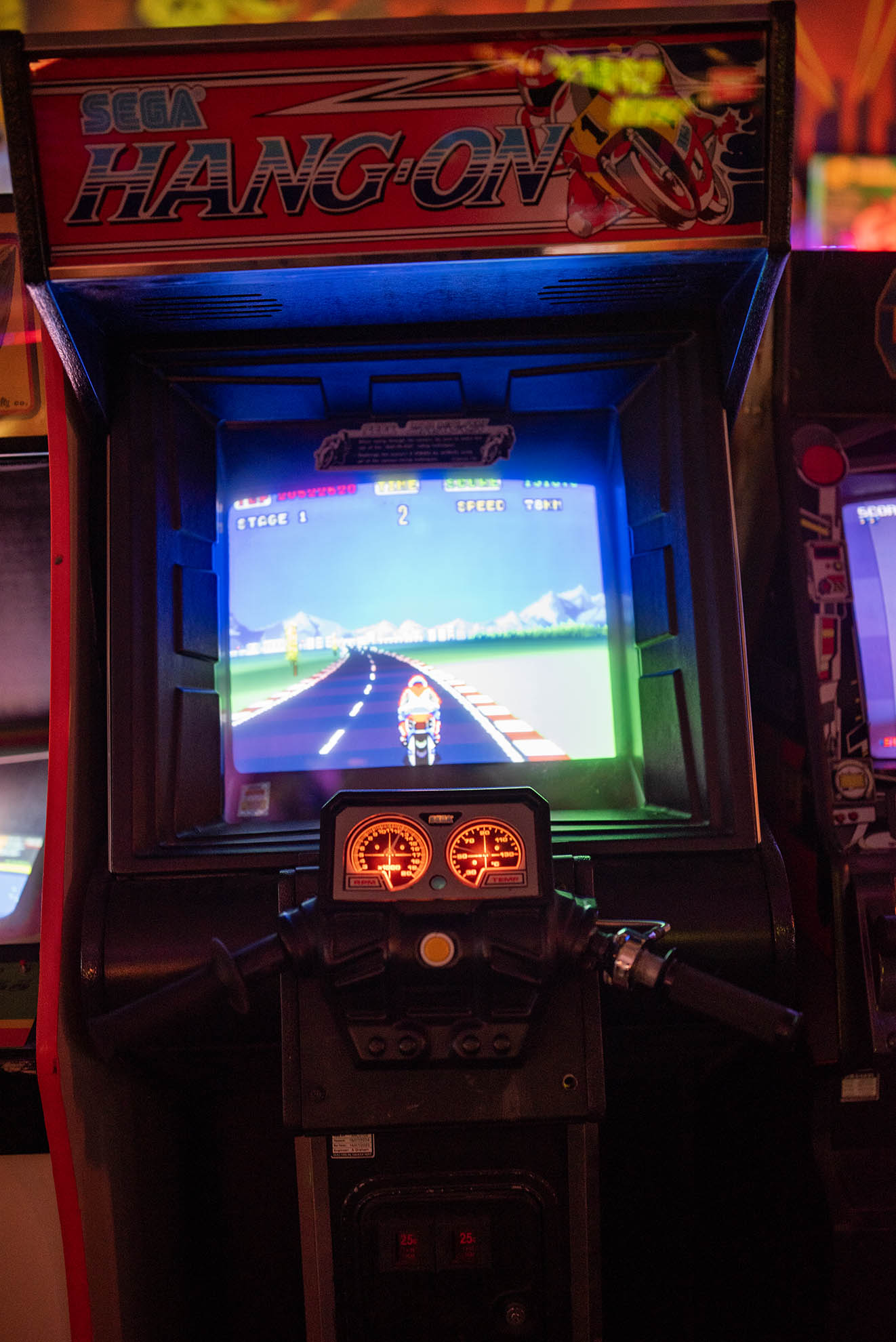
His team initially figured they could use actual motorcycle parts for the cabinet. Real handlebars, real footpegs, authentic components from genuine bikes. It seemed logical. Why reinvent the wheel?
Reality had other plans. Real motorcycles aren't designed to be ridden continuously from morning to night. In an arcade, Hang-On would be played non-stop from the moment the doors opened until closing time. The team discovered that authentic parts wore out five times faster than expected under those conditions. They had to engineer everything from scratch, building components tough enough to survive the abuse of thousands of eager players.
Freddie Spencer's Shadow
Before writing a single line of code, Suzuki faced a crucial decision. What kind of motorcycle racing should the game simulate?
Personally, Suzuki was drawn to dirt bikes, motocross, and enduro racing. There's something raw and immediate about off-road competition that appealed to him. But Sega's market research told a different story. Worldwide, road-based GP 500 racing was far more popular. The glamour of Grand Prix circuits, the sleek racing bikes, the international prestige. That's what would sell cabinets.
So Suzuki dove into GP 500 racing culture. And that's when he discovered Freddie Spencer.
Spencer had just become the youngest person ever to win a motorcycling world championship, claiming the GP500 title at just 21 years old. His riding style was distinctive, aggressive, beautiful to watch. The way he leaned into corners, how he seemed to hang off the side of his Honda machine through every turn.
"Freddie Spencer's riding style, it was so nice," Suzuki explained. "And my game was like a homage. That's the reason I wanted to make it. Freddie Spencer, he rode a Honda bike, and I loved the way he hung on!"
That phrase, "hung on," stuck in Suzuki's mind. He'd read about the technique in a Japanese bike magazine, where it was called "hang on." Later, he learned that Americans called it "hang off." But by then, the name was already set. Hang-On it would be.
Building the Impossible
Creating Hang-On required technology that didn't exist yet. So Suzuki's team built it.
The result was the Sega Super Scaler system, a hardware architecture that would power some of the most influential arcade games of the decade. At its heart were two Motorola 68000 processors running at 6 MHz, supported by a Zilog Z80 handling audio duties. The system ran at a buttery smooth 60 frames per second.
But the real magic was in the sprite scaling. Super Scaler could manipulate sprites in ways that simulated three-dimensional movement, scaling objects larger as they approached the player and smaller as they receded into the distance. It was capable of Z-buffering and depth mapping, handling sprites almost like the texture-mapped polygons that wouldn't become standard for years. At the time of its release, this was simply the most powerful game system on the planet.
And then there was the sound. Suzuki didn't want the bleeps and bloops that dominated arcade audio. He wanted rock music. Real, driving rock music.
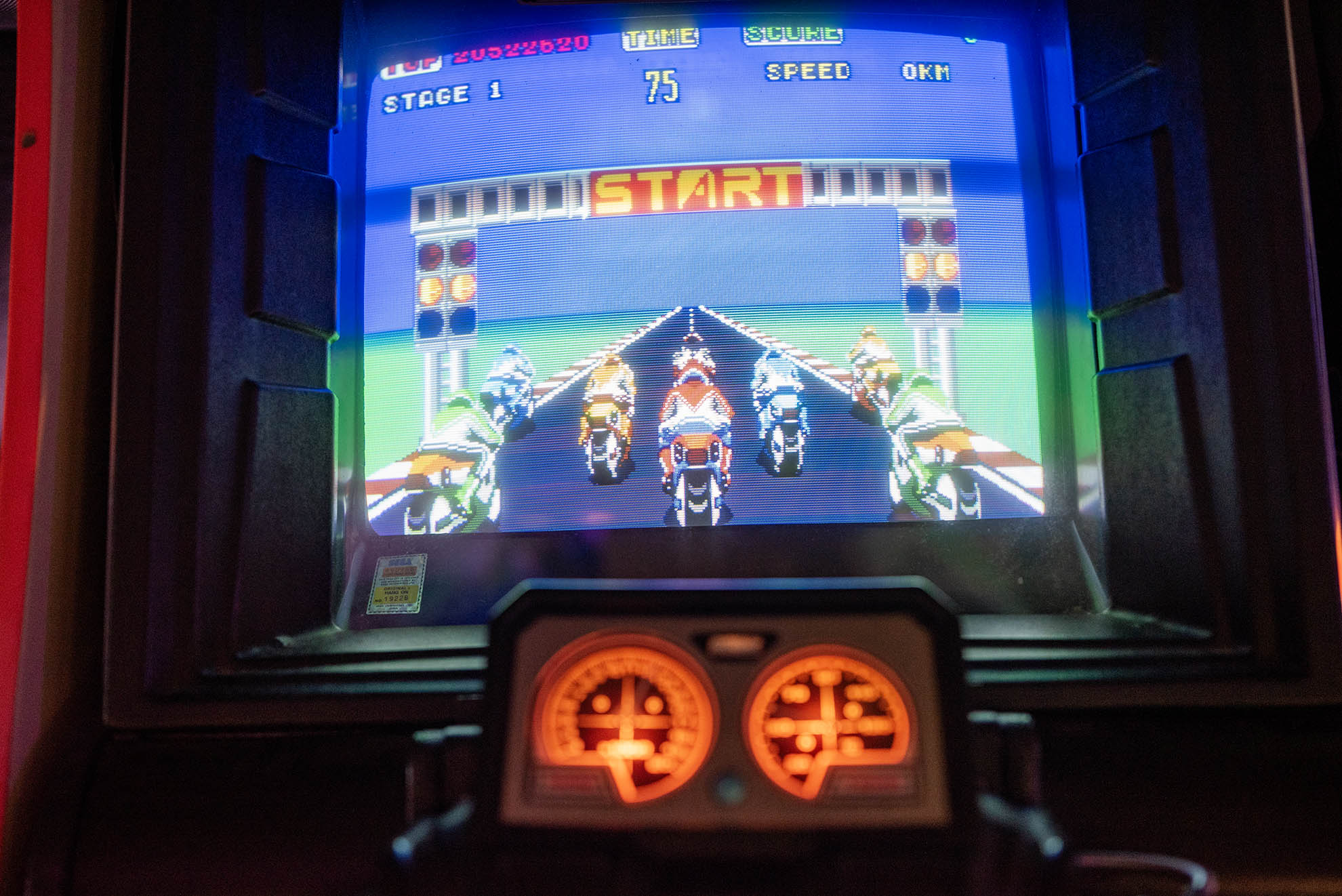
He found his composer in Hiroshi Kawaguchi, a fellow Sega employee who actually played in a band. Suzuki told him he wanted "songs like what a band would play," and Kawaguchi delivered. Using the Yamaha YM2203 sound chip to its absolute limits, Kawaguchi composed the main stage tracks including the unforgettable "Theme of Love." Yoji Ishii contributed the Goal Music and Name Entry themes. They pushed the hardware with PCM sampling and added something almost unheard of in arcade games at the time: digitized drum samples.
Hang-On became the first Sega arcade game to feature real drum sounds. The deluxe cabinet pumped that rock soundtrack through stereo speakers, creating an audio experience that matched the visual spectacle.
Three Ways to Ride
Sega released Hang-On in three different cabinet configurations, each offering a different level of immersion.
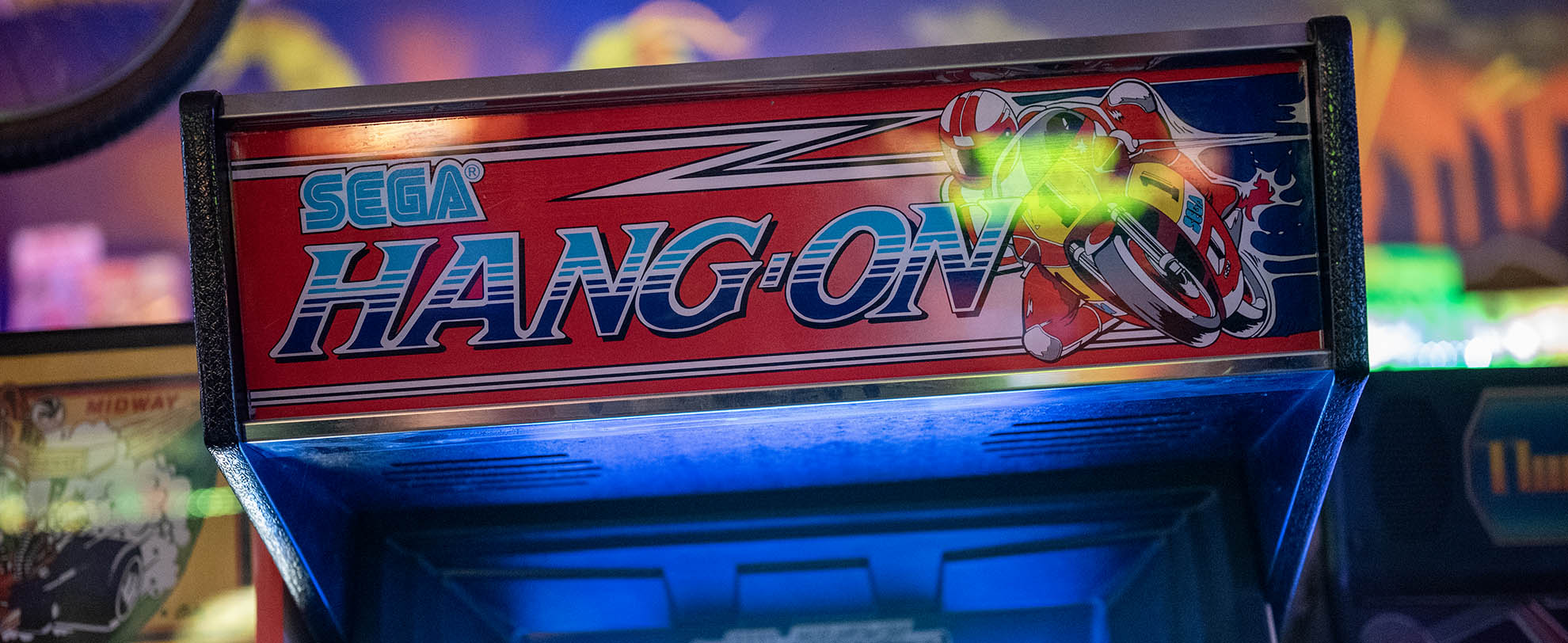
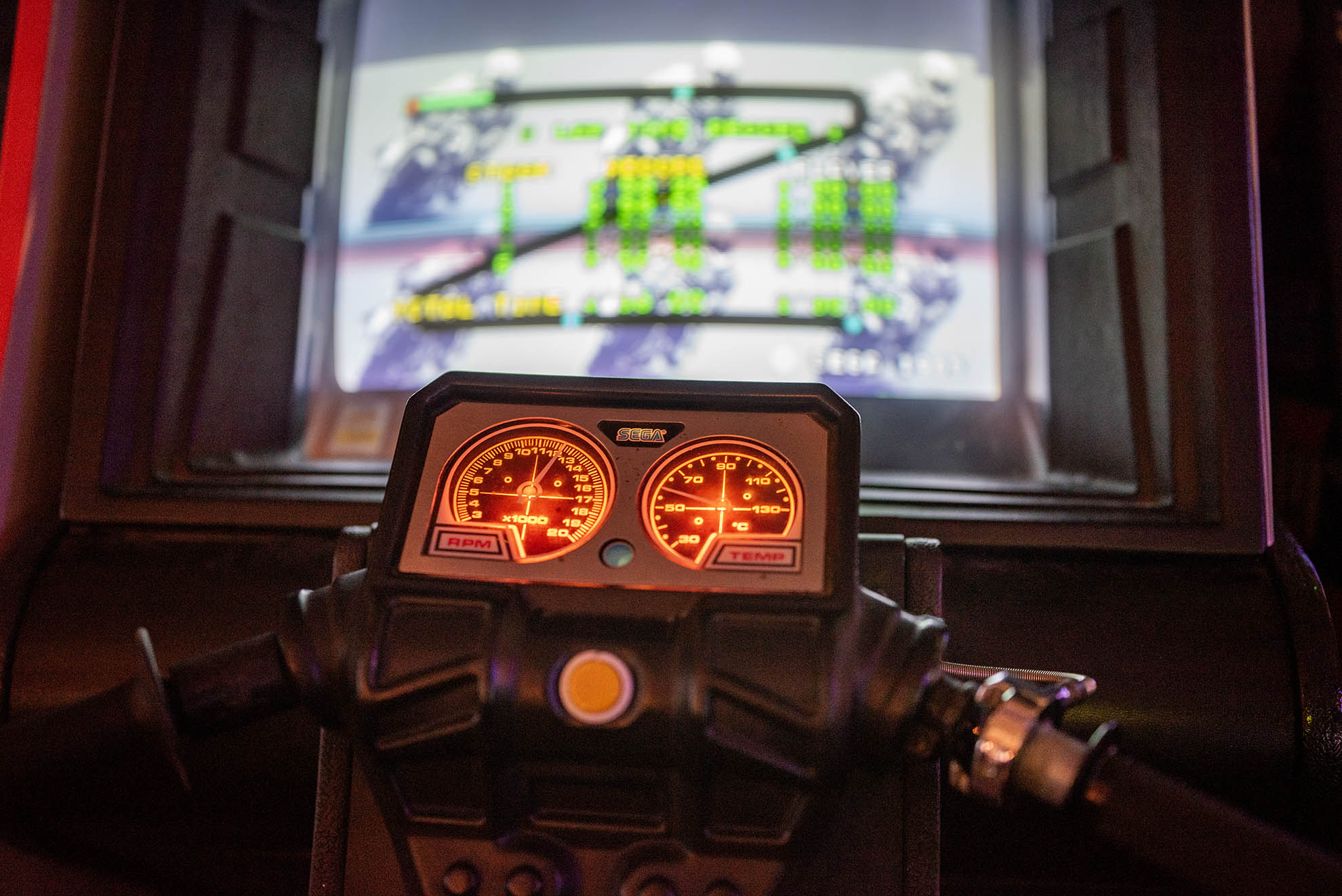
The upright cabinet was the most practical option for operators with limited floor space. It featured authentic motorcycle handlebars with throttle and brake levers, plus simulated tachometer and speedometer gauges. Players stood or sat on a stool while gripping the bars. No body movement required.
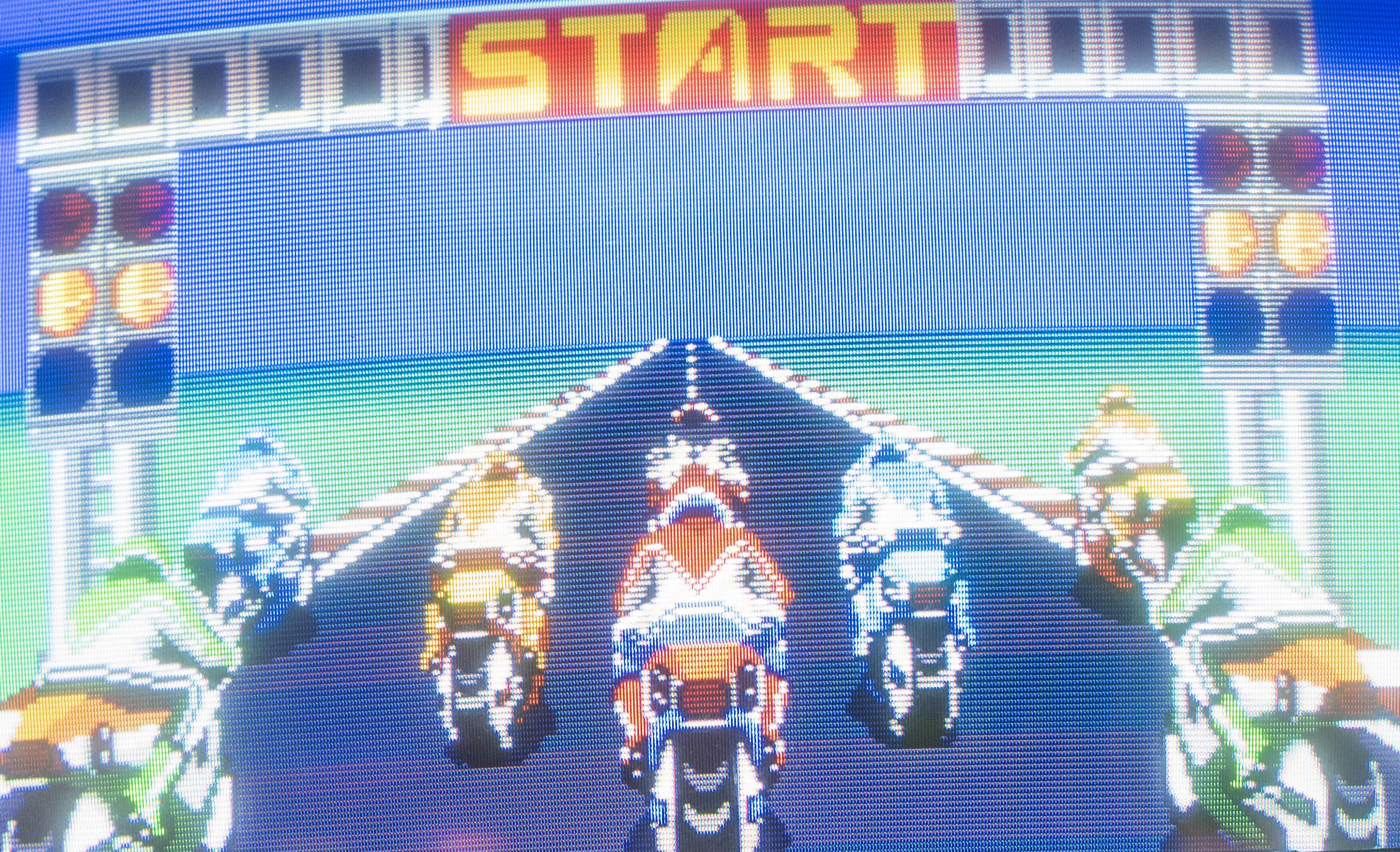
The sit-down version added a seat to the package. Players could actually steer by shifting their weight left and right, and pressing down on the foot pegs helped execute tighter turns. It was a step up in immersion, though it lacked force feedback.
But the deluxe motorcycle cabinet was the true revolution. This was a full life-size motorcycle replica that players actually straddled. The screen was mounted where the windshield would be. To steer, you leaned the entire bike, and the handlebars were fixed to the body so the whole unit tilted as one piece.
This was the world's first "full-body-experience" video game. You didn't just play Hang-On. You rode it.
The deluxe cabinet used a 15-inch CRT monitor and stereo speakers blasting Kawaguchi's rock soundtrack. It was unlike anything that had ever existed in an arcade.
The Critics Were Wrong
When Sega debuted Hang-On at the Hotel New Otani Tokyo on July 2, 1985, not everyone was convinced.
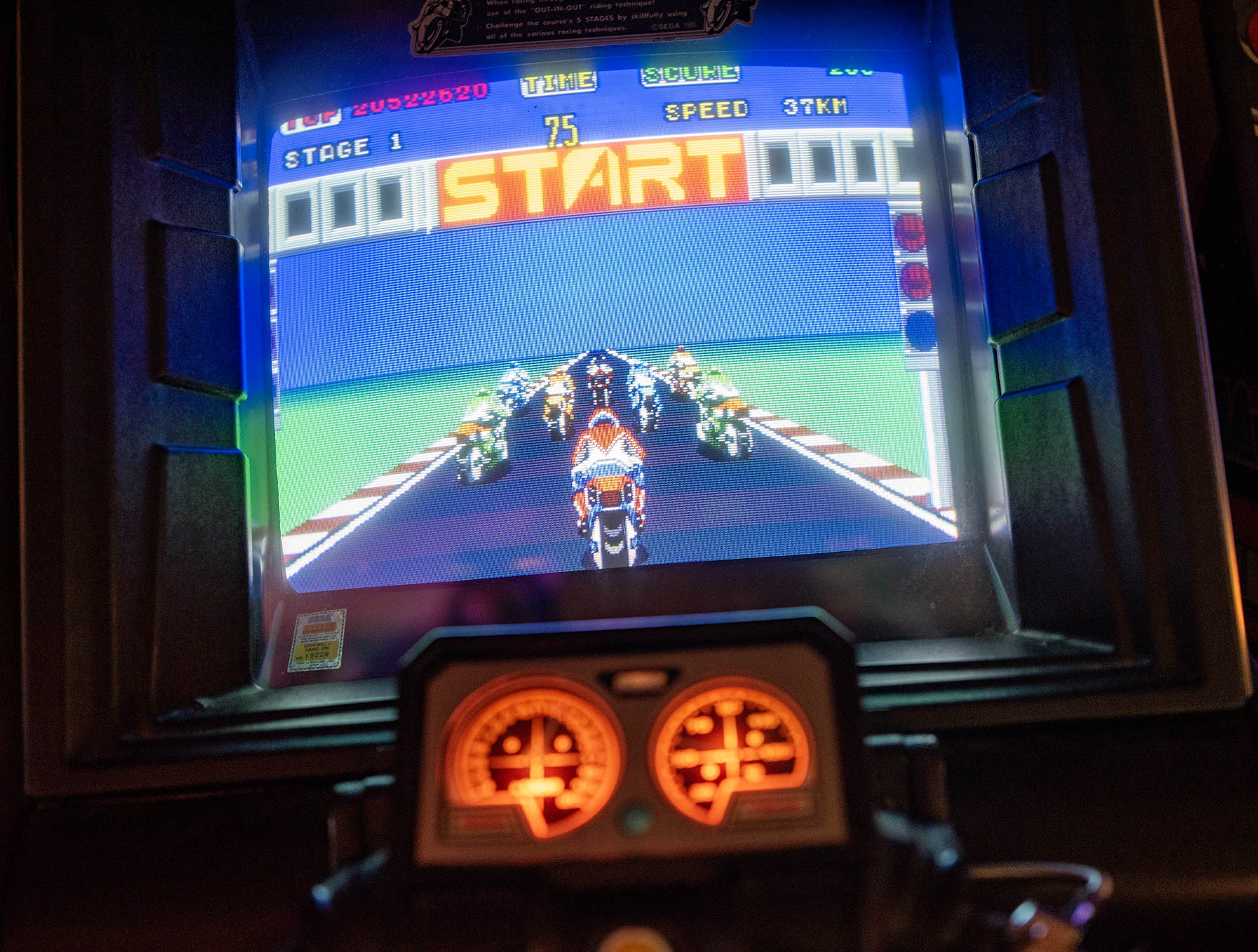
The deluxe motorcycle cabinet drew immediate criticism. Some industry observers called it "inappropriate for Japanese culture." Their reasoning? Japanese people were too shy and reserved. Nobody would want to straddle a motorcycle in public, leaning side to side while strangers watched. It was embarrassing. It was undignified. It would never work.
Suzuki recalled these criticisms years later. The conventional wisdom insisted that the cultural barrier was insurmountable.
Then the arcade doors opened, and players lined up around the block.
The critics had underestimated how badly people wanted something genuinely new. How the thrill of immersion would overcome any embarrassment. How the sheer joy of virtually racing a superbike through the Alps and across the Grand Canyon would make people forget they were being watched.
An interesting footnote: Japanese female players developed what became known as the "women's position," an alternative way of sitting on the deluxe cabinet that addressed practical concerns about riding in skirts. Adaptation happened naturally. The game was simply too fun to miss.
Five Stages of Speed
Hang-On challenged players to blast through five distinct stages before the timer ran out:
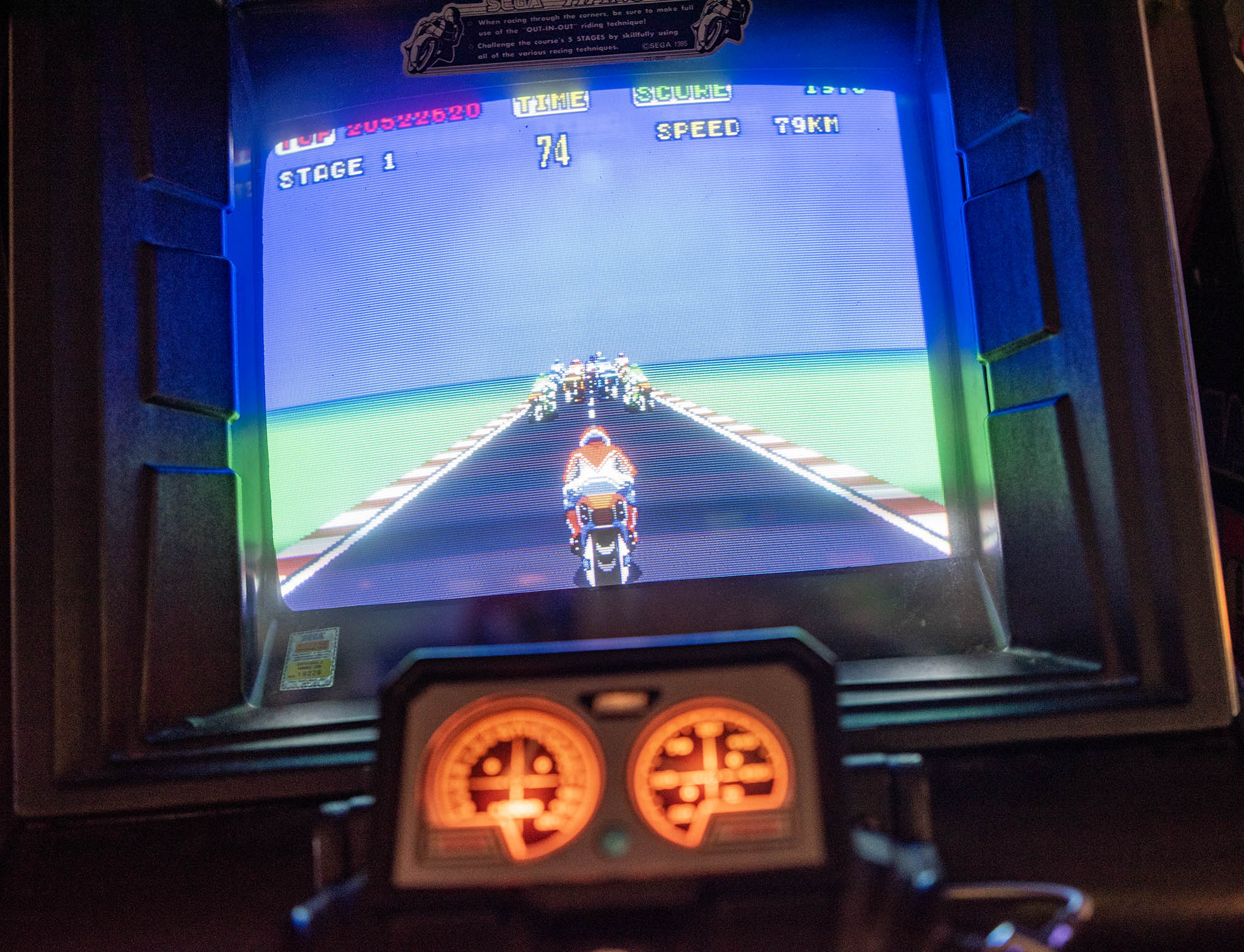
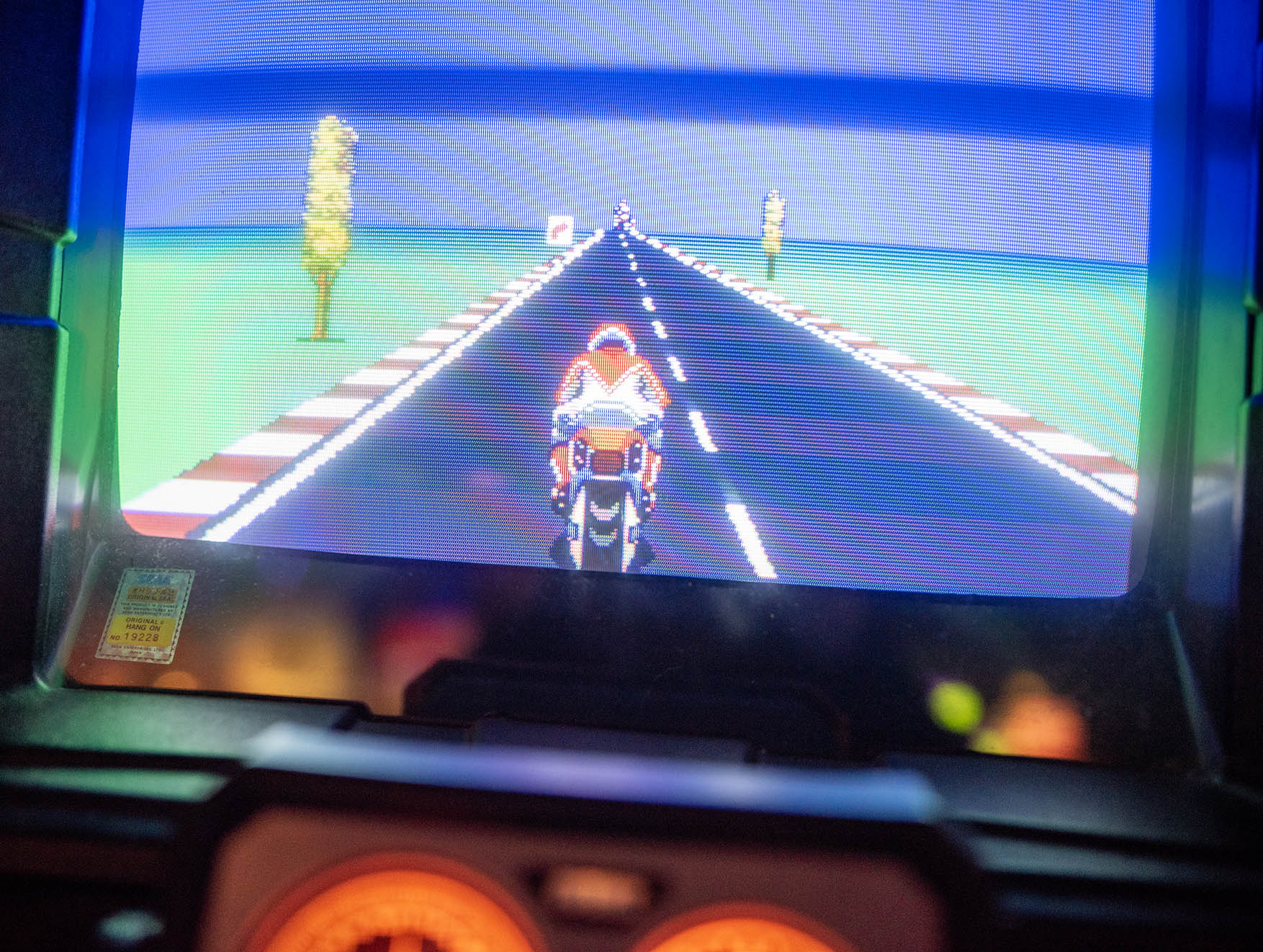
First came the Alps, with mountain scenery rushing past as you navigated sweeping curves against a backdrop of snow-capped peaks. Then the Grand Canyon, with its desert landscapes and rusty orange vistas stretching to the horizon. The Urban Night stage plunged players into city streets after dark, neon reflecting off the pavement. Seaside offered coastal roads with ocean views. And finally, the Circuit brought everything together in a proper racing track finale.
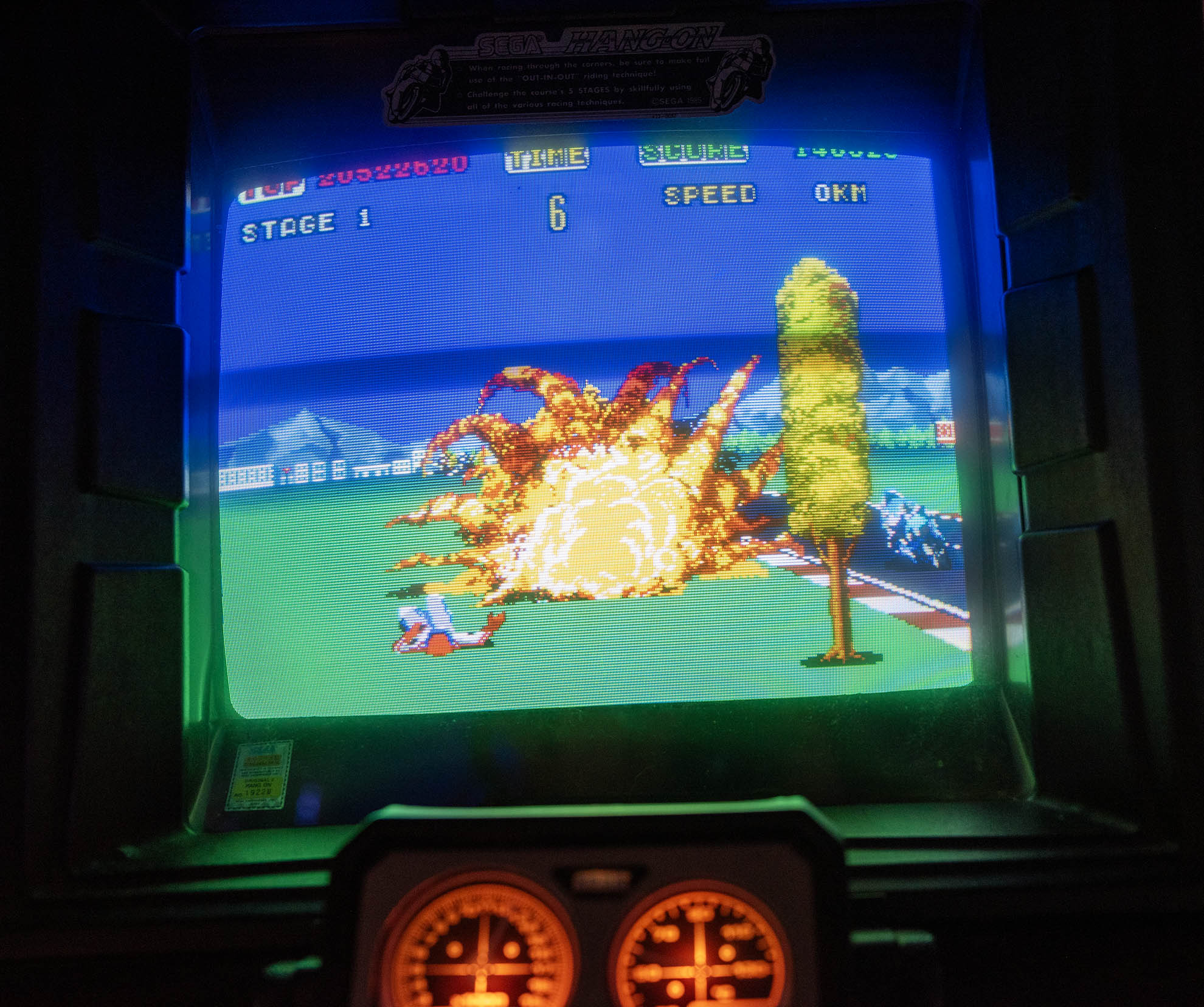
Each stage had its own personality, its own hazards. Other racers crowded the road, and clipping them meant a spectacular crash that cost precious seconds. The timer was relentless. You couldn't just survive. You had to fly.
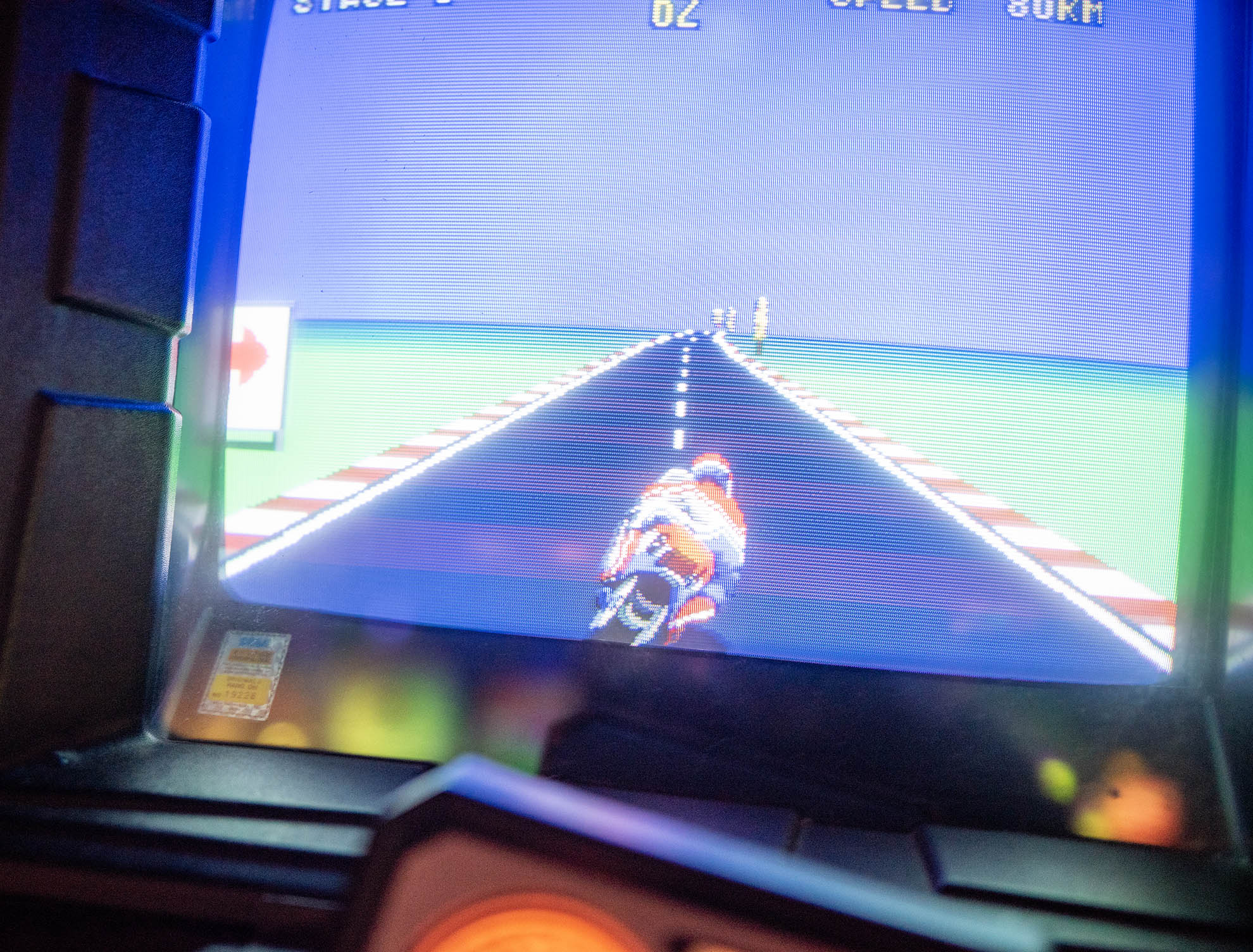
The controls were simple but deep. Twist the throttle to accelerate. Squeeze the brake to slow down. Lean to turn. But mastering that lean, finding the perfect angle to carry maximum speed through a corner without losing control, that took practice. Real practice. The kind of practice that ate quarters.
Success Beyond Expectations
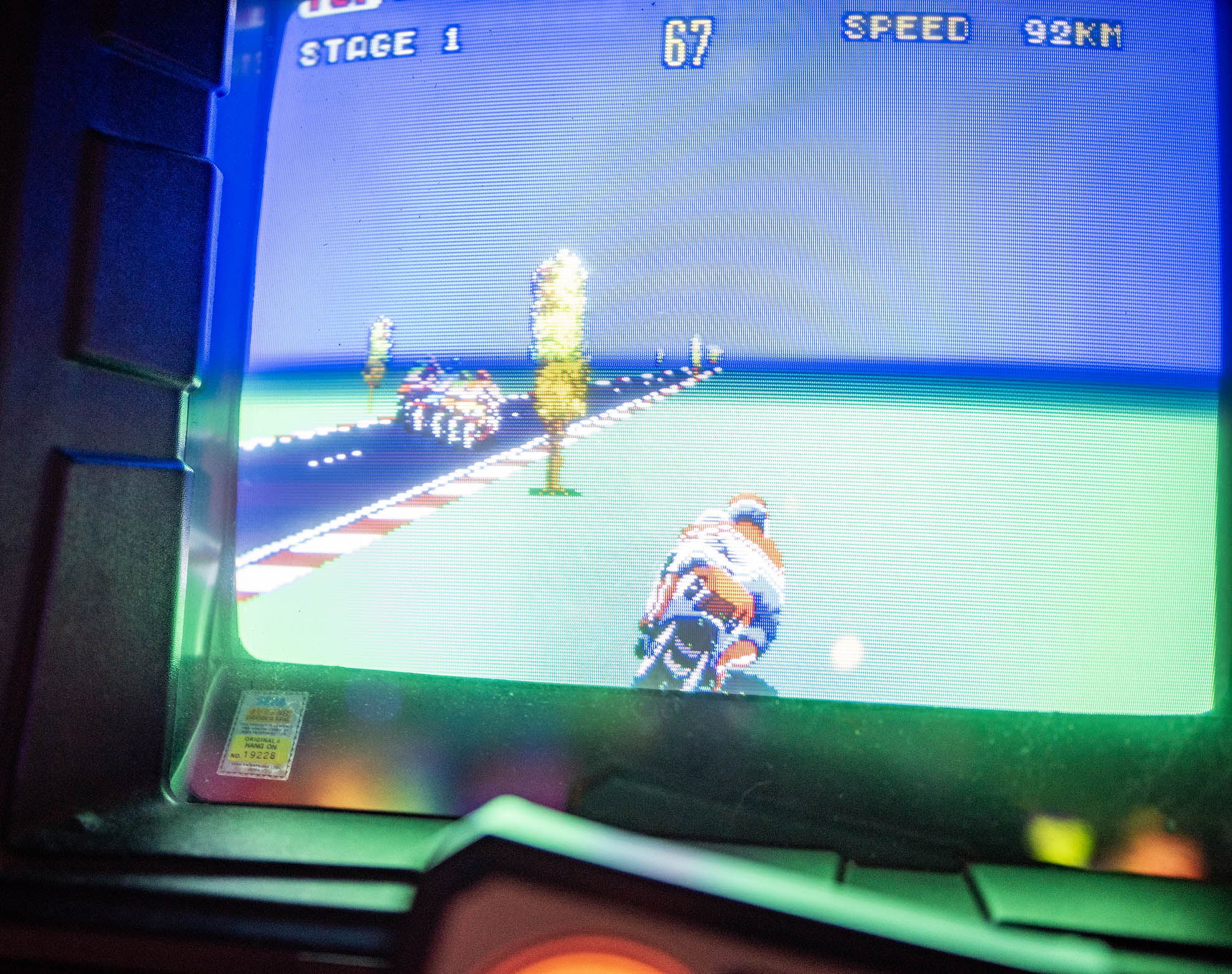
Sega's internal projections were modest. They expected to sell maybe 5,000 Hang-On cabinets worldwide: 2,000 in Japan, 2,000 in the United States, and 1,000 in Europe.
They were off by a factor of four.
By early 1991, Sega had sold over 20,000 official Hang-On arcade cabinets. And that doesn't count the estimated 20,000 to 30,000 pirated units circulating worldwide. When your game is successful enough to spawn that many bootlegs, you've achieved something special.
Orders flooded in immediately after the Tokyo debut. Operators wanted several hundred units right away, and Sega struggled to keep up with demand. It was a manufacturing challenge they were happy to have.
The numbers told the story. Hang-On became the highest-grossing arcade game of 1985 in the United States. Then it topped the charts again in 1986, claiming the number one spot in both Japan AND America. In London's competitive arcade scene, it finished second only to Konami's Gradius.
Sega employees had their own tribute to the game's success. The Sega Haneda building, their corporate headquarters, became informally known as the "Hang-On Building." Rumor had it that the game's profits had directly funded its construction. Whether true or not, the nickname stuck.
The Taikan Revolution
Hang-On didn't just succeed on its own terms. It launched an entire genre.
The Japanese word "taikan" (体感) translates roughly to "body sensation." And that's exactly what Hang-On delivered: games you felt in your whole body, not just your fingertips. The taikan revolution had begun.
Sega didn't rest. Later in 1985, they released Space Harrier with its own motion-controlled cabinet, a hydraulic seat that pitched and rolled as players flew through surreal landscapes blasting aliens. In 1986 came Out Run, with its iconic red Ferrari cabinet that shifted and tilted through coastal highways and branching paths. And 1987 brought After Burner, a rotating cockpit that simulated the sensations of jet combat.
All of these games ran on hardware descended from Hang-On's Super Scaler technology. The system spawned the OutRun board, the X Board, the Y Board, pushing sprite-based graphics to their absolute limits well into the 1990s.
More importantly, taikan games helped the arcade industry recover. The crash of 1982 had hit hard, and home consoles were becoming increasingly sophisticated. Arcades needed experiences that couldn't be replicated in living rooms. Motion cabinets were the answer. You could own an Atari or a Nintendo, but you couldn't own a hydraulic motorcycle or a rotating jet fighter cockpit.
It took two decades before motion controls became standard in home gaming with the Wii. Yu Suzuki and Hang-On beat everyone to the concept by twenty years.
Bringing It Home
Of course, Sega wanted to bring Hang-On to their home consoles. You just couldn't replicate the full-body experience.
The SG-1000 received a port in 1985, marketed in Japan as "Hang-On II." It was simplified significantly to work within the console's limitations, but it got the basic racing gameplay across.
The Master System version was more ambitious. Released in Japan on October 20, 1985, and later in the US (October 1986) and Europe (August 1987), it became a flagship title for the console. Sega bundled it with Safari Hunt on some Master System models, and with Astro Warrior on others. It helped establish the Master System's identity as an arcade-quality home machine.
A curious hybrid called Hang-On Jr. appeared in 1986. This was actually an arcade release based on the Master System port, running on Sega's System E board. It was Hang-On simplified for smaller venues that couldn't accommodate the full cabinets.
Other ports reached the MSX and PC-8801 mkII SR in 1986. And in 1987, Sega released Super Hang-On, a full arcade sequel with improved graphics and four new courses spanning Africa, Asia, the Americas, and Europe.
The Legacy of Speed
For Yu Suzuki, Hang-On was just the beginning. His subsequent games (Space Harrier, Out Run, After Burner) made him one of the most celebrated designers in arcade history. His later work on Virtua Racing and Virtua Fighter pioneered 3D polygon graphics in arcades. And his Shenmue series pushed the boundaries of what games could be as narrative experiences.
The industry noticed. In 2003, Suzuki became the sixth person inducted into the Academy of Interactive Arts and Sciences Hall of Fame. In 2011, he received the GDC Pioneer Award for his body of work spanning three decades. IGN ranked him ninth on their list of the 100 greatest game creators of all time. The Smithsonian Institution recognized his contributions to the medium.
But it all started here, with a young designer who loved motorcycles, who admired a world champion's riding style, and who refused to accept that arcades had to be limited to joysticks and buttons.
Hang-On didn't just race against the clock. It raced against the future, and it won.
All arcade cabinet photos taken by the author at The Pixel Bunker.
For more arcade classics, see Street Fighter II and Snow Bros.\n\n## When Arcades Needed a Hero
Game Information
| Title | Hang-On |
| JP Title | ハングオン |
| Developer | Studio 128 (later AM2) |
| Designer | Yu Suzuki |
| Composer | Hiroshi Kawaguchi, Yoji Ishii |
| Release | July 5, 1985 (Japan) |
| Platform | Arcade (Super Scaler) |
| Genre | Racing |
| Players | 1 |
| Cabinets Sold | 20,000+ (official) |
| Chart Position | #1 Arcade 1985-1986 |
Get Gaming News and Features First
Stay updated with the latest gaming news and exclusive content.