Secret of Mana: The Masterpiece That Almost Never Was
Square's legendary SNES action RPG lost 40% of its content to cartridge limits, yet sold 1.83 million. Speedruns, easter eggs, and technical deep dive.
In the summer of 1993, a Japanese game developer named Hiromichi Tanaka faced an impossible choice. His team at Square had spent months building an ambitious action RPG for a revolutionary piece of hardware that would never exist. The SNES CD-ROM addon, a joint venture between Nintendo and Sony, had collapsed in spectacular fashion. Sony would eventually transform their abandoned technology into the PlayStation, reshaping the entire games industry. But Tanaka's team had a more immediate problem. They had a game designed for a CD-ROM that now needed to fit on a cartridge one-twentieth the size.
"Quantities, and now I really mean quantities of materials disappeared when the CD-format was discontinued," Tanaka later recalled. "We had to redo the game from scratch."
What emerged from that crisis was Secret of Mana, known in Japan as Seiken Densetsu 2. Director Koichi Ishii estimated that roughly forty percent of the planned content was cut to meet cartridge limitations. Multiple storyline paths leading to different endings. Time travel mechanics. A darker, more complex narrative. All of it vanished. Yet the game that survived those brutal cuts went on to sell nearly two million copies worldwide, earn dozens of awards, and define the action RPG genre for a generation of players. Sometimes the best art comes from constraints, and Secret of Mana is proof that what remains after a creative disaster can still be extraordinary.
A Game With Three Names
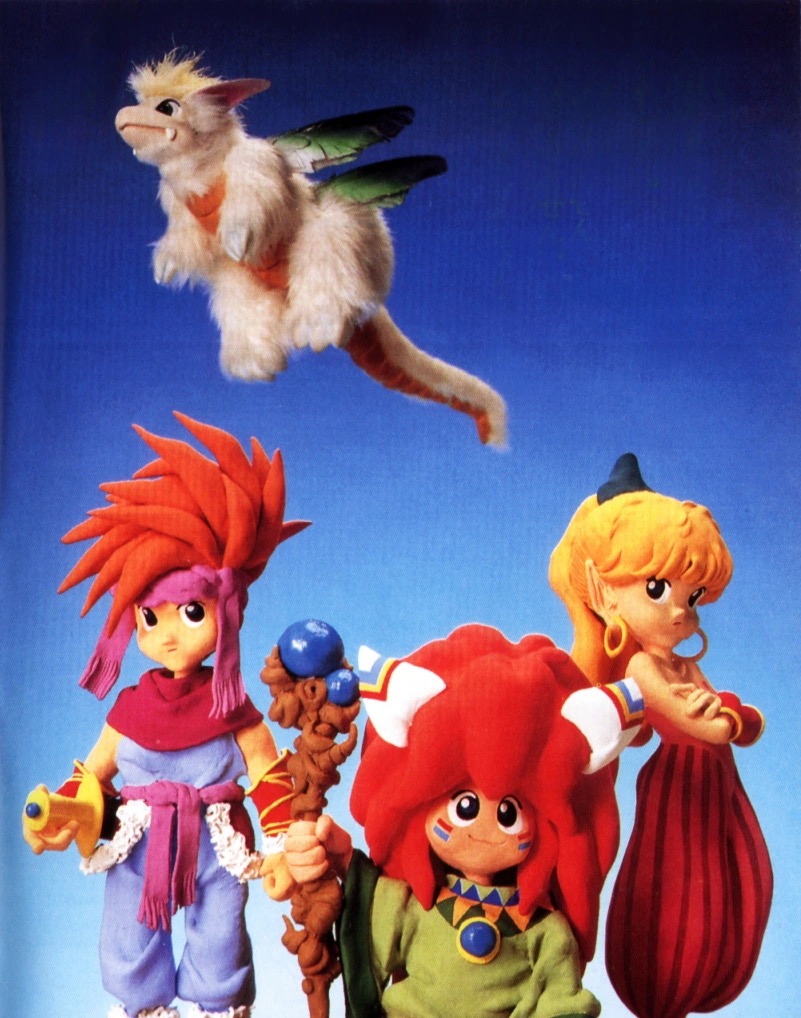
The history of Secret of Mana's development reads like a corporate soap opera. The project began life as something entirely different, a more action-oriented take on Final Fantasy IV. Square's Development Division 3, led by Tanaka and Ishii, wanted to create a Final Fantasy experience with real-time combat and a dynamic overworld rather than random encounters and turn-based battles.
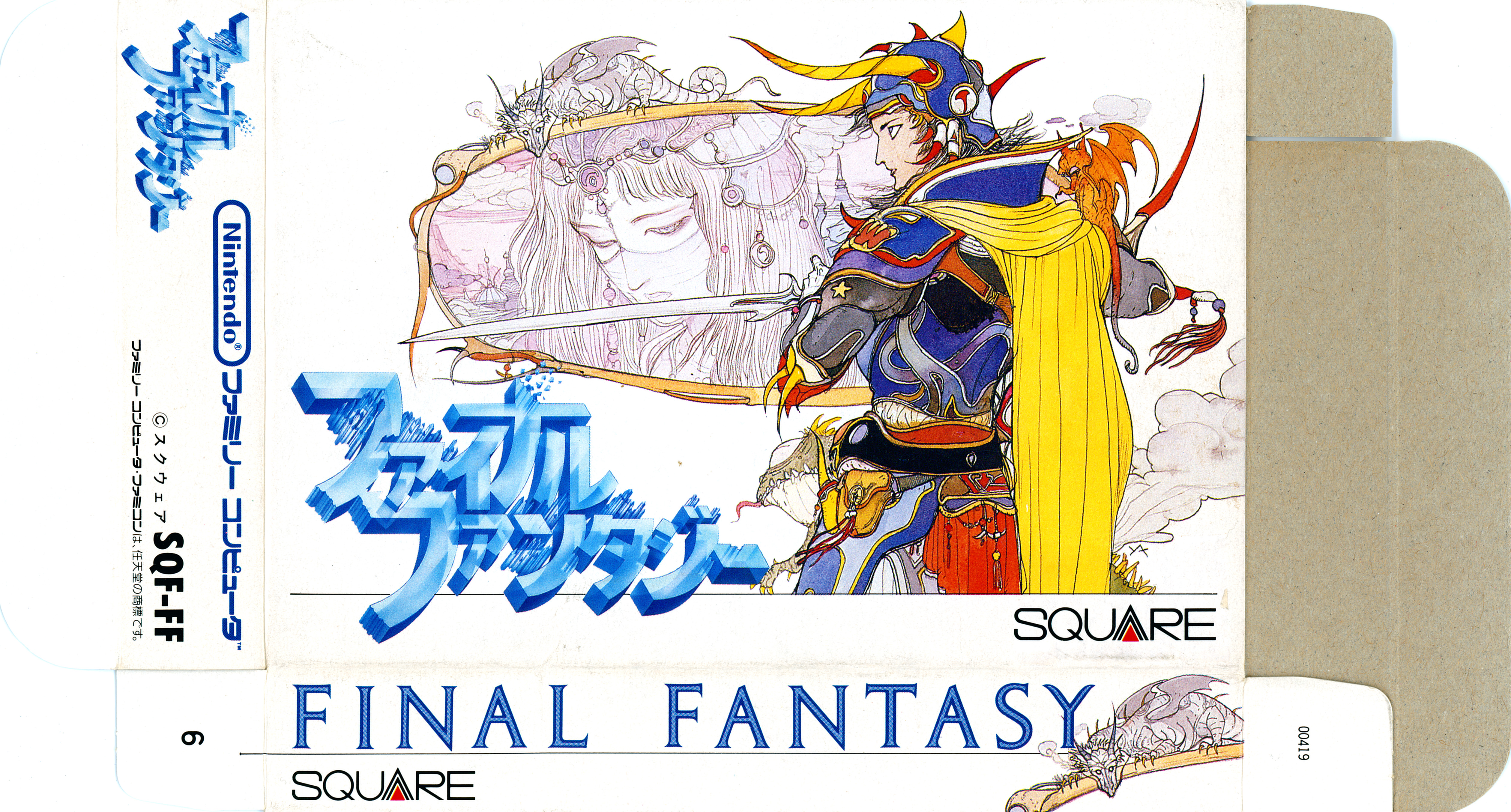
As the project evolved, it received an internal codename that would later become famous for entirely different reasons: Chrono Trigger. The action RPG under development in Square's offices during 1991 and 1992 bore that working title before it eventually became Seiken Densetsu 2. The actual Chrono Trigger, released in 1995, would inherit some of the concepts and personnel from this earlier project, particularly the multiple endings and time travel elements that Tanaka's team had been forced to abandon.
The Nintendo-Sony partnership collapse proved devastating for Square's plans. Nintendo had been developing a CD-ROM peripheral for the Super Famicom in collaboration with Sony, promising storage capacity that dwarfed what cartridges could offer. Square designed their ambitious action RPG around that capacity. When the deal fell through in 1991, the development team initially resisted continuing the project. They believed too much would need to be cut to make it work on standard cartridge hardware.
Company management overruled them.
What followed was a brutal compression process. Ishii, serving as director while handling monster design and game design alongside Tanaka's production and scenario work, watched features disappear daily. The original storyline, Tanaka later revealed, had a much darker tone. Character development that seemed essential was trimmed to fit the space constraints. The branching paths that would have given players agency over their journey through the narrative became a single linear experience.
The programmer tasked with making this all work was Nasir Gebelli, an Iranian-American coding legend who had already built the engines for Final Fantasy I through III. Gebelli's expertise proved essential in optimizing the game to fit within its sixteen megabit cartridge limitation while maintaining the fluid real-time combat that distinguished Secret of Mana from its turn-based contemporaries.
The Technical Marvel Inside the Cartridge
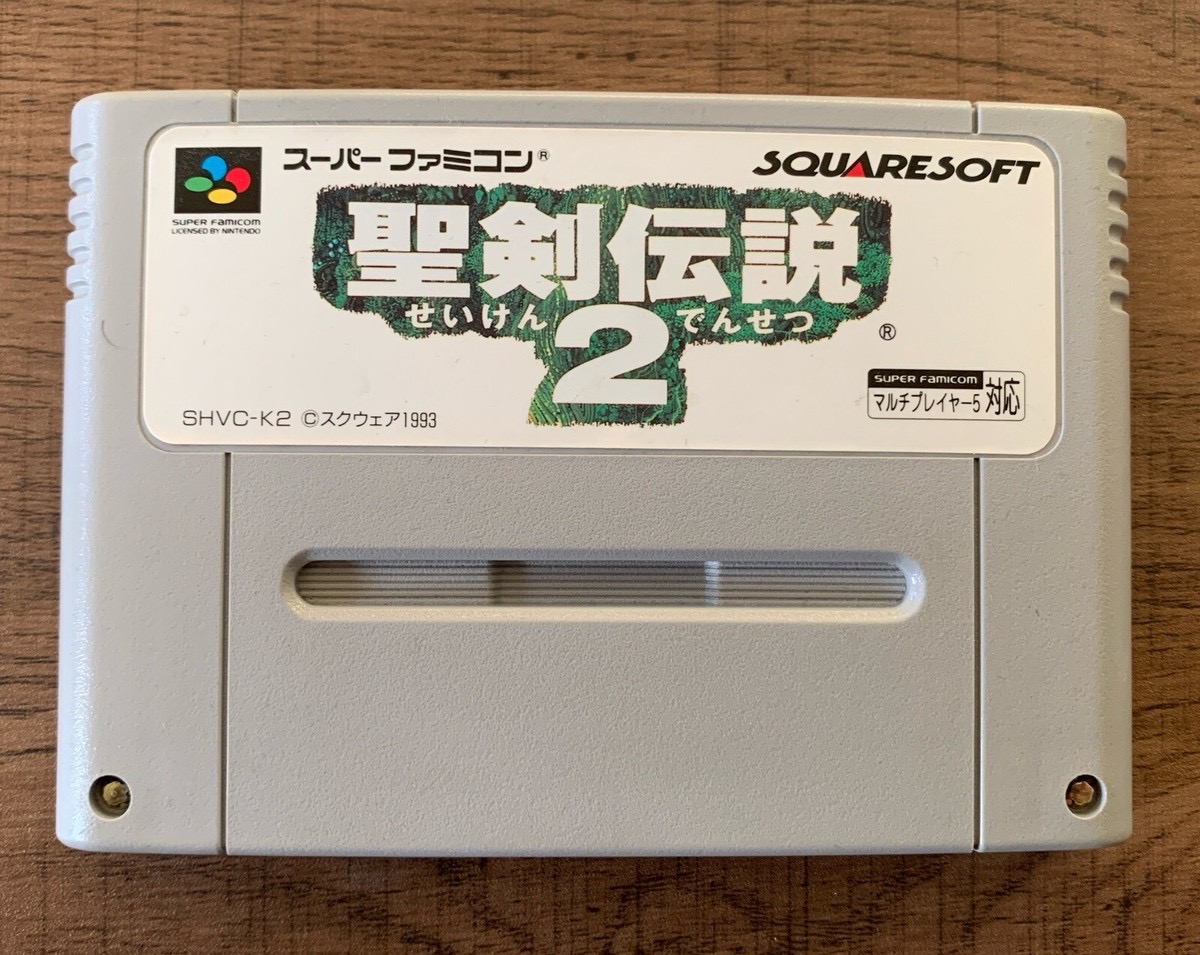
Secret of Mana's sixteen megabit ROM, equivalent to two megabytes of storage, contained innovations that pushed the Super Famicom hardware to its limits. The cartridge used HiROM banking to maximize the addressable space and included sixty-four kilobits of battery-backed SRAM for saving game progress. These were standard specifications for ambitious Super Famicom titles of the era, but what Square accomplished within those constraints demonstrated masterful engineering.
The Ring Menu system became one of the game's most celebrated features. Rather than pausing combat to navigate through hierarchical menu screens, players could summon circular menus that orbited their character while the game continued in slow motion around them. Equipment, magic, items, and status screens all lived within these nested rings, accessible within seconds. The system proved so elegant that countless action RPGs would imitate it for decades to come.
When players summoned the dragon Flammie and took to the skies, the Super Famicom's Mode 7 capabilities created a rotating, scaling world map beneath them. This pseudo-3D effect, achieved by manipulating a single background layer with hardware-accelerated transformations, gave the illusion of true flight over a spherical world. Watching the continents spin beneath Flammie's wings remained one of gaming's magical moments throughout the sixteen-bit era, alongside technical showcases like Super Metroid.
The real-time combat system required careful technical management. Only three enemies could appear on screen simultaneously, a limitation born of sprite processing constraints. The eight weapon types, each upgradeable through nine levels by finding orbs and visiting the dwarf blacksmith Watts, featured charging mechanics that rewarded patience. Holding the attack button filled a gauge, and releasing at full charge unleashed devastating special moves. The system created a rhythm to combat that felt distinct from both action games and traditional RPGs.
Perhaps most remarkably, Secret of Mana supported three simultaneous players through the Super Multitap accessory. This made it quite possibly the first console RPG to offer three-player cooperative gameplay, transforming the experience into something social and chaotic. The Boy, the Girl, and the Sprite could each be controlled by different players, coordinating magic attacks and weapon strikes in real time. Few games of the era even attempted multiplayer RPG experiences, and Secret of Mana delivered it flawlessly.
Hiroki Kikuta and the Sound of Magic
The music of Secret of Mana came from a twenty-something composer who had never scored a game before. Hiroki Kikuta joined Square after the company's sound director, Nobuo Uematsu, heard his demo tape. His first assignments were unglamorous: debugging Final Fantasy IV and creating sound effects for Romancing SaGa. When Kenji Ito, who had composed the music for the first Mana game, became unavailable due to his work on Romancing SaGa, Kikuta received his chance.
Uematsu ran Square's music division as a separate entity from the game development teams, and he gave his composers complete creative freedom. Kikuta received no direction whatsoever regarding how Secret of Mana should sound. He began composing before the game design was even finalized, crafting music based purely on concepts and emotional intentions rather than specific scenes.
The creative process that followed bordered on obsessive. During the two-year production period, Kikuta practically lived at Square's offices, alternating between composing and editing in near-continuous cycles. Rather than create MIDI files and hope they translated well to Super Famicom hardware, he built his own audio samples specifically calibrated to the console's Sony SPC700 sound chip. This approach meant he knew exactly how every note would sound on actual hardware, eliminating the translation problems that plagued many game soundtracks.
His musical influences ranged across cultures and continents. The track "Ceremony" drew directly from Indonesian gamelan traditions. The Sorcerer incorporated Kecak rhythms that Kikuta had studied through recordings of the Geinoh Yamashirogumi ensemble. Traditional game music of the era rarely ventured beyond Western classical and pop influences, making Kikuta's world music approach revolutionary.
The whale cry that greets players on the title screen became an unexpected signature. Kikuta wanted players to feel, from the very first moment, that they were entering a world teeming with life. That mournful, organic sound announced that Secret of Mana would be something different from the beeps and synthesized fanfares of typical game music.
Kikuta pushed the Super Famicom's audio hardware so aggressively that the music sometimes distorted. He utilized channels typically reserved for sound effects to achieve the density he wanted, accepting occasional audio clipping as an acceptable trade-off for richer compositions. Working alongside him as an assistant was Yasunori Mitsuda, who would later compose Chrono Trigger's legendary soundtrack. Mitsuda handled shorter cues like fanfares while learning from Kikuta's unconventional approach.
The track names themselves carried hidden intentions. Kikuta deliberately titled pieces after science fiction novels and philosophical concepts, hoping that children playing the game would encounter these names and, years later, discover the books that inspired them. He described these references as "time bombs" planted for future detonation in curious minds.
In 1995, still processing the frustration of working within Super Famicom limitations, Kikuta released Secret of Mana+, an experimental arranged album consisting of a single fifty-minute track. Free from hardware constraints, he created something entirely unrestrained, an artistic response to years of compression and compromise.
The Journey Across Regions
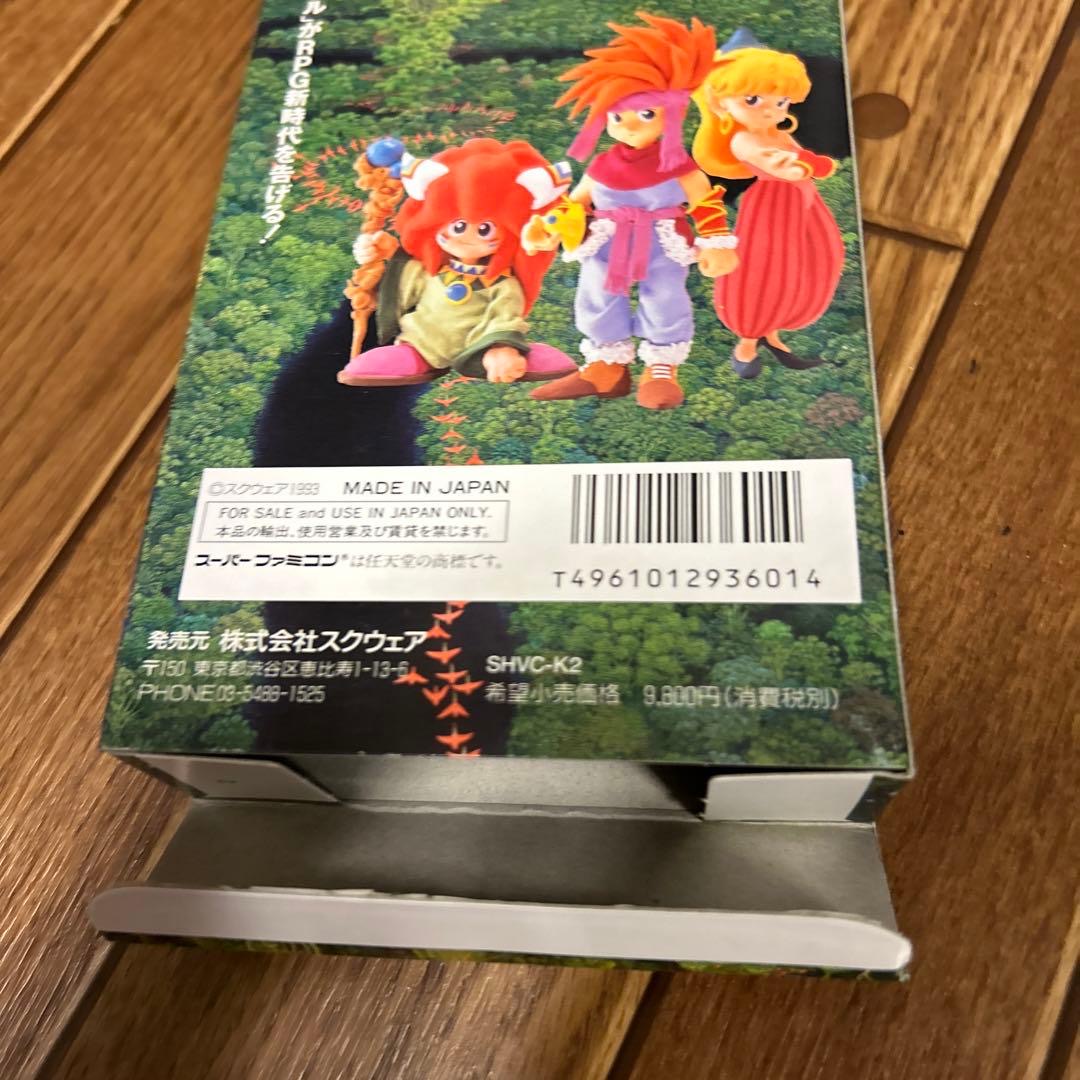
Secret of Mana arrived in Japanese stores on August 6, 1993, priced at 9,800 yen. The initial shipment sold out within days. Dengeki Oh magazine would later confirm that the game sold over one million copies in Japan during 1993 alone, making it the second best-selling title of the year behind Street Fighter II Turbo.
Square faced immediate pressure to localize the game for Western markets in time for the 1993 holiday season. They assigned the task to translator Ted Woolsey, who had just finished working on Final Fantasy VI. What followed became legendary in localization circles for all the wrong reasons.
Woolsey completed the English translation in approximately thirty days. The compressed timeline forced brutal decisions. "About forty percent of the text had to be nuked," Woolsey later admitted, referring not to quality concerns but to the literal space limitations of the cartridge. The English alphabet required more memory per character than Japanese text, and there simply was not room for a complete translation. Dialogue was trimmed, context was lost, and characterization suffered throughout the localized script.
The North American release launched on October 3, 1993, published by Square's American division. Despite the compromised localization, the game found immediate commercial success. By October, Secret of Mana ranked second on the Babbage's retail chain charts, trailing only the cultural phenomenon of Mortal Kombat. It would remain in the American top ten for an entire year.
European players waited until November 24, 1994, over a year after the Japanese and American releases. Nintendo handled European publishing, and their localization team created French and German translations in addition to English. Spanish speakers received only the English version. The European cartridge featured a thicker, more readable font and improved text spacing that the North American version lacked.
Ports, Remakes, and Resurrections
Secret of Mana's journey across platforms spans three decades and nearly every gaming device imaginable. The Wii Virtual Console received the game in Japan during September 2008, allowing a new generation to experience the Super Famicom original through legitimate digital distribution. The Wii U Virtual Console followed in June 2013.
Mobile versions began appearing in 2009, when Square Enix released a Japanese feature phone port. An enhanced iOS version arrived in 2010, featuring touch controls adapted for Apple's devices. Android users gained access in 2014. The iOS version required periodic updates to maintain compatibility with Apple's operating system changes, culminating in a major Spring 2020 patch that addressed serious compatibility issues with modern iOS versions.
Nintendo's SNES Classic Edition, the miniature replica console released in September 2017, included Secret of Mana among its twenty-one preloaded games. This marked the first time many younger Western players encountered the original version through official channels.
The Collection of Mana compilation arrived on Nintendo Switch in Japan during June 2017, bundling Secret of Mana with its predecessor and the previously Japan-exclusive Seiken Densetsu 3. North American and European releases followed in June 2019, finally giving Western audiences legal access to the complete trilogy.
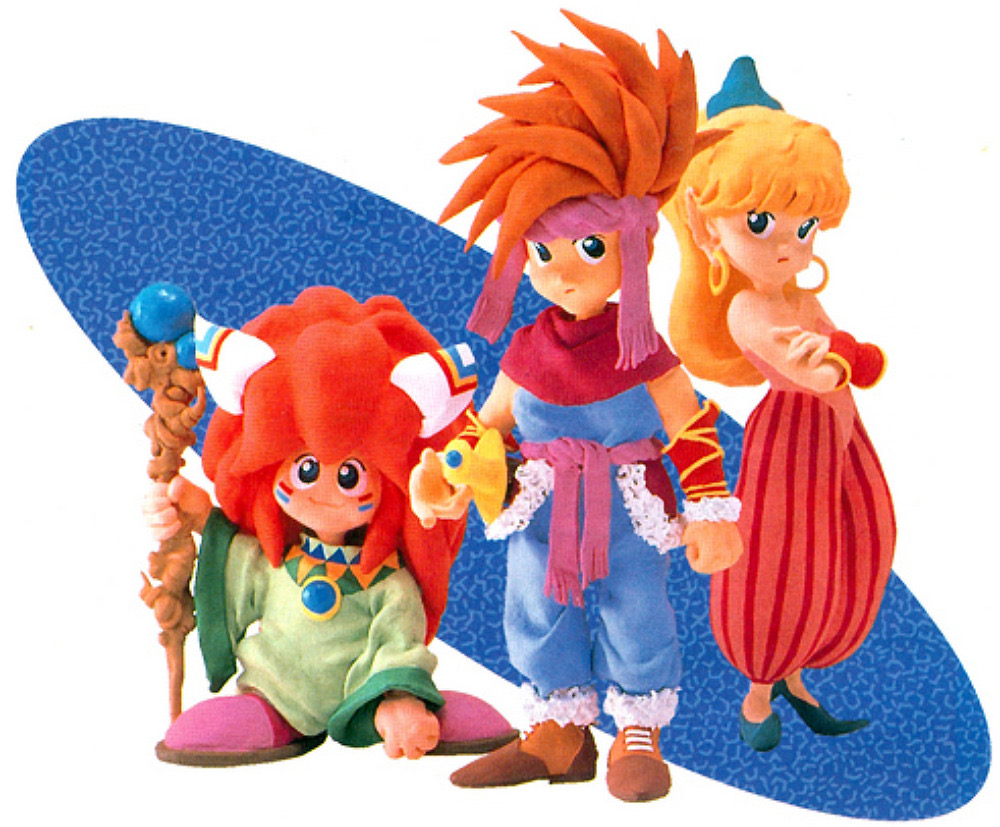
Square Enix announced a full 3D remake on August 25, 2017, targeting PlayStation 4, PlayStation Vita, and Windows PC. The reimagined version launched on February 15, 2018, featuring polygonal graphics, full voice acting in Japanese and English, and a completely rearranged soundtrack supervised by Kikuta himself. Character designs came from artist Haccan, who had previously worked on Adventures of Mana.
Critical reception proved mixed. Metacritic aggregated the PlayStation 4 version at 63 out of 100, with reviewers praising the nostalgic appeal while criticizing technical issues, stiff animations, and a voice acting implementation that many found jarring. First-week Japanese sales reached approximately 54,000 units combined between PlayStation 4 and Vita versions. The remake demonstrated that while Secret of Mana retained devoted fans, translating its specific charm to modern hardware presented challenges that Square Enix had not fully overcome.
Commercial Triumph Against the Odds
The commercial performance of Secret of Mana defied the chaos of its development. That initial Japanese release sold out immediately, with Edge magazine reporting in November 1993 that the game had become the most widely covered title of the year in Japanese gaming press.
Square eventually shipped 1.5 million copies in Japan alone. North American sales exceeded 500,000 units by 1996, according to Next Generation magazine. Worldwide shipments reached 1.83 million copies by 2003, making Secret of Mana one of the most successful Super Nintendo RPGs outside of the Final Fantasy franchise.
The game's chart performance demonstrated remarkable staying power. After debuting at number two on the American Babbage's charts in October 1993, it maintained top-ten placement for twelve consecutive months. In the United Kingdom, where the delayed European release finally arrived in late 1994, Secret of Mana claimed the fourth position overall in November, second only to Donkey Kong Country among Super Nintendo titles.
The 2018 remake underperformed relative to the original game's legacy. Global estimates placed sales between 230,000 and 260,000 units, with Japanese physical sales split approximately 36,000 on PlayStation 4 and 18,000 on Vita during the first week. The entire Mana franchise, including all sequels and spinoffs, has sold over nine million copies worldwide as of 2024.
Critical Acclaim and Industry Recognition
The gaming press of 1993 recognized Secret of Mana immediately. Electronic Gaming Monthly named it Game of the Month in December 1993 and subsequently awarded it Best Role-Playing Game of 1993. GameFan's annual Megawards ceremony gave it Best Action/RPG for Super Nintendo. GamePro declared it Role-Playing Game of the Year.
Edge magazine's review proved particularly effusive, claiming that Secret of Mana featured "the best combat system ever designed" and "the best player interface ever designed." The publication favorably compared it to contemporaries including Ys I and II, The Legend of Zelda: A Link to the Past, and Landstalker, concluding that Square had surpassed them all.
GameSpot would later describe the game as "one of Square's masterpieces on the SNES," a sentiment echoed across retrospective coverage. Famitsu inducted Secret of Mana into its Gold Hall of Fame and later placed it at number 97 on the magazine's list of the top 100 games of all time.
The Speedrunning Community
Secret of Mana developed an active speedrunning community that continues discovering new techniques decades after release. The current Any% single-controller world record stands at 2 hours, 16 minutes, and 39 seconds, achieved by runner Z4T0X. The same player holds the Any% Glitchless record at 3 hours, 27 minutes, and 44 seconds.
Cooperative speedrunning adds another dimension to the competition. StingerPA and Yagamoth established the two-player Any% record of 1 hour, 52 minutes, and 41 seconds in January 2015. StingerPA had previously showcased the game at Awesome Games Done Quick 2014, completing a solo two-controller run in 2 hours and 4 minutes while explaining techniques to the live audience.
The most dramatic speedrun category exploits major glitches to reach the credits in under seven minutes. Runner Overfiendvip achieved a time of 6 minutes and 37 seconds in April 2016 using the so-called credits warp technique. This run requires the Invisibility Glitch, which involves savewarping into the game's opening cutscene to make characters invisible and able to pass through walls while text boxes are displayed. Combined with Equipment Trashing memory manipulation, runners can essentially corrupt their way to the ending.
Speedrun.com lists 207 total submitted runs from 45 different players, demonstrating a dedicated community that continues finding optimization opportunities in a game released over thirty years ago.
Strange Tales from Japan
The development of Secret of Mana occurred during Square's scrappy era, when the entire company operated from a single office floor with roughly forty employees. Kikuta described an environment where everyone knew each other personally, where developers slept on arranged office chairs during crunch periods, and where creative decisions happened through informal conversations rather than formal meetings.
Koichi Ishii revealed in interviews that the Mana series drew thematic inspiration from an unexpected source: the 1988 Italian film Cinema Paradiso. The movie's exploration of loss and the pain of saying goodbye to beloved people and places shaped Ishii's approach to storytelling throughout the franchise. Secret of Mana's melancholy undercurrents, the sense that something precious is always slipping away, traces back to that cinematic influence.
The original Japanese price of 9,800 yen translated to approximately ninety dollars at 1993 exchange rates, making it a significant investment for Japanese households. This premium pricing was standard for ambitious Super Famicom RPGs, reflecting both the cartridge manufacturing costs and the market's willingness to pay for prestige titles.
Some content changes between Japanese and Western versions reflected cultural sensitivities of the era. The enemy known in English as National Scar, a flying spellbook found in the Grand Palace and Mana Fortress, bore the Japanese name Debiru Magajin, literally "Devil Magazine." The localization team renamed the creature while retaining its distinctive animation of landing on a revealing centerfold spread before embarrassedly flipping to proper pages.
The project's internal codename evolution tells a story of corporate confusion and creative reinvention. Starting as an action-focused Final Fantasy IV, becoming something codenamed Chrono Trigger, and finally emerging as Seiken Densetsu 2, the game changed identity multiple times before reaching players. Elements abandoned during those transformations would eventually resurface in the actual Chrono Trigger two years later, creating a strange genealogy where Secret of Mana and Chrono Trigger share conceptual DNA despite being very different games.
Hidden Secrets and Easter Eggs
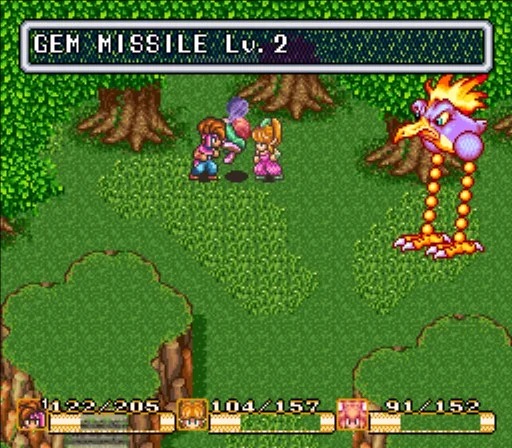
Secret of Mana contains numerous hidden details that reward curious players. The most famous involves programmer Nasir Gebelli's signature code. While on any screen with a weapon drawn, holding the A and L buttons while pressing R thirty-nine times, then releasing A and L and pressing R once more, causes "NAS" to appear in the status bars of all three characters. This references the "Programmed by Nasir" credit displayed during the opening sequence, a hidden tribute to the legendary coder.
The Mystic Book and National Scar enemies, both flying spellbooks, contain an animation that surprised countless players. These creatures occasionally land on pages revealing a nude woman lying on her stomach. The book visibly becomes embarrassed, nervously flipping through pages to find acceptable content. This risque joke survived international localization despite the period's generally conservative approach to game content.
Flying Flammie slowly over the ocean northeast of Matango reveals a strange phenomenon: the player character's face appears reflected in the water. Whether intentional artistic choice or graphical artifact, this hidden face became one of the game's most discussed mysteries.
An NPC on the island where players find the Sea Hare's Tail claims that the landmass is actually a turtle shell. Flying Flammie above the island reveals the truth: shadows clearly depicting a turtle head and fins prove the character correct. The attention to detail in this throwaway piece of environmental storytelling exemplifies Square's craft.
The totem poles scattered throughout Upperland Forest respond to violence with personality. Striking them with a sword causes the poles to stick out their tongues in defiance. Hitting them again makes them retract. This purely cosmetic interaction serves no gameplay purpose but delights players who discover it accidentally.
Shadow Zero, a character originating in the Game Boy title Final Fantasy Adventure, makes hidden appearances in Secret of Mana. Certain treasure chests dropped by Fiend Head enemies occasionally reveal Shadow Zero, who emerges, looks around cautiously, and retreats back into the chest.
The Castle of Tasnica contains a secret shop that most players never find. In the room with the bridge, walking through the south wall behind the bar reveals a hidden area. Speaking to the merchant concealed there grants access to items unavailable elsewhere.
Perhaps the strangest discovery involves Karon, the ferryman who transports players to and from the Moon Palace. Because Karon uses a monster sprite rather than an NPC sprite, the game's targeting system recognizes him as an enemy. Patient players can kill the ferryman with magic spells, though doing so serves no purpose beyond dark amusement.
Finally, players banished from Potos Village can return through exploitation of the party system. Walking into the guard blocking the entrance with a full party while rapidly pressing Select to cycle through party members eventually clips characters through the obstruction. The village beyond offers nothing new, but the satisfaction of defying exile motivates many to attempt the glitch.
Game Information
| Title | Secret of Mana |
| JP Title | 聖剣伝説2 (Seiken Densetsu 2) |
| Developer | Square (Development Division 3) |
| Publisher | Square (JP/NA), Nintendo (EU) |
| Release | August 6, 1993 (JP), October 3, 1993 (NA), November 24, 1994 (EU) |
| Platform | Super Famicom / SNES |
| Genre | Action RPG |
| Players | 1-3 (Multitap required for 3P) |
| ROM Size | 16 Megabit (2 MB) HiROM |
| Save RAM | 64 Kb battery backup |
| Director | Koichi Ishii |
| Producer | Hiromichi Tanaka |
| Scenario | Hiromichi Tanaka |
| Main Programmer | Nasir Gebelli |
| Composer | Hiroki Kikuta |
| Price (JP) | ¥9,800 |
Gallery
Get Gaming News and Features First
Stay updated with the latest gaming news and exclusive content.