Atari Star Wars Arcade (1983): The Force Awakens in Vector Graphics
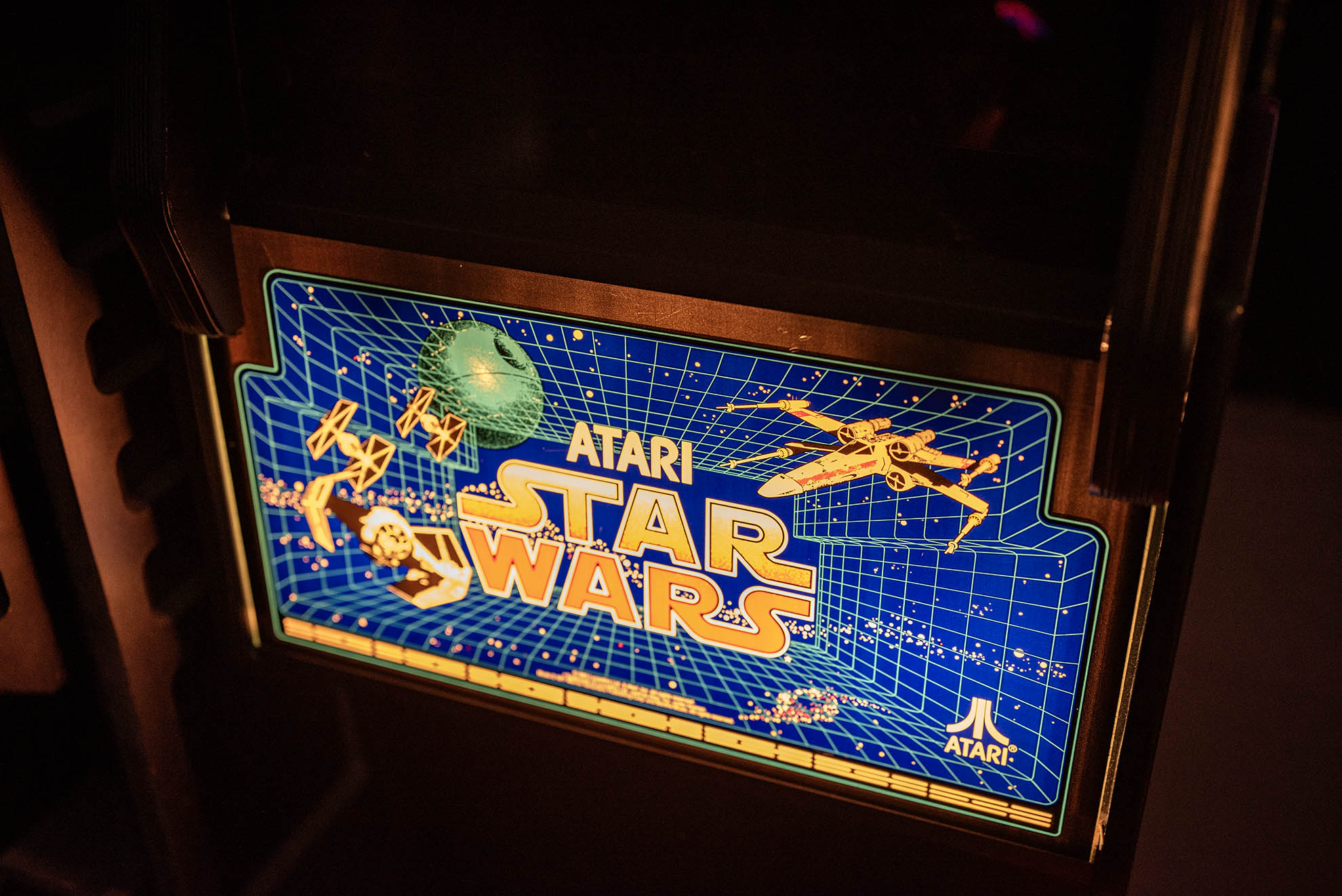
Atari's 1983 Star Wars arcade game delivered the Death Star trench run with color vector graphics, flight yoke controls, and digitized movie dialogue.
From Warp Speed to a Galaxy Far, Far Away
The origins of the Star Wars arcade game trace back to 1981 and a project called "Warp Speed." Engineer Jed Margolin had joined Atari specifically to develop a 3D space combat game using experimental vector graphics hardware. The project initially had no connection to the Star Wars franchise, it was simply an ambitious attempt to create convincing three-dimensional space combat on arcade hardware.
Ed Rotberg, the legendary designer behind Battlezone, initially headed the project. However, Rotberg departed Atari in October 1981, leaving the nascent game in limbo. Enter Mike Hally, a rising star within Atari's coin-op division who had cut his teeth designing pinball machines including Middle Earth, Time 2000, and Superman before transitioning to arcade games.
Hally immediately recognized the potential. "I took a look at it and thought, 'Man, this would be perfect for Star Wars,'" he later recalled. "So, I worked up a proposal, and Atari approved me being in charge of it." With Margolin's revolutionary 3D vector hardware as the foundation, Hally assembled his team, including programmer Greg Rivera, and set about transforming abstract space combat into the definitive Star Wars gaming experience.
Convincing the Creator
Securing the Star Wars license was only the beginning. Throughout development, Lucasfilm maintained exacting oversight of every detail, treating the game with the same care they applied to their films. The pressure culminated in a nerve-wracking demonstration when Hally personally loaded a hulking prototype cabinet into a truck and drove it to George Lucas's Skywalker Ranch in Marin County.
"I remember that, throughout the entire project, the people at Lucasfilm were worried about every little detail, just like they were with their movies," Hally recalled. The demonstration proved successful, and Lucas gave his approval on August 10, 1983. A commemorative prototype was later gifted to Lucas himself, complete with a special dedication plaque.
Engineering the Ultimate Controller
One of the most critical challenges facing the development team was the control scheme. Early prototypes used a conventional joystick, but focus group testing revealed a fundamental problem: players became confused about steering direction. The solution came from an unexpected source.
Mechanical engineer Jerry Liachek adapted the flight yoke design from an earlier Atari project, the Bradley Trainer, a military simulator created for the United States Army to train operators of the Bradley Fighting Vehicle. The resulting controller was a revelation: a heavy-duty flight yoke that players gripped with both hands, featuring four triggers (two for each hand) and thumb buttons for precise fire control. The intuitive push-pull, left-right motion perfectly mimicked the experience of piloting a starfighter.
The yoke's industrial construction proved remarkably durable, essential for arcade machines that would endure countless hours of aggressive play. Many surviving cabinets still feature their original controllers in working condition four decades later.
Vector Graphics: Light Speed Visuals
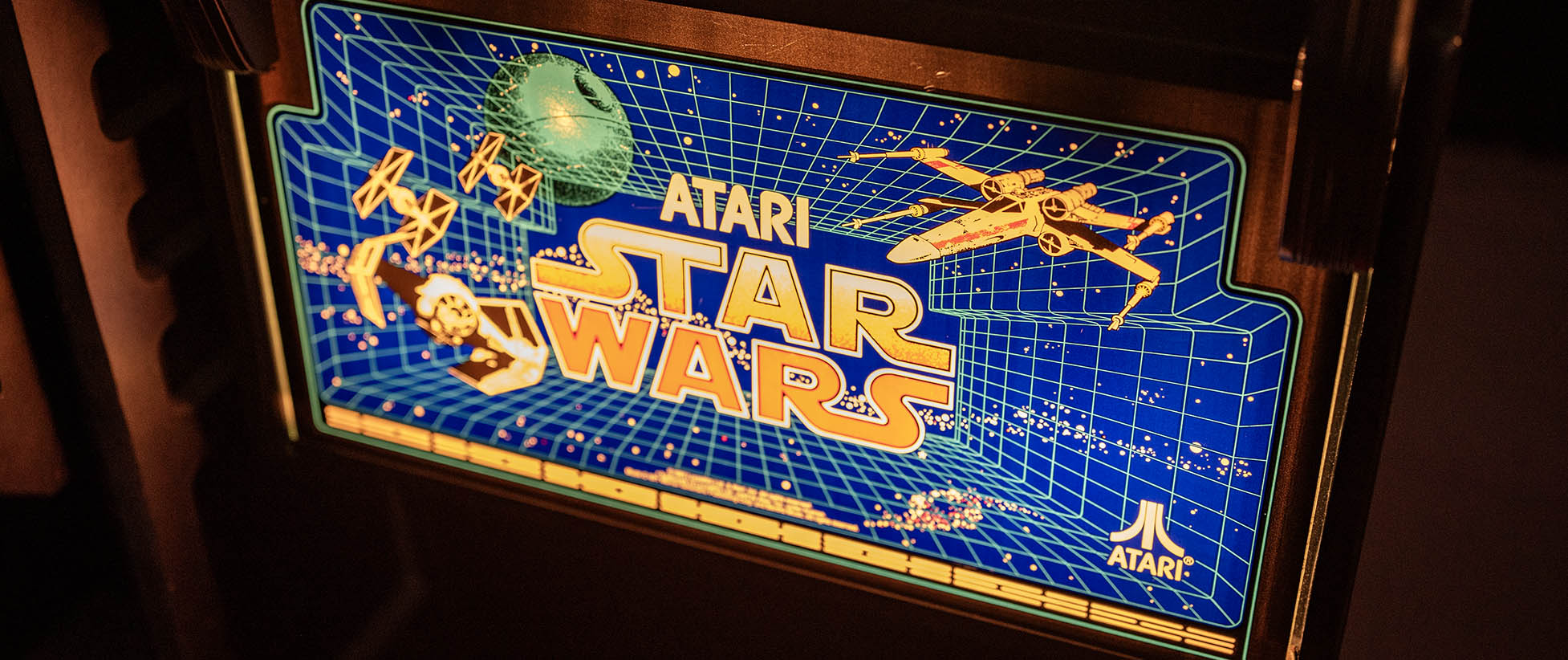
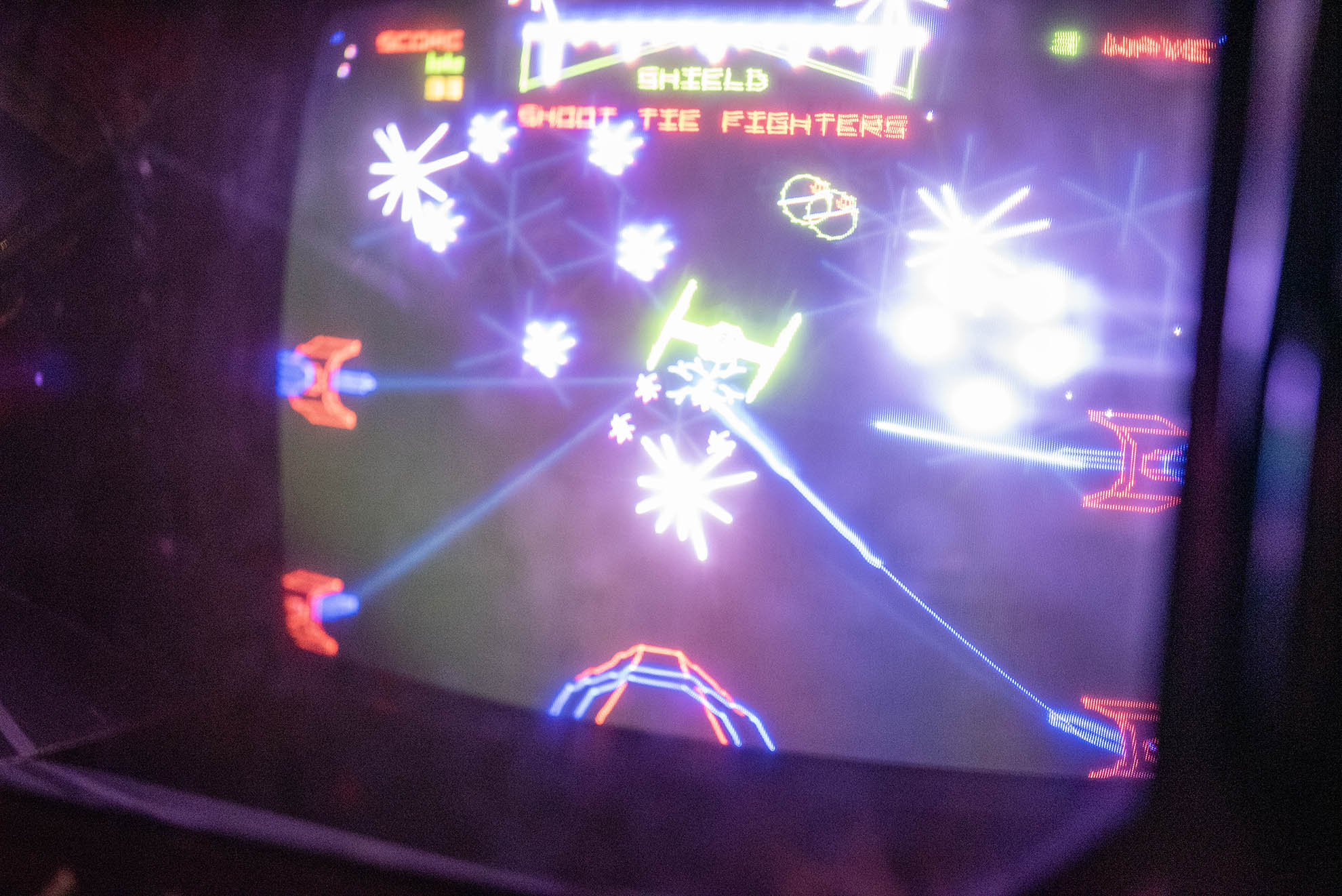
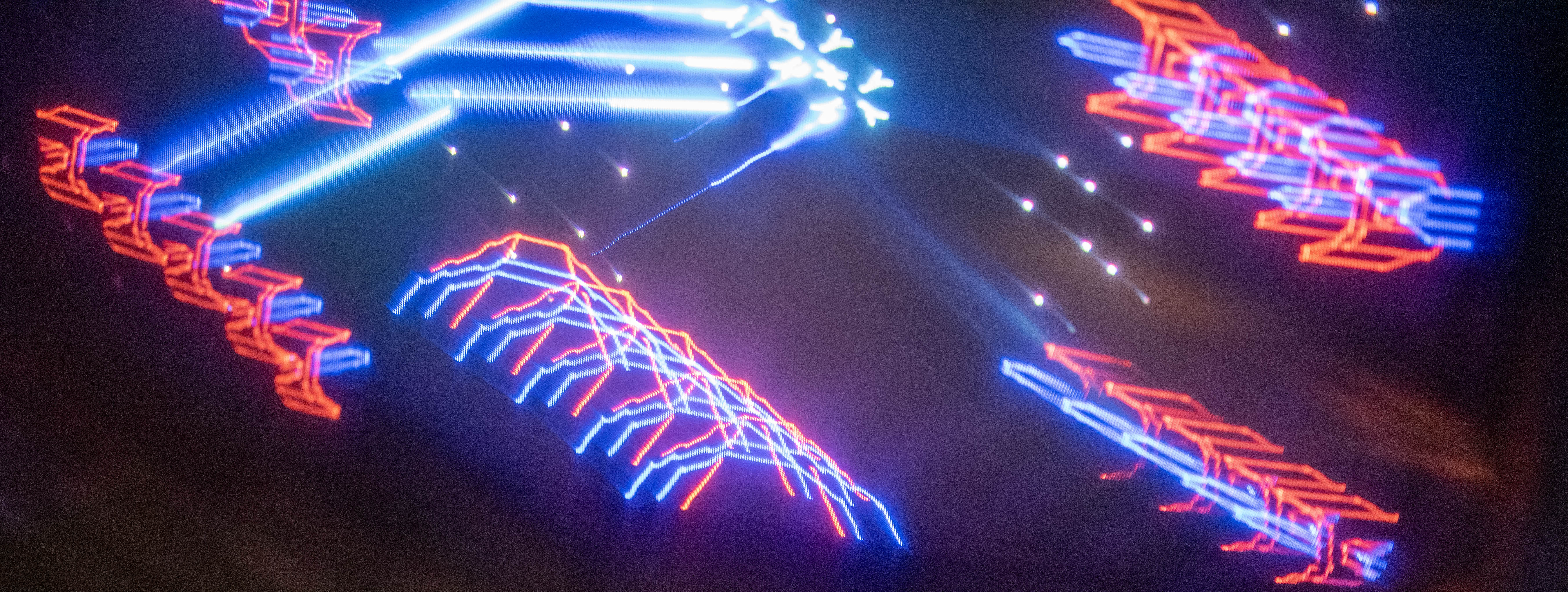
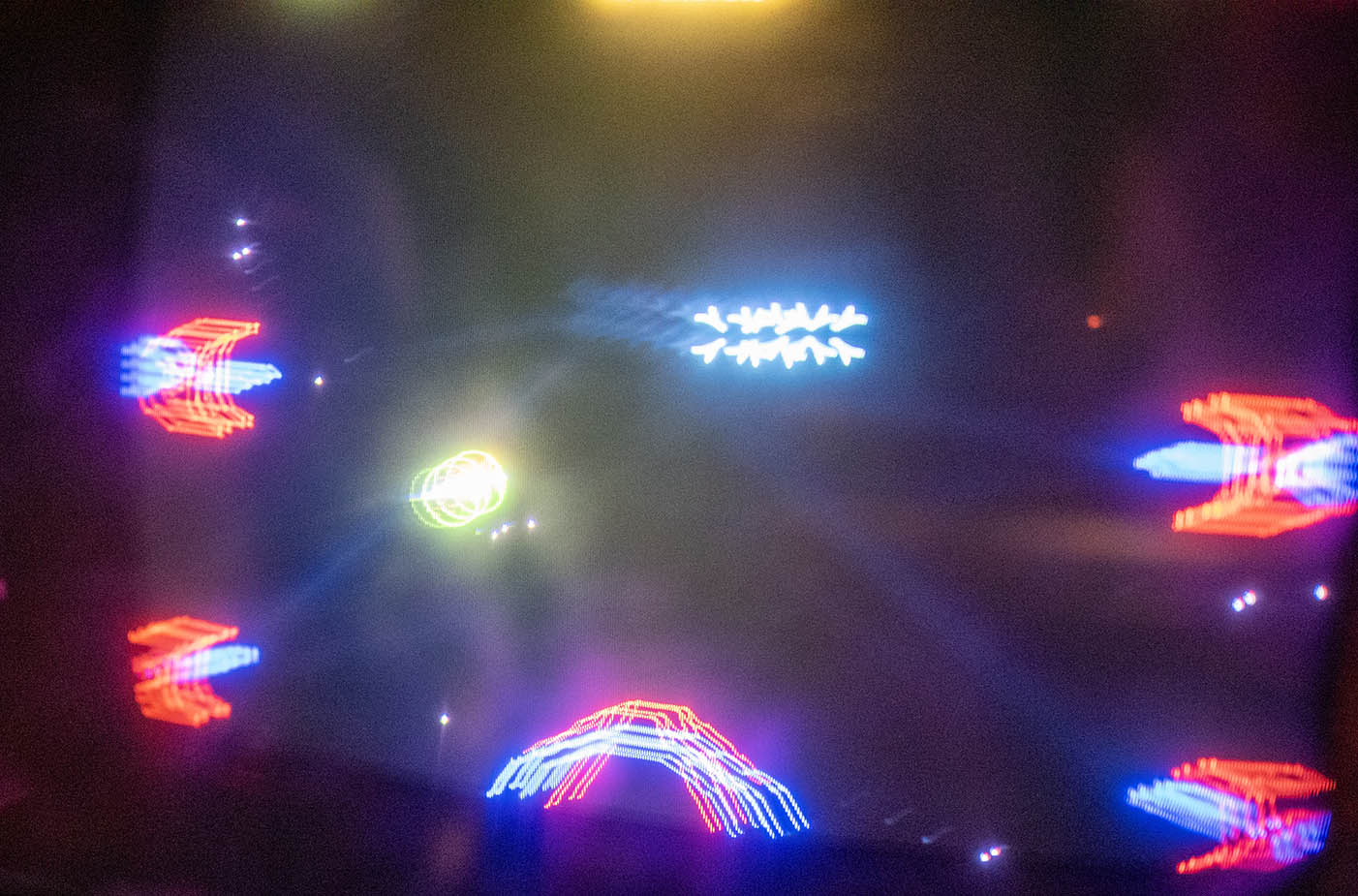
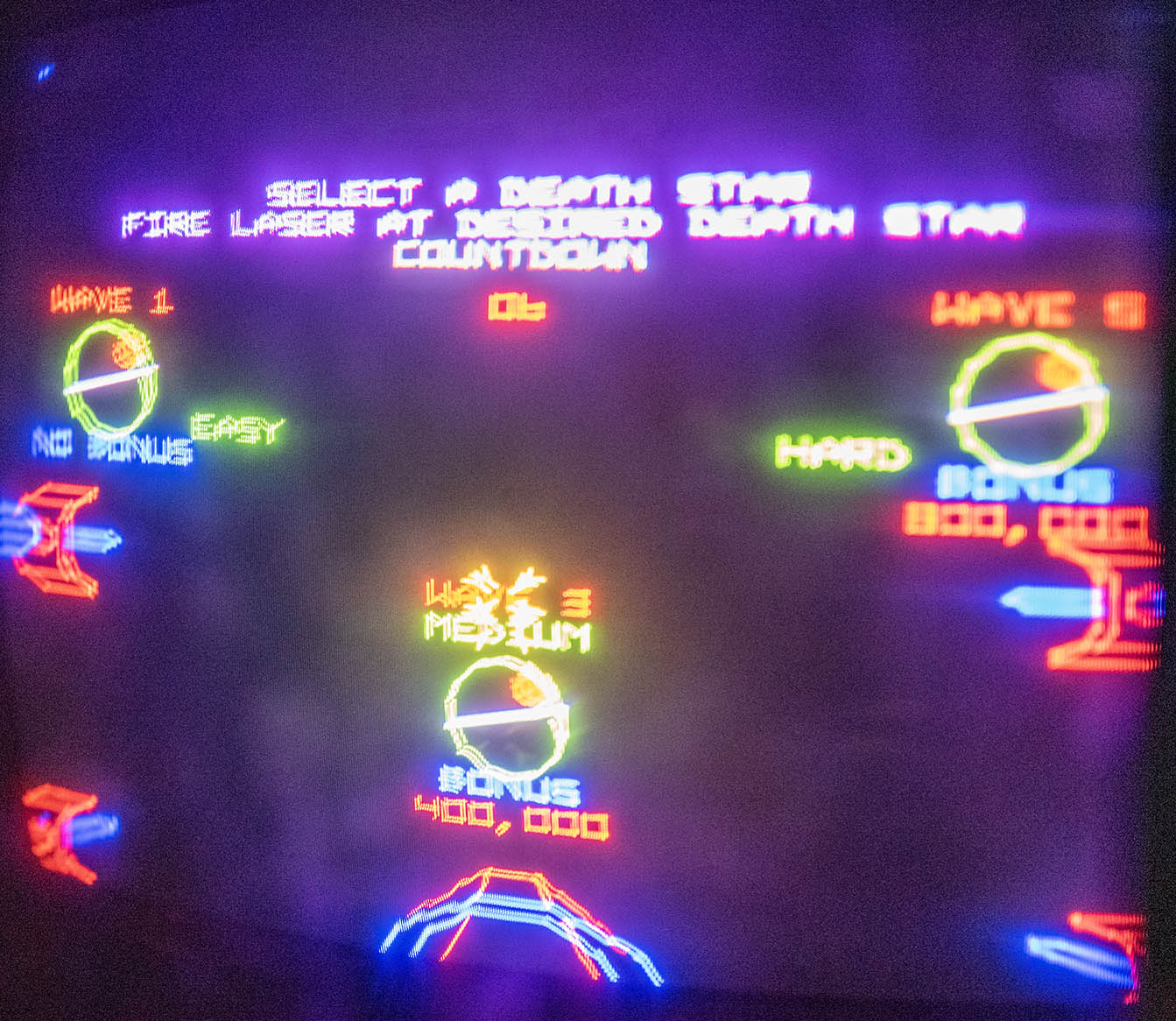
Star Wars represented the pinnacle of color vector graphics technology. Unlike conventional raster displays that drew images as grids of pixels, vector monitors used electron beams to draw lines directly on the screen, producing razor-sharp wireframe graphics with zero flicker. The result was an ethereal, luminous quality that seemed to glow from within.
The game shipped with the new Amplifone color vector monitor, a 19-inch version for upright cabinets and an impressive 25-inch display for the cockpit configuration. This represented an upgrade from the Wells Gardner 6100 monitors used in earlier Atari vector games like Tempest and Gravitar.
The technical specifications were impressive for 1983: the main board featured 6809 CPUs running at 1.5MHz, driving the Analog Vector-Generator board that rendered the game's distinctive wireframe universe. The system produced smooth animation that created a genuine sense of depth and velocity, players truly felt like they were hurtling through space.
Audio Innovation: The Force of Sound
Beyond its visual achievements, Star Wars pioneered arcade audio in remarkable ways. The dedicated sound circuit board contained a 68B09E microprocessor, 16KB of ROM containing program code, sound tables, and speech vocabulary, plus 2KB of RAM.
Most notably, the game utilized a Texas Instruments TMS5220 LPC speech processor to deliver digitized dialogue from the original 1977 film. Phrases like "Use the Force, Luke," "Red Five standing by," and "The Force is strong with this one" brought Obi-Wan Kenobi, Luke Skywalker, and Darth Vader to life. This marked one of the first arcade games to incorporate authentic movie dialogue, predating the widespread adoption of digitized speech by several years.
The audio system delivered 20 watts of stereo power through two 6x9-inch shielded woofers mounted in the cabinet's overhead panel. Seven distinct musical themes accompanied gameplay, creating an immersive soundscape that transported players directly into the Star Wars universe.
The Three Phases of Battle
Gameplay faithfully recreated the climactic Death Star assault from the original film, divided into three distinct phases that repeated with escalating difficulty.
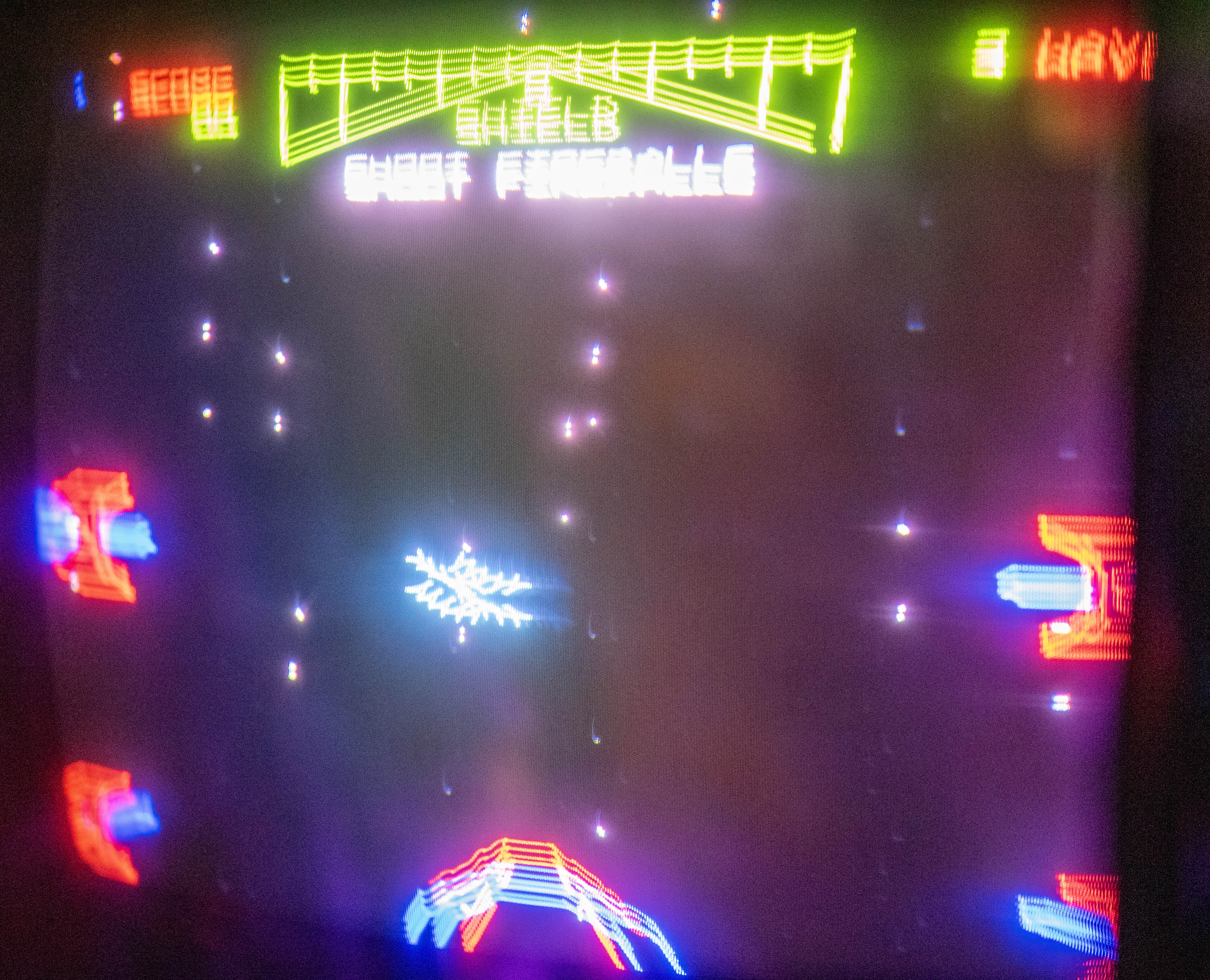
Phase One: Deep Space Dogfight - Players engage TIE Fighters and Darth Vader's distinctive craft in open space. Using the yoke to aim and the triggers to fire, players must destroy or evade enemy fighters while shooting down incoming fireballs.
Phase Two: Death Star Surface - The X-Wing approaches the battle station's surface, where players must navigate past bunkers and destroy laser towers while avoiding collision with the superstructure.
Phase Three: The Trench Run - The iconic sequence sends players careening through the Death Star's equatorial trench, dodging obstacles and enemy fire before lining up the crucial shot on the thermal exhaust port. A successful torpedo launch triggers a spectacular multicolored explosion as the Death Star is destroyed.
The game featured a "Use the Force" bonus that rewarded skilled players who navigated the trench without firing until the final exhaust port shot, worth an additional 100,000 points for channeling their inner Luke Skywalker.
Cabinet Designs: Upright and Cockpit
Atari released Star Wars in two configurations. The standard upright cabinet featured dramatic artwork across all surfaces, with the yoke controller mounted at a comfortable playing height. The 19-inch vector monitor provided the visual display, with speakers mounted overhead.
The cockpit version, designed by industrial designer Mike Jang, was a true showpiece. Jang incorporated hydraulic ram-shaped plastic moldings and a truss-style roof framework that echoed the mechanical aesthetics of the Star Wars film universe. The larger 25-inch Amplifone monitor, combined with the enclosed seating position, created an unparalleled sense of immersion.
"I sketched up were the hydraulic ram shapes on the plastic parts," Jang explained of his design philosophy. "I wanted to continue the mechanical theme by adding that truss style design." Dark Perspex panels around the monitor eliminated glare and enhanced visibility of the vibrant vector graphics.
Commercial Triumph
Star Wars became Atari's top-selling arcade release of 1983. The company produced 12,695 cabinets: 10,245 uprights and 2,450 cockpits. At original prices of $2,295 for upright units and $3,095 for cockpits, the game generated substantial revenue for arcade operators.
In the United States, Star Wars topped the Play Meter arcade chart for street locations in October 1983. The success extended internationally: Japan's Game Machine magazine listed it as the most successful upright/cockpit arcade unit in their November 1, 1983 issue.
World Records and Competitive Legacy
The original Star Wars cabinet was notably forgiving by arcade standards, allowing skilled players to continue indefinitely through generous extra lives and shield restoration.
Marathon Record: The highest score ever achieved is 1,000,000,012 points, set by a team of three students. Flavio Tozzi, Dave Roberts, and Mike Ohren, at Leeds University in West Yorkshire, UK. Their marathon began at 12:00 PM on Saturday, June 15, 1985, and continued until 2:46 PM on Thursday, June 20, an astonishing 82 hours and 46 minutes of continuous play.
Tournament Record: Under modified tournament conditions at the 1986 Video Game Masters Tournament, David Palmer achieved the recognized competitive high score of 31,660,614 points, a record later verified by Guinness World Records that still stands today.
Legacy: A Masterpiece of Arcade Technology
Star Wars represented the apex of vector graphics in arcade gaming, a technology that would soon give way to increasingly powerful raster displays. In 1996, Next Generation magazine ranked the arcade version on their "Top 100 Games of All Time," praising its "awesome vector graphics, multiple triggers, a deluxe cabinet with powerful speakers in the back, [and] digitized voices."
Today, original Star Wars cabinets command premium prices among collectors. The Video Arcade Preservation Society census identifies over 800 known surviving machines. For those who experienced the magic of that flight yoke in a dimly lit arcade in 1983, the luminous wireframe graphics and digitized exhortation to "Use the Force" remain unforgettable, a perfect fusion of cinema and interactivity that helped define what arcade gaming could achieve.
In the summer of 1983, arcade-goers across America encountered something truly remarkable: a hulking cabinet that invited them to pilot an X-Wing fighter through the Death Star trench. Atari's Star Wars arcade game wasn't just another licensed tie-in, it was a technological tour de force that pushed the boundaries of what arcade games could achieve. For more arcade history, explore APB and Berzerk. With its groundbreaking color vector graphics, revolutionary flight yoke controller, and digitized speech from the actual film, this machine delivered an experience that felt impossibly close to living inside George Lucas's galaxy far, far away.
Game Information
| Title | Star Wars |
| Developer | Atari, Inc. |
| Publisher | Atari, Inc. (with Lucasfilm Ltd.) |
| Release | 1983 |
| Platform | Arcade |
| Genre | First-person rail shooter |
| Players | 1 |
| Display | Color vector (19" upright / 25" cockpit) |
| Cabinet Types | Upright, Cockpit |
| Control | Flight yoke with 4 triggers |
| Sound | TMS5220 speech, stereo 20W |
| Production | 12,695 units |
| Designer | Mike Hally |
| Programmer | Greg Rivera |
| Hardware | Jed Margolin |
| Cabinet | Mike Jang (cockpit) |
All arcade cabinet photos taken by the author at The Pixel Bunker.
Gallery
Get Gaming News and Features First
Stay updated with the latest gaming news and exclusive content.