
Resident Evil 7: Biohazard - Capcom's Horror Renaissance
Deep dive into Resident Evil 7 covering the RE Engine debut, first-person horror, PlayStation VR support, Baker family lore, DLC content, and speedrun records.
After the divisive reception of Resident Evil 6, Capcom faced a critical crossroads. The franchise that had defined survival horror needed reinvention, and what emerged in January 2017 would fundamentally transform not just the series but the entire horror gaming landscape. Resident Evil 7: Biohazard, known in Japan as バイオハザード7 レジデント イービル, stripped away the action-heavy approach of its predecessors and delivered pure, concentrated terror through an unprecedented first-person perspective and full virtual reality support. Built on the revolutionary RE Engine that would power Capcom's future for years to come, RE7 sold over 15 million copies and proved that sometimes the boldest creative decision is returning to your roots.
| Title (EN) | Resident Evil 7: Biohazard |
| Title (JP) | バイオハザード7 レジデント イービル |
| Developer | Capcom |
| Publisher | Capcom |
| Director | Koshi Nakanishi |
| Release Date | January 26, 2017 (JP), January 24, 2017 (WW) |
| Platforms | PS4, Xbox One, PC, Switch Cloud, PS5, Xbox Series, iOS/macOS |
| Engine | RE Engine |
| Genre | First-Person Survival Horror |
Development: The Courage to Start Over

The development of Resident Evil 7 began on January 4, 2014, when Capcom President Tsujimoto commissioned veteran producer Jun Takeuchi to helm a new direction for the struggling franchise. What followed was over a year of contentious internal discussions about the series' future. The team debated endlessly: What was Resident Evil supposed to be? Had it lost its identity? The answer, when it finally emerged, was deceptively simple.
Director Koshi Nakanishi led the project with a clear philosophy. The original Resident Evil was fundamentally a scary game, and the team needed to create horror that met modern standards by returning to that foundation. This wasn't nostalgia; it was recognition that fear had always been the franchise's core identity, temporarily obscured by the action-heavy direction of RE5 and RE6.
The development prototype carried the internal codename Intestines, a direct reference to Sam Raimi's The Evil Dead. That classic horror film became required viewing for the development team, with screening sessions helping establish the visual and tonal vocabulary they sought. The single-location, intimate horror of Evil Dead directly influenced RE7's focus on the Baker estate rather than globe-spanning action sequences.
Capcom assembled a team of approximately 100 to 120 staff members, combining veteran series developers with recent hires bringing fresh perspectives. Producer Masachika Kawata worked alongside Nakanishi to balance innovation with respect for the franchise's legacy. Development stretched across three full years, with the RE Engine reaching production-ready status by April 2015, giving the team approximately eighteen months for focused game development.
Nakanishi structured each Baker family member to embody distinct types of fear. Jack Baker represented violence-based terror through relentless pursuit and brutal confrontations. Marguerite Baker channeled biological revulsion through her insect-controlling mutations. Lucas Baker embodied trap-based fear through his Saw-inspired puzzle rooms. This deliberate design ensured players experienced varied horror throughout the campaign rather than relying on a single note.
RE Engine: The Foundation of a New Era
Resident Evil 7 holds the distinction of being the first full-length game built on Capcom's proprietary RE Engine, a technological achievement that would reshape the company's entire development pipeline. Work on the engine began in April 2014, running parallel to game production. The previous MT Framework engine, while successful, had become inadequate for achieving the photorealistic standards modern horror demanded.

The RE Engine introduced a comprehensive photogrammetry workflow to Capcom's production process. Character models were created through multiple-view photography, capturing real actors from numerous angles and constructing 3D data from these photographs. Approximately 80 facial expression patterns were captured per actor, then retopologized with bone weighting to enable realistic animation. This technology delivered unprecedented facial fidelity, crucial for a first-person game where players would scrutinize character faces during intimate dialogue scenes.
Photogrammetry proved transformative but had limitations the team learned to navigate. The technique worked poorly for non-existent creatures requiring artistic interpretation, overly small objects, industrial or reflective materials, and assets that could be modeled faster through traditional methods. The team integrated their photogrammetry pipeline with Autodesk Maya for retopology and shape adjustments, creating a hybrid workflow that maximized the technology's strengths.
The engine was built from the ground up with VR support in mind, a crucial decision that enabled the game's groundbreaking PlayStation VR implementation. Rendering systems, interaction models, and camera behaviors all accounted for virtual reality requirements from the earliest stages.
RE Engine's legacy extends far beyond RE7. The technology has since powered Resident Evil 2 Remake, Devil May Cry 5, Resident Evil 3 Remake, Resident Evil Village, Resident Evil 4 Remake, Street Fighter 6, Dragon's Dogma 2, and the upcoming Monster Hunter Wilds. Every major Capcom release now builds upon the foundation established during RE7's development, making it one of the most consequential technical decisions in the company's history.
The Story: Welcome to the Family
Resident Evil 7 follows Ethan Winters, an ordinary civilian searching for his wife Mia, who disappeared three years earlier. A mysterious message leads him to a derelict plantation in Dulvey, Louisiana, where he discovers Mia alive but changed. Before he can escape with her, Ethan is captured by the Baker family and drawn into a nightmare that will forever alter his understanding of reality.
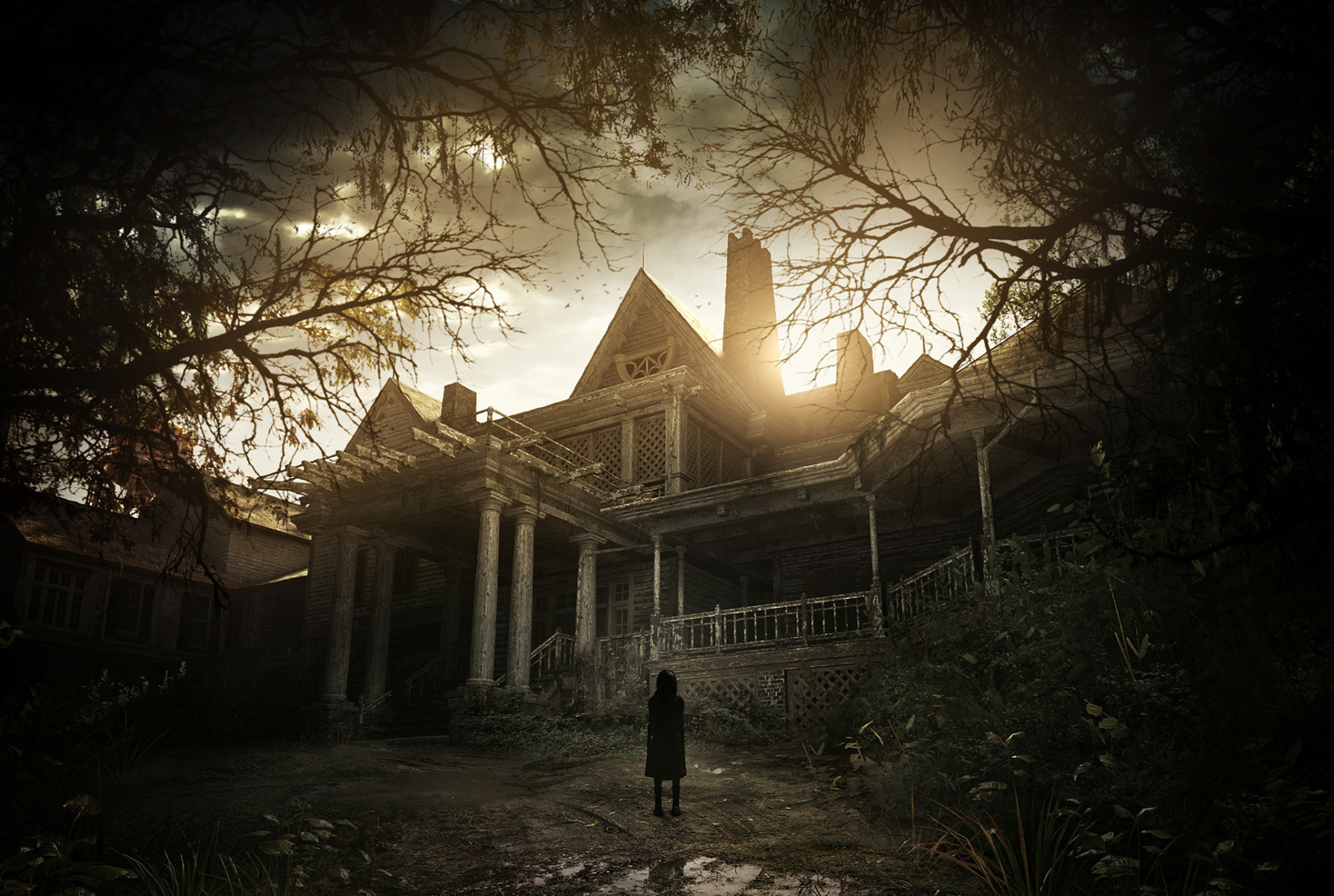
The Baker family serves as RE7's primary antagonists, though their story proves more tragic than villainous. Jack Baker, the family patriarch, was a Marine Corps veteran who lived a simple farm life with his family before October 2014. During a devastating hurricane, Jack discovered a wrecked tanker ship and rescued two survivors: a young girl named Eveline and an unconscious woman named Mia. His act of kindness would doom his entire family.
Marguerite Baker, Jack's wife, became horrifically mutated after infection, gaining the ability to control insects through her corrupted biology. Her sections of the game emphasize biological disgust, with swarms of insects and organic horror replacing Jack's direct violence.
Lucas Baker presents a more complicated picture. Born in 1991, Lucas showed signs of psychopathy long before Eveline's arrival. As a child, he trapped a school bully named Oliver in the attic using a remote-controlled door, leaving him there until starvation claimed him. Lucas maintained a grievance list against his own family and harbored deep resentment toward them. When The Connections, a shadowy bioweapons organization, contacted him, Lucas accepted a serum that allowed him to resist Eveline's mind control while pretending to remain under her influence. He spent years spying on his family while secretly working with outside forces.
Zoe Baker stands as the family's sole beacon of hope. Never fully infected by Eveline, Zoe actively helps survivors escape the plantation, including Ethan. She guides players through much of the game via telephone calls and direct assistance, seeking a cure that might save her corrupted family.
The true antagonist is Eveline, designated E-001 as the first successful E-Series bioweapon created by The Connections using samples of a hyper-evolved fungus called the Mold. Artificially aged to appear as a ten-year-old girl, Eveline possesses the ability to secrete Mutamycete from her body tissues, infecting victims and bringing them under her mental control. Her obsession with having a family drove her to infect Mia and the Bakers, attempting to create the loving household she never experienced.
The Mold itself represents a new category of bioweapon in the Resident Evil universe. This hyper-evolved fungus grants regenerative abilities and enables mind control through infection. The Baker family mass-produced Molded creatures from 2014 through 2017 by kidnapping people and disposing of their bodies in bathtub-filled Mold, creating the shambling horrors that populate the plantation.
The game climaxes with Ethan creating a necrotoxin to destroy Eveline, who has mutated into a massive creature. Chris Redfield arrives with a military squad, providing Ethan with the weapon to deliver the killing blow. Chris extracts Ethan via helicopter bearing the Umbrella Corporation logo, a shocking sight explained by the reformation of Blue Umbrella, a PMC founded from the original company's American branch and now dedicated to cleaning up bioweapon incidents under UN supervision.
First-Person Horror: A Calculated Risk
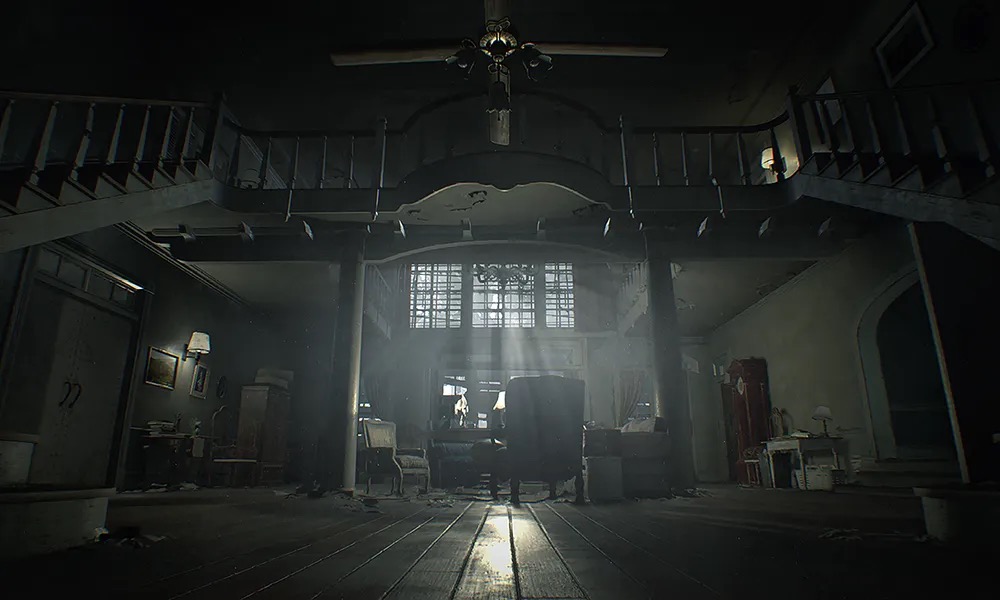
The shift to first-person perspective represented RE7's most visible and controversial change. Producer Masachika Kawata explained the reasoning directly: first-person perspective would be the most effective way to fully immerse the player in horror. The decision drew inspiration from The Evil Dead's intimate, single-location terror and reflected a philosophical commitment to player vulnerability.
Third-person cameras provide approximately 180 degrees of situational awareness, allowing players to see threats approaching from multiple directions. First-person restricts vision to roughly 80 degrees, forcing players to constantly sweep their view while searching for items, listening for approaching footsteps, and dreading what might be behind them. This limitation transforms every room into a potential ambush.
The perspective change removed the comfortable buffer of watching a character navigate danger. Players no longer controlled Chris or Leon; they became Ethan, experiencing every horror directly. When Jack Baker smashes through a wall, players instinctively flinch. When Marguerite's insects swarm the screen, players recoil. The visceral response proved far more intense than third-person presentation could achieve.
The decision also enabled seamless VR integration. First-person gameplay translates directly to virtual reality without the disorientation of controlling a visible avatar. Capcom built RE7 as a VR-ready experience from initial conception, ensuring the perspective served both traditional and immersive display formats.
PlayStation VR: Horror Redefined
Resident Evil 7 achieved something no AAA game had attempted before: a complete 12-plus hour campaign playable entirely in virtual reality. PlayStation VR support wasn't a gimmick or side mode but a full implementation of the entire experience, fundamentally changing how players could engage with horror gaming.
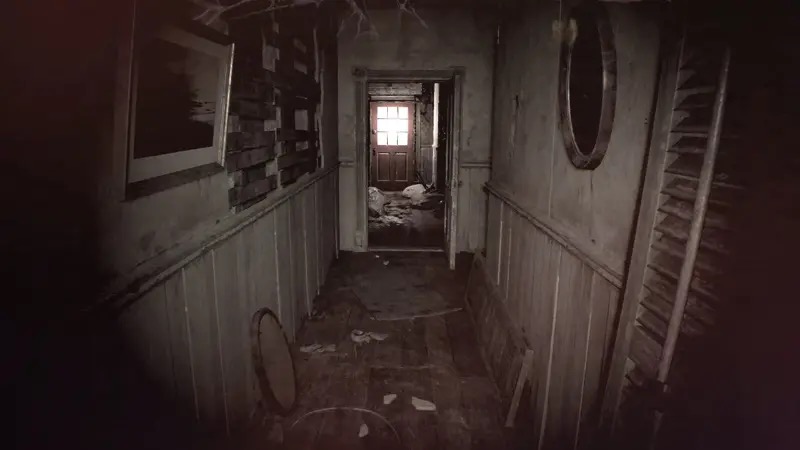
The Kitchen demo, released October 13, 2016, served as both technology demonstration and marketing preview. This three-minute horror experience cost 93 yen in Japan and was included in overseas PSVR bundles, offering a taste of the full game's intensity. The demo required CERO Z (18+) age verification through credit card confirmation, reflecting Japanese content regulations. The short drama connected narratively to the full game while showcasing the VR technology's potential for intimate horror.
Capcom won the Excellent Award in the Annual Works Category at the Japan Game Awards 2017 largely based on the VR implementation's impact. The CEDEC 2017 awards recognized the RE Engine Development Team with an Engineering Excellence Award, while the Sound Development Team received a Sound Excellence Award, acknowledging the comprehensive technical achievement.
Players reported fear and engagement levels increasing dramatically in VR compared to standard display play, with some describing the experience as approximately 100 times more intense. The full locomotion system used DualShock 4 controllers rather than Move controllers, prioritizing precise control over motion gimmicks. Comfort options including adjustable rotation speed and field-of-view dimming helped players manage the intense immersion.
The original PSVR's 960x1080 per-eye resolution has since been surpassed by PSVR2's 2000x2040 per-eye displays with wider field of view and IPD adjustments, though PSVR2 did not support RE7 at launch.
DLC Content: Expanding the Nightmare
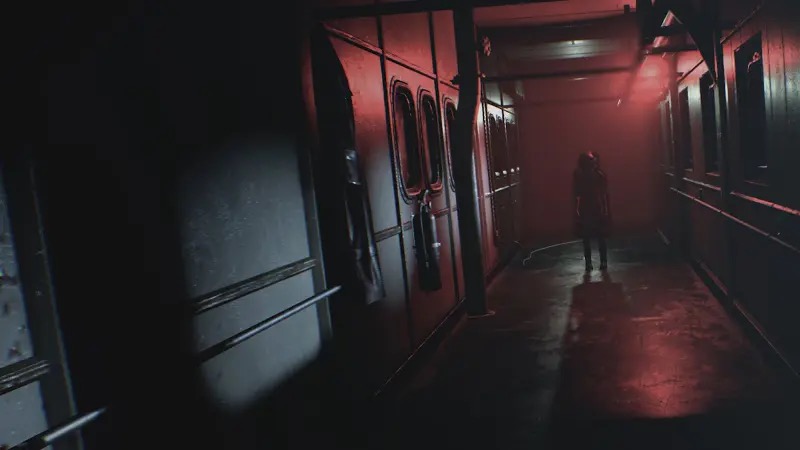
Resident Evil 7 received substantial post-launch support through multiple DLC releases that expanded both narrative and gameplay variety.
Not A Hero released as free downloadable content, starring BSAA captain Chris Redfield hunting Lucas Baker through the mines beneath the plantation. Set shortly after the main game's conclusion, Chris wields enhanced combat capabilities including the ability to perform instant kills through specific combat techniques. The episode introduced white Molded variants and progressive mask upgrades unlocking new areas. Ten antique coins and nine files provide collectible motivation for thorough exploration.
End of Zoe provided the definitive conclusion to the main narrative, revealing Zoe's fate through her uncle Joe Baker. This episode radically departed from standard gameplay by emphasizing melee combat through a robotic gauntlet rather than traditional firearms. Joe fights mutated creatures with charged punches, spear throws, and heavy combos. Boss encounters against Jack Baker and the recurring Swamp Man punctuate the swamp-setting adventure.
Banned Footage Vol. 1 released January 31, 2017, introducing two story scenarios featuring the unfortunate cameraman Clancy. Nightmare mode offered wave-based combat survival in the Baker house basement. Bedroom presented an escape room puzzle directly inspired by Stephen King's Misery, with Clancy strapped to a bed and forced to find an escape key while avoiding periodic checks from Marguerite Baker.
Banned Footage Vol. 2 followed February 17, 2017, adding Night Terror as a higher-difficulty version of Nightmare. The 21 card game forced players into a deadly blackjack variant where losing means losing fingers to a guillotine. Jack's 55th Birthday offered lighter fare as a party-themed feeding challenge with time management mechanics across six stages.
Daughters serves as a prequel set three years before the main game, allowing players to experience the night Eveline arrived at the Baker household through Zoe's perspective. Multiple endings reward exploration and reveal crucial backstory elements connecting to the main narrative.
Bonus Modes and Challenges
Ethan Must Die provides RE7's ultimate challenge, a brutally difficult survival mode drawing comparisons to Dark Souls. Ethan dies after two or three hits with extremely limited firepower, and equipment spawns are randomized throughout each attempt. Success requires memorizing room layouts, exploiting environmental traps to conserve ammunition, and accepting repeated failure as learning experience. The Marguerite boss fight demands specific strategies: targeting her vulnerable spot with flamethrower or grenade launcher while maintaining defensive positioning.
Nightmare and Night Terror modes offer wave-based survival with escalating enemy encounters. Players defend against continuous Molded attacks in the Baker house basement, managing resources while surviving until dawn. Night Terror increases spawn rates and enemy aggression for experienced players seeking greater challenge.
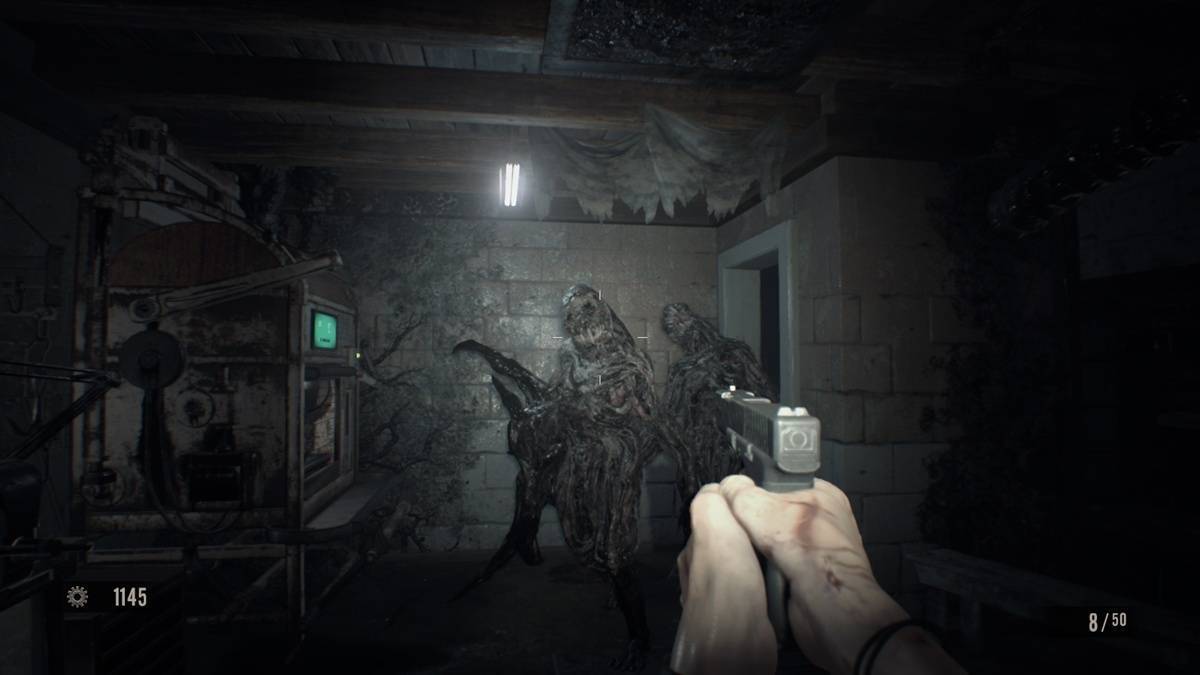
The 21 card game transforms blackjack into horror through narrative context and escalating consequences. Clancy plays against another captive victim with Lucas Baker presiding. Trump cards add strategic depth while the finger guillotine provides visceral stakes. Progressive rounds increase difficulty and disturbing consequences.
Jack's 55th Birthday offers comedic contrast to the main game's terror. Players collect food items to satisfy Jack's hunger meter before time expires, with enemy kills granting time bonuses. Six stages across three maps test time management skills, with S and SS rankings rewarding mastery.
Secrets, Easter Eggs, and Unlockables
Resident Evil 7 rewards thorough exploration and skilled play with numerous unlockables. The Circular Saw becomes available after completing the game in under four hours, easiest on Easy mode. This powerful melee weapon stuns and destroys Molded faster than any other option. The Albert-01R handgun, named in reference to Albert Wesker and resembling his Samurai Edge, unlocks after any first completion.
Infinite ammunition unlocks for completing the game on Madhouse difficulty, the hardest setting featuring reduced resources, relocated item positions, and cassette tapes functioning as limited save items similar to classic ink ribbons. X-Ray Glasses unlock for completing the game using three or fewer recovery items, revealing hidden items throughout subsequent playthroughs. Running Shoes and Walking Shoes provide movement speed modifications for completing the game in under four hours.
Twenty Mr. Everywhere bobbleheads hide throughout the game, purple and white football-uniformed figures that unlock bonuses when destroyed. Completing this collection requires careful exploration across all areas.
Easter eggs reference Capcom history and horror influences throughout. A book titled Fighting Street references Street Fighter's original name. Keypad sounds match Jill's inventory organization from Resident Evil 3: Nemesis. The Sewer Gators van displays JOIN US, an Evil Dead reference, while Jack quotes groovy when picking up a chainsaw during his second boss encounter. The Arklay Mountains appear in photographs with dates preceding the original Resident Evil's events, and The Unveiled Abyss book was written by Clive O'Brian from Resident Evil: Revelations.
Speedrunning: Records and Techniques
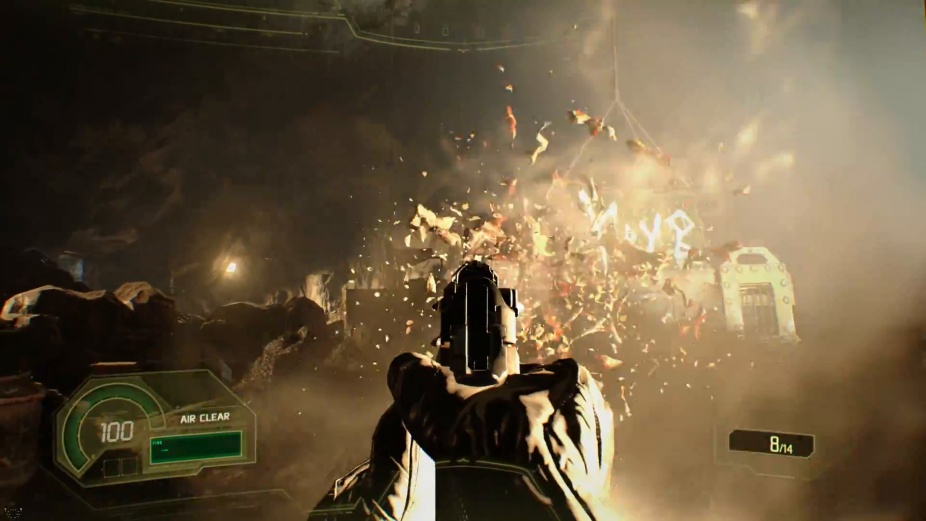
The Resident Evil 7 speedrunning community has developed extensive optimization for the game's various categories. Any% completion records have reached 1:27:13 by UK runner Rossrossy, while Knife Only specialists like French runner Psarthex have achieved 1:46:49 using only the survival knife. Madhouse difficulty records stand at 1:35:44 by Superxiaojuju, and 100% completion times reach 1:39:25 by DickGor.
Guinness World Records recognizes both fastest completion of Resident Evil 7 and fastest completion using only the knife as official categories, legitimizing the competitive scene.
Categories include Any%, 100%, Knife Only, New Game versus New Game+, and various difficulty settings. Platform divisions separate PC, PlayStation, and Xbox runs due to performance differences affecting timing.
Key techniques involve route optimization through memorized layouts, strategic enemy avoidance to save time, weapon pickup optimization for combat-required sections, and boss fight minimization strategies. Out-of-bounds glitches exist but require precise execution. The Lucas birthday cake sequence can be manipulated by removing balloons before candle placement to affect loading sequences.
Active Discord servers and speedrun.com forums connect the community, with runners sharing strategies, discovering new techniques, and pushing records lower. Notable runners beyond those mentioned include LeWhoZeHurr for Knife Only Madhouse, Stirliing as an early competitive streamer, and Quizzle for extended Madhouse documentation.
All Ports and Platform Versions
Resident Evil 7 has been released across an impressive range of platforms, each with distinct characteristics.
The original PlayStation 4, Xbox One, and Windows PC versions launched January 24, 2017 worldwide and January 26 in Japan. PS4 and Xbox One achieved 1080p resolution at 60 frames per second with HDR support. PS4 Pro enhanced output to 2160p through checkerboard rendering from a 3200x1800 base resolution. Xbox One X delivered native 4K at 60fps, representing the best console performance of the original generation. PC offered unlimited customization including 144Hz refresh rates, native 4K resolution, and adjustable texture quality.
Nintendo Switch received a Cloud version in May 2018 for Japan and December 2022 worldwide. This streaming-based implementation offers the first 15 minutes free with unlimited play passes available for 180-day periods. Performance depends entirely on internet connection quality rather than local hardware.
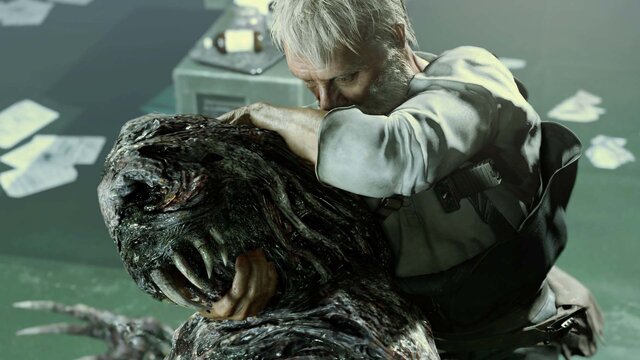
PlayStation 5 and Xbox Series X|S versions arrived June 13, 2022, adding ray-tracing support and high-framerate modes. These versions provide free upgrades from PS4 and Xbox One copies, encouraging library continuity.
Mobile platforms received RE7 on July 2, 2024, supporting iPhone 15 Pro, iPhone 15 Pro Max, iPad, and Mac through iOS, iPadOS, and macOS releases.
Nintendo Switch 2 will receive a native version alongside Resident Evil Village and Resident Evil 9: Requiem on February 27, 2026, finally bringing full local processing to Nintendo hardware.
PlayStation VR support remains exclusive to PlayStation 4, with no PSVR2 implementation announced despite the newer headset's superior specifications.
Japanese Reception and Legacy
Resident Evil 7 achieved critical and commercial success in Japan, winning multiple CEDEC 2017 awards including Engineering Excellence for the RE Engine Development Team and Sound Excellence for the audio team. The Japan Game Awards 2017 recognized the title with an Excellent Award in the Annual Works Category, particularly citing the groundbreaking VR implementation.
The Japanese voice cast featured respected actors including Hidenobu Kiuchi (木内秀信) as Ethan Winters, Akari Higuchi (樋口あかり) as Mia, Kazuhiro Yamaji (山路和弘) as Jack Baker, Maroki Isawa (伊沢麿紀) as Marguerite, Setsuji Sato (佐藤せつじ) as Lucas, and beloved voice actress Sumire Morohoshi (諸星すみれ) as Eveline. A completion presentation event featured the voice cast alongside comedian Kazuyoshi Tsuchiya celebrating the game's release.
Regional content differences reflect Japanese censorship regulations. The Japanese version removes certain graphic violence including a police officer decapitation scene and modifies a sequence where players reach into a corpse to retrieve a key. Even the Grotesque version released in Japan contains these modifications. International versions include Japanese language data without content restrictions, allowing Japanese players to access the complete experience through foreign releases.
Sales performance has been extraordinary. The game has sold over 15 million copies with sustained momentum across eight consecutive fiscal years, each exceeding one million units annually. This longevity reflects continued digital promotions, strategic pricing, and bundling with Resident Evil Village.
RE7's legacy extends beyond sales figures. The game successfully redirected the franchise toward horror after the action-oriented RE5 and RE6, proving that returning to survival horror roots could achieve massive commercial success. The RE Engine technology established during development now powers virtually all major Capcom productions. The first-person perspective and VR integration demonstrated new possibilities for horror gaming that influenced the broader industry.
Most importantly, RE7 established Ethan Winters as a new protagonist whose story continued in Resident Evil Village. The Mold bioweapon introduced here connects to Village's Mother Miranda mythology and broader revelations about the series' origins. Connections to Umbrella founder Oswell Spencer through Miranda's writings in Village reveal that RE7 planted seeds for understanding the entire franchise's history.
Resident Evil 7: Biohazard represents a creative and commercial triumph born from the courage to abandon a failing direction and return to fundamental principles. The game that emerged from three years of development, internal debate, and technological innovation didn't just save a franchise; it redefined what survival horror could achieve in the modern era.
Gallery
Get Gaming News and Features First
Stay updated with the latest gaming news and exclusive content.