Parasite Eve 2 at 26: Square Enix's Cinematic Horror Masterpiece Still Deserves a PS5 Remake
Twenty-six years after release, Parasite Eve 2 remains a survival horror masterpiece. It's time Square Enix brings Aya Brea back to modern platforms.
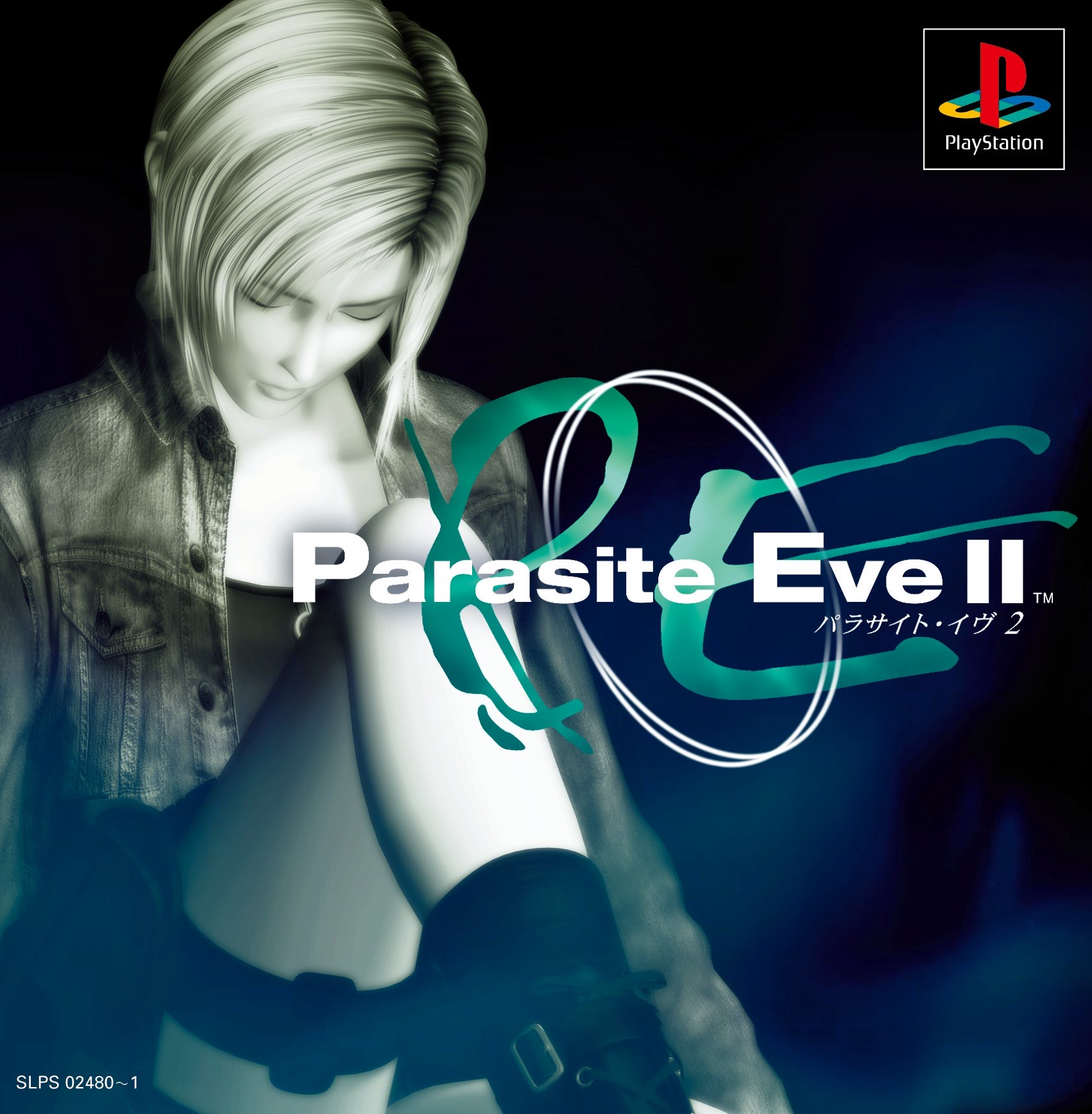
For those of us who played it on release, unwrapping that two-disc case and stepping into Aya Brea's world for the second time, the memories are indelible. The haunted desert towns, the biological nightmares lurking in abandoned motels, the satisfying crack of gunfire echoing through pre-rendered corridors. Parasite Eve 2 wasn't just a sequel. It was a transformation, a bold reimagining that took everything the original established and filtered it through the lens of pure survival horror.
The Atmosphere That Still Haunts
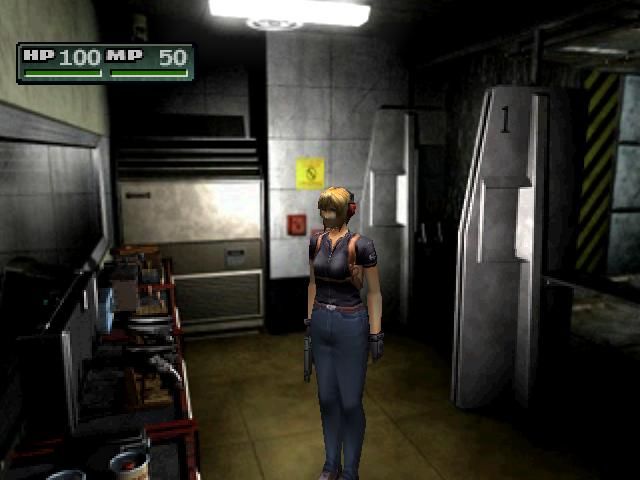
If you've played Parasite Eve 2, you know the feeling. That profound sense of isolation that settles into your bones as Aya Brea walks through Dryfield, Nevada. The sun-bleached ruins of a forgotten desert town, abandoned gas stations, a motel that looks like it hasn't seen a guest in decades. One retrospective put it perfectly: "I've never felt more abandoned in a survival horror than I have in Parasite Eve II."
The genius of Parasite Eve 2's atmosphere lies not in what it shows, but what it suggests. Unlike the grotesque in-your-face horror of many contemporaries, this game creates dread through environmental storytelling. You wander through "desolate, functionless concrete structures under harsh desert conditions," as one Japanese reviewer described it. The horror isn't just the Neo-Mitochondrial Creatures lurking around corners. It's the emptiness, the abandonment, the sense that humanity has already lost this battle.
The Akropolis Tower mall in Los Angeles opens the game with claustrophobic urban terror, but it's the Mojave Desert sequences that define Parasite Eve 2's identity. The Shanbara facility, a government installation hiding unspeakable experiments, represents the game's climactic descent into biological nightmare. These locations feel lived-in, decayed, haunted by the ghosts of what came before.
Cinematic Adventure: Graphics Ahead of Its Time
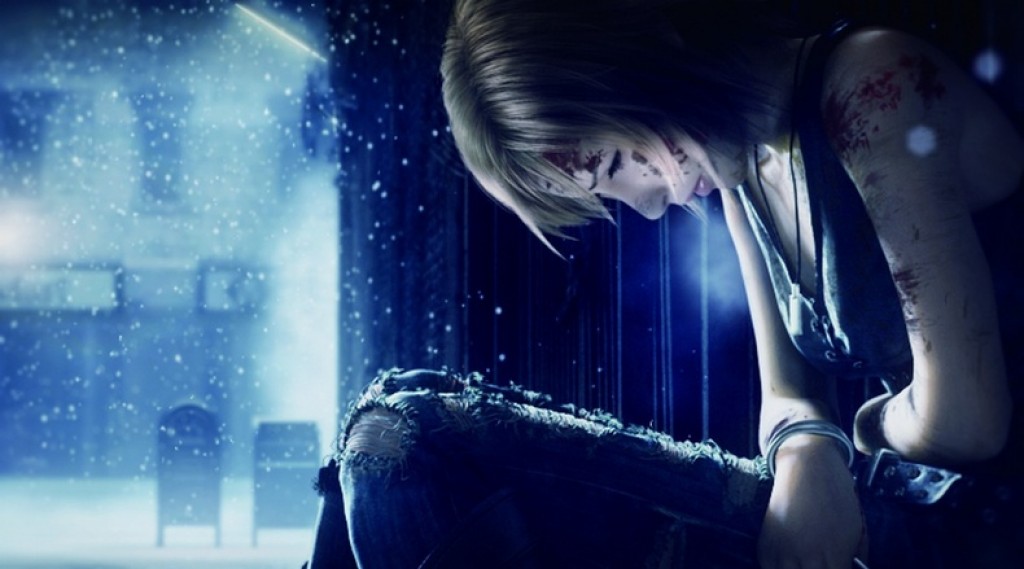
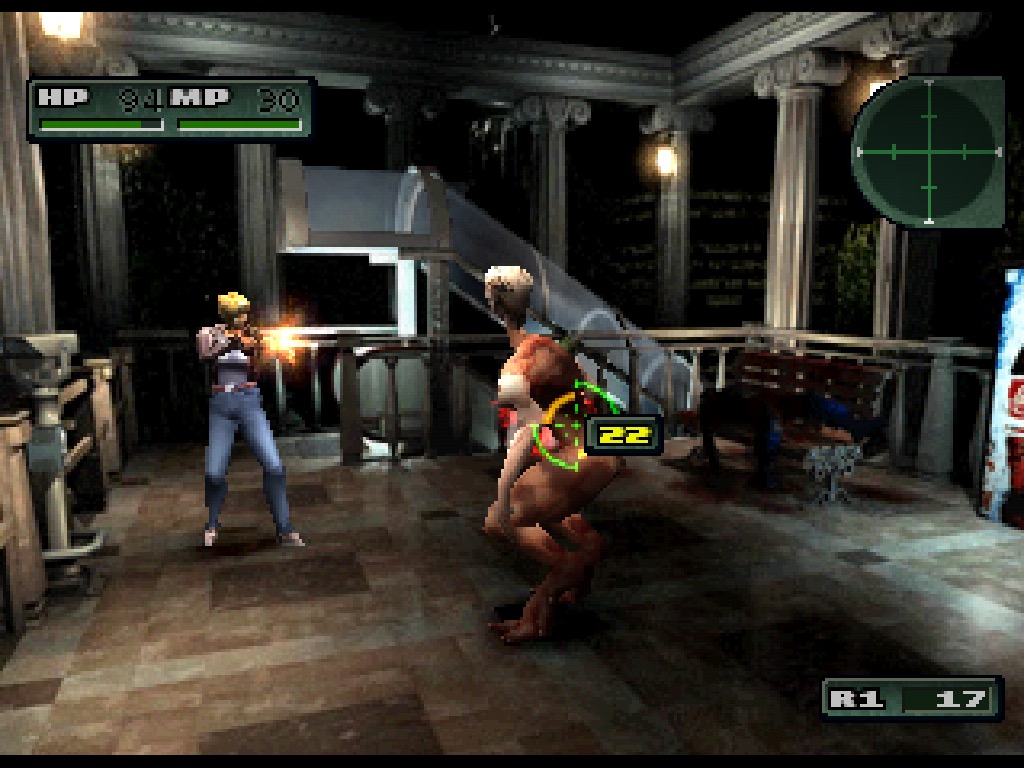
Square Enix Japan's anniversary tweet called Parasite Eve 2 a "Cinematic Adventure," and that description captures the visual philosophy perfectly. The game pushed the original PlayStation to its absolute limits, achieving a level of graphical fidelity that still impresses today.
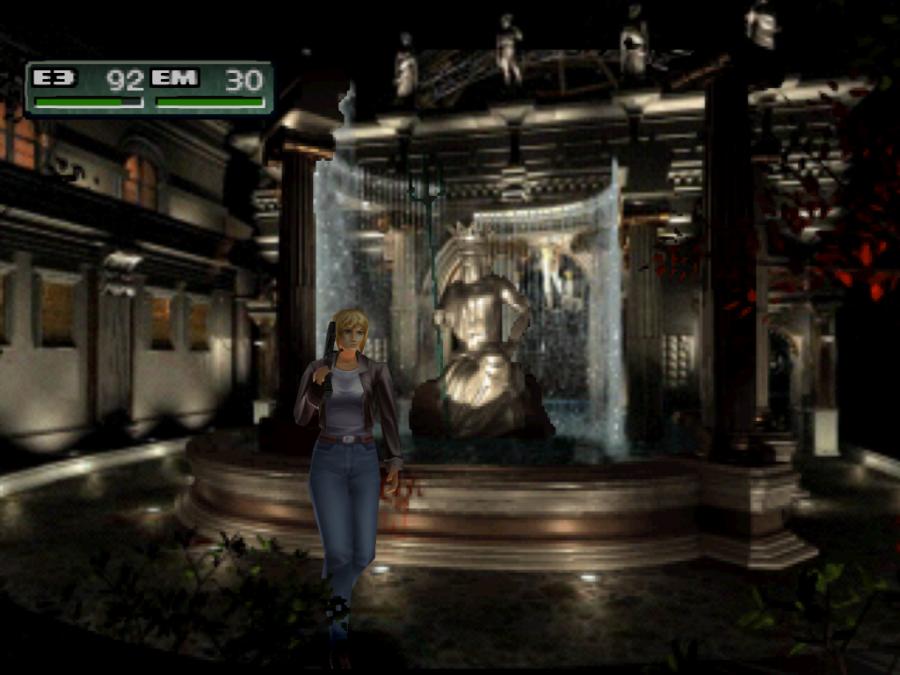
Critics praised Parasite Eve 2's visuals, with many calling certain sequences "one of the most impressive examples of what the PlayStation can do." The pre-rendered backgrounds weren't just static images. They featured colored ambient lighting that shifted as Aya moved through environments, reflective glossy floors catching her silhouette, glass surfaces that seemed to breathe with the game's oppressive atmosphere.
GameSpot's Greg Kasavin noted how "the detail in Parasite Eve II's settings makes the static backgrounds look especially realistic; colored ambient lighting, reflective glossy floors and glass surfaces, skittering bugs and moths, and other such elements all contribute to the game's surprising visual quality." The game succeeded where many PS1 titles failed, delivering "the cinematic appearance that its predecessor aimed for."
The character models avoided the blocky polygon look that plagued many contemporary titles. Aya Brea's design, her confident stance, the way she holds her weapons, all conveyed personality through visual design alone. The enemy designs remain genuinely disturbing, monstrous yet vaguely recognizable humans and animals whose fleshy, elongated limbs and hollow eyes make them look both creepy and dangerous.
The Perfect Blend: RPG Meets Survival Horror
What makes Parasite Eve 2 special isn't just its atmosphere or visuals. It's the innovative fusion of survival horror tension with RPG progression mechanics. The game stripped away traditional leveling entirely, replacing it with two interconnected systems that created meaningful choices at every turn.
Bounty Points (BP) function as the game's currency, earned by eliminating NMCs (Neo-Mitochondrial Creatures). The lore explains this brilliantly: M.I.S.T. agents wear special contact lenses with nano-computers that register their kills and calculate bounty rewards. BP purchases weapons, armor, ammunition, and items from the game's shops. But here's the catch. Resources are always scarce. As GameSpot noted, "you'll get to buy the good gun or the good armor, but not both." Every purchase matters.
Experience Points (EXP) work differently. Rather than increasing Aya's level, experience unlocks and upgrades her Parasite Energy abilities. These supernatural powers are divided into four elemental branches: Fire, Water, Wind, and Earth (or Necro). Each element contains three distinct abilities, and each ability has three upgrade tiers. Higher tiers cost less MP and deal more damage. This creates a skill tree before skill trees were standard, letting players customize Aya's supernatural arsenal to match their playstyle.
The magic system offers everything from healing and status recovery to offensive attacks like combustion and necrosis. Unlike the first game's turn-based interruptions, these abilities consume mana in real-time, keeping the action flowing while adding strategic depth.
The weapon customization system deserves special mention. Players can attach upgrades purchased with BP to their firearms, creating personalized loadouts. Do you prioritize rate of fire or stopping power? Critical hit chance or magazine capacity? These decisions ripple through the entire playthrough.
Resident Evil's Stylish Cousin
Parasite Eve 2 embraced the survival horror conventions popularized by Capcom's Resident Evil series, but it implemented them with Square's signature polish. The tank controls that defined the era are present, yes. But they're executed with enough precision that navigation rarely feels frustrating.
The fixed camera angles serve the atmosphere rather than fighting against the player. GameSpot praised how "the game uses a great mix of both artistic and claustrophobic camera angles that make the scenery look good without making it difficult to navigate through." These perspectives create cinematic tension, framing Aya against vast desert landscapes or confining her in narrow corridors with unknown threats.
Combat represents a significant departure from the original Parasite Eve. Gone is the ATB system inherited from Final Fantasy. In its place, real-time shooting with satisfying weight and feedback. "Most every weapon fires with its own distinctively satisfying, reverberating boom," wrote Kasavin. The dynamic between weapon weight and power creates meaningful tradeoffs. Heavier weapons hit harder but slow Aya's movement. Lighter weapons allow agility but require more ammunition to down tougher foes.
Enemies appear onscreen before engagement, letting players assess threats and plan approaches. This visibility removes cheap deaths while maintaining tension through resource management and the ever-present question: can I afford this fight?
Critical Reception and The Timing Tragedy
Parasite Eve 2 released to positive reviews. GameSpot gave it a 7.3, calling it "a marked improvement over the original." Critics praised the visuals, combat innovations, and atmospheric design.
But timing conspired against the game. Releasing in Japan on December 16, 1999, and September 2000 in North America, Parasite Eve 2 arrived at the PlayStation's twilight. The PlayStation 2 had launched in Japan on March 4, 2000, and excitement for Sony's next-generation console overshadowed everything else. Many players had already moved on.
The result? Parasite Eve 2 sold roughly half of its predecessor's numbers. Not because it was inferior, but because history had moved forward. "Although generally well-received by the public," one retrospective noted, "Parasite Eve II came close to the end of the PSX's life cycle for it to get the proper attention that it deserves."
This timing tragedy shaped the franchise's future. The next entry, The 3rd Birthday on PSP in 2010, received mixed reception and effectively killed the series. Aya Brea has remained dormant ever since.
Why PS5 Desperately Needs Parasite Eve 2
Here's the frustrating reality: you cannot play Parasite Eve 2 on any modern platform. Not PS5, not Xbox, not Switch, not PC. The only legitimate options are hunting down original PlayStation hardware and discs, or accessing the PSN Game Archives on a PlayStation 3. For an entire generation of gamers, this masterpiece might as well not exist.
The demand for a remake is real. Fans have watched Capcom resurrect Resident Evil 2 to universal acclaim, proving that classic survival horror can thrive on modern hardware. They've seen Final Fantasy VII Remake demonstrate that Square Enix can reimagine PS1 classics with stunning results. Why not Parasite Eve?
The answer is complicated. Some fans speculate that licensing complications with Hideaki Sena, the author of the original Parasite Eve novel, have prevented new entries. However, this remains disputed. Square Enix still holds active trademarks and re-released both games on PSN in 2011 and 2019. The more likely explanation may simply be that no one at Square Enix currently champions the franchise.
This hasn't stopped the demand. When Square Enix trademarked "Symbiogenesis," a term deeply connected to the Parasite Eve mythology, fans erupted with speculation. When rumors of a February 2025 State of Play announcement circulated, hope surged through the community. Neither panned out.
Meanwhile, a Chinese developer called IceSitruuna has announced Parasite Mutant for PS5 in 2026, a spiritual successor that wears its inspiration openly. It's a testament to Parasite Eve's enduring influence that independent developers are stepping up to fill the void Square Enix has left.
A Call to Square Enix: Bring Aya Back
Twenty-six years ago, Parasite Eve 2 showed what happens when survival horror meets RPG innovation. It delivered an atmosphere that still haunts those who played it. Graphics that pushed hardware to its limits. Mechanics that rewarded strategy and planning. A protagonist in Aya Brea who deserved far more than obscurity.
Square Enix's own Yoshinori Kitase once said that leaving Aya Brea dormant "would be a waste." He was right. The success of the Resident Evil remakes proves the market exists. The continued fan demand proves the passion remains. All that's missing is the will to make it happen.
To those who played Parasite Eve 2 on release, who remember the Nevada desert heat and the biological nightmares lurking within: we're still here. We're still waiting. And we believe Aya Brea's story isn't finished yet.
To Square Enix: it's been twenty-six years. It's time to bring Parasite Eve home.
| Detail | Information |
| EN Name | Parasite Eve II |
| JP Name | パラサイト・イヴ2 |
| Release | December 16, 1999 (JP) / September 12, 2000 (NA) |
| Platforms | PlayStation |
| Developer | Square |
| Publisher | Square / Square EA (NA) |
| Composer | Naoshi Mizuta |
For more Square Enix retrospectives, see The 3rd Birthday and Parasite Mutant.\n\nSquare Enix Japan recently marked a significant anniversary on their official timeline: December 16, 1999, the day Parasite Eve 2 descended upon Japanese PlayStation owners. Twenty-six years later, their commemorative tweet describing the game as a "Cinematic Adventure" feels almost bittersweet. This masterpiece of survival horror remains trapped in the past, inaccessible on any modern platform, while an entire generation of gamers has never experienced what many consider one of the PlayStation's finest hours.
Gallery
Get Gaming News and Features First
Stay updated with the latest gaming news and exclusive content.