Resident Evil 6: Capcom's Most Ambitious and Divisive Horror Epic
Explore Resident Evil 6's four campaigns, MT Framework 2.0 tech, C-Virus lore, Mercenaries records, and 15+ million copies sold across all platforms.
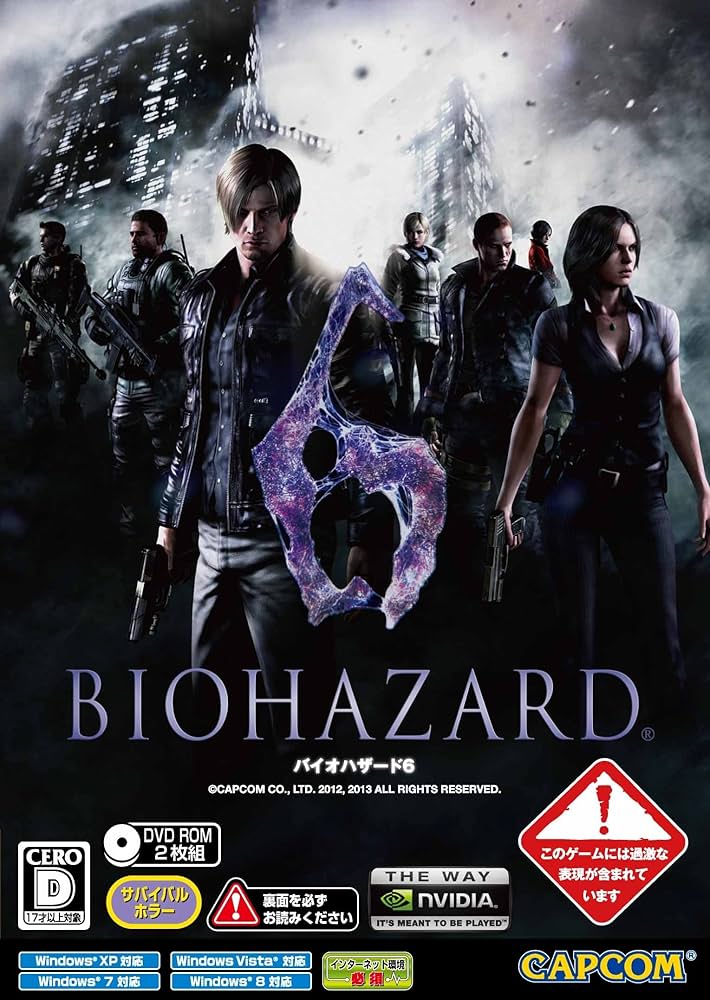
Resident Evil 6 represents the most ambitious entry Capcom ever created for the survival horror franchise. Released in October 2012 as Biohazard 6 (バイオハザード6) in Japan, this massive undertaking featured four interconnected campaigns, an ensemble cast of series favorites, and production values that pushed the MT Framework engine to unprecedented heights. With over 15 million copies sold across all platforms and a near-perfect 39/40 score from Famitsu, RE6 stands as both a commercial triumph and one of the most divisive entries in gaming history, sparking debates about the franchise's direction that continue to this day.
| Title (EN) | Resident Evil 6 |
| Title (JP) | バイオハザード6 (Biohazard 6) |
| Developer | Capcom |
| Publisher | Capcom |
| Release Date | October 4, 2012 (JP), October 2, 2012 (WW) |
| Platforms | PS3, Xbox 360, PC, PS4, Xbox One, Nintendo Switch |
| Engine | MT Framework 2.0 |
| Genre | Third-Person Action / Survival Horror |
Development: Capcom's Largest Project Ever
The development of Resident Evil 6 was unprecedented in Capcom's history, representing their single largest production undertaking. Executive Producer Hiroyuki Kobayashi (小林裕幸), who had previously overseen Resident Evil 4 and the Sengoku Basara series, assembled a team of enormous scale and ambition. Director Eiichiro Sasaki (佐々木栄一郎), who had helmed the Resident Evil Outbreak series with its pioneering online multiplayer focus, brought his expertise in cooperative horror experiences to the main franchise.
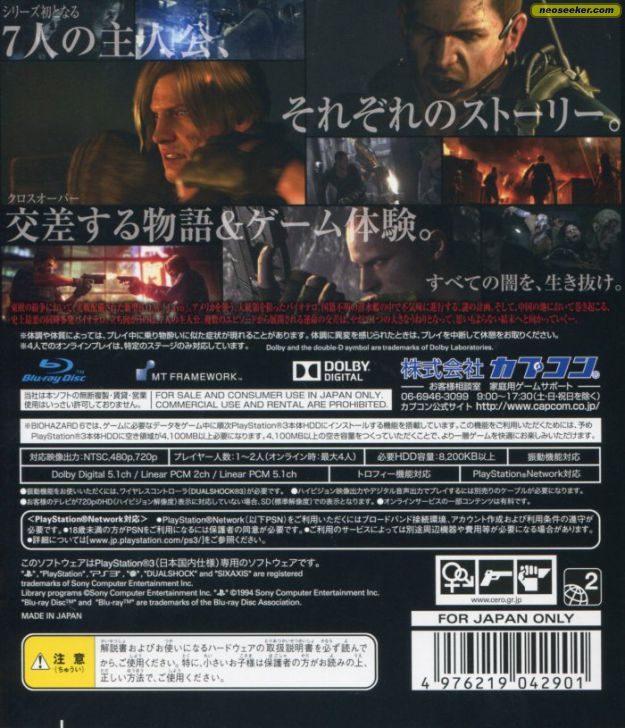
In extensive interviews published by Famitsu and 4Gamer during CAPTIVATE 2012 and Tokyo Game Show 2012, Producer Yoshiaki Hirabayashi (平林良章) from Capcom's CS Development Department revealed the staggering scope of production. Scenario meetings alone exceeded 200 to 300 hours of development time as the team crafted four distinct narrative campaigns that would interweave at crucial dramatic moments. The team emphasized scenario-centric game design, with gameplay systems directly integrated with narrative progression rather than treated as separate elements.
The soundtrack required eight composers working in close collaboration, mixing internal Capcom talent with external contributors in a cross-departmental effort unprecedented in the company's history. This represented the most ambitious audio production Capcom had ever attempted, as detailed in extensive interview series published on Capcom's official sound portal. The result was a dynamic, adaptive score that shifted tone dramatically between the atmospheric horror of Leon's campaign, the military intensity of Chris's missions, and the desperate chase sequences of Jake's storyline.
Capcom shipped 4.5 million units globally on launch day, October 4, 2012, signaling massive confidence in their investment. Japanese first-week sales reached an impressive 676,585 copies, with approximately 635,000 on PlayStation 3 and the remainder on Xbox 360. This significantly exceeded Resident Evil 5's opening week of 398,000 copies in Japan during 2009, demonstrating that the franchise maintained powerful momentum in its home territory.
The development philosophy centered on delivering what Kobayashi called the definitive Resident Evil experience. By offering four distinct campaign styles, the team hoped to satisfy horror purists seeking tension, action fans wanting intensity, newcomers needing accessibility, and longtime fans desiring connections to series lore. Whether this ambitious approach succeeded remains a point of passionate debate among the community.
The Four Campaigns: Interweaving Narratives
Resident Evil 6 tells its story across four distinct campaigns, each offering unique gameplay styles and perspectives on the same global bioterror crisis spanning from late December 2012 through July 2013.
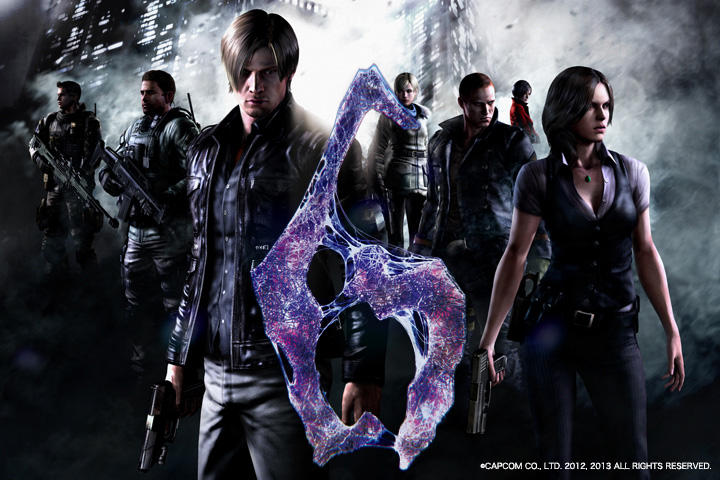
The Leon S. Kennedy and Helena Harper campaign opens with immediate tragedy. On June 29, 2013, President Adam Benford prepares to publicly disclose the truth about the 1998 Raccoon City incident, a secret the United States government has suppressed for fifteen years. Before he can speak, a bioterrorist attack unleashes the C-Virus on Tall Oaks, transforming the President himself into one of the infected. Leon, forced to put down his friend with his own hands, teams with Secret Service agent Helena Harper to pursue the truth behind the attack.
Helena harbors a terrible secret: she was coerced into helping the attackers by threats against her sister Deborah. Their investigation leads them from American soil to Lanshiang, China, where they confront National Security Advisor Derek Simmons, the mastermind behind the conspiracy. This campaign deliberately echoes the survival horror roots of Resident Evil 2 and 3, featuring civilian panic, dark corridors, and classic zombie encounters that harken back to the franchise's origins. The STAGLA gas station from RE3 even makes a nostalgic appearance in the first chapter.
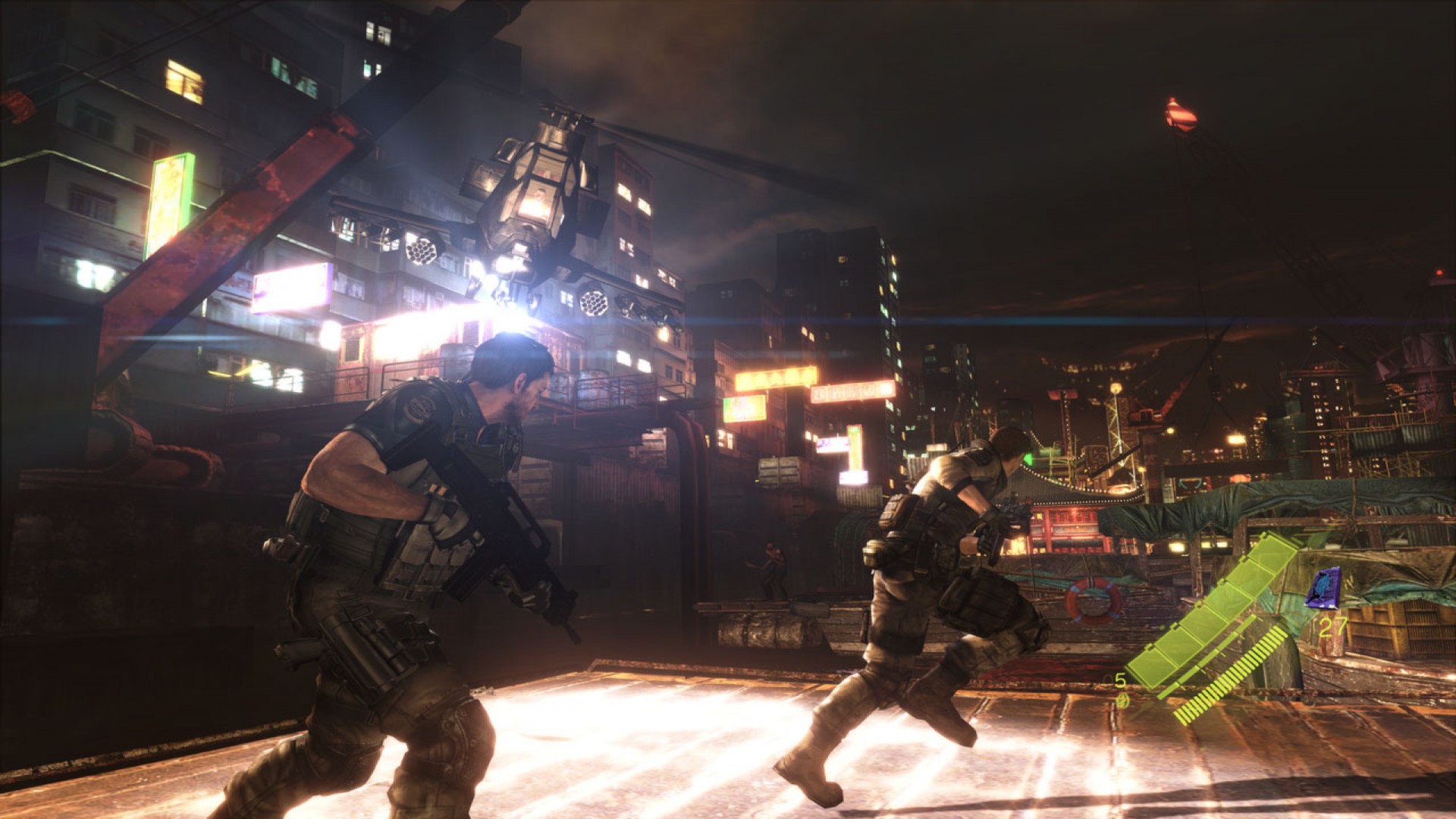
The Chris Redfield and Piers Nivans campaign presents a dramatically different experience focused on military action. Chris has been missing for six months, suffering from mysterious amnesia after a traumatic mission in Edonia where his entire squad was killed. Piers, his loyal BSAA subordinate who idolizes Chris as a mentor, tracks him down in an Eastern European bar, convincing the broken soldier to return to duty despite his shattered mental state.
Their mission takes them to Lanshiang, China, where a massive C-Virus outbreak threatens United Nations officials and countless civilians. The campaign emphasizes military action against J'avo enemies and bio-organic weapons, with Chris leading tactical team responses through urban warfare scenarios. The storyline culminates in a desperate underwater battle against the massive Haos creature, a bioweapon capable of releasing C-Virus across the entire world.
The ending delivers one of the series' most tragic and memorable moments. Piers, mortally wounded and unable to continue fighting, injects himself with the C-Virus to gain enough strength to defeat Haos. Knowing his mutation is inevitable and irreversible, he forces Chris into an escape pod before sacrificing himself to destroy the creature. Chris escapes alone, carrying the weight of another lost comrade and questioning whether he can continue as a soldier. This emotional conclusion resonated deeply with Japanese audiences who appreciated the themes of loyalty, sacrifice, and survivor's guilt.
The Jake Muller and Sherry Birkin campaign introduces a stunning revelation to series lore that connects directly to Resident Evil 5. Jake, a mercenary fighting in the Edonian civil conflict, discovers he is the biological son of Albert Wesker, the series' long-running antagonist who died in volcanic fire at the conclusion of RE5. His blood contains unique antibodies capable of creating a vaccine against the C-Virus, making him the most valuable person on Earth.
Sherry Birkin, the young girl rescued by Leon and Claire in Resident Evil 2, returns as an adult DSO government agent assigned to extract Jake. Her own history with the G-Virus, having been infected by her father William Birkin as a child, has granted her remarkable healing abilities that prove crucial throughout their journey. Together they endure capture by Neo-Umbrella, six months of imprisonment in a Chinese research facility, and relentless pursuit by the unstoppable Ustanak creature, a Nemesis-like persistent threat.
Their campaign explores themes of inherited sin and redemption, with both characters grappling with the legacies of their villainous fathers. Jake must confront whether he is destined to become a monster like Wesker, while Sherry has transformed her trauma into determination to protect others. Their developing partnership provides emotional depth amid the explosive action sequences.
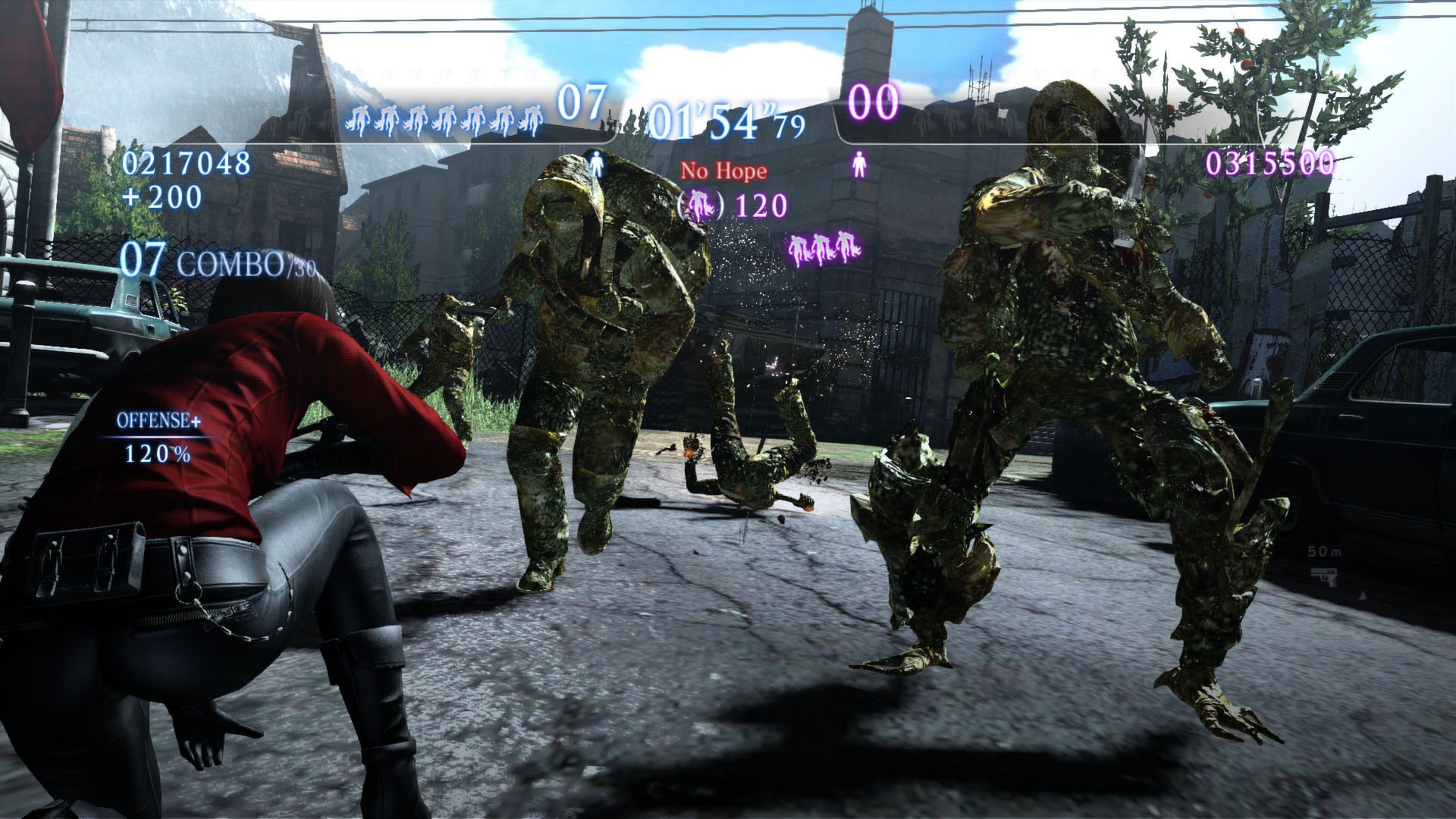
The Ada Wong campaign unlocks after completing the three main storylines, offering a solo espionage experience that reveals secrets hidden from other protagonists. Ada investigates Derek Simmons and Neo-Umbrella, uncovering the truth behind her mysterious doppelganger who has been committing atrocities in her name. Her journey takes her through the same events as the other campaigns but from a hidden perspective, observing from shadows and intervening at crucial moments.
The campaign climaxes with Ada confronting Carla Radames, the woman transformed into her genetic clone, aboard a tanker at sea. The encounter forces Ada to face the consequences of her enigmatic reputation and the obsession she unknowingly inspired in Simmons. This campaign returns to classic Resident Evil puzzle-solving and lone-wolf gameplay, providing contrast to the partner-focused other storylines.
The four campaigns intersect at multiple dramatic points, allowing up to four players to experience key confrontations together through online crossover gameplay. Leon and Chris clash over the identity of Ada Wong in a tense standoff. All four protagonists converge against the mutating Simmons in Lanshiang. Chris receives orders from Leon to rescue Jake and Sherry from Neo-Umbrella's oil platform facility. These interconnected moments create a narrative tapestry unprecedented in franchise history.
The Villains: Simmons, Carla, and Neo-Umbrella
Derek Clifford Simmons serves as the primary antagonist, a man whose obsession with Ada Wong drove him to commit monstrous acts that reshaped global history. As National Security Advisor to President Benford and secret leader of The Family, a shadowy organization maintaining global order for centuries through manipulation and control, Simmons possessed nearly unlimited resources and influence. He supervised the Simmons Foundation, a bioweapons research front that recruited brilliant scientists for classified genetic experiments.
Among those scientists was Carla Radames, a child prodigy who earned her doctorate at the remarkable age of fifteen. Recognized by the Simmons Foundation for her exceptional intellect, she spent a decade in bioweapons research, desperately trying to earn Simmons's approval and affection through her scientific achievements. But Simmons felt nothing for her devotion. His obsession with Ada Wong consumed him entirely, leaving Carla invisible despite her dedication.
Simmons launched Project Ada, a horrifying experiment to transform a test subject into a genetic clone of Ada Wong using the C-Virus chrysalis process. Thousands of subjects died in the attempts, their bodies unable to survive the transformation. Subject 12,235 was Carla herself, forcibly selected when Simmons grew desperate for results. Injected with the C-Virus and encased in a chrysalis cocoon, she emerged hours later transformed from a pale-skinned blonde woman into a perfect physical replica of Ada Wong. She retained all memories of her former self, including the violation and betrayal she had suffered.
Burning with desire for revenge against the man who had destroyed her identity, Carla recognized that dismantling The Family's centuries of careful work would be the ultimate punishment for Simmons. She manipulated Family members to pledge loyalty to her instead of Simmons, establishing Neo-Umbrella as a personality cult dedicated to unleashing global chaos. She created the enhanced C-Virus, orchestrated the Tall Oaks attack that killed President Benford, and built three research facilities in Lanshiang from which to conduct her bioterror operations: the Quad Tower, Vinci Medical Research Centre, and a nearby mansion, plus a secret offshore facility.
The C-Virus itself represented a terrifying advancement over previous biological weapons developed by Umbrella and its successors. More stable than the G-Virus, it allowed controlled mutations while victims retained intelligence and motor function. Those infected became J'avo, derived from a Serbo-Croatian word meaning demon. Unlike mindless zombies, J'avo could follow complex orders, use firearms and vehicles, coordinate tactical attacks, and even regenerate damaged limbs into new mutated appendages.
Secrets, Easter Eggs, and Unlockables
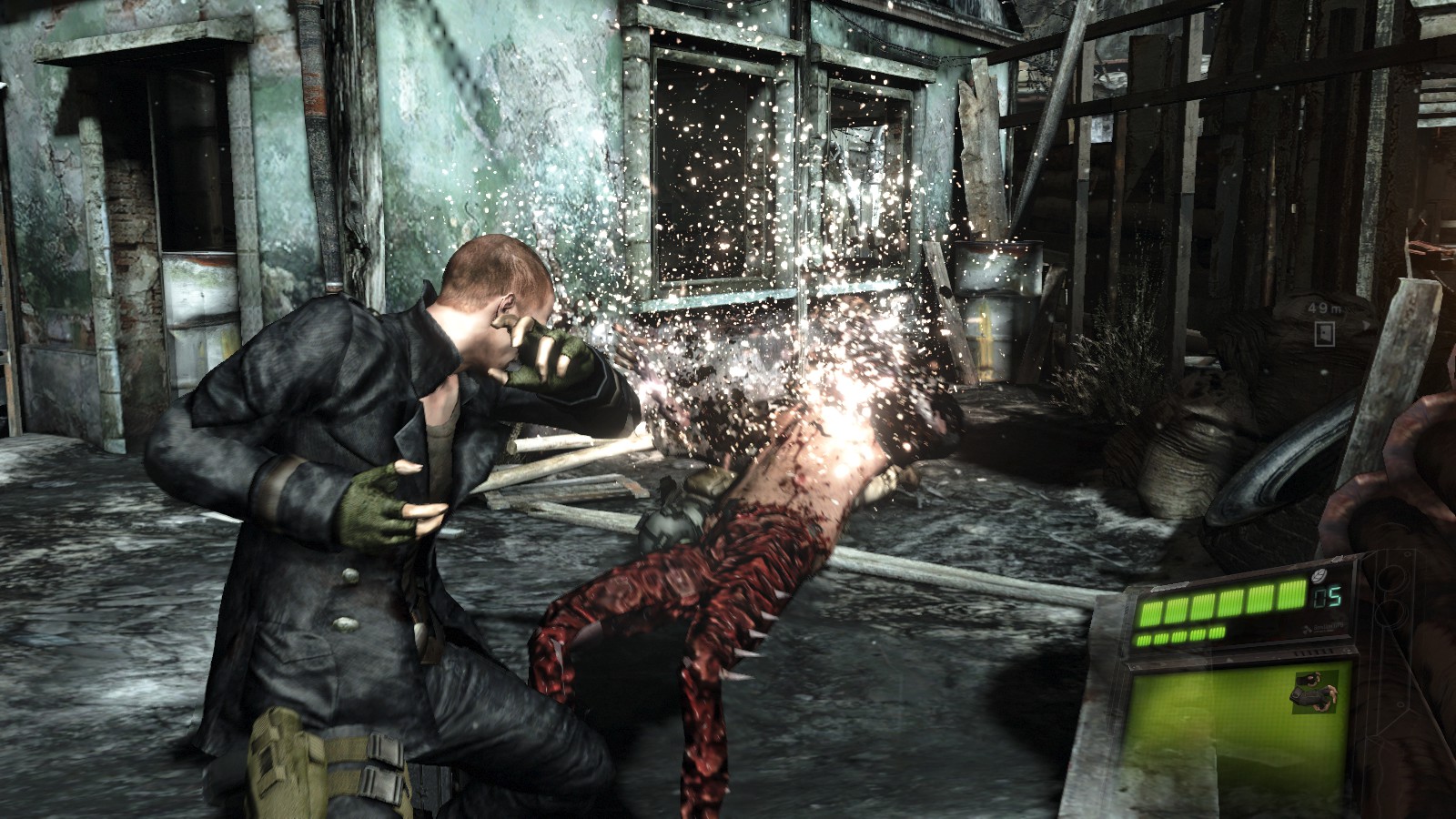
Resident Evil 6 rewards dedicated players with numerous secrets and references to franchise history scattered throughout its massive campaign. The game contains 80 Serpent Emblems, distinctive blue-green disc collectibles featuring snake patterns, distributed evenly with 20 per campaign across Leon, Chris, Jake, and Ada's storylines. Shooting or meleeing these emblems unlocks Files providing backstory and Figurines in the Special Features menu for collection enthusiasts.
Easter eggs reference classic Resident Evil moments throughout the experience. The STAGLA gas station from Resident Evil 3: Nemesis appears in Leon's first chapter, a nostalgic callback for longtime fans who remember Raccoon City's doomed streets. At the beginning of Jake's campaign, he whistles the haunting Alfred Music Box melody from Resident Evil Code: Veronica, suggesting unexpected cultural knowledge for a mercenary. Chris can bounce on panda playground equipment and mimic Leon's iconic lounging pose from Resident Evil 4's opening village sequence when interacting with certain furniture.
Unlockable content includes Ada Wong's entire fourth campaign, accessible only after completing Leon, Chris, and Jake's storylines. Agent Hunt mode unlocks after finishing any single campaign, allowing players to invade others' games as enemies. Completing all four campaigns grants access to infinite ammunition for all skill slots.
The Mercenaries Mode
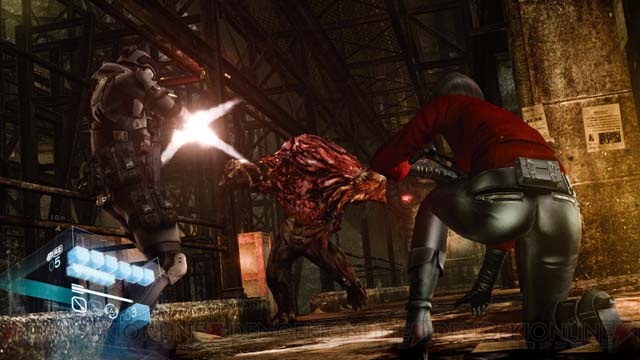
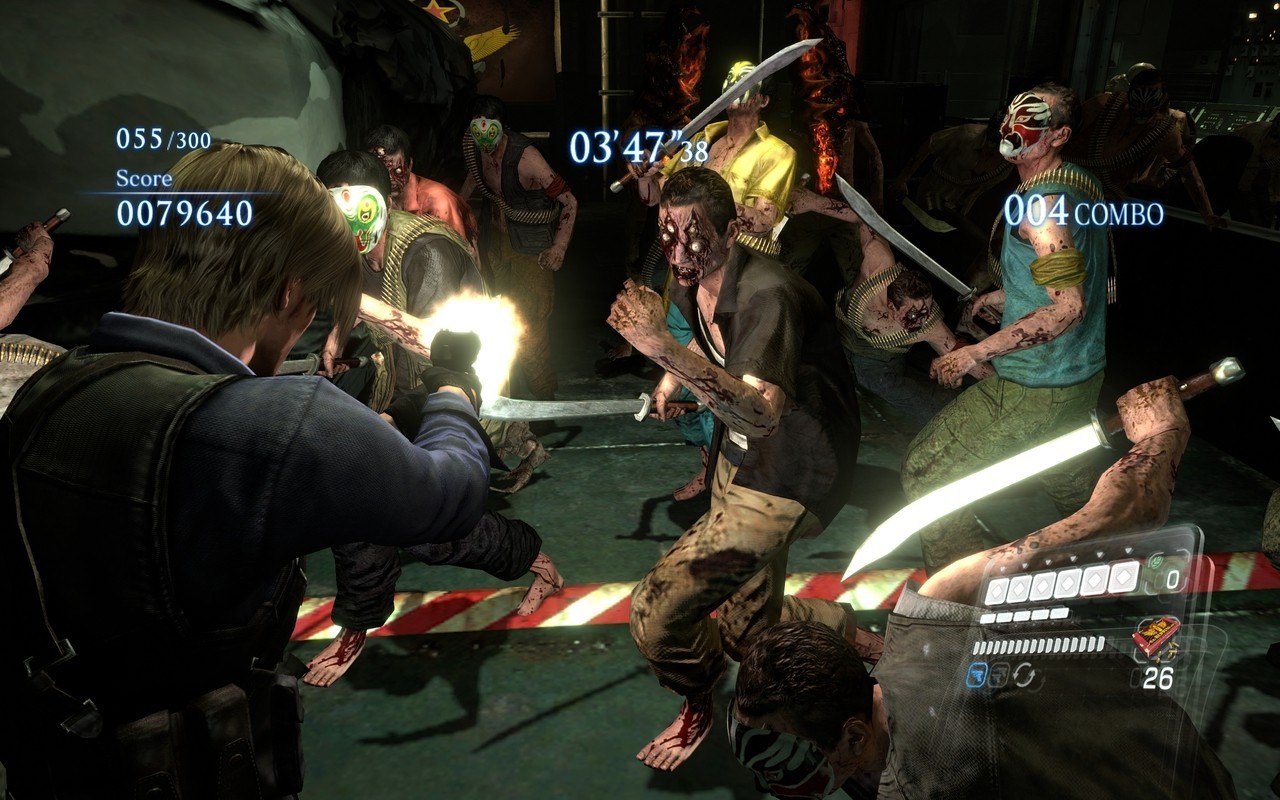
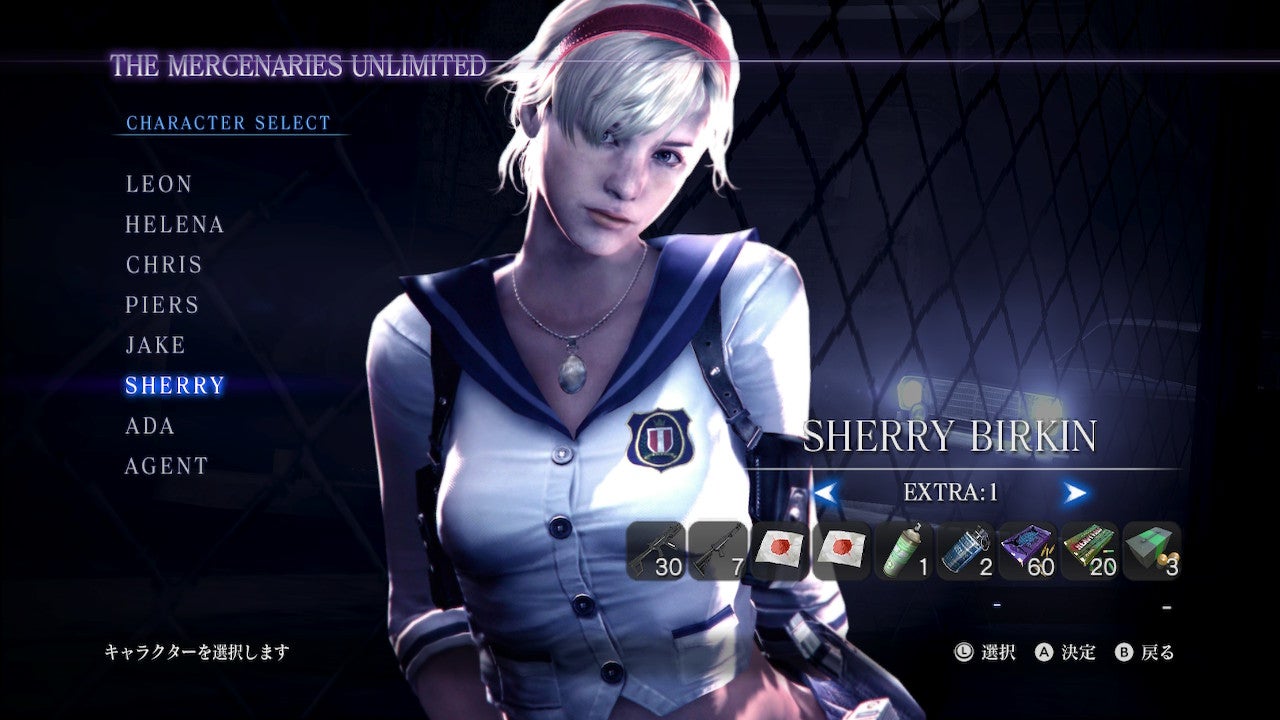
The Mercenaries returns as a robust bonus mode featuring Leon, Helena, Chris, Piers, Jake, Sherry, Ada, Carla, and the Agent. Three maps unlock by default, with more stages available through A rank achievements.
The world record high score stands at an astonishing 3,223,800 points, achieved by legendary player Gozper20 using Sherry EX1 on Urban Chaos solo mode on PlayStation 3 according to official Resident Evil.NET rankings. Second place belongs to xV-BrHoOoM-Vx with 1,398,208 points using Chris, followed by hidena with 1,389,605 points. Duo mode records reach 1,410,954 points on the Liquid Fire stage.
Character tier discussions among competitive players favor Jake in his default loadout for excellent headshot capabilities, powerful magnum dealing massive boss damage, and good effective range. Chris and Leon in their EX configurations receive strong recommendations for gun-focused aggressive playstyles.
All Ports and Platform Versions
Resident Evil 6 has been ported across two console generations plus PC and remains available on current platforms through backward compatibility and dedicated releases.
The original PlayStation 3 and Xbox 360 versions launched October 4, 2012 in Japan and October 2 worldwide. Both ran at sub-HD 720p resolution with 30 FPS targets, standard performance for seventh-generation console hardware of that era.
The Windows PC version followed in March 2013 with extensive exclusive features unavailable elsewhere. Mercenaries: No Mercy offered dramatically increased enemy density creating chaotic action impossible on console hardware. Resolution support extended up to 2560x1600 with internal frame rate limits of 120 FPS for high-refresh displays. All four DLC multiplayer modes released completely free of charge on PC.
The HD Remaster arrived March 29, 2016 on PlayStation 4 and Xbox One with dramatic performance improvements over original releases. Both versions achieved 1080p resolution at stable 60 FPS, effectively doubling the frame rate and providing sharper image quality. QTE sequences received playability adjustments making them more forgiving. All previously released DLC came bundled at no extra charge.
The Nintendo Switch port launched October 29, 2019, based on the PS4/Xbox One version but with necessary technical compromises. Docked mode targets 1080p output at 30 FPS while handheld achieves 720p at 30 FPS, both with unlocked but often unstable frame rates during intense action. Joy-Con motion controls support aiming, knife attacks, reloading gestures, and escape sequence inputs. The Switch version uniquely allows EX costumes in story mode, a feature restricted to Mercenaries on other platforms.
Total sales across all platforms reached over 15 million units by September 2025: 9.9 million on PS3/Xbox 360 original versions, 4.2 million on PS4/Xbox One remasters, and 1.1 million on Nintendo Switch, confirming the game's enduring commercial appeal.
Japanese Reception and Legacy
Resident Evil 6 received exceptional critical acclaim in Japan that contrasted sharply with more mixed Western reception. Famitsu awarded an impressive 39 out of 40 points, with three of four critics giving perfect 10/10 scores and one giving 9/10. This placed RE6 among only 19 perfect or near-perfect scores in Famitsu's entire history at that time, an extraordinary achievement. The review praised the four distinct story campaigns, satisfying online cooperative features, and unprecedented production values.
Japanese first-week sales of 676,585 copies significantly exceeded Resident Evil 5's 398,000 opening, demonstrating strong domestic market enthusiasm. Game Developer reported that RE6 sold exceptionally well in Japan even as international gaming press expressed reservations about the shift toward action-focused gameplay.
Resident Evil 6 stands as a pivotal and controversial moment in franchise history, representing Capcom's most ambitious attempt to satisfy multiple audience segments simultaneously within a single package. The four-campaign structure, interconnected narratives, diverse gameplay styles ranging from horror to military action to espionage, and massive multiplayer offerings created an experience unlike anything before or since in the series. Whether viewed as an overambitious experiment that diluted the franchise's identity or an underappreciated epic that delivered unprecedented scope and value, its 15+ million sales and enduring player communities confirm RE6's place as a significant chapter in survival horror history.
Gallery
Get Gaming News and Features First
Stay updated with the latest gaming news and exclusive content.