Chrono Trigger: The Definitive History of Squaresoft's Timeless Masterpiece
Explore the complete history of Chrono Trigger, from the Dream Team's creation to speedrunning secrets. Discover how Squaresoft's 1995 SNES masterpiece became the greatest JRPG ever made.
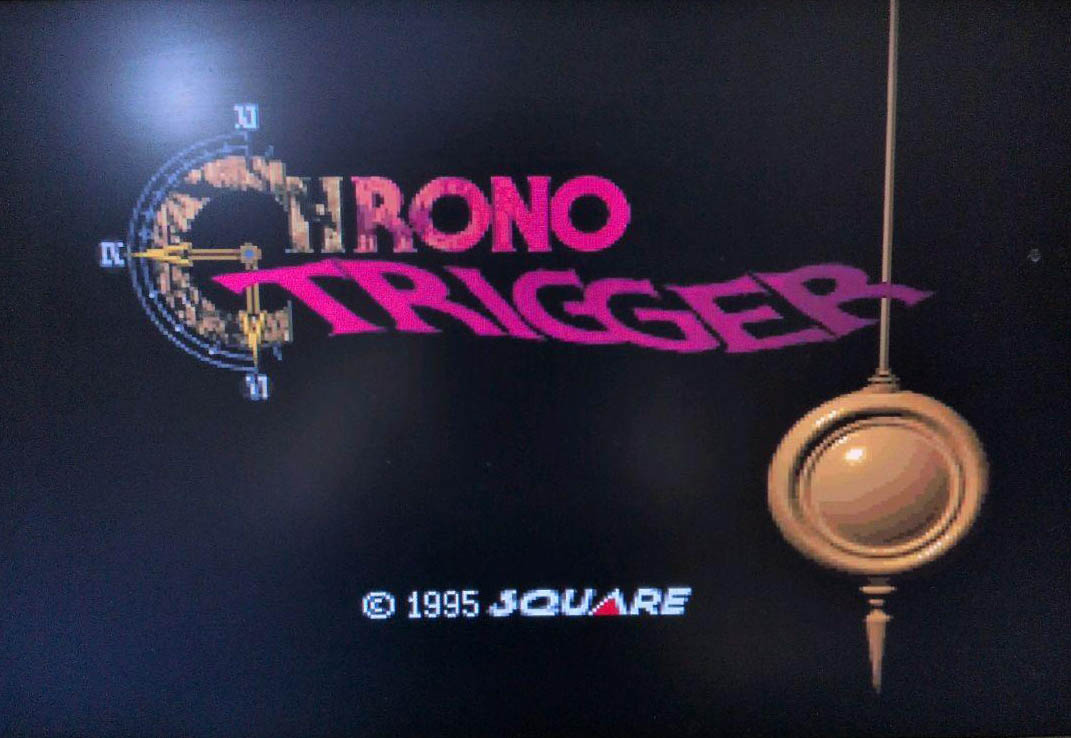
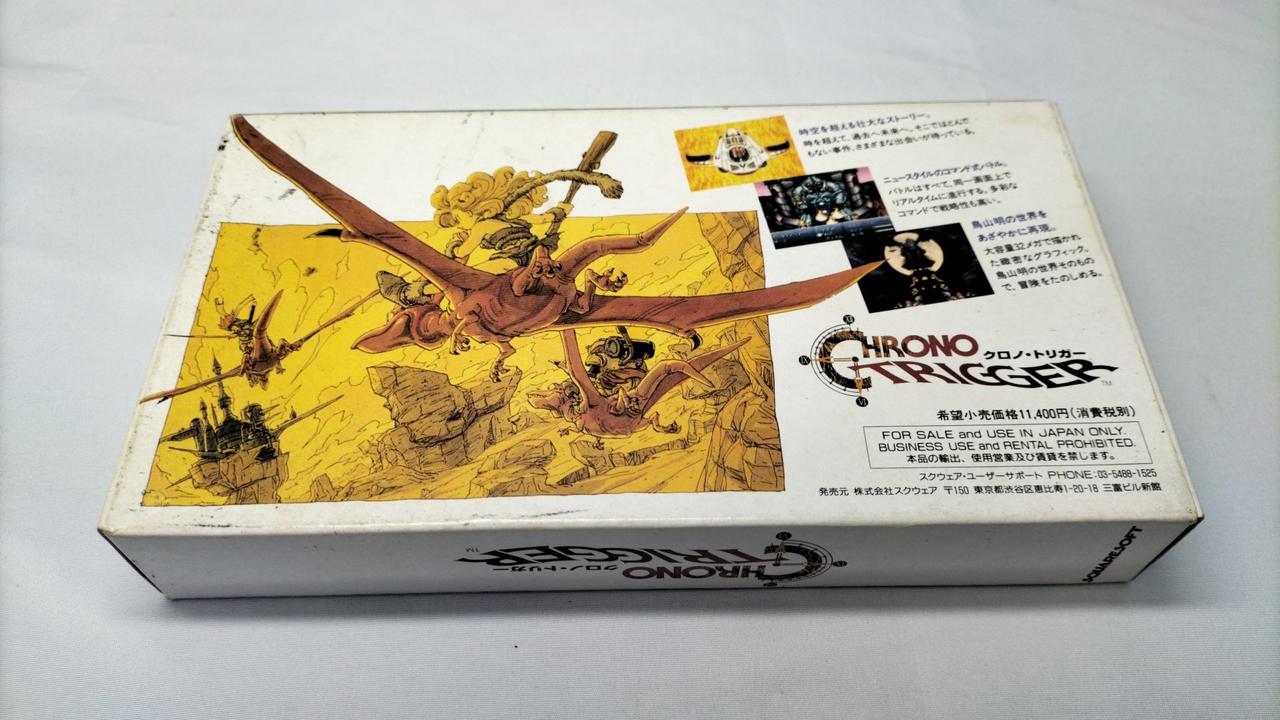
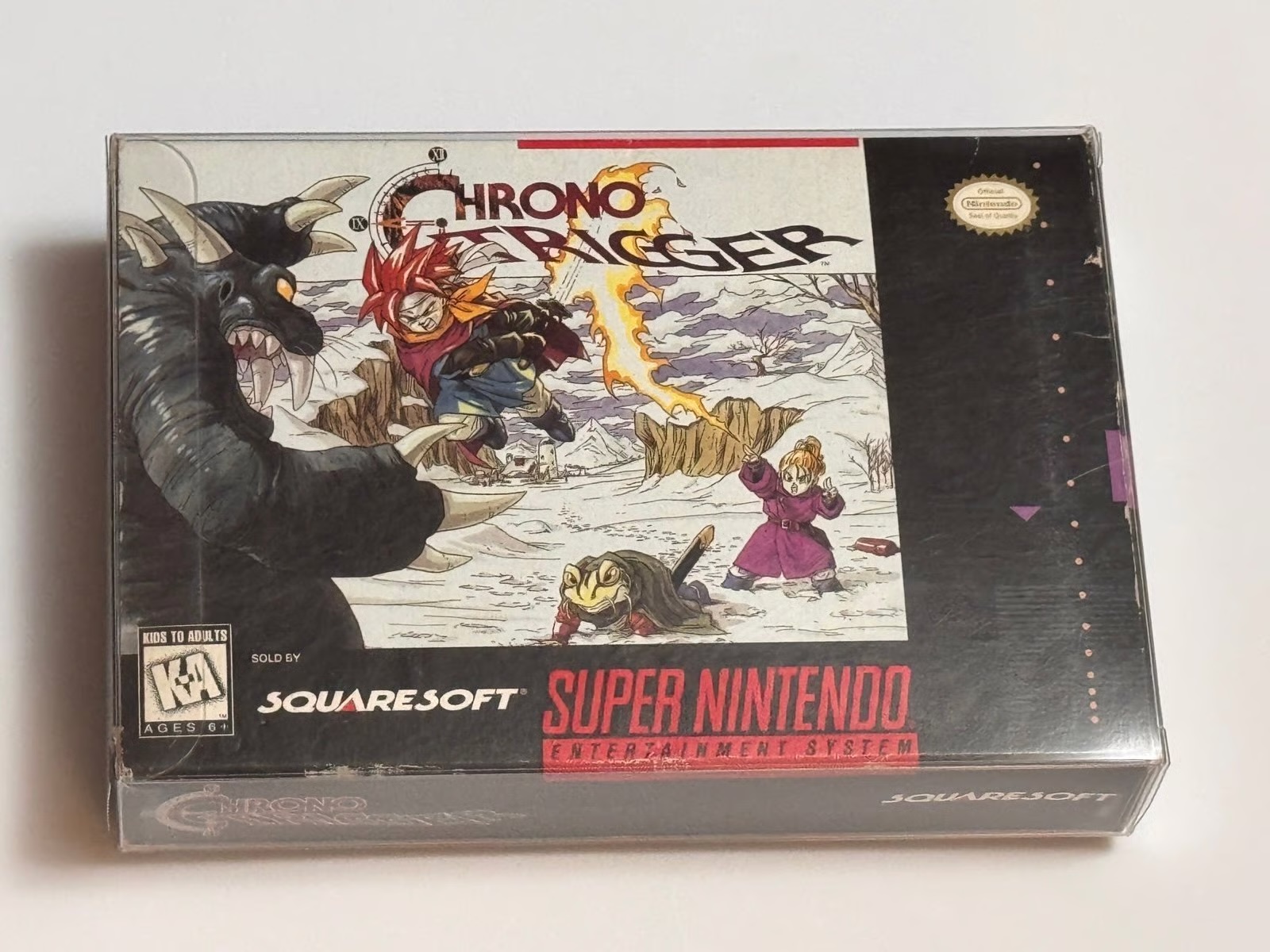
There are games that define a generation, and then there is Chrono Trigger. Released on March 11, 1995, in Japan and August 22 in North America, this Super Famicom masterpiece arrived at the absolute zenith of the Japanese RPG golden age. Just one year after Final Fantasy VI had pushed the boundaries of storytelling on 16-bit hardware, Squaresoft assembled what they boldly dubbed the "Dream Team" to create something that no one had done before.
The result was not merely another excellent RPG. Chrono Trigger became the standard against which all JRPGs would be measured for decades to come.
The Dream Team Assembles
The collaboration began almost casually in October 1992, when three titans of the Japanese gaming industry found themselves traveling to the United States to research computer graphics. Hironobu Sakaguchi, the creator of Final Fantasy. Yuji Horii, the mastermind behind Dragon Quest. Akira Toriyama, the legendary manga artist whose Dragon Ball had conquered the world and whose character designs had defined Dragon Quest's visual identity.
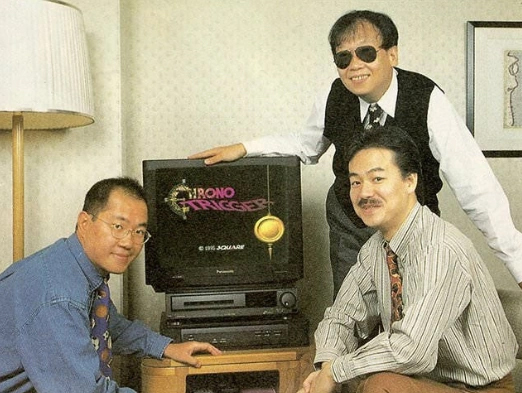
According to producer Kazuhiko Aoki, the initial discussions were "more of an offhand, casual thing." But the idea of merging the philosophies of Japan's two greatest RPG franchises proved too tantalizing to abandon. Toriyama's editor, Kazuhiko Torishima, later described the concept as "Dragon Quest plus Final Fantasy" and personally arranged for Enix to loan Yuji Horii to Squaresoft for development.
This was unprecedented. Square and Enix were bitter rivals, competing head-to-head for RPG supremacy. The idea that they would collaborate on anything seemed impossible. Yet here they were, pooling their greatest creative minds for a single project.
Behind the Scenes: A Massive Undertaking
Serious planning did not begin until approximately two years after those initial conversations, but once development started in earnest, it consumed Squaresoft. The team ballooned to 50-60 people, roughly double the size of a typical Square project at the time.
Three directors shared leadership responsibilities: Akihiko Matsui, Yoshinori Kitase, and Takashi Tokita. Each brought unique expertise. Matsui had designed the battle systems for Final Fantasy IV and V. Kitase would later direct Final Fantasy VII. Tokita had created the innovative Live A Live and would go on to direct Parasite Eve.
Masato Kato wrote the main scenario, crafting the time-spanning epic that would define the game. Tokita and Kitase handled subplots, with Tokita focusing on Marle's storyline while Kitase developed Lucca's character arc. Tetsuya Takahashi, who would later create the Xenogears and Xenoblade franchises, served as graphic director.
"It took us about a year to sort out and decide on the bones of the game, then another year for the development," Kitase recalled in interviews. "It ended being a massive 2-year project."
Technical Marvel: Pushing the Super Famicom to Its Limits
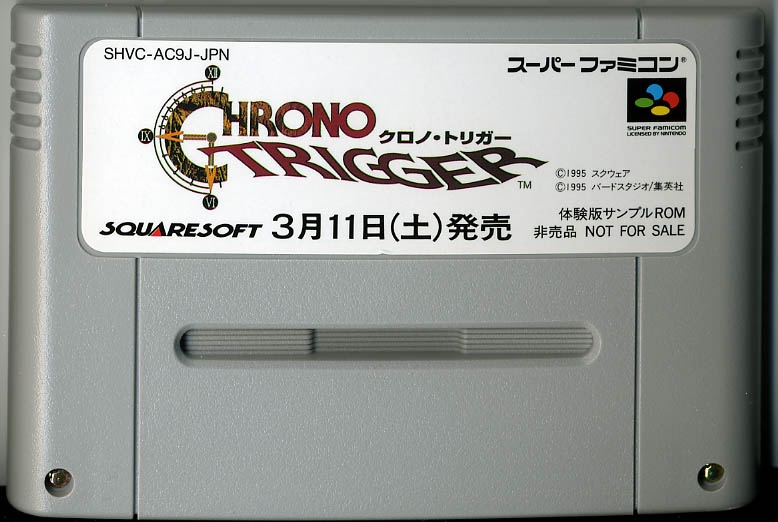
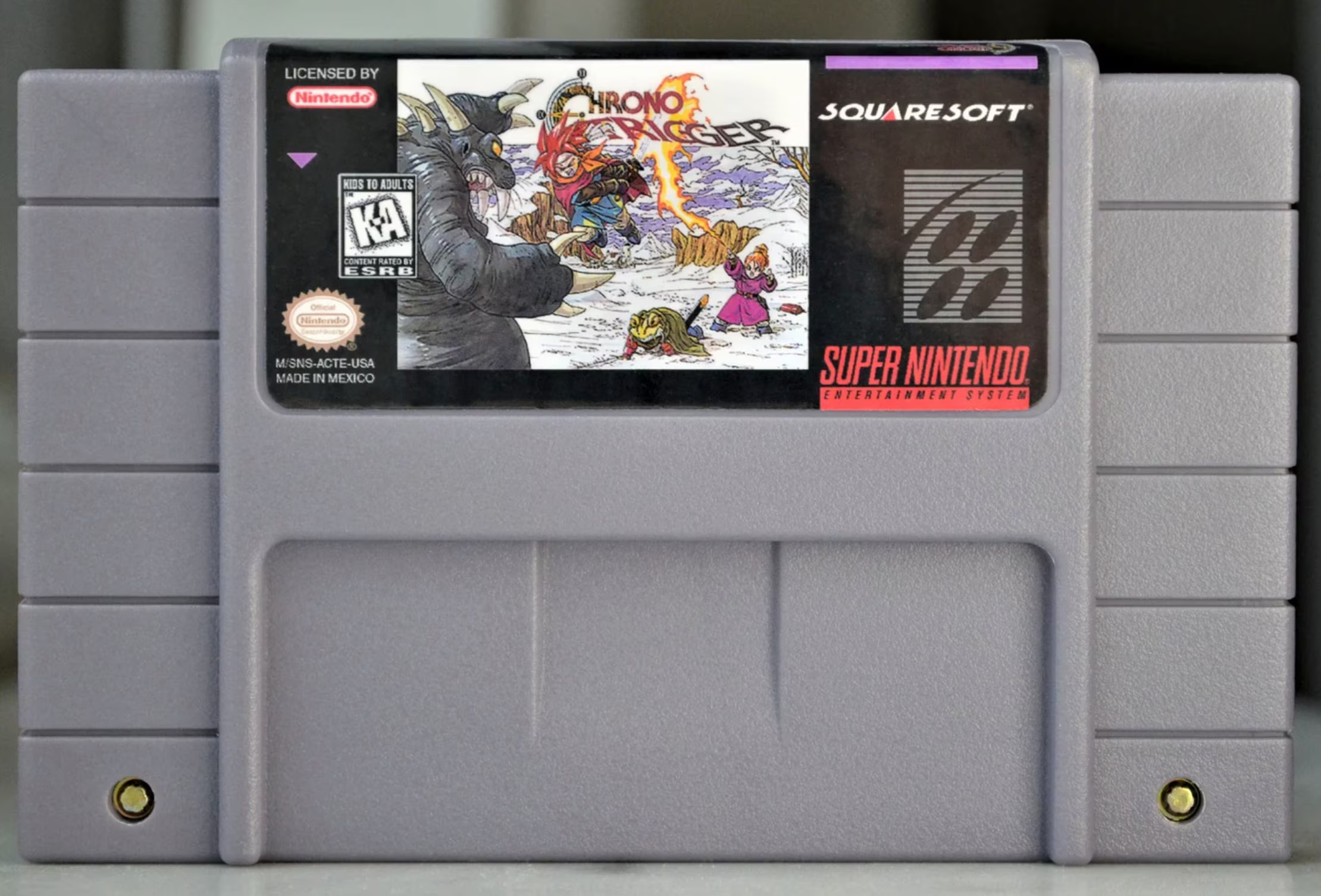
Chrono Trigger was originally conceived for CD-ROM, which would have offered vastly more storage space. When the decision was made to release on cartridge instead, the team faced enormous technical challenges. The final product shipped on a 32-megabit ROM cartridge, making it one of the largest Super Famicom games ever produced.
The cartridge contained no special coprocessors, relying entirely on clever programming to achieve its ambitious goals. Battery-backed RAM handled save games, allowing players to maintain multiple save files across their journey through time.
Yusuke Naora, one of the developers, recalled the freedom this massive cartridge provided: "I was free to use as much memory as I wanted! And I did."
The game utilized Mode 7, the SNES's rotation and scaling capability, most memorably in the Jet Bike Race sequence. Hidden developer credits in the ROM reveal that Kaname Tanaka created the Mode 7 road graphics for this thrilling racing minigame.
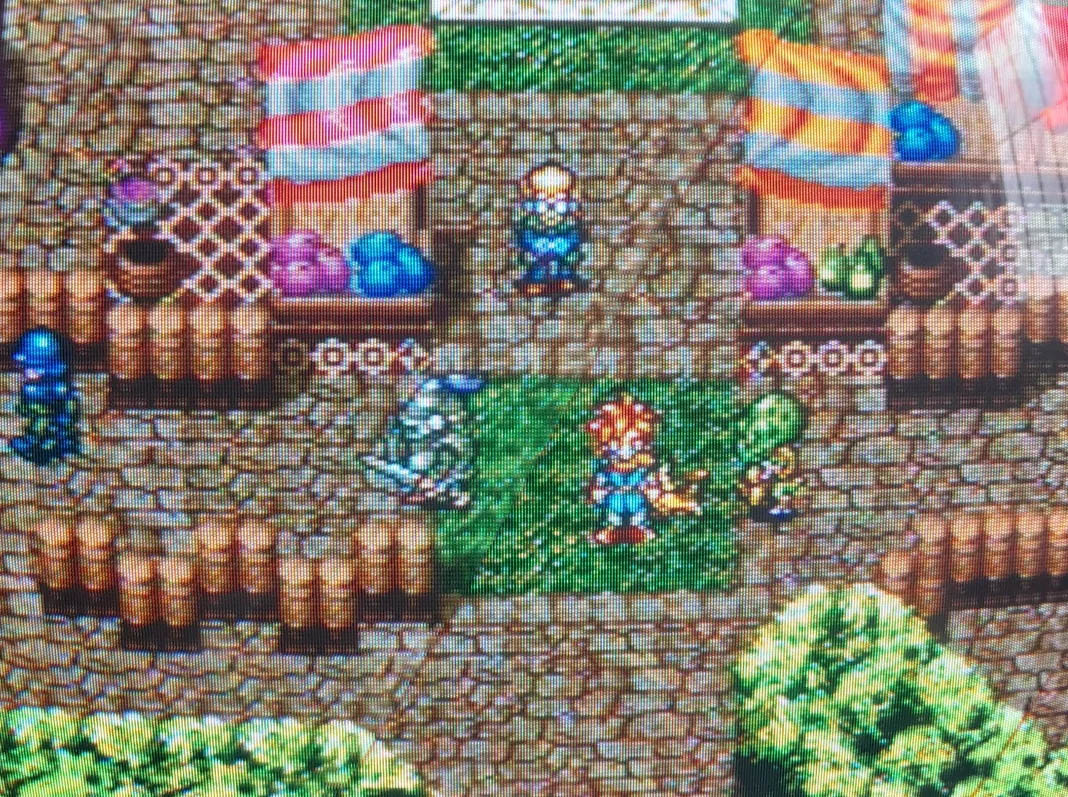
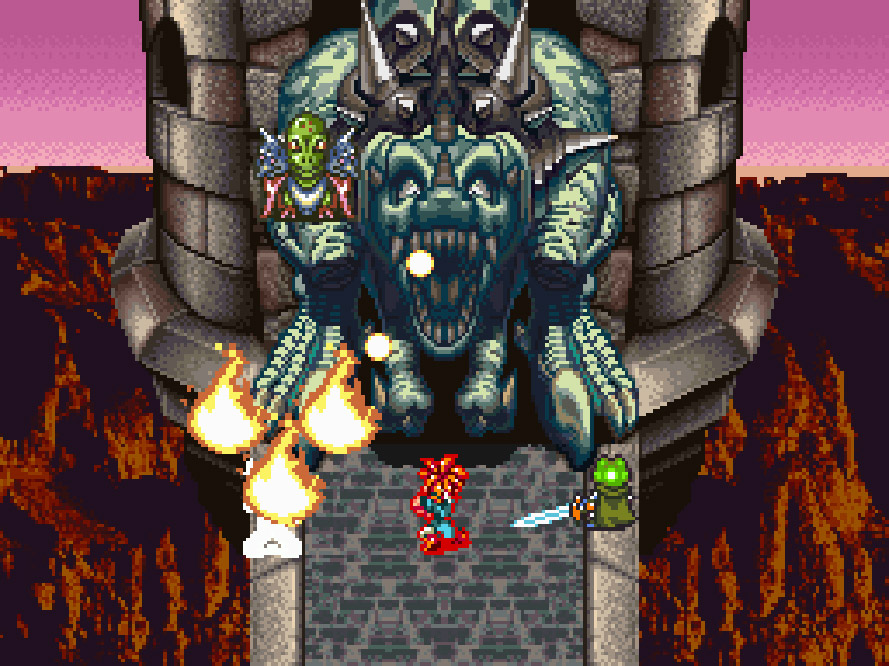
Perhaps most revolutionary was the elimination of separate battle screens. Where Final Fantasy and Dragon Quest pulled players into isolated combat arenas, Chrono Trigger's battles occurred directly on the field map. Enemies were visible before engagement, and combat flowed seamlessly from exploration.
This premium experience came with a premium price. In North America, Chrono Trigger retailed for $79.99, significantly higher than most SNES titles. The investment proved worthwhile.
ATB Version 2.0: Reinventing Combat
Squaresoft's Active Time Battle system, introduced in Final Fantasy IV, had already transformed turn-based RPG combat. Chrono Trigger evolved this into what Japanese documentation called "ATB Ver.2," adding innovations that remain influential today.
Akihiko Matsui, drawing on his experience designing the battle systems for Final Fantasy IV and V, introduced positional combat. Enemy placement on the battlefield now mattered. Some attacks could hit multiple foes if they clustered together, while others required specific positioning to maximize damage.
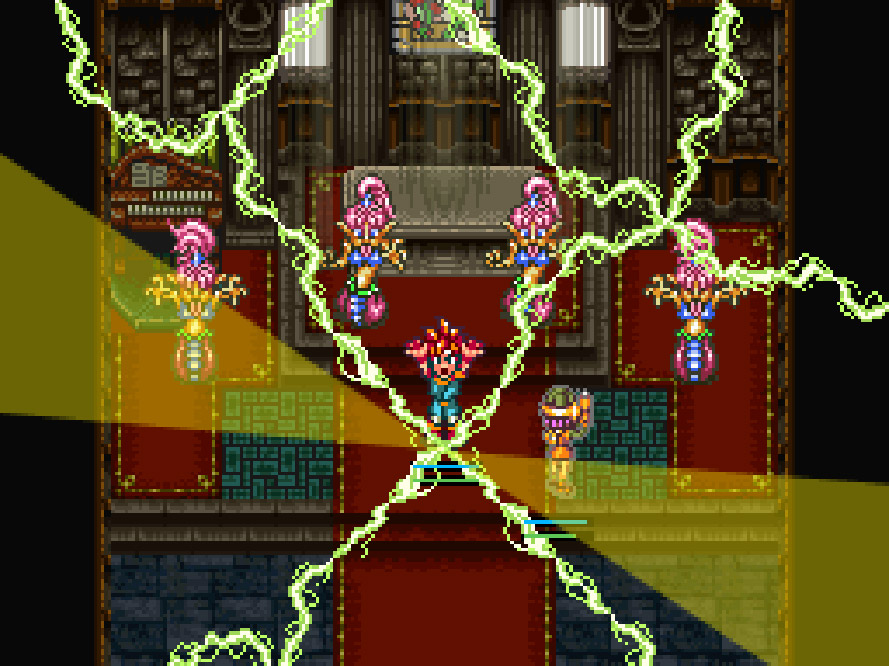
The Dual Tech and Triple Tech systems represented the most significant innovation. Two or three characters could combine their abilities into devastating combination attacks. Crono's Cyclone could merge with Lucca's Flame Toss to create Fire Whirl. All three party members could unite for ultimate techniques like Delta Force or the legendary Luminaire-based combinations.
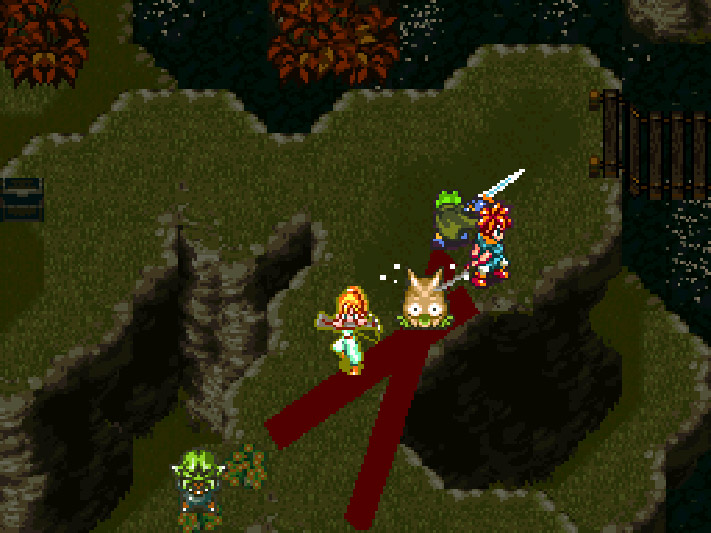
Players could choose between Active and Wait modes, the former maintaining real-time pressure while the latter paused the action during menu navigation. This flexibility allowed both action-oriented players and strategic planners to enjoy the combat on their terms.
Yasunori Mitsuda: A Star Is Born
The story of Chrono Trigger's soundtrack is one of determination, suffering, and triumph.
Yasunori Mitsuda had joined Square in 1992 as a sound effects designer, but composing was his true passion. After two years of creating sound effects for other projects, he approached Hironobu Sakaguchi with an ultimatum: let him compose music, or he would quit.
Sakaguchi assigned the young musician to Chrono Trigger, reportedly telling him, "After you finish it, maybe your salary will go up."
Mitsuda threw himself into the work with an intensity that nearly destroyed him. He worked obsessive hours, frequently collapsing at his desk and awakening with new musical ideas. The main theme that would define the game came to him this way, its haunting melody emerging from exhaustion-fueled creativity.
"I wanted to create music that wouldn't fit into any established genre," Mitsuda explained. "Music of an imaginary world."
He drew on folk and jazz traditions rather than the orchestral style dominating game music at the time. Asian influences permeated the score: Japanese shakuhachi flutes, Indian tabla drums, the twang of the sitar. The result was unlike anything players had heard in a video game.
But the pressure took its toll. Mitsuda developed severe stomach ulcers and had to be hospitalized, unable to complete the soundtrack himself. Nobuo Uematsu, the legendary Final Fantasy composer, stepped in to finish the remaining tracks.
Of the game's 68 compositions, Mitsuda created 54 while Uematsu contributed 10, with Noriko Matsueda assisting on one track. The three-disc commercial soundtrack release was unprecedented for a video game.
Mitsuda returned to Square before the game's completion. When he watched the ending for the first time, he cried.
Toriyama's Artistic Vision
Akira Toriyama's involvement presented unique challenges for the development team. Yuji Horii provided rough character sketches that Toriyama refined into his distinctive style, but the manga artist had an unusual working method: he only drew characters from the front.
"Unfortunately he only drew characters from the front, so we didn't know what they looked like from behind," one developer noted. The animators had to improvise back views for every character, interpreting Toriyama's designs as best they could.
Rather than constraining the team, Toriyama's designs liberated them. The developers balanced Final Fantasy's more serious aesthetic with playful elements, channeling what one team member described as creativity "pent up" from previous projects.
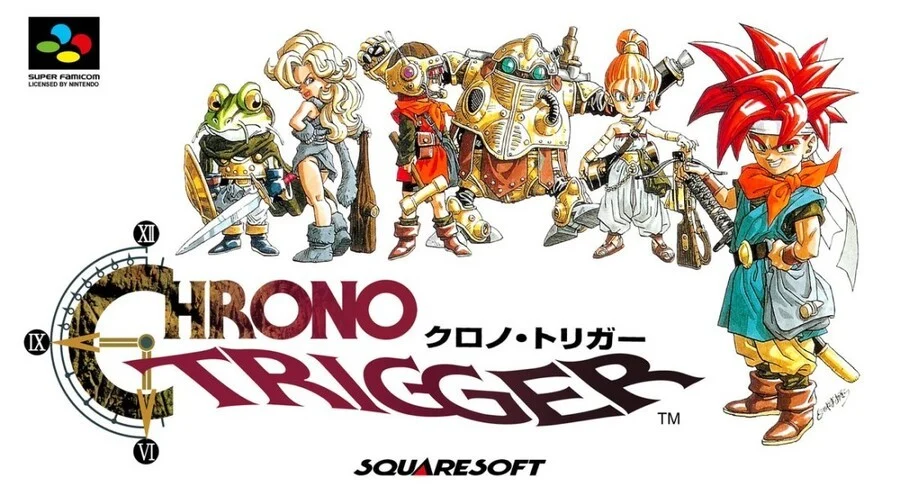
The result was a cast of instantly iconic characters. Crono's spiky red hair. Marle's princess ponytail. Frog's noble bearing. Magus's cape-shrouded menace. Robo's gentle mechanical form. Ayla's prehistoric strength. Each design communicated personality at a glance.
Time Travel and Narrative Innovation
Yuji Horii was a devoted fan of time travel fiction, particularly the American television series The Time Tunnel. He brought this passion to Chrono Trigger's story concept, creating an adventure spanning seven distinct eras: Prehistory (65,000,000 BC), Antiquity (12,000 BC), the Middle Ages (600 AD), the Present (1000 AD), the Future (2300 AD), the End of Time, and the apocalyptic Day of Lavos (1999 AD).
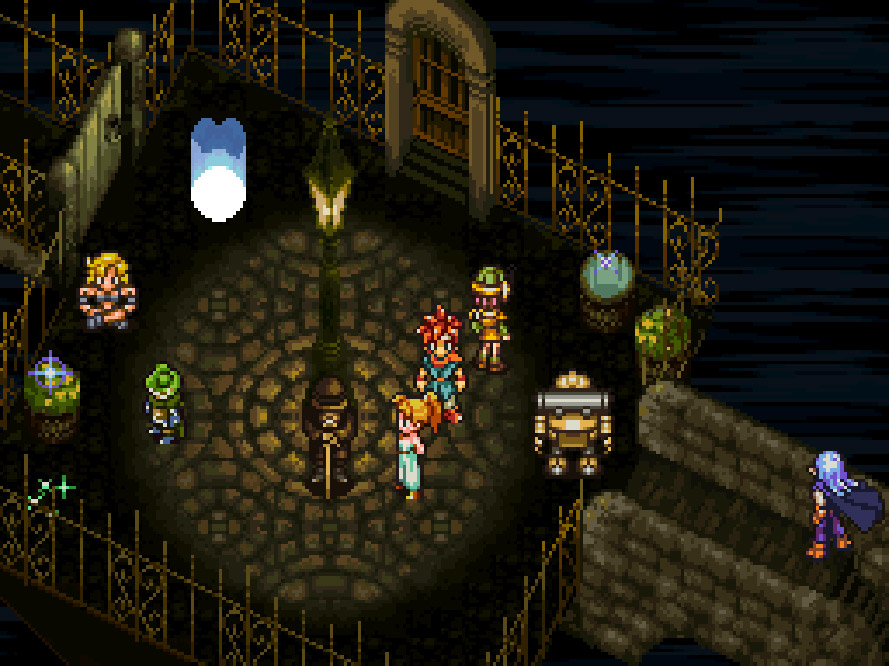
The narrative tackled mature themes rarely explored in video games. Environmental destruction. The consequences of technological hubris. The weight of destiny. The question of whether changing the past justifies erasing entire timelines.
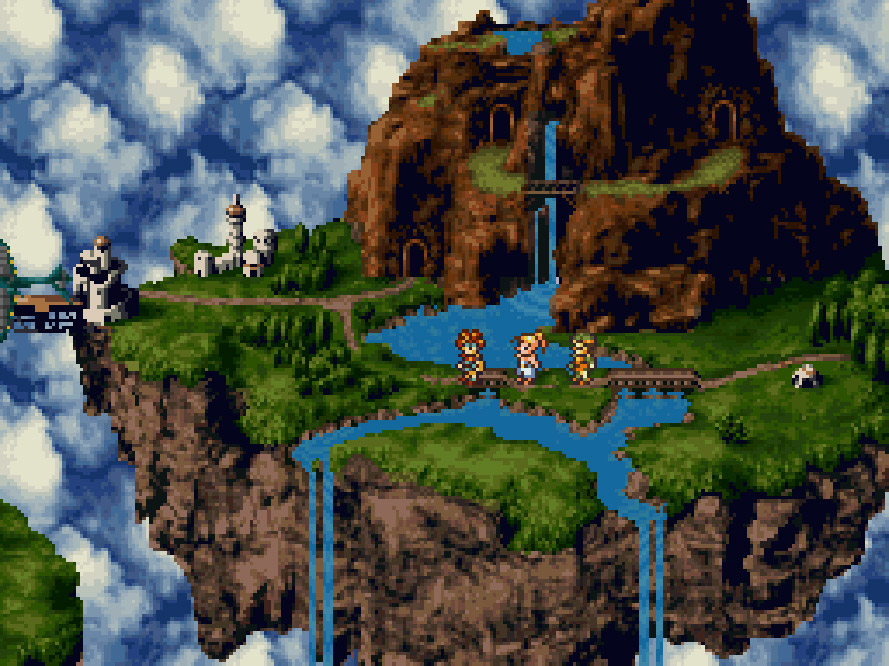
The Kingdom of Zeal, floating high above the clouds in 12,000 BC, stands as one of gaming's most memorable locations. This advanced magical civilization, powered by the energy of Lavos, would ultimately bring about its own destruction through hubris. The tragic fall of Zeal remains one of the game's most powerful narrative moments.
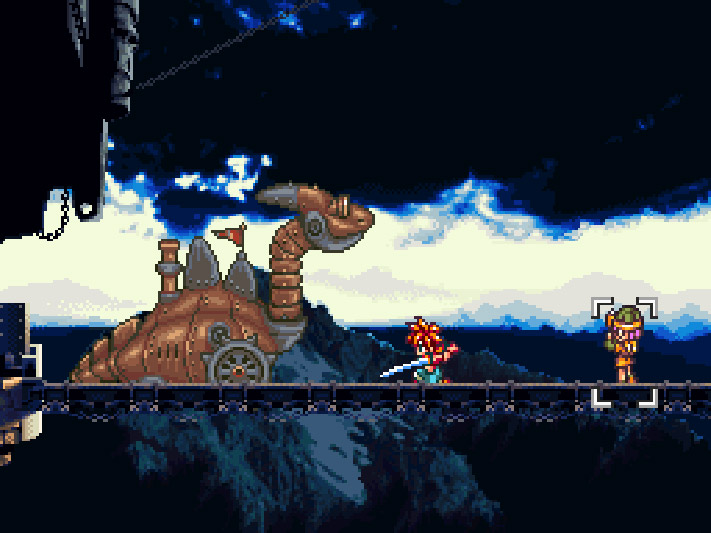
Masato Kato's original draft was even darker. When Crono dies at the Ocean Palace, the initial plan called for the party to recruit a younger version of the character from the past. Even if they defeated Lavos, this younger Crono would eventually be returned to his own time and die the same death. The ending was deemed "too disheartening," and the team revised it to use a clone replacement, allowing for a more hopeful conclusion.
Thirteen Endings and the Birth of New Game Plus
Chrono Trigger popularized a concept that would become ubiquitous in gaming: New Game Plus. While not the absolute first game with replay features, Chrono Trigger coined the term "New Game+" and made it a standard RPG feature. After completing the game, players could restart with their levels, equipment, and abilities intact. This was not merely a convenience feature but a necessity, as the game contained an unprecedented number of endings.
The original SNES and PlayStation versions featured 12 distinct conclusions. The Nintendo DS port added one more with "Dream's Epilogue," bringing the total to 13. These endings ranged dramatically in tone and content.
The canonical "good" ending sees Crono and friends defeating Lavos and saving the future, culminating in Crono and Marle's wedding. But players could experience wildly different conclusions: Frog returning to his human form, a timeline where reptites evolved instead of humans, and even a gag ending featuring nothing but frogs pranking each other during the credits.
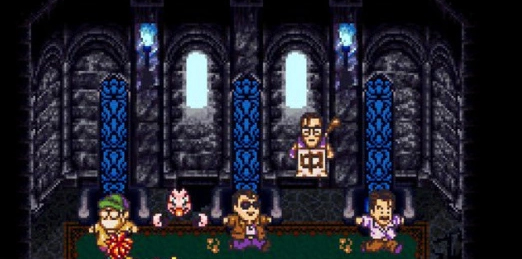
The most famous secret ending, "The Dream Project," required players to defeat Lavos at the very beginning of the game using New Game Plus. This seemingly impossible task rewarded persistent players with access to a hidden room where they could meet the actual Chrono Trigger development team, rendered as in-game characters who discussed their experiences creating the game and thanked players for their dedication.
Secrets, Easter Eggs, and Hidden Depths
Chrono Trigger rewarded exploration and experimentation with countless secrets.
Magus's three henchmen bore names familiar to rock music fans: Ozzie (Ozzy Osbourne from Black Sabbath), Slash (from Guns N' Roses), and Flea (from Red Hot Chili Peppers). This musical reference was intentional and became one of gaming's most beloved Easter eggs.
In Crono's home at the beginning of the game, players could accumulate cats by winning cat food at the Millennial Fair. Every time they collected approximately 60 ounces of cat food, another cat would appear in his room. Patient players could fill the house with felines.
At the End of Time, speaking to a party member and offering to take them along, then backing out of the party selection screen, would cause that character's theme music to loop continuously. Speed-runners and casual players alike used this trick to enjoy their favorite character themes.
Ayla's Charm technique proved essential for completionists. This stealing ability allowed players to obtain rare equipment and stat-boosting Tabs from enemies who would never drop them otherwise. The Twin Charm Dual Tech, combining Ayla and Marle's abilities, improved steal rates even further.
The Singing Mountain: Gaming's Most Famous Cut Content
In 1999, a prototype of Chrono Trigger dated November 17, 1994, nearly four months before release, surfaced online. This unfinished build revealed content that never made it to the final game, most famously the Singing Mountain dungeon.
The Singing Mountain was intended for the Prehistoric era, a location where players would explore after obtaining the Dactyls. The area featured geography similar to the Mystic Mountains, with a cave system containing rivers of lava. Yet the dungeon remained incomplete: no enemies, no treasure chests, no clear purpose.
What made this discovery remarkable was that the Singing Mountain's theme music had been included on the official soundtrack despite never appearing in the game. Players had wondered about this phantom track for years.
Yasunori Mitsuda later explained: "There was a dungeon where that song was used, but because the dungeon didn't contain much and there were no problems or anything that advanced the game, it was cut. So inevitably the song was cut with it."
The Black Omen, the massive flying fortress that serves as the game's ultimate dungeon, was created to replace the Singing Mountain, which ironically does not appear in the Prehistoric era at all.
Other cut content discovered in the prototype included dungeons beneath the sealed ruins north of Medina and catacombs under Zeal Castle. An unused weapon called the Dark Saber (Attack Power: 50) remains in the game's code, possibly intended for the scrapped areas.
The Singing Mountain finally made its official appearance in the 2008 Nintendo DS port. The new Dimensional Vortex dungeon included an area called the Frozen Cliffs, which uses the long-lost theme as its background music. It took 13 years, but Mitsuda's composition finally found its home.
Commercial Triumph and Critical Acclaim
Chrono Trigger was a phenomenon from the moment it launched. The game sold 2 million copies in Japan within its first two months, eventually reaching 2.36 million in that market alone. Worldwide sales across all versions have exceeded 5 million copies.
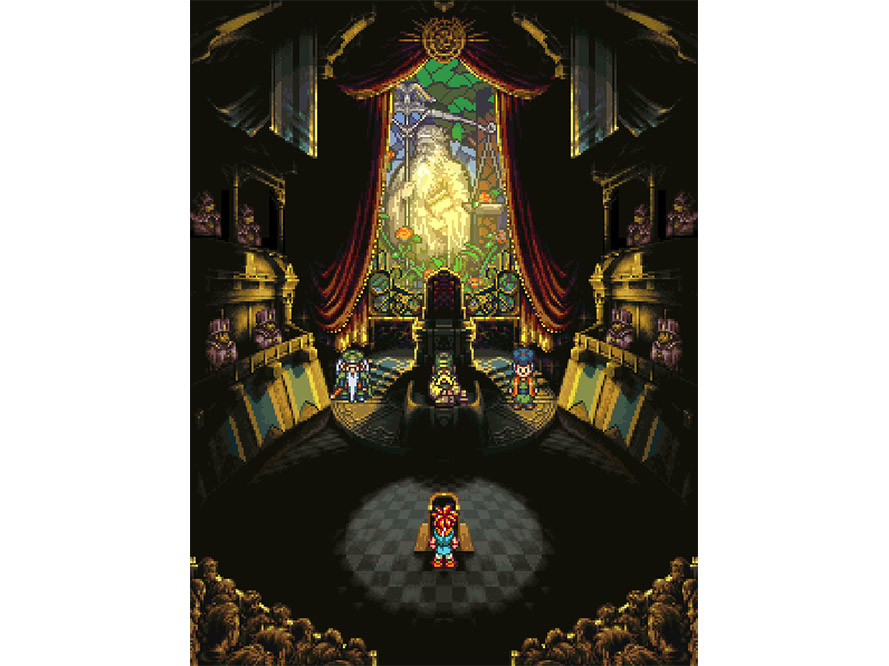
In Japan, Chrono Trigger finished 1995 as the second best-selling game of the year, behind only Dragon Quest VI and Donkey Kong Country 2. Critics lavished praise on every aspect of the production.
Electronic Gaming Monthly's 1995 Video Game Awards recognized Chrono Trigger with three major honors: Best Role-Playing Game, Best Music in a Cartridge-Based Game, and Best Super NES Game. The soundtrack, despite being compressed for cartridge delivery, was hailed as one of the finest in gaming history.
The accolades continued for decades. GameSpot included Chrono Trigger in their "Greatest Games of All Time" list in 2006. In 2019, Japanese gaming magazine Famitsu conducted a poll asking readers to vote for the best video game of the Heisei Era (1989-2019). From 7,158 submissions, Chrono Trigger emerged victorious with 230 votes, beating The Legend of Zelda: Breath of the Wild and NieR: Automata.
Thirty years after release, Chrono Trigger still appears on virtually every "best games ever made" list published by any gaming outlet worldwide.
Every Version: A Complete History
Chrono Trigger has been ported and re-released numerous times, each version offering something slightly different.
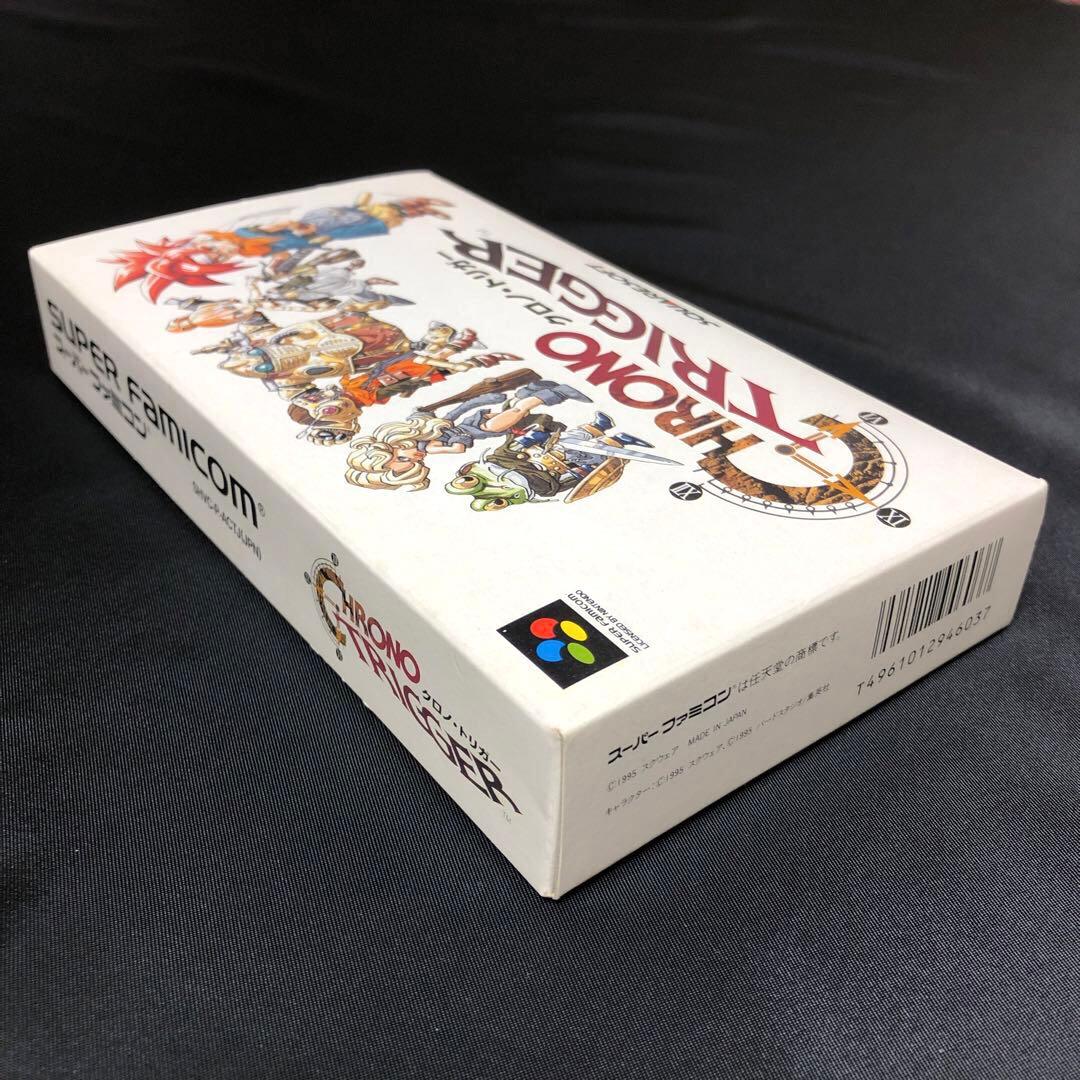
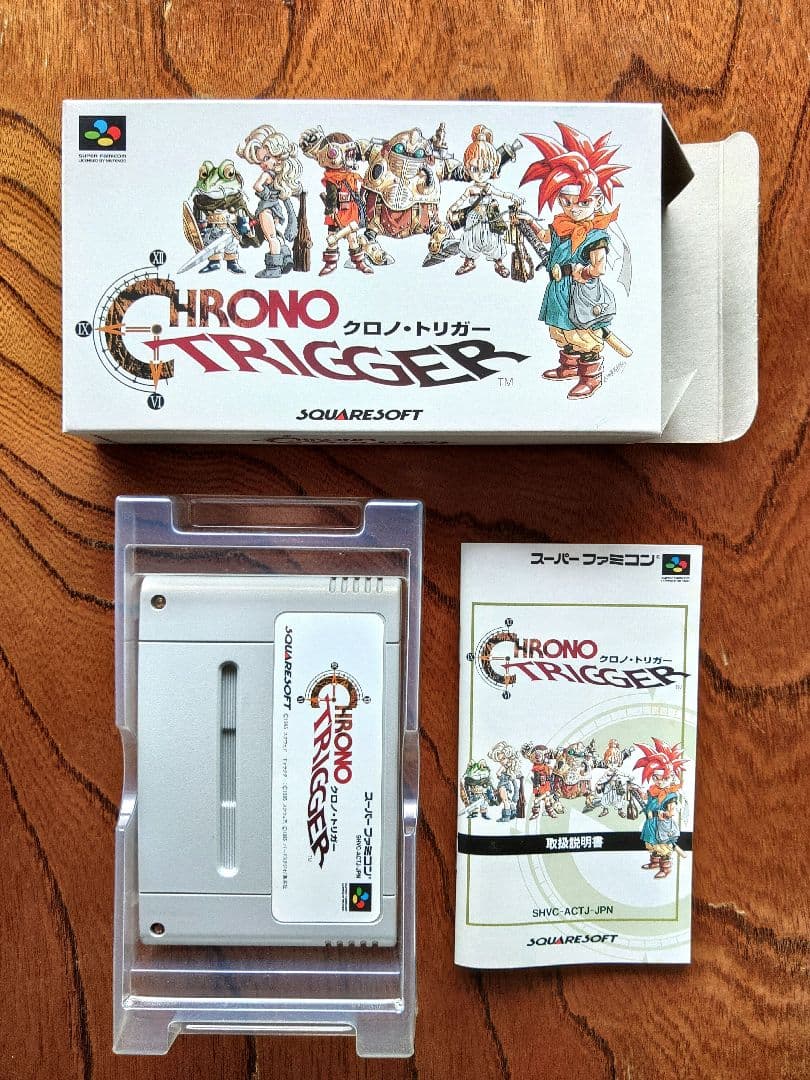
The original Super Famicom and SNES release remains definitive for purists. The pure 16-bit experience, unchanged and unenhanced, represents the game as its creators intended.
Japan received exclusive content through Nintendo's Satellaview satellite broadcast service, which operated from 1995 to 2000. Three Chrono Trigger mini-games were broadcast: Jet Bike Special (an expanded racing minigame), Music Library (a soundtrack player), and Character Library (a monster encyclopedia). When the Satellaview service ended on June 30, 2000, this content became lost to history.
The PlayStation port arrived in Japan in 1999 and North America in 2001, bundled with Final Fantasy IV as Final Fantasy Chronicles. This version added anime-style cutscenes created under Akira Toriyama's supervision, plus an extras section with a cutscene viewer and music player. Unfortunately, it also introduced significant load times that marred the otherwise smooth experience.
The Nintendo DS release in 2008 is widely considered the best version for modern players. It included all PlayStation bonus content plus substantial new material: the Lost Sanctum and Dimensional Vortex dungeons, the Arena of Ages monster-battling mode, and one additional ending (Dream's Epilogue). Tom Slattery provided a new, more accurate translation that notably removed Frog's pseudo-Old English dialogue from the original localization. The dual-screen interface cleared the top screen of menus, providing an unobstructed view of the action.
Mobile versions for iOS (2011) and Android (2012) were based on the DS port, featuring faster game speed but lacking the Arena of Ages mode. A 2018 update incorporating features from the Windows release restored the anime cutscenes, which had been absent from the initial mobile release.
The Steam/Windows release in February 2018 launched disastrously, riddled with graphical glitches that made the game nearly unplayable. Square Enix diligently patched these issues over subsequent months, and the PC version now runs properly. It includes most DS content except the Arena of Ages and two anime cutscenes.
The PlayStation version was also re-released on PlayStation Network in 2011, playable on PlayStation 3, PlayStation Portable, and PlayStation Vita.
Speedrunning and Challenge Runs
Chrono Trigger's design makes it exceptionally suitable for competitive play.
The speedrunning community at speedrun.com maintains active leaderboards across multiple categories. The PC version runs approximately 40-50 minutes faster than SNES due to faster battle animations, quicker zone transitions, adjustable battle speed, and near-instant text display.
Notable runner puwexil holds a SNES Glitchless time of 5 hours, 25 minutes, and 12 seconds. Categories include Any% (beat the game as fast as possible), Glitchless (no exploiting bugs), 100% (complete all content), and No RNG Manipulation (pure skill without manipulating random number generation).
The Low Level Challenge tests players' mastery of game mechanics. Because characters gain no experience while knocked out, skilled players can complete the game at remarkably low levels. The theoretical minimums are: Crono at Level 1, Marle at Level 4, Lucca at Level 15, Frog at Level 15, Robo at Level 16, Ayla at Level 20, and Magus at Level 37 (his starting level, making him typically excluded from challenge runs).
Equipment bonuses can compensate for low stats, and the battle system rewards strategic thinking over raw power. Dedicated guides document exact strategies for every boss encounter at minimum levels.
For players seeking even greater difficulty, the Chrono Trigger Hardtype ROM hack dramatically increases enemy strength, rebalances Dual and Triple Techs to encourage their use, and removes the ability to flee from battles entirely.
Super Play Techniques and Expert Strategies
Mastering Chrono Trigger rewards players with powerful optimization opportunities.
The best power leveling location in the SNES version is the Black Omen's second room, where two Synchrites (robotic enemies) provide 2000 experience points for a trivially easy battle. A save point sits immediately adjacent, allowing infinite grinding. High-level spells like Luminaire, Flare, Dark Matter, or Shock can defeat them in a single attack.
For the DS version, the Dimensional Vortex's Frozen Cliffs area offers superior grinding when characters equip Blue Plates or Vests (absorbs water damage) and Berserker Rings (auto-attack).
Character optimization requires understanding hidden mechanics. Crono stands as the game's strongest character, with the Dreamseeker or Rainbow weapons providing unmatched offense. His Luminaire spell deals the highest single-tech damage under normal circumstances.
Marle and Lucca operate differently from other characters: their physical attacks scale with the Hit stat rather than Power. Wasting Power Tabs on these characters yields minimal benefit. Save those precious stat boosters for Crono, Frog, Robo, or Ayla.
Ayla's Charm technique is essential for obtaining the best equipment. Many enemies carry items that they never drop but can be stolen. The Twin Charm Dual Tech with Marle improves success rates significantly.
For the final battle against Lavos, level 45 or higher is recommended. The optimal team combines Crono, Ayla, and Robo. Equip Prism Helmets for status ailment protection, Prism Spectacles for damage maximization, and Gold or Silver Studs on magic-dependent characters to reduce MP consumption.
Frog's Frog Squash technique deals extreme damage when his HP is critically low, making it most effective immediately after revival.
Squaresoft's Golden Era
Chrono Trigger represented the culmination of Squaresoft's Super Nintendo dominance. The company had spent years building toward this moment.
Final Fantasy VI had released just one year earlier in 1994, pushing the SNES to its limits with its operatic story and unprecedented ensemble cast. Secret of Mana had demonstrated action-RPG possibilities. Super Mario RPG would follow, showing what happened when Square's expertise met Nintendo's most famous mascot.
In Japan, 1995 also saw the release of Seiken Densetsu 3, the Mana series sequel that never reached Western shores until decades later. Windows 95 launched that same year, heralding the internet age that would transform gaming forever.
Yoshinori Kitase and Tetsuya Nomura had to pause work on early Final Fantasy VII development to focus on completing Chrono Trigger. That upcoming PlayStation project would change everything, but Chrono Trigger represented the last great flowering of 16-bit RPG excellence.
"It was essentially a dream mix between Final Fantasy and Dragon Quest," Takashi Tokita reflected in a 2016 interview. "Creating or exceeding what it was in its original form is a very difficult feat."
This sentiment explains why, despite Square Enix's willingness to remake other classics, Chrono Trigger has remained largely untouched beyond ports and rereleases. The original developers consider it sacred, a perfect crystallization of a moment in gaming history that cannot be recaptured.
Legacy: Thirty Years and Counting
Chrono Trigger's influence extends far beyond its immediate sequels.
Chrono Cross arrived on PlayStation in 1999, a thematically connected sequel that divided fans with its different approach but earned critical acclaim in its own right. The obscure Radical Dreamers, a text-based adventure released exclusively on the Satellaview in Japan, bridged the gap between the two games.
In 2023, Sea of Stars launched to widespread praise as a spiritual successor, deliberately evoking Chrono Trigger's aesthetic and design philosophy. Yasunori Mitsuda himself contributed music to the project, passing the torch to a new generation.
The game's 30th anniversary in March 2025 finds Chrono Trigger's reputation stronger than ever. Its innovations, from New Game Plus to seamless battle transitions to meaningful multiple endings, became industry standards. Its soundtrack remains a benchmark for video game composition. Its characters persist in gaming's collective memory.
But numbers and accolades cannot capture what makes Chrono Trigger special. It is the feeling of discovery when you first realize time travel changes the world. The moment Frog's theme swells as he prepares to face Magus. The heartbreak of the Ocean Palace. The triumph of the final battle against Lavos.
Chrono Trigger is not merely a great game. It is a reminder of why we play games at all: to experience wonder, to face challenges, to visit worlds that exist nowhere else. Squaresoft's Dream Team created something timeless in the most literal sense, a journey through eras that itself transcends the era of its creation.
Thirty years later, the dream continues.
Gallery
Get Gaming News and Features First
Stay updated with the latest gaming news and exclusive content.