ICO Turns 24: Fumito Ueda Classic That Changed Gaming Forever
Fumito Ueda's ICO celebrates 24 years. The PS2 masterpiece that pioneered minimalist storytelling and emotional game design still influences developers today.
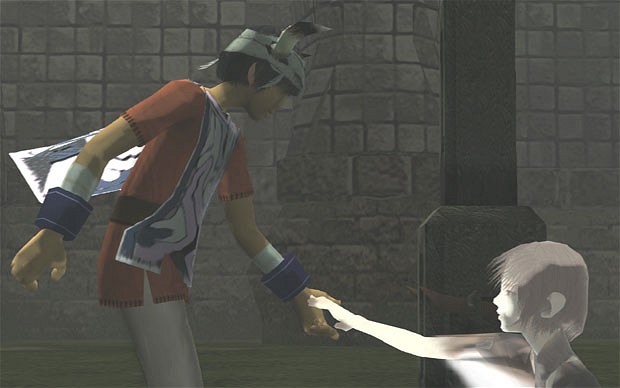
Twenty-four years ago today, a boy with horns reached out his hand to a pale, ethereal girl trapped in a cage. That single gesture. Ico taking Yorda's hand, became one of gaming's most profound moments, a mechanic so simple yet so emotionally resonant that it redefined what video games could make us feel.
ICO launched on December 6, 2001 for PlayStation 2, and while it didn't set sales charts ablaze, it ignited something far more lasting: a revolution in game design philosophy that continues to influence developers today.
The Castle in the Mist
The premise is deceptively simple. Ico, a young boy born with horns, a bad omen in his village, is brought to a mysterious, fog-shrouded castle to be sacrificed. He escapes his stone coffin and discovers Yorda, a ghostly girl imprisoned in an iron cage suspended high above the ground. Together, they must navigate the castle's ancient puzzles and escape before the shadow creatures reclaim Yorda for their dark queen.
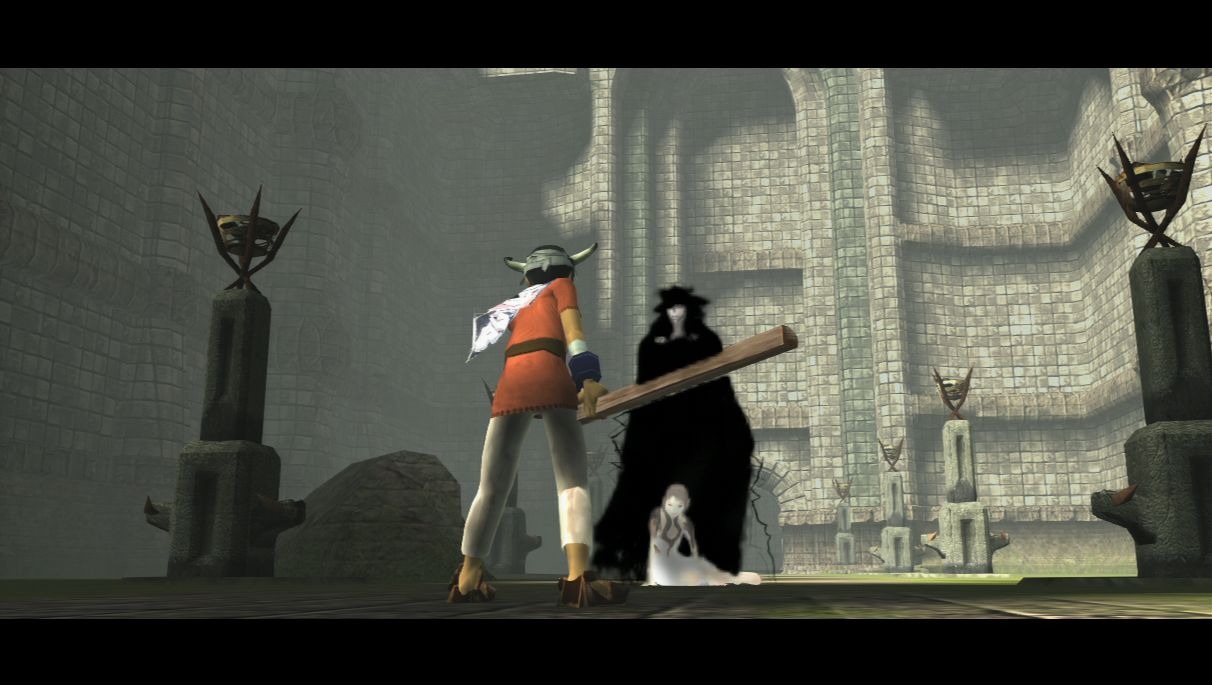
But what makes ICO extraordinary isn't the destination, it's the journey. Director Fumito Ueda stripped away everything that wasn't essential. No HUD. No health bar. Minimal music. No dialogue you can understand. What remained was pure, distilled emotion: two vulnerable characters navigating a hostile world, connected by their clasped hands.
"This Person's Hand. I Won't Let Go"
The hand-holding mechanic isn't just clever design, it's the game's soul. Press R1 and Ico reaches out. Yorda takes his hand. You feel responsible for her in a way few games have ever achieved. She can't fight. She can't run fast. She speaks a language you don't understand. But when those shadow creatures emerge from the floor and drag her toward dark portals, you'll sprint across crumbling bridges and swing your wooden stick with desperate fury to save her.
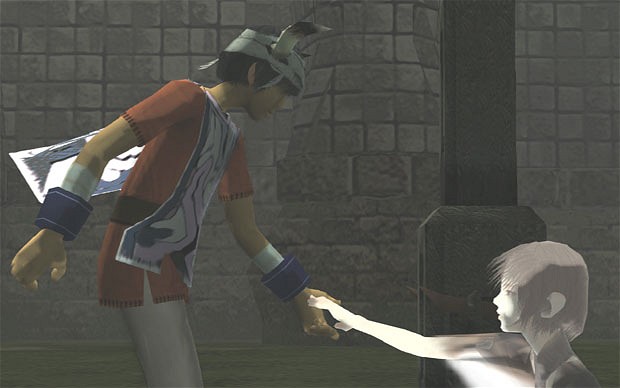
This wasn't escort mission tedium, it was love translated into gameplay. Every time you called out "Yorda!" and she came running, every time you pulled her up from a ledge, every time you sat together on a stone bench to save your progress, the bond deepened. No cutscene could achieve what simply holding that button accomplished.
Design by Subtraction
Ueda's philosophy of "design by subtraction" became legendary. Where other games added complexity, ICO removed it. The castle itself tells the story through its architecture, sun-drenched courtyards give way to oppressive corridors, spiral staircases wind through impossible spaces, and everywhere the fog suggests a world half-remembered, half-dreamed.
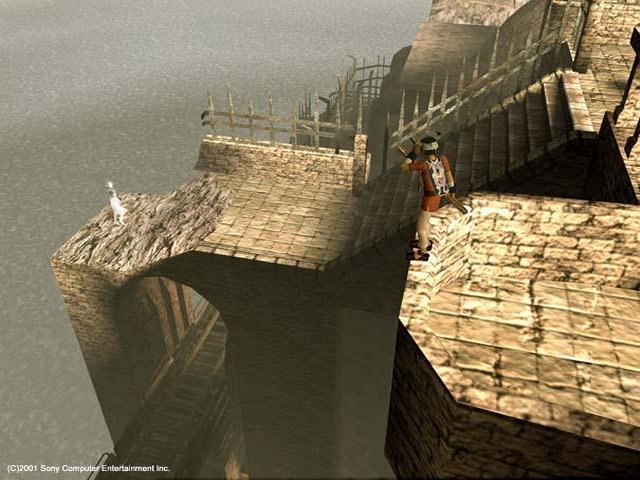
The puzzles emerge organically from the environment. Push this cart to create a platform. Light this bomb to destroy that wall. Activate windmills to open gates. Nothing feels gamey, everything feels like two children solving problems with the tools around them. And always, always, you must consider Yorda. Can she make that jump? Can you catch her on the other side?
A Legacy Beyond Sales
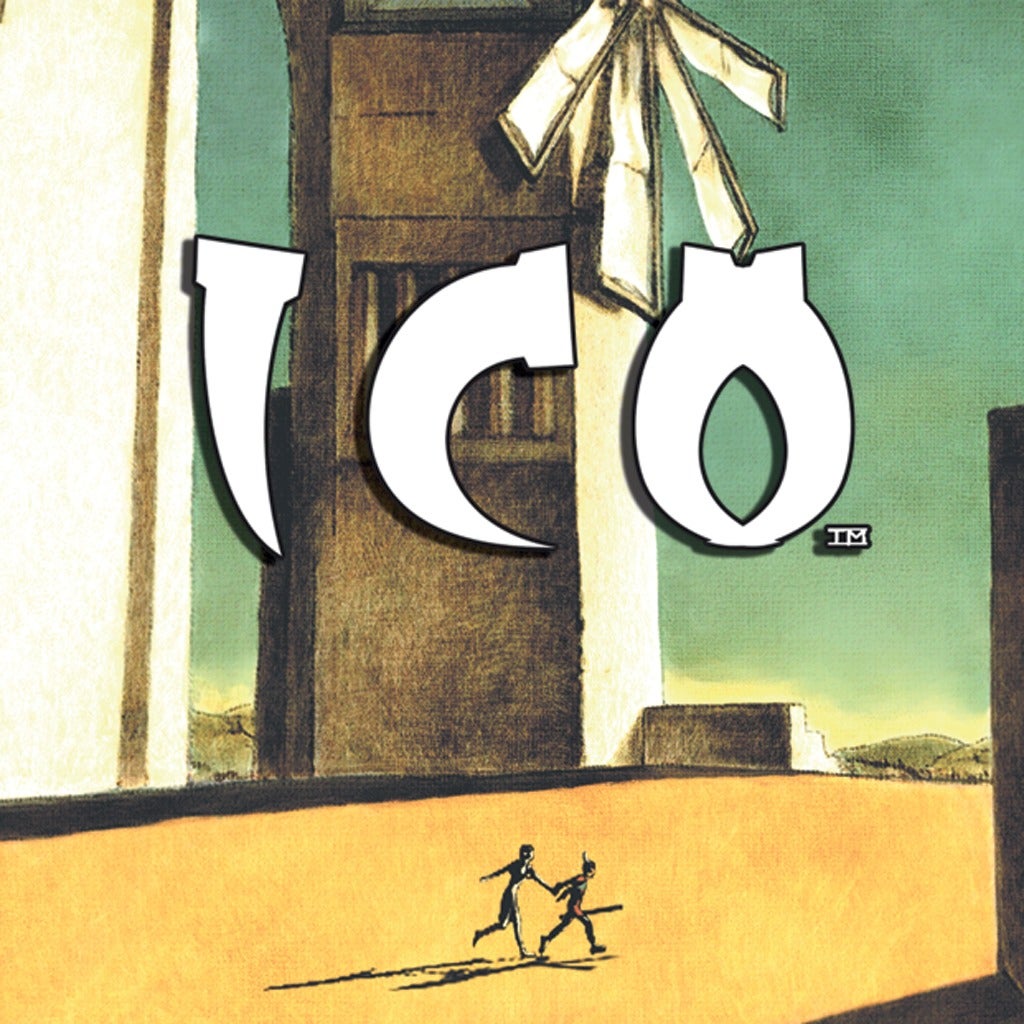
ICO's initial reception was modest. Critics adored it, but mainstream audiences weren't sure what to make of a game so quiet, so contemplative. Then something remarkable happened: word of mouth. Players who experienced ICO couldn't stop talking about it. The game became a cult phenomenon, its European box art, featuring Giorgio de Chirico-inspired painting, becoming iconic in its own right.
Novelist Miyuki Miyabe was so moved by the game that she wrote *ICO: Castle in the Mist*, a novelization that expanded the lore while preserving the game's dreamlike atmosphere. Composer Michiru Oshima's main theme, "ICO -You Were There-," became synonymous with melancholic beauty in gaming.
And then came the children. Shadow of the Colossus (2005) and The Last Guardian (2016) followed, each carrying ICO's DNA, the minimalism, the emotional bonds between characters, the environmental storytelling, the design by subtraction. Ueda had created not just a game, but a school of thought.
Playing ICO Today
The 2011 ICO & Shadow of the Colossus Collection for PlayStation 3 remains the definitive way to experience this masterpiece, offering enhanced visuals while preserving the original's haunting atmosphere. Whether you're returning after two decades or discovering it for the first time, the magic remains intact.
The puzzles still challenge. The castle still awes. And when you take Yorda's hand and lead her into the sunlight, you'll understand why this simple gesture changed gaming forever.
| Title | ICO |
| Japanese Title | イコ |
| Original Release | December 6, 2001 |
| Platform | PlayStation 2 (original) |
| HD Remaster | September 22, 2011 (PS3) |
| Developer | Team Ico / Sony Computer Entertainment |
| Director | Fumito Ueda |
| Composer | Michiru Oshima |
| Genre | Action-Adventure / Puzzle |
Happy 24th birthday, ICO. Your hand still reaches across the years, and we still won't let go.
For more on Fumito Ueda's work, see our The Last Guardian anniversary retrospective.
Gallery
Get Gaming News and Features First
Stay updated with the latest gaming news and exclusive content.